
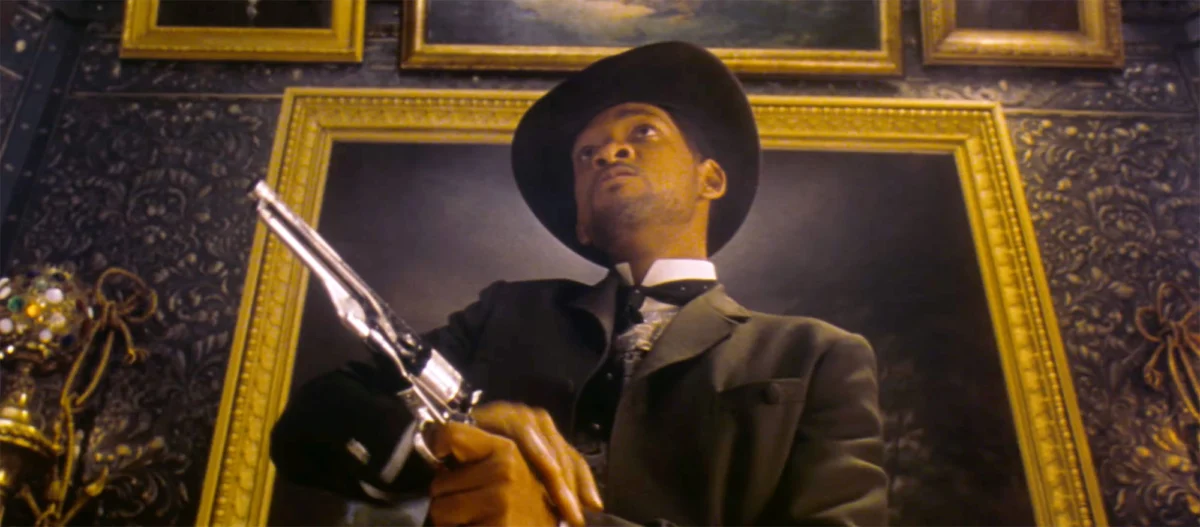
The year 1999 was a transformative period for cinema, a landscape of groundbreaking special effects, ambitious storytelling, and the culmination of an era for many established stars. Amidst this vibrant backdrop, a new look at the original trailers for Barry Sonnenfeld’s Wild Wild West serves as a stark reminder of a film that aimed for blockbuster glory but instead landed in the annals of Hollywood’s most notorious box office failures. Originally released on June 30th, 1999, the film, starring Will Smith and Kevin Kline, attempted to fuse the Western genre with steampunk aesthetics and comedic action, a formula that, despite significant star power and a substantial budget, ultimately failed to resonate with audiences and critics alike.
The Genesis of a High-Stakes Production
The journey of Wild Wild West to the big screen was paved with high expectations, largely due to the proven track record of its key creative forces. Will Smith was, at the turn of the millennium, arguably one of the most bankable stars in Hollywood. His charisma and comedic timing had propelled films like Independence Day (1996) and Men in Black (1997) to massive global success, establishing him as a crossover sensation capable of anchoring large-scale summer blockbusters. The reunion with Barry Sonnenfeld, who had directed Smith in the highly acclaimed Men in Black, further amplified anticipation. Sonnenfeld himself had a distinct directorial style, known for his quirky humor and visual flair, honed through hits like The Addams Family (1991) and Get Shorty (1995).
The film’s concept was an adaptation of the beloved 1960s CBS television series "The Wild Wild West," which starred Robert Conrad as James West and Ross Martin as Artemus Gordon. The original series was groundbreaking for its unique blend of Western, spy fiction, and science fiction elements, featuring elaborate gadgets and a distinctive tone. This rich source material, combined with the star power of Smith and Sonnenfeld, promised a fresh, modern take on a classic. However, the decision to inject heavy steampunk elements and an overtly comedic tone would prove to be a double-edged sword, attempting to revitalize a genre that had seen mixed fortunes in the preceding decades. While Westerns enjoyed intermittent successes, a consistent mainstream appeal beyond revisionist takes or historical dramas was often elusive. The ambition to combine a classic American genre with futuristic Victorian technology and a comedic buddy-cop dynamic was undoubtedly bold, but perhaps overly complex for a summer popcorn flick.
Behind the Scenes: A Production Marred by Ambition
The production of Wild Wild West was characterized by its immense scale and technological ambition, commensurate with its reported budget of $170 million (excluding significant marketing costs). This figure placed it among the most expensive films ever made at the time, reflecting the studio’s confidence in its potential. A substantial portion of this budget was allocated to elaborate set pieces, costumes, and pioneering visual effects, most notably the colossal mechanical spider that serves as the film’s iconic, albeit infamous, villainous gimmick.

The legend of the mechanical spider has become a cinematic anecdote, famously recounted by filmmaker Kevin Smith. According to Smith, he had been approached by a producer who was insistent on including a giant mechanical spider in a script Smith was working on. Smith reportedly resisted, finding the idea incongruous with his project. Eventually, the producer found a home for his arachnid obsession in Wild Wild West, where it became a central antagonist vehicle for Dr. Arliss Loveless. This anecdote provides a glimpse into the creative pressures and sometimes eccentric demands that can shape large-scale productions, suggesting a pursuit of spectacle that may have overshadowed narrative coherence. The spider, a marvel of late-90s practical and digital effects, symbolized the film’s commitment to visual grandeur, but also its potential over-reliance on novelty.
Beyond the spider, the film assembled an impressive ensemble cast. Kevin Kline, known for his versatility and comedic prowess, was cast as the eccentric inventor Artemus Gordon, playing off Smith’s Agent James West. Kenneth Branagh, a renowned Shakespearean actor, embraced the role of the diabolical, wheelchair-bound Confederate scientist Dr. Arliss Loveless, delivering a performance that many found to be a highlight, albeit in a polarizing film. The cast was further bolstered by Salma Hayek as the mysterious Rita Escobar, Ted Levine, M. Emmet Walsh, and Bai Ling as Miss Mae Lee East. The caliber of talent involved underscored the project’s perceived potential and the studio’s belief that a strong cast could elevate the ambitious premise.
The screenplay itself went through multiple iterations, credited to S. S. Wilson, Brent Maddock, Jeffrey Price, and Peter S. Seaman, from a story by Jim Thomas & John Thomas. Adapting a beloved television series, especially one with a cult following, always presents a challenge. The writers aimed to capture the essence of the original’s inventive spirit while updating it for a contemporary audience, incorporating elements of action, adventure, and broad comedy. However, critics would later argue that this fusion resulted in a muddled tone, struggling to balance its disparate genre influences and comedic aspirations.
The Release, Reception, and Box Office Fallout
Wild Wild West premiered in theaters on June 30th, 1999, directly entering the notoriously competitive summer movie season. That year was packed with highly anticipated blockbusters, including Star Wars: Episode I – The Phantom Menace, The Mummy, and The Matrix (released earlier in the spring, but still a dominant force). The film faced an uphill battle for audience attention and critical acclaim.
Upon its release, Wild Wild West was met with overwhelmingly negative reviews. Critics largely panned the film for its convoluted plot, excessive and often nonsensical special effects, forced humor, and a perceived lack of chemistry between its leads. Many reviewers found the blend of Western and steampunk elements jarring rather than innovative, with the film struggling to establish a consistent tone. Kenneth Branagh’s performance as Dr. Loveless was often cited as a standout, but even his theatrical villainy couldn’t salvage the overall critical consensus. The film’s attempts at comedic banter often fell flat, and its reliance on slapstick and crude jokes alienated many who expected the sharper wit seen in Smith and Sonnenfeld’s previous collaborations.
Financially, Wild Wild West was a significant disappointment, widely considered a box office bomb despite grossing over $222 million worldwide. While this figure might seem substantial on its own, it must be contextualized against its colossal production budget of $170 million, coupled with an estimated $60-80 million in marketing and distribution costs. Studios typically only receive about half of the box office gross, meaning the film needed to earn well over $300 million just to break even. The opening weekend, while respectable, did not generate the kind of momentum needed to sustain a profitable run, especially given the fierce competition. Its domestic gross was approximately $113.8 million, a far cry from the performances of Smith’s prior blockbusters. The film’s underperformance sent ripples through the industry, serving as a cautionary tale about the perils of unchecked ambition and the limitations of star power alone. The film’s critical failure was further solidified by its nominations for eight Golden Raspberry Awards (Razzies), ultimately winning five, including Worst Picture, Worst Director, Worst Screenplay, Worst Screen Couple (Will Smith and Kevin Kline), and Worst Original Song for Will Smith’s "Wild Wild West" rap.

The Enduring Legacy of a Notorious Flop
The aftermath of Wild Wild West‘s failure had tangible implications for those involved. For Will Smith, it marked a rare misstep in an otherwise stellar career trajectory. While the film was a significant setback, Smith quickly rebounded, demonstrating his resilience and ability to choose successful projects. He went on to star in critically acclaimed films like Ali (2001), for which he received an Academy Award nomination, and continued his blockbuster streak with Men in Black II (2002) and Bad Boys II (2003). The experience likely informed his future project selections, perhaps making him more discerning about scripts that prioritized spectacle over substance.
For Barry Sonnenfeld, Wild Wild West also represented a dent in his directorial reputation. Following this film, his next major project was Big Trouble (2002), which also struggled to find an audience. While he continued to direct, his subsequent films often lacked the critical and commercial impact of his earlier work. The film’s failure underscored the delicate balance required in translating a director’s unique vision into a universally appealing blockbuster, especially when dealing with such an experimental genre blend.
Beyond individual careers, Wild Wild West holds a peculiar place in cinematic history. It remains an infamous cultural artifact, frequently cited in discussions about Hollywood’s most expensive failures. Its over-the-top elements, particularly the giant mechanical spider and Will Smith’s accompanying rap song, have cemented its status in pop culture memory, often as a punchline. Despite its flaws, the film inadvertently contributed to the nascent mainstream awareness of steampunk aesthetics, showcasing a visual style that would later gain more traction in niche communities and other media. While the film itself failed to ignite a widespread love for steampunk Westerns, its visual daring was undeniable.
The trailers themselves, now available online, offer a fascinating glimpse into the marketing strategy that attempted to sell this ambitious project. They highlight the elaborate set pieces, the star power, and the promise of action and comedy. The inclusion of Will Smith’s "Wild Wild West" rap song directly in the trailer was a key marketing tactic, leveraging his musical fame to draw in audiences. Listening to the song and watching the trailers now evokes a sense of nostalgia for a different era of Hollywood marketing, where star-driven musical tie-ins were a common, and often effective, strategy. The fact that these classic 90s trailers were scanned from original 35mm prints and uploaded to YouTube for contemporary enjoyment speaks to the enduring interest in cinematic history, even for films that didn’t achieve critical acclaim. They serve as historical documents, showcasing how films were presented and what was emphasized to entice moviegoers.
In conclusion, Wild Wild West stands as a monumental example of a blockbuster that had all the ingredients for success – a beloved star, a proven director, an intriguing concept, and an astronomical budget – yet ultimately crumbled under the weight of its own ambition. While it may not have achieved critical or commercial triumph, its story remains a compelling case study in Hollywood’s high-stakes game, a reminder that even the most promising ventures can stumble, leaving behind a legacy that is as much about its notorious failure as it is about its grand, albeit misguided, vision. The rewatch of its original trailers is not just a trip down memory lane, but an opportunity to reflect on a unique moment in cinema when a bold experiment in genre fusion taught the industry valuable, albeit expensive, lessons.