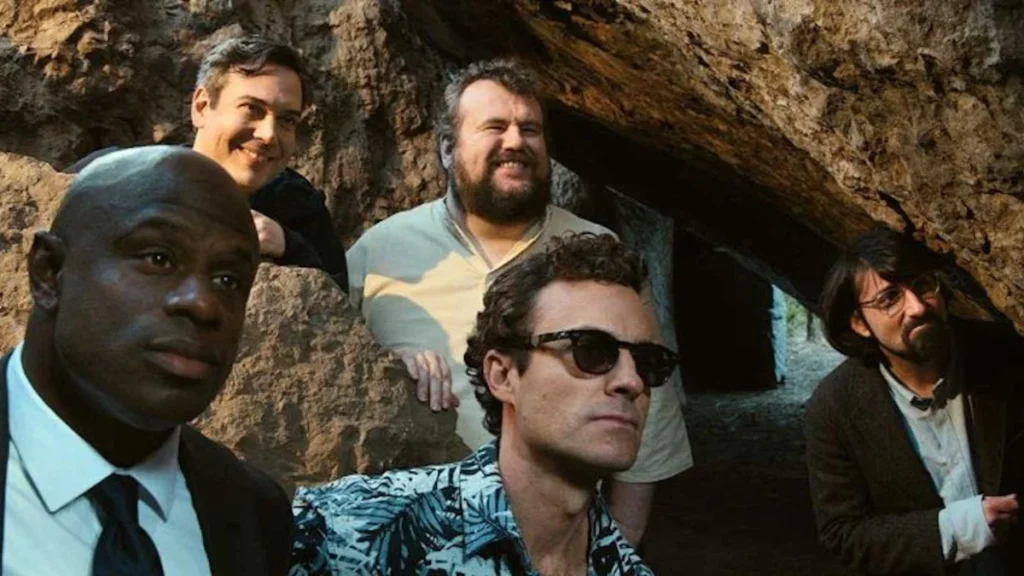





Amman, Jordan – In the heart of Amman, amidst the relentless pulse of a modernizing city, a cinematic relic stands on the precipice of oblivion. "Cinema Kawakeb," a deeply humanistic documentary by acclaimed Jordanian-Dutch filmmaker Mahmoud al Massad, offers an intimate and often melancholic portrait of this historic venue and the individuals whose lives are inextricably woven into its fading tapestry. Shot largely during the unprecedented global pause of the Covid-19 pandemic, the film transcends a mere archival record, capturing a profound transitional moment for both a physical space and the resilient spirits it shelters. Al Massad, a director whose previous works have graced prestigious international platforms like Sundance and Toronto, turns his discerning lens towards a subject that, while not commercially driven, has resonated deeply within the international festival circuit, earning critical praise for its empathetic storytelling and its timely exploration of cultural memory and urban decay.
The narrative centers on Yousef and Ali, the last two custodians of Cinema Kawakeb, a once-grand establishment now relegated to a back alley, a ghost of its former splendor. Their dedication is a desperate struggle against time and neglect, a valiant effort to breathe life into a space slowly succumbing to the ravages of time and, more critically, ownership disputes and severe financial strain. The peeling paint, threadbare seats, and tattered curtains are not merely signs of disrepair; they are silent witnesses to a legacy teetering on the brink of erasure. The film effectively conveys the poignant absurdity of their situation: two men tethered to a functioning shell, a place that no longer fulfills its intended purpose but remains imbued with a profound personal significance.
Beyond the plight of the dedicated employees, "Cinema Kawakeb" weaves in the stories of a few other peripheral figures, most notably Hussein, a solitary scrap collector who finds solace and escape within the cinema’s dusty confines, his passion ignited by the vibrant narratives of Indian cinema. These interactions serve as conduits, gradually revealing the intricate personal histories of the subjects, their connections to the West Bank, and their past experiences within the broader landscape of cinema exhibition in the region. As the specter of demolition looms and the future of Cinema Kawakeb, and by extension, Yousef and Ali, remains shrouded in uncertainty, the film transforms into a peculiar sanctuary, a testament to the enduring power of shared spaces and human connection in the face of inevitable change.
A Multilayered Narrative Unfolding Across Three Axes
Mahmoud al Massad masterfully constructs "Cinema Kawakeb" through a tripartite narrative structure, each layer offering a distinct yet interconnected perspective.
The Observational Axis: Capturing the Present and Echoes of the Past
The most prominent axis is observational, bifurcated into two distinct realms: the intimate interior of the cinema and its surrounding urban environment. The cinema’s interior becomes the primary stage, a space where the film delves into its present condition, unearths stories of its glorious past, and meticulously reconstructs the narrative of its decline. The palpable threat to its future hangs heavy in the air, lending a dramatic urgency to the unfolding events. Concurrently, the observational lens extends to the surrounding streets, offering glimpses into the daily lives of the characters. A significant portion of this segment is dedicated to Hussein’s life as a garbage collector, a portrayal that injects a potent dose of social drama while remaining firmly rooted in gritty reality. His infrequent patronage, marked by the purchase of tickets, becomes a crucial, albeit meager, source of income for Yousef and Ali. This transactional relationship, however, introduces another layer of dramatic tension, as Hussein begins to perceive these exchanges as potentially exploitative, adding a subtle yet significant ethical dimension to their interdependence.
The Archival Axis: Connecting Local Stories to Geopolitical Realities
The second axis is characterized by the strategic incorporation of archival footage, presented as if playing within the cinema itself. This curated selection of historical films and newsreels acts as a visual bridge, connecting the micro-narrative of Cinema Kawakeb to the macro-historical and geopolitical landscape of the region. Beginning with newsreels from the World War II era, the footage progresses through various historical periods, with a pronounced focus on the latter part of the 20th century and early 21st century. This segment delves into the policies and actions of Israel and the varied reactions of Arab nations, providing crucial context for the socio-political backdrop against which the cinema’s story unfolds. The filmmaker’s deliberate effort to juxtapose the intimate struggles within the cinema with these broader historical currents underscores the interconnectedness of local narratives and national destinies, demonstrating how a single cultural space can reflect and absorb the weight of regional history.
The Meta-Narrative Axis: Transparency and the Filmmaking Process
The third axis introduces a meta-narrative layer, where al Massad invites the audience behind the scenes, documenting the very process of filmmaking. This includes candid discussions about camera placement, lighting, and even the collaborative input of the protagonists themselves, who offer suggestions on how the documentary should be shaped. This self-reflexive element imbues the film with a unique sense of irony and, at times, gentle humor. It not only enhances the viewing experience by demystifying the filmmaking process but also fosters a deeper connection between the audience and the subjects, by highlighting the collaborative and sometimes improvisational nature of documentary storytelling. This transparency underscores the film’s commitment to portraying its subjects with authenticity and respect, allowing them a voice in their own representation.
Editorial Cohesion and Cinematographic Resonance
Bassam Samy Chekhes’s skillful editing plays a pivotal role in harmonizing these disparate narrative threads. The editorial choices ensure a cohesive flow, where the microcosm of Cinema Kawakeb mirrors and amplifies the broader geographical and historical context. Despite the film’s commitment to a realist tone, there are moments where the narrative might have benefited from a judicious reduction in archival footage, allowing for a more extended focus on the cinema and its human inhabitants. It is precisely these individuals, with their poignant stories and quiet resilience, who ultimately emerge as the most compelling and enduring elements of the documentary.
Al Massad’s cinematography is a testament to his keen eye for detail and atmospheric rendering. He captures both the dilapidated grandeur of the cinema and the bustling dynamism of its surroundings with striking clarity. The rich and evocative color palette further enhances the film’s emotional impact, imbuing the scenes with a palpable sense of nostalgia. The deliberate inclusion of cinematic apparatus – the projectors, film reels, screens, worn seats, and faded posters – creates a powerful visual language of remembrance, a tangible evocation of a bygone era. This consistent visual motif permeates the entire narrative, reinforcing the film’s central theme of preserving memory in the face of inevitable change.
Broader Implications and the Enduring Spirit of Cinema
"Cinema Kawakeb," despite its occasional inclination towards extensive archival sequences, ultimately distinguishes itself as a profoundly engaging documentary. Its strength lies in its unflinching portrayal of the human spirit, the enduring significance of shared cultural spaces, and the quiet tenacity of life itself. The film serves as a potent reminder of how cultural institutions, even in their decline, can act as anchors for community and individual identity.
The struggles faced by Cinema Kawakeb are not unique to Amman. Across the globe, historic cinemas are facing similar pressures from urban development, shifting entertainment consumption patterns, and economic challenges. In Jordan, the cinematic landscape has undergone significant transformation. While modern multiplexes have emerged, catering to contemporary tastes, the fate of older, single-screen venues often hangs precariously in the balance. These older establishments represent not just entertainment venues but cultural touchstones, repositories of collective memory and shared experiences.
The ownership dispute at Cinema Kawakeb, involving brothers, adds a layer of familial complexity to the economic pressures. Such internal conflicts within families that own legacy businesses are not uncommon, often exacerbating existing financial woes and hastening decline. The film subtly highlights the human cost of such disputes, as Yousef and Ali, loyal employees, become casualties of a conflict they have no control over.
The Covid-19 pandemic, as a backdrop, amplifies the film’s themes of isolation and resilience. The lockdown period, which forced many public spaces to shutter, serves as a poignant metaphor for the suspended animation of Cinema Kawakeb. The film captures the world emerging from this period of forced introspection, a world where the value of human connection and shared experience is perhaps more acutely felt.
The implication of "Cinema Kawakeb" extends beyond its immediate narrative. It prompts reflection on the importance of cultural heritage preservation and the role of cinema as a vital cultural artery. The potential demolition of such a venue represents not just the loss of a building but the erasure of stories, memories, and a unique facet of urban identity. In an era increasingly dominated by digital consumption, the tangible, communal experience offered by a physical cinema holds a special, irreplaceable value.
The film’s critical reception at international festivals underscores the universal appeal of its themes. The human-centered storytelling, the exploration of identity, memory, and the struggle against obsolescence, resonates with audiences across diverse cultural backgrounds. "Cinema Kawakeb" is more than just a documentary about a dying cinema; it is a poignant elegy for fading eras and a powerful testament to the enduring, often fragile, persistence of the human spirit and the indelible mark it leaves on the spaces it inhabits. It reminds us that even in the face of inevitable change, the echoes of shared experiences and the bonds of human connection can continue to resonate, offering a glimmer of hope in the twilight of obsolescence.