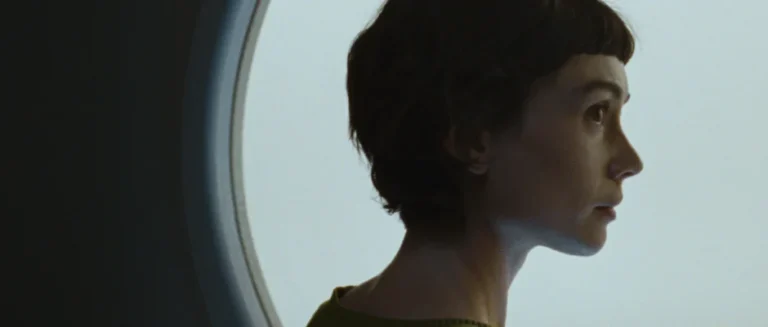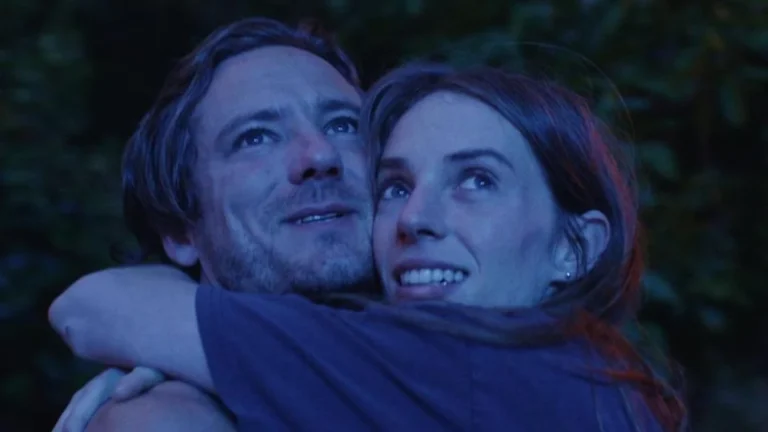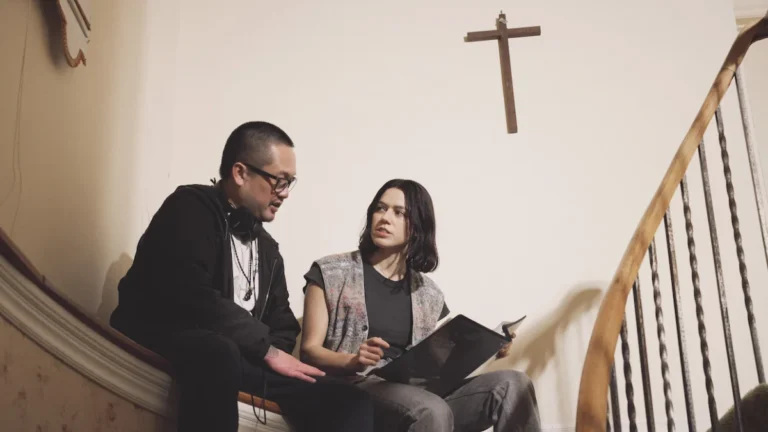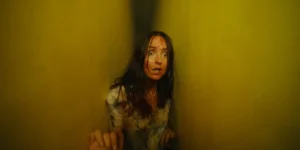




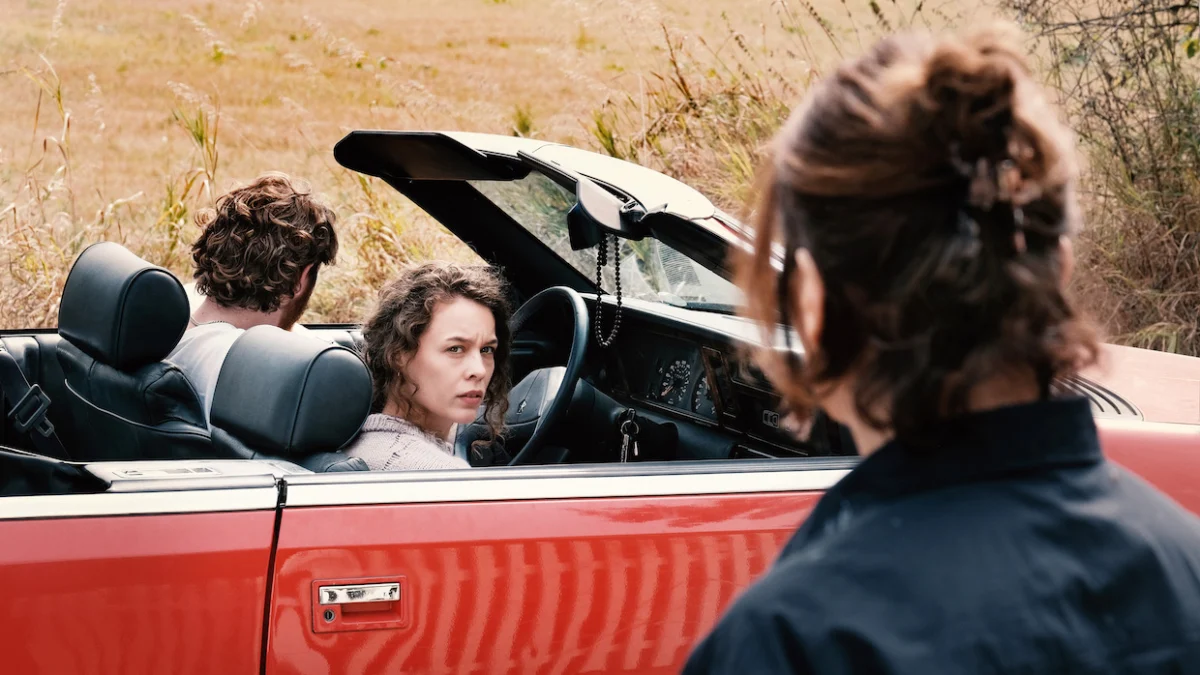
The latest feature from acclaimed German director Christian Petzold, Miroirs No. 3, marks a significant evolution in the filmmaker’s career-long exploration of memory, trauma, and the ghostly remnants of German history. Starring Paula Beer and Barbara Auer, the film centers on Laura (Beer), a concert pianist from Berlin who survives a catastrophic car accident in the rural countryside. Following the death of her boyfriend in the crash, Laura is taken in and nursed by Betty (Auer), a reclusive woman living in a house that seems to exist on the periphery of reality. As the narrative unfolds, the relationship between the two women shifts from one of caregiver and patient to a complex, psychological entanglement fueled by mutual loss and unspoken needs.
The film, which has recently seen its theatrical rollout through 1-2 Special, arrives at a time when Petzold’s international standing is at an all-time high. A central figure of the "Berlin School" of filmmaking, Petzold has spent decades refining a style characterized by precision, social observation, and a preoccupation with "phantom" characters who are caught between past and present. With Miroirs No. 3, he moves further into the realm of the fantastical, utilizing the structures of fairy tales to navigate the terrain of contemporary grief.
The Cinematic Fairy Tale and the Looking Glass Motif
In Miroirs No. 3, Petzold leans heavily into what he describes as a cinematic "Alice in Wonderland" framework. This is not the first time the director has utilized folklore as a narrative scaffolding; his 2020 film Undine reimagined the myth of the water nymph in modern-day Berlin. However, Miroirs No. 3 utilizes the mirror—and the concept of the "looking glass"—as its primary metaphorical device.
According to Petzold, the use of fantastical elements is a response to the perceived lack of romantic or mystical spaces in modern German reality. Unlike the iconic locations of the French New Wave, such as the Jardin du Luxembourg, Petzold suggests that German cinema must often "create" its own mystical atmospheres from mundane or even "ugly" surroundings. In the film, the transition into the "looking glass" occurs through the car accident, which serves as a threshold between the world of Berlin’s urban logic and a rural purgatory where the laws of narrative expectation are subverted.
The director incorporates subtle nods to classic fairy tales throughout the film. A lost shoe at the site of the car crash evokes Cinderella, while the red convertible driven by the characters serves as a visual citation of films like Jean-Luc Godard’s Pierrot le Fou or Mike Nichols’ The Graduate. For Petzold, these are not mere Easter eggs for cinephiles but rather tools to proclaim that the characters have entered a world where the structures of myth have begun to seep into their reality.
The Morality of the Lens: Collaboration with Hans Fromm
A defining feature of Petzold’s filmography is his long-term collaboration with cinematographer Hans Fromm. Their partnership, which spans over two decades, is built on a shared philosophy regarding the "morality" of camera placement—a concept Petzold attributes to Nouvelle Vague masters Éric Rohmer and Jacques Rivette.
The production of Miroirs No. 3 adhered to Petzold’s rigorous rehearsal process, which eschews the use of cameras until the very end of the day. Actors typically rehearse in costume for several hours without any technical interference, allowing the performances to dictate the space. Only after this process does Fromm observe the final rehearsal to determine the camera’s position.
This approach is fundamentally opposed to the "Direct Cinema" or handheld styles that rose to prominence in the 1960s. Petzold maintains that a handheld camera lacks a moral position because it merely "follows" the action rather than observing it from a calculated perspective. In Miroirs No. 3, the camera placement was specifically designed to reflect themes of surveillance and the "intruder" status of the viewer. This is particularly evident in the way the film captures the house where much of the action takes place, using frames within frames—doors and windows—to suggest a space that is both open to the elements and fraught with hidden observations.
The Construction of Failure: Set Design and Abandoned Places
One of the most striking revelations regarding the production of Miroirs No. 3 is that the central location—Betty’s house—was built entirely from scratch. Despite Petzold’s reputation for realism, he opted to construct the porch, the piano room, and even the surrounding white fences to fulfill a specific thematic vision.
Petzold posits that cinema has an inherent affinity for abandoned places because they represent "failed projects." In his view, Betty’s house was intended to be a project of transparency and familial openness—a "refreshing" of German domesticity that ultimately met with defeat. The house is filled with broken objects: a malfunctioning dishwasher, a ruined bicycle, and a broken fence. These physical markers of decay serve as mirrors for the "broken souls" of the characters inhabiting the space.
The architectural design of the set stands in stark contrast to traditional German domestic architecture, which Petzold describes as "cave-like," with porches hidden at the back and doors firmly closed to the outside world. By creating a house with a porch facing the street and curtains that allow the wind to pass through the entire structure, Petzold visualizes a desire for connection that has been thwarted by tragedy.

Musical Citations and the Working Class Narrative
Music plays a pivotal role in the emotional architecture of the film, specifically the Frankie Valli and The Four Seasons song "The Night." Petzold’s inclusion of the track was inspired by his admiration for Michael Cimino’s 1978 masterpiece, The Deer Hunter.
Petzold views The Deer Hunter as a seminal text on the American working class and the way capitalism in crisis funnels domestic energy into foreign wars. He draws a direct line between the final scene of Cimino’s film—where the traumatized characters gather to eat eggs and drink coffee—and the final scene of Miroirs No. 3. For Petzold, these moments of domestic ritual represent the choice to live on despite overwhelming trauma.
The director’s discovery of "The Night" occurred during his time on a film festival jury in Seville, where he viewed Miguel Gomes’ The Tsuga Diaries (2021). The song, which features a distinct energy compared to Valli’s more famous "Can’t Take My Eyes Off You," became the sonic anchor for the film’s exploration of lost social spaces and the longing for communal life that intensified during the global pandemic.
Revisions and Reshoots: The Agency of the Actor
The production of Miroirs No. 3 also highlights the collaborative and sometimes self-correcting nature of Petzold’s creative process. Following the completion of the initial shoot, Petzold realized that the film’s ending—which he had previously considered his best writing—was fundamentally flawed.
The realization came after interventions from lead actors Paula Beer and Enno Trebs, as well as longtime editor Bettina Böhler. The original script concluded with Laura deciding to stay with Betty’s family forever, essentially assuming the role of a surrogate daughter. The actors argued that this conclusion felt unearned and regressive for the character.
Despite the initial blow to his ego, Petzold eventually agreed. The production undertook a one-day reshoot of the final scene at a cost of approximately 20,000 Euros. Because the reshoot took place months later, Paula Beer was eight months pregnant at the time. Petzold noted that the physical changes in Beer actually enhanced the scene, providing a visual metaphor for her character’s transition into a self-actualized adult who chooses to leave the "family" structure to pursue her own life.
Chronology of the Petzold Troupe and Future Prospects
The casting of Barbara Auer in Miroirs No. 3 represents a significant reunion for Petzold. Auer previously starred in Petzold’s 2000 film The State I Am In, a cornerstone of the Berlin School that followed former Red Army Faction members living in hiding. Petzold views Auer’s role in Miroirs No. 3 as a spiritual companion to her character from 25 years ago. While the earlier film dealt with a mother trying to protect a daughter in an underground life, the new film features a woman grappling with the loss of a daughter and the attempt to forge a new maternal bond.
This continuity of casting is a hallmark of Petzold’s method. He is currently preparing a new project with Auer for the summer of 2024 and has revealed plans for a major collaboration involving both Paula Beer and his previous longtime muse, Nina Hoss.
The upcoming project, which Petzold expects to shoot in approximately two years, is set within the world of a failing German theater troupe. The narrative will follow an ensemble facing the closure of their theater due to corporate acquisition. Their final performance will be Anton Chekhov’s The Cherry Orchard, with Hoss and Beer playing rival members of the group. Petzold describes the project as a "Chekhovian conflict" that explores the bravery that emerges when people have nothing left to lose.
Broader Implications and Critical Reception
The release of Miroirs No. 3 further solidifies Christian Petzold’s role as a chronicler of the European psyche. By weaving together high-culture references—from Chopin and Chekhov to Hitchcock and Murnau—with pop culture artifacts and fairy tale tropes, Petzold continues to challenge the boundaries of contemporary realism.
The film’s success on the festival circuit and its sold-out retrospectives at venues like Film at Lincoln Center suggest a growing appetite for "slow cinema" that prioritizes thematic depth and formal precision over traditional plot mechanics. As Petzold enters his mid-60s, his prolific output—with four scripts currently in various stages of development—indicates a filmmaker at the height of his powers, increasingly focused on the intersection of art, labor, and the enduring necessity of human connection in a fractured world.