


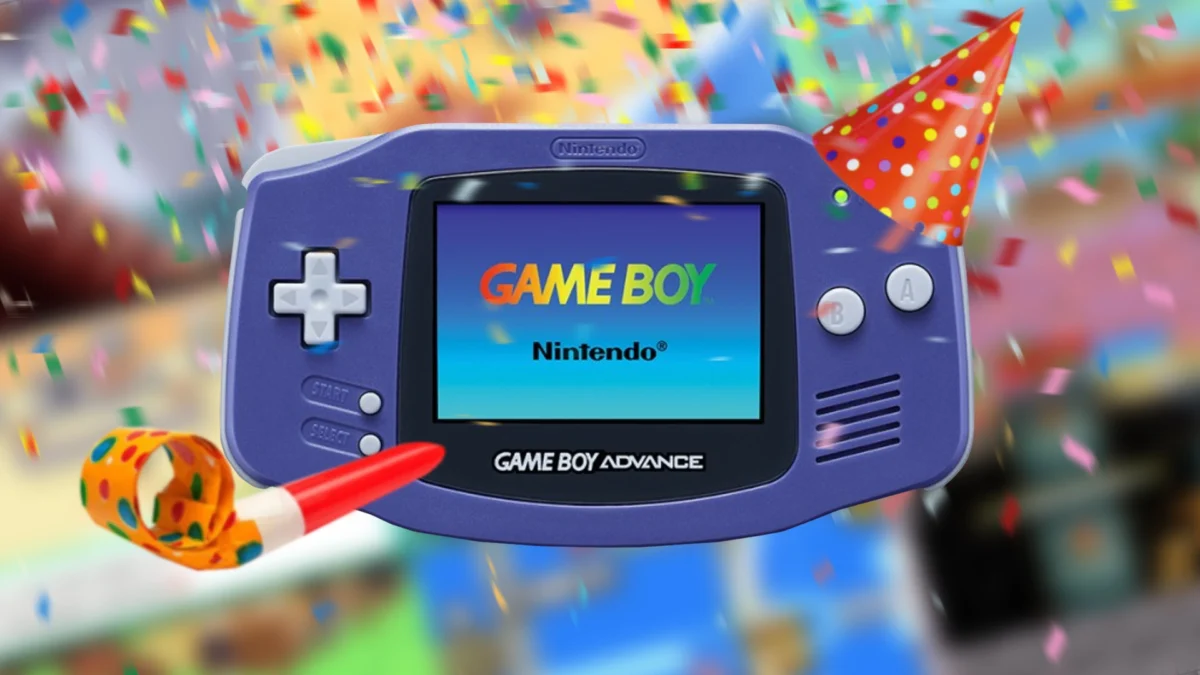
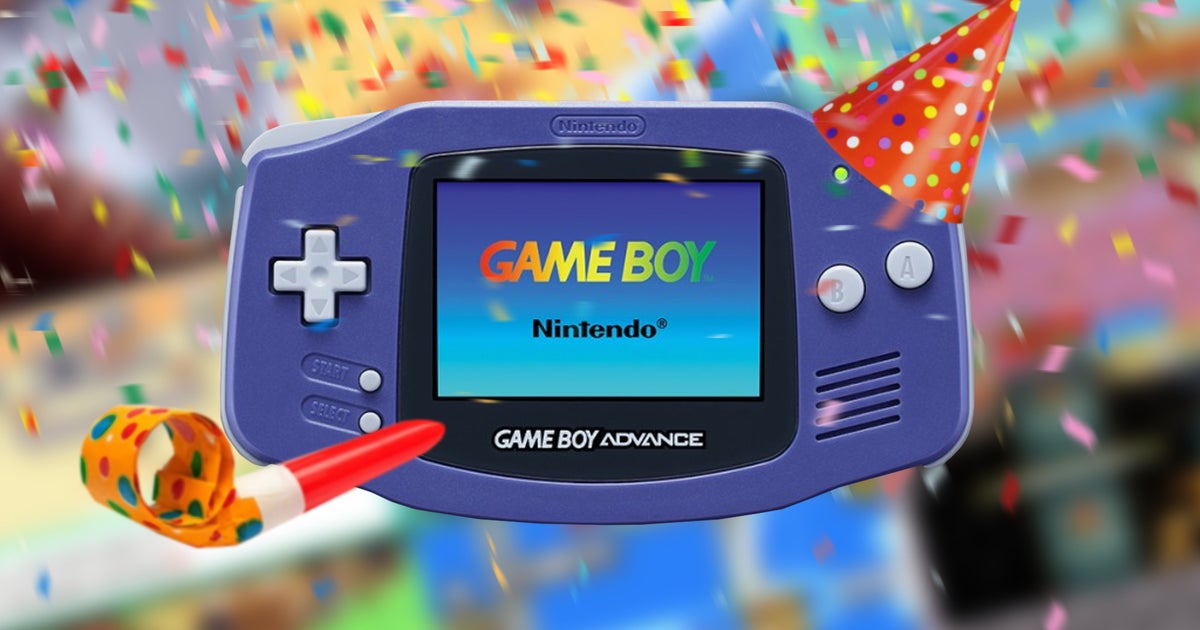
The Game Boy Advance (GBA) has reached its 25th anniversary, marking a quarter-century since Nintendo’s 32-bit handheld first redefined the parameters of portable entertainment. Launched in Japan on March 21, 2001, and subsequently released in North America and Europe in June of the same year, the console served as the direct successor to the Game Boy Color. Over its lifespan, the GBA would go on to sell 81.51 million units worldwide, solidifying its position as a pillar of gaming history. Today, the platform’s legacy continues through digital preservation on the Nintendo Switch Online + Expansion Pack service, where a curated selection of its most influential titles remains accessible to a new generation of players.
A Technological Leap: From 8-Bit Roots to 32-Bit Power
The transition from the Game Boy Color to the Game Boy Advance represented one of the most significant technological leaps in handheld history. While the original Game Boy family relied on 8-bit architecture, the GBA utilized a 32-bit ARM7TDMI RISC processor clocked at 16.78 MHz. This allowed for a level of graphical fidelity and audio complexity previously reserved for home consoles like the Super Nintendo Entertainment System (SNES).
Despite its 32-bit capabilities, the GBA became renowned as the ultimate destination for high-quality 2D sprite work. Its screen resolution of 240×160 pixels provided a wider aspect ratio than its predecessors, enabling more expansive level designs and cinematic storytelling. However, the initial model faced criticism for its lack of an internal light source, a hardware limitation that made games difficult to view in low-light environments. This issue was famously illustrated by launch titles such as Castlevania: Circle of the Moon, which featured detailed but dark color palettes. Nintendo eventually addressed these concerns with the 2003 release of the Game Boy Advance SP, which introduced a front-lit (and later back-lit) clamshell design, and the 2005 Game Boy Micro.

The Evolution of Core Franchises and the Birth of New Series
The GBA library is characterized by its dual role as a repository for enhanced SNES ports and a laboratory for experimental new intellectual properties. Nintendo’s strategy involved bringing classic experiences to a portable format while tasking internal and external developers with creating bespoke adventures for the new hardware.
The Legend of Zelda: Collaborative Innovation
The GBA era saw The Legend of Zelda franchise explore new mechanical territory. The Legend of Zelda: Four Swords, which was originally bundled with the GBA port of A Link to the Past, introduced a multiplayer-centric approach to the series. It required the use of Link Cables to connect multiple consoles, fostering a unique cooperative and competitive environment.

Later, Capcom’s development arm, Flagship, produced The Legend of Zelda: The Minish Cap. This title is often cited by historians for its vibrant art style, heavily influenced by The Wind Waker, and its innovative shrinking mechanic. By allowing the protagonist to navigate the world at a microscopic scale, the game offered a fresh perspective on environmental puzzle-solving, a hallmark of the series that would influence later entries.
The RPG Renaissance: Golden Sun and Mario & Luigi
The GBA served as a fertile ground for role-playing games. Camelot Software Planning developed Golden Sun, a title that pushed the hardware’s graphical capabilities with pseudo-3D battle effects and a complex "Djinn" system for character customization. The game’s emphasis on using magic—known as "Psynergy"—to solve overworld puzzles distinguished it from the more static RPGs of the era.

Simultaneously, Nintendo explored comedic storytelling with Mario & Luigi: Superstar Saga. Developed by AlphaDream, the game introduced a "dual-control" mechanic where players managed both Mario and Luigi simultaneously using different buttons. Its emphasis on timing-based combat and slapstick humor provided a stark contrast to the more traditional Paper Mario and Super Mario RPG titles.
Pokémon’s Third Generation and the Remake Strategy
The GBA was the home of Pokémon’s third generation, beginning with Pokémon Ruby and Sapphire in 2002. These titles introduced "Abilities" and "Natures," mechanics that remain foundational to the franchise’s competitive scene today. The era also saw the debut of Pokémon FireRed and LeafGreen, the first official remakes in the series. This established a release pattern that The Pokémon Company continues to follow, bridging the gap between nostalgic audiences and modern hardware.

Innovation Through Specialized Hardware
One of the most distinct aspects of the GBA era was the use of specialized cartridges that contained hardware enhancements. This allowed developers to bypass the console’s standard limitations to provide unique sensory experiences.
WarioWare Twisted! is a primary example of this ingenuity. The cartridge featured a built-in piezoelectric gyroscope and a rumble motor. Players moved the entire console to interact with "micro-games," a precursor to the motion control craze that would later define the Wii era. Similarly, Game Freak’s Drill Dozer utilized a built-in rumble pack to simulate the tactile sensation of the protagonist’s mechanical drill. These experimental titles demonstrated Nintendo’s willingness to treat the handheld not just as a screen, but as a physical interface.

Market Performance and Chronology of the GBA Era
To understand the GBA’s impact, one must look at the timeline of its dominance and its eventual transition to the Nintendo DS:
- March 2001: Launch in Japan. The system sells nearly 500,000 units in its first week.
- June 2001: Western launch. The GBA becomes the fastest-selling console in US history at the time.
- February 2003: Release of the GBA SP. This iteration significantly boosts sales, eventually accounting for nearly half of all GBA units sold.
- September 2004: Launch of Pokémon Emerald in Japan, which would go on to sell over 6 million copies.
- November 2004: Launch of the Nintendo DS. While the DS featured a GBA cartridge slot, it signaled the beginning of the end for the dedicated GBA line.
- September 2005: Launch of the Game Boy Micro, a miniaturized version of the console aimed at a niche, fashion-conscious market.
By the time production ceased around 2008, the GBA had hosted over 1,500 games. Its top-selling titles, Pokémon Ruby and Sapphire, reached a combined 16.27 million units, followed by Pokémon FireRed and LeafGreen at 12 million.

Contemporary Preservation and the Role of Nintendo Switch Online
In the current gaming landscape, the GBA is experiencing a resurgence through digital subscription models. Nintendo’s decision to include GBA titles in the Switch Online + Expansion Pack tier reflects a broader industry trend toward "Games as a Service" (GaaS) for legacy content. This move has been met with positive reactions from industry analysts, who view it as a strategic method to maintain the value of Nintendo’s intellectual property without the need for individual digital purchases.
However, the preservation effort remains incomplete. Many highly-regarded titles, such as Pokémon Emerald, WarioWare Twisted!, and Drill Dozer, remain unavailable on modern platforms. This has led to a surge in the secondary market, with authentic physical cartridges often commanding prices exceeding $200. Collectors and preservationists argue that while the Switch Online service is a positive step, the lack of a permanent purchase option leaves the long-term accessibility of these games in question.

Broader Impact and Implications for the Handheld Market
The Game Boy Advance was more than a commercial success; it was a bridge between two eras of gaming. It took the artisanal pixel art of the 1990s and refined it with 21st-century processing power. It also proved that handheld devices could be viable platforms for deep, narrative-driven experiences, rather than just "lite" versions of home console games.
The system’s influence is still visible in the indie gaming sector today. The "GBA aesthetic"—characterized by vibrant colors, expressive sprites, and a 240p-style resolution—is frequently emulated by modern developers seeking to capture the specific nostalgia of the early 2000s. Furthermore, the GBA’s emphasis on local connectivity and "Link Cable" culture laid the groundwork for the social gaming features that would eventually evolve into the local wireless and online play seen on the Nintendo Switch.

As the industry reflects on 25 years of the Game Boy Advance, it is clear that the machine’s legacy is defined not just by its sales figures, but by its library. From the rhythmic precision of Rhythm Tengoku to the epic scope of Golden Sun, the GBA provided a portable window into worlds that felt far larger than the plastic shell that contained them. For many, it remains the definitive handheld console, representing a perfect balance of technological capability and creative risk-taking.