



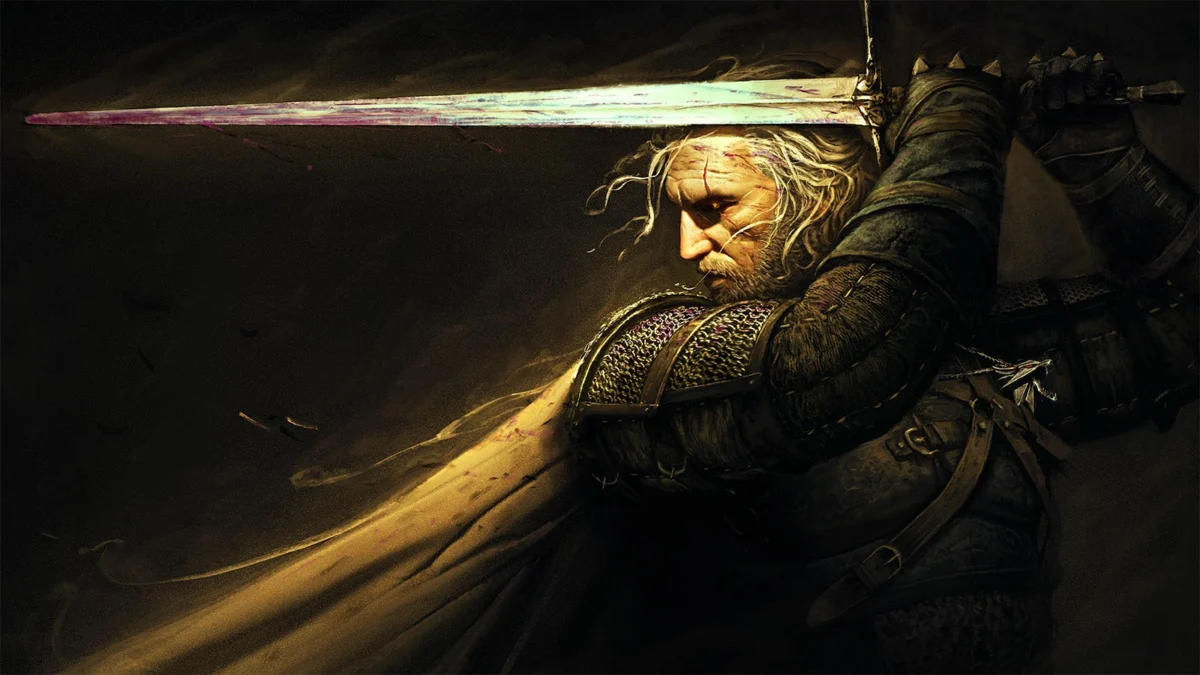
CD Projekt Red (CDPR), the prominent Polish video game developer behind the critically acclaimed Witcher series and Cyberpunk 2077, has provided new insights into its upcoming production schedule and marketing philosophy during its latest fiscal year earnings call. While the studio remains officially tight-lipped regarding specific unannounced projects, leadership comments suggest that the company is preparing for significant content releases in the near future to meet ambitious internal financial targets. Central to the discussion was the possibility of new content for The Witcher 3: Wild Hunt and the studio’s explicit preference for traditional, long-form marketing campaigns over the "shadow drop" release model that has gained popularity elsewhere in the industry.
Strategic Marketing and the Rejection of Shadow Drops
During the Q&A session of the earnings call, joint CEO Michał Nowakowski was questioned by investors regarding the studio’s approach to marketing upcoming content. The inquiry specifically asked whether the company would consider a "shadow drop"—a surprise release with little to no prior announcement—or if it would stick to a more conventional promotional window spanning weeks or months.
Nowakowski acknowledged that while "everything is a possibility" in a hypothetical sense, the studio’s established preference leans heavily toward sustained visibility. "Our experience and our preference, given the types of games we make, is for longer-term marketing campaigns," Nowakowski stated. "We think they tend to work a little bit better than, say, a live drop at some conference or event. So I’d point in that direction."
This stance marks a clear strategic boundary for CDPR. The "shadow drop" method has seen notable success recently with titles like Tango Gameworks’ Hi-Fi Rush, which generated massive viral momentum through an instantaneous launch. However, CDPR’s portfolio consists of massive, narrative-driven RPGs that typically require extensive "runway" time to build pre-order momentum and educate the audience on complex gameplay mechanics. For a studio that relies on massive launch-day figures to recoup high development costs, a multi-month marketing cycle remains the safer and more profitable path.
The 527 Million Zloty Gap: Financial Incentives and New Content
The speculation surrounding a potential secret expansion or significant update for The Witcher 3 is driven by more than just fan hope; it is rooted in CDPR’s own financial reporting. Chief Financial Officer Piotr Nielubowicz highlighted the company’s "incentive program," a performance-based bonus structure tied to specific profit goals.
According to Nielubowicz, the company has completed three out of the four years of its current incentive cycle and currently stands at 74 percent of its target. To reach the full goal and trigger the associated bonuses, the studio must earn an additional 527 million zloty (approximately £107 million or $132 million) within the current fiscal year.
Analysts have noted that reaching such a high figure solely through "back catalogue" sales of decade-old games and the maturing Cyberpunk 2077 would be statistically improbable without a new commercial catalyst. Nielubowicz himself admitted, "We continue to believe that with strong back-catalogue sales performance this year and the new content we’re planning to release, we have a fair chance of reaching our target." The mention of "new content" that has not yet been fully detailed to the public has led many to believe that a significant product launch is imminent.
The Role of Fool’s Theory and Unannounced Projects
A recurring point of interest during the call was the status of "Project Canis Majoris," which was previously revealed to be a remake of the original The Witcher (2007) being developed in Unreal Engine 5 by the external studio Fool’s Theory. When asked if this project would contribute to this year’s revenue, Nielubowicz remained evasive but promising. "In terms of the project from Fool’s Theory—as was said, we will come back with more news later this year," he noted.
However, the studio disclosed that it currently has four unannounced projects that have reached a "capitalized" stage of development. In accounting terms, capitalization occurs when a project is far enough along that its costs are recorded as assets on the balance sheet rather than immediate expenses—a sign that these projects are moving toward completion. Of these four projects, three are categorized as gaming-related, while one is a non-gaming venture (potentially related to the company’s transmedia efforts in film or television).
The State of Project Polaris: The Witcher 4
While the rumors of a Witcher 3 expansion circulate, the bulk of CDPR’s internal workforce has shifted toward "Project Polaris," the first entry in a new Witcher trilogy. The earnings report confirmed that the development team for Polaris has grown to 499 members, making it the largest active project within the company.
Despite the massive headcount, the studio reiterated that fans should not expect a release in the immediate future. Historical data and previous executive statements suggest a 2027 release window at the earliest. The project is being built on Unreal Engine 5 as part of a strategic partnership with Epic Games, moving away from the studio’s proprietary REDengine. A glimpse of this new technology was provided during an Epic Games showcase last summer, and the studio confirmed that another update on the technical progress of the game is expected later this year.
Bridging the Generational Gap via Xbox Game Pass
In a move that surprised some industry watchers, The Witcher 3: Wild Hunt recently returned to the Xbox Game Pass library. When asked if this move was intended to prime the pump for new content, Nowakowski provided a nuanced explanation centered on brand longevity.
"The game has been out there for almost 11 years—11 years in May this year—and for most of that time we’ve been selling the complete version," Nowakowski explained. He noted that the inclusion on Game Pass is intended to "bridge the generational gap." By lowering the barrier to entry, CDPR hopes to introduce a younger demographic of players to the franchise before the eventual launch of The Witcher 4. This "onboarding" strategy ensures that the brand remains culturally relevant during the long fallow periods between major releases.
Chronology of The Witcher Franchise and CDPR Milestones
To understand the current pressure on CD Projekt Red, one must look at the timeline of their major releases and the evolving nature of their development cycles:
- October 2007: The Witcher launches, establishing CDPR as a serious RPG developer.
- May 2011: The Witcher 2: Assassins of Kings releases to critical acclaim, showcasing the REDengine.
- May 2015: The Witcher 3: Wild Hunt launches, becoming one of the best-selling RPGs of all time.
- 2015–2016: Release of Hearts of Stone and Blood and Wine expansions, setting the industry gold standard for DLC.
- December 2020: Cyberpunk 2077 launches; technical issues lead to a multi-year "redemption" period.
- December 2022: The Witcher 3 Next-Gen Update brings the title to PS5 and Xbox Series X|S.
- September 2023: Cyberpunk 2077: Phantom Liberty releases, successfully rehabilitating the studio’s reputation.
- May 2025: The 10th anniversary of The Witcher 3 (and 11th year since its announcement phase), a potential window for major announcements.
Analysis: The Probability of a 2024 Release
Given the data provided in the earnings call, several conclusions can be drawn regarding the studio’s immediate future. The requirement of 527 million zloty strongly suggests that CDPR is not merely relying on "business as usual." While the studio is currently benefiting from the success of the Cyberpunk: Edgerunners anime and the Phantom Liberty expansion, those revenue streams are beginning to stabilize.
The "new content" mentioned by Nielubowicz could take several forms. While a full-scale expansion on the level of Blood and Wine seems unlikely this late in the game’s life cycle, a "Director’s Cut" or a significant "Anniversary Content Pack" (potentially featuring new quests or assets developed in collaboration with Fool’s Theory) would fit the financial profile needed to bridge the revenue gap.
Furthermore, the rejection of shadow drops implies that if a release is planned for the second half of 2024 or early 2025, an announcement must occur soon. The month of May, marking the game’s anniversary, stands out as the most logical platform for such a reveal.
Broader Industry Implications
CD Projekt Red’s current trajectory reflects a broader trend in the AAA gaming industry: the move toward "evergreen" titles. By continuing to update and potentially expand The Witcher 3 a decade after its release, CDPR is treating the game as a platform rather than a static product. This strategy allows the studio to maintain a massive, engaged player base during the 5-to-7-year development cycles required for modern blockbusters like Project Polaris or the upcoming Cyberpunk sequel, Project Orion.
As the company prepares to share more news later this year, the focus remains on whether CDPR can successfully navigate its ambitious financial targets while maintaining the high quality-bar that fans have come to expect. With nearly 500 developers working on the future of the franchise and a potential surprise for the current generation of players, the "Witcher" saga appears far from over.