



The electrifying energy envisioned by BTS leader RM — "I need the whole stadium to jump. Put your phone down, let’s get all the fun" — transcended the typical arena, enveloping the entirety of Seoul’s iconic Gwanghwamun Square. This historic landmark, usually reserved for solemn national events and cultural displays, was transformed into a vibrant stage for the groundbreaking K-pop septet’s highly anticipated return. On Saturday night, the seven members of BTS – RM, Jin, Suga, J-hope, Jimin, V, and Jungkook – staged their first group live performance in over three years, an event dubbed BTS The Comeback Live | Arirang, simultaneously broadcast live to a global audience on Netflix. This monumental concert not only celebrated the release of their fifth studio album, Arirang, but also heralded a new chapter for the group following a period of individual pursuits and mandatory military service, cementing their unparalleled status as cultural ambassadors and pioneers in the global entertainment landscape.
A Return Forged in Tradition and Innovation
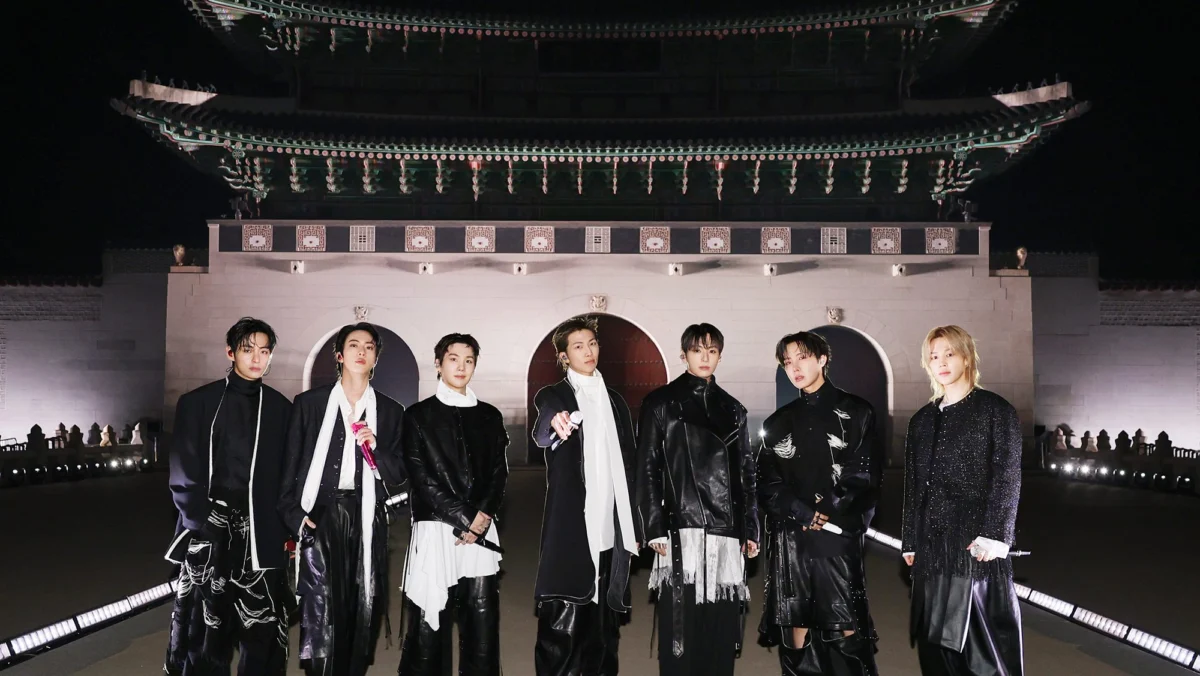
The much-anticipated concert commenced with a breathtaking sweeping shot of Seoul’s majestic Joseon-era Gyeongbokgung Palace, a visual prelude that underscored the deep historical roots anchoring BTS’s latest artistic endeavor. As the camera panned, the seven figures of BTS emerged, standing resolutely before the ancient palace, a potent symbol of Korean heritage. "Hello, Seoul," RM greeted the vast crowd, his voice resonating through the square. "We’re back." This declaration, simple yet profound, signaled not just a return to the stage but a reassertion of their collective identity and enduring connection with their homeland.
The performance immediately launched into "Body to Body," a track from the new album, which culminated in a visually stunning segment featuring performers in traditional Korean hanbok, playing the timeless Korean folk song "Arirang." This seamless fusion of contemporary K-pop and traditional Korean artistry set the tone for an evening deeply steeped in cultural pride. The group then transitioned into new tracks "Hooligan" and "2.0," showcasing their evolving sound before formally reintroducing themselves to the ecstatic audience. Jimin, 30, conveyed the group’s palpable emotion, stating, "We are finally here, and we are seeing you again. The fact that I’m speaking here, I am so moved." The setlist continued to weave a tapestry of their career, blending non-Arirang hits like the infectious "Butter" and the powerful "MIC Drop" with new album tracks such as "Aliens," "FYA," the new single "Swim," "Like Animals," and "Normal." After the rousing rendition of "Normal," J-hope, 32, energized the crowd with the declaration, "BTS 2.0 is just getting started," while Jin, the eldest at 33, expressed heartfelt gratitude: "Thank you for waiting, ARMY."
RM’s Resilient Presence Amidst Injury
A notable aspect of the comeback performance was the courageous participation of RM, whose presence was slightly modified due to an ankle injury sustained during rehearsals. BigHit Music, the band’s label, had announced the injury on Friday, detailing a "serious-sounding ankle injury" suffered by RM while practicing with his bandmates on Thursday. Despite the setback, RM’s commitment to the performance remained unwavering. Throughout the show, he was frequently on his feet, engaging with the audience and his fellow members, but primarily utilized a stool at the front of the stage as a base, minimizing strain on his injured ankle.
BigHit Music’s statement conveyed the gravity of the situation while reassuring fans of RM’s determination: "Although there will be limitations to his performance, RM will participate on stage to the extent possible and hopes to connect with ARMY and the audience. As many have waited a long time for this performance, he will do his utmost to deliver his best." This resilience underscored the group’s profound dedication to their fans, known collectively as ARMY, who have patiently awaited their return. RM’s modified participation was a testament to his professionalism and the collective spirit of BTS, demonstrating that even faced with physical limitations, the show’s emotional impact and artistic integrity remained paramount.
The Arirang Album: A Deep Dive into Korean Identity
The album Arirang marks BTS’s first full-group release in nearly four years, serving as the definitive statement of their return to the global stage. This hiatus saw individual members exploring solo music careers and fulfilling their mandatory military service, a rite of passage for all able-bodied South Korean men. The completion of these duties, staggered over the last year, fueled immense anticipation among ARMY worldwide, eager for the septet’s reunion.
The album’s title and thematic core are deeply rooted in Korean culture and history. Arirang pays homage to the eponymous folk song, a melody of profound national significance often referred to as Korea’s unofficial national anthem. The folk song "Arirang" holds a special place in history as the first Korean song recorded by Korean men with American ethnologist Alice Fletcher in the U.S. in 1896, symbolizing an early cross-cultural exchange. Motifs from this traditional tune are prominently woven into the fabric of the album, notably in the opening track "Body to Body," establishing a resonant connection between past and present.
Another striking element on Arirang is the track "No. 29," a minute-and-38-second recording featuring the resonant tolling of the Divine Bell of King Seongdeok. This ancient bronze bell, cast in 771 AD during the Silla Dynasty, is designated as South Korea’s National Treasure No. 29. Renowned for its unique, prolonged reverberation, often described as "e-mil-le" (a sound said to echo the crying of a child sacrificed for its casting, though this is folk legend), the bell represents a significant piece of Korean historical and auditory heritage. By incorporating these profound cultural symbols, Arirang sends an unequivocal message: BTS is fiercely proud of its roots. The album is a powerful affirmation that, despite their global reach and unprecedented international success, they remain, at their core, a Korean band, deeply connected to their heritage. This intentional embrace of Korean identity resonates globally, showcasing the richness of their culture to an ever-expanding audience.
Gwanghwamun Square: A Stage of Unprecedented Significance
The selection of Gwanghwamun Square, a site laden with historical and political weight, as the venue for this comeback performance was a deliberate and potent statement. Historically, Gwanghwamun is the main gate and the grand entryway to Gyeongbokgung Palace, the principal royal palace of the Joseon Dynasty. The square itself has been the epicenter of pivotal moments in Korean history, from royal processions to significant national protests and celebrations. Its deep cultural resonance meant that, prior to this event, no pop concert had ever been permitted to be held within its confines.
This unprecedented decision to stage BTS The Comeback Live | Arirang in such a venerated location underscored BTS’s extraordinary national stature. It symbolized not only their return but also their role as contemporary cultural icons who bridge tradition and modernity. The concert was a visual spectacle that blended the ancient majesty of the palace with the futuristic glow of Seoul’s surrounding skyscrapers. The city of Seoul fully embraced the event, offering unparalleled logistical support. Crucially, this included the unprecedented arrangement to utilize the enormous, skyscraper-sized video billboards encircling Gwanghwamun Square as an integral part of the concert experience. Jonathan Mussman, Netflix’s vice president of production for nonfiction and live programming, remarked on the rarity of such a feat, stating, "If we were in Times Square, that’s totally impossible." He added, "We’ve been secretly testing the billboards late at night with tears coming into our eyes, because of how unique and impressive it is." These privately held LED panels, totaling an astounding 50.6 million pixels, were illuminated with original content, transforming the entire urban landscape into an immersive, dynamic stage that stretched far beyond the physical boundaries of the performance area.
Netflix’s Foray into Live Global Entertainment
BTS The Comeback Live | Arirang marked a significant milestone for Netflix as its first-ever live stream of a standalone concert. The global streaming giant recognized the immense potential of partnering with a phenomenon like BTS. Brandon Riegg, Netflix’s vice president of nonfiction sports and series, articulated the platform’s strategic vision in a press briefing before the show: "It was very clear from the start that this opportunity was one we could not pass up." He elaborated on Netflix’s burgeoning interest in live events, stating, "We view these live events as an opportunity to reach fans and members around the world in a way that is becoming increasingly tough to find: singular events that really pull people together." Riegg further emphasized the magnitude of the collaboration, declaring, "It just doesn’t get any bigger than BTS when speaking about the live stream. I would venture to guess this might be the biggest thing this year that we see on Netflix in terms of our live ambition."
The production itself was a logistical marvel, involving a jaw-dropping 23-camera setup designed to capture every nuance of the live experience for fans across the globe. Directing this ambitious live broadcast was Hamish Hamilton, a seasoned veteran of live television known for his work on multiple Super Bowl halftime shows, including the recent one featuring global icon Bad Bunny. Hamilton expressed his honor, stating, "BTS is the greatest band in the world, so it’s a huge honor to be asked to direct this live show in such an iconic location." His directorial philosophy centered on immersive viewing: "Every decision we have made in terms of camera approach, stage design and production has been built around one question: how do we make the person watching at home feel like they are standing in that square?" Hamilton aimed to strike a balance, incorporating "big sweeping moments that convey the full scale of what is happening in Seoul, and then there are moments of real intimacy where you are right there with the band. The millions watching around the world are every bit as much a part of this night as the people on the ground in Seoul."
Jonathan Mussman further highlighted the unprecedented scale of the undertaking, likening the staging of the concert in a busy public square to a "military takeover" rather than a typical arena show. "When you do this in a stadium, you can completely control the environment and you can take your time setting up," Mussman explained during a press walkthrough. "We’re really pushing the boundaries of what’s possible in the live concert broadcast world." The sheer manpower involved was staggering; while a typical arena rock show, such as Harry Styles’s recent Netflix concert, might require a few hundred crew members, BTS The Comeback Live | Arirang mobilized over 1,000 local and international production professionals, excluding security personnel. Mussman aptly summarized the collaborative effort: "It really takes an army of production veterans — plus BTS Army, of course — to make this happen." Netflix’s venture into live concert streaming with BTS signals a potential shift in how major events are consumed globally, leveraging cutting-edge technology and unparalleled logistical coordination to bridge geographical distances.
Broader Implications and The Road Ahead
The Gwanghwamun Square concert transcends a mere musical performance; it stands as a powerful testament to BTS’s enduring cultural impact and their role as pivotal figures in global cultural exchange. Their return, marked by an album so deeply rooted in Korean heritage and performed in such a historically significant location, reinforces their unique position as trailblazers who have successfully globalized K-pop while remaining authentically Korean. This event serves as a powerful affirmation of their identity and artistic mission.
The meticulous planning and execution, especially the unprecedented collaboration between Hybe, Netflix, and the city of Seoul, set a new benchmark for live entertainment production. It demonstrated the feasibility of transforming urban historical spaces into modern concert venues, opening new possibilities for large-scale public events. Furthermore, the massive global viewership on Netflix underscores the continued, expanding demand for live, communal experiences, even in a fragmented media landscape. This success may well pave the way for more ambitious live streaming ventures from Netflix and other platforms, solidifying the trend of direct-to-fan global broadcasts.
For BTS, this comeback signifies a strategic re-entry into the global spotlight as a united force. After years of individual growth and national service, the group’s collective energy and refined artistry promise an exciting "BTS 2.0" era. The immediate future for the septet includes a series of high-profile engagements in the United States, marking their first performances there in nearly four years. The group is slated to perform at a Spotify event this coming Monday and will make their highly anticipated return to U.S. television later in the week, appearing on two nights of The Tonight Show with Jimmy Fallon. These upcoming appearances are expected to further amplify the momentum generated by their Seoul comeback, re-engaging their vast North American fanbase and introducing their new sound to a broader audience. The Gwanghwamun concert was not just a return; it was a re-declaration of BTS’s global dominance, a celebration of their Korean identity, and a groundbreaking moment for the future of live entertainment.