



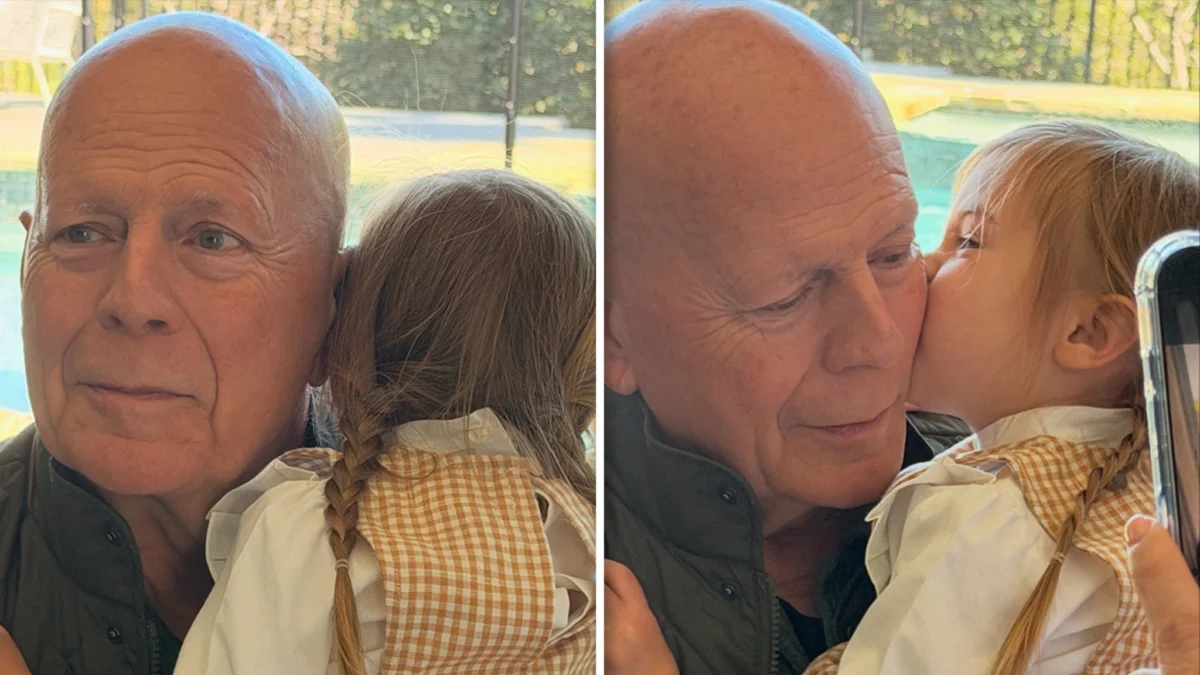
Bruce Willis, the iconic actor celebrated for his formidable presence across decades of cinema, marked his 71st birthday on Thursday, March 20, 2026, with an outpouring of love from his family, most notably a tender tribute shared by his ex-wife, Demi Moore. The touching homage, posted on Instagram, featured poignant photographs of Willis engaging in affectionate moments with his nearly three-year-old granddaughter, Louetta, offering a heartwarming glimpse into the profound intergenerational bonds that sustain the family as Willis navigates his ongoing battle with frontotemporal dementia (FTD). This public display of familial affection resonated deeply with fans and observers worldwide, underscoring the enduring power of love and connection in the face of profound personal challenges.
A Poignant Celebration: Family’s Digital Tributes
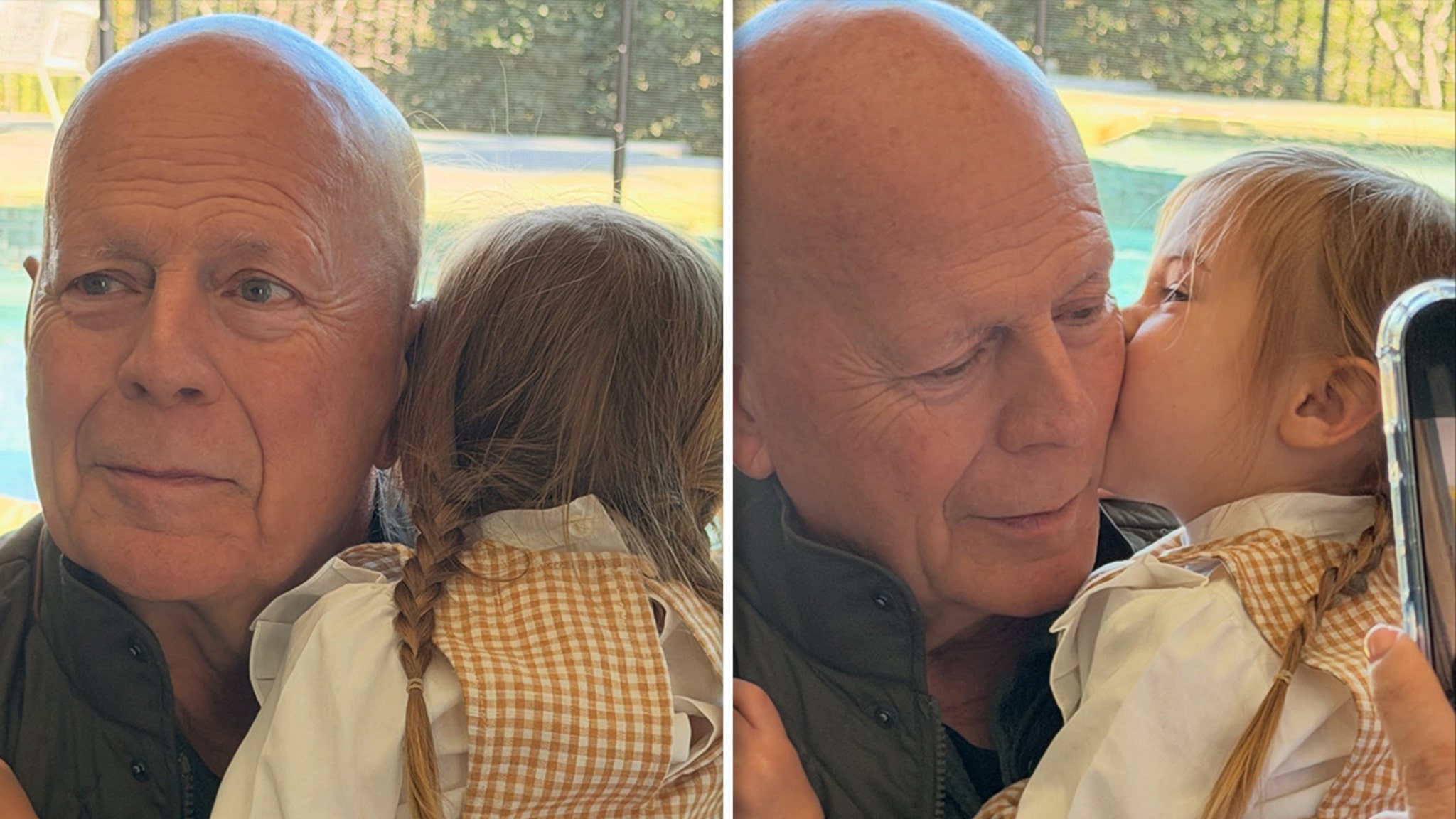
The heart of the birthday celebration, as shared with the public, stemmed from Demi Moore’s Instagram post, which quickly garnered significant attention and an outpouring of well wishes. Moore, who was married to Willis from 1987 to 2000, shared a series of intimate snapshots capturing the essence of family joy. Two of the most moving images depicted Willis in a warm embrace with Louetta, who tenderly planted a kiss on his cheek. Another photo showed the pair sharing a sweet smooch, with Willis and Moore’s oldest daughter, Rumer Willis, surrounding them, embodying the close-knit support system that defines their family dynamic. A fourth photograph captured Willis holding Louetta close to his chest, a gesture of profound tenderness and protection.
Accompanying these heartfelt images, Moore penned a simple yet powerful caption: "All you need is LOVE. Happy birthday, BW! ❤️." This message, evocative of the timeless Beatles lyric, perfectly encapsulated the sentiment of the occasion, emphasizing the paramount importance of love and connection in times of both celebration and challenge. The images, devoid of pretense, offered a rare and precious window into the private life of a beloved public figure, highlighting the universal comfort found in family bonds.
The tributes extended beyond Moore’s post. Rumer Willis, the mother of Louetta and the eldest of Willis’s three daughters with Moore, also took to Instagram to honor her father. Her post featured a collection of images that paid homage to his illustrious career, showcasing some of his most memorable acting roles. Rumer’s accompanying message read, "Happy Birthday Daddio, I wanted to think about you today. Dancing around, being your undeniably charming self. I love you so much." This dual tribute from his ex-wife and daughter painted a picture of a man deeply cherished, not only for his professional achievements but for his personal spirit and enduring role as a patriarch.
The Unconventional Strength of a Blended Family
The public display of affection and unity from Bruce Willis’s family is particularly notable given the unique dynamics of their blended structure. Despite their divorce in 2000, Bruce Willis and Demi Moore have maintained an exceptionally close and supportive relationship, a testament to their enduring respect and shared commitment to their children. This bond became even more apparent following Willis’s health struggles. Moore, along with their three daughters—Rumer (37), Scout (34), and Tallulah (32)—has remained a steadfast presence in Willis’s life, working in concert with his current wife, Emma Heming Willis, and their two young daughters.
This extraordinary family unit has often been lauded as a model of how divorced partners can successfully co-parent and co-support through life’s challenges. Their collective efforts have ensured that Willis receives comprehensive care and remains surrounded by love, creating an environment of stability and affection that is crucial for individuals living with progressive neurological conditions. The public has witnessed their united front through various updates and shared moments, reinforcing the message that family transcends conventional definitions, particularly when faced with adversity. The collaborative approach taken by Moore and Heming Willis, often seen together at family events and sharing joint statements, speaks volumes about their shared dedication to Willis’s well-being and the importance of presenting a strong, unified family presence.
Understanding Frontotemporal Dementia: A Chronology of Health
The backdrop to these heartwarming birthday celebrations is Bruce Willis’s ongoing battle with frontotemporal dementia (FTD). His health journey first came to public light in March 2022 when his family announced his retirement from acting due to a diagnosis of aphasia, a condition affecting language and communication abilities. This initial announcement sent shockwaves through Hollywood and among his global fanbase, as it marked the premature end of a career spanning over four decades.
However, in February 2023, the family provided a more definitive and sobering update, revealing that Willis’s condition had progressed, and he had been formally diagnosed with frontotemporal dementia. FTD is a group of disorders caused by progressive nerve cell loss in the brain’s frontal lobes (behind the forehead) or temporal lobes (behind the ears). These areas of the brain are associated with personality, behavior, and language. Unlike Alzheimer’s disease, which primarily affects memory, FTD often manifests first through changes in personality, behavior, and communication skills.
The symptoms of FTD can vary widely but commonly include:
- Behavioral changes: Loss of empathy, socially inappropriate behavior, impulsivity, apathy, repetitive behaviors, changes in eating habits.
- Language difficulties (Primary Progressive Aphasia): Trouble speaking, understanding speech, reading, or writing. This aligns with Willis’s initial aphasia diagnosis.
- Motor symptoms: In some forms of FTD, individuals may experience problems with movement, balance, or muscle stiffness.
The progression of FTD is relentless, with symptoms worsening over time. It significantly impacts an individual’s ability to engage in daily activities, maintain relationships, and communicate effectively. For a renowned actor whose career relied heavily on expressive communication and complex performances, the diagnosis of FTD represents an especially cruel turn of events. The family’s transparency about his condition has been instrumental in raising awareness for FTD, a less commonly understood form of dementia compared to Alzheimer’s, thereby contributing to broader public education and advocacy efforts. Their updates have provided a human face to a complex neurological disorder, fostering empathy and understanding.
A Storied Career: The Enduring Legacy of Bruce Willis
Before his diagnosis, Bruce Willis had cemented his status as one of Hollywood’s most beloved and bankable stars. His career, spanning from the early 1980s, showcased a remarkable versatility that transcended genres. He first gained widespread recognition for his charming and witty portrayal of private detective David Addison Jr. in the hit television series Moonlighting (1985-1989), which earned him an Emmy Award and a Golden Globe.
However, it was his iconic role as John McClane in the 1988 action film Die Hard that truly launched him into superstardom. The character of the ordinary cop thrust into extraordinary circumstances, delivering one-liners while battling terrorists, redefined the action hero archetype and became synonymous with Willis’s tough-guy persona. The film’s success spawned a highly successful franchise, with Willis reprising the role in four sequels.
Beyond action, Willis demonstrated his dramatic range in critically acclaimed films such as Quentin Tarantino’s Pulp Fiction (1994), where his performance as boxer Butch Coolidge was lauded. He continued to impress with roles in M. Night Shyamalan’s psychological thriller The Sixth Sense (1999), which became a cultural phenomenon, and Terry Gilliam’s dystopian sci-fi 12 Monkeys (1995), for which he received a Golden Globe nomination. His filmography is extensive, including blockbusters like Armageddon (1998), comedies such as Death Becomes Her (1992), and dramas like Nobody’s Fool (1994).
Willis’s distinctive voice also made him a popular choice for voice acting, most notably as the voice of Mikey in the Look Who’s Talking film series. Throughout his career, he was celebrated for his unique blend of charisma, vulnerability, and gritty determination, earning him a star on the Hollywood Walk of Fame and a reputation as a genuine cinematic icon. The premature end of such a prolific and impactful career due to illness has undoubtedly left a void in the film industry and among his legion of fans, making the family’s shared moments all the more precious as they honor the man behind the legendary roles. His legacy is not just in the films he made, but in the indelible mark he left on popular culture and the hearts of audiences worldwide.
The Power of Intergenerational Bonds in Challenging Times
The images of Bruce Willis with his granddaughter Louetta carry a profound significance, particularly in the context of his FTD diagnosis. Intergenerational relationships, especially those between grandparents and grandchildren, are known to offer immense emotional and psychological benefits to both parties. For grandparents, these bonds can provide a renewed sense of purpose, joy, and a connection to the future. For grandchildren, they offer a source of unconditional love, wisdom, and a link to their family history.
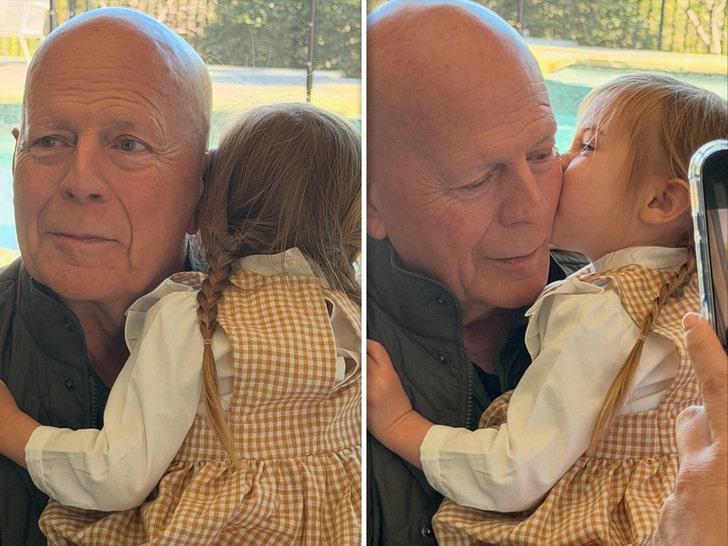
In situations where a grandparent is battling a neurodegenerative disease like FTD, these interactions become even more vital. While the ability to communicate verbally or engage in complex activities may diminish, the capacity for emotional connection and sensory comfort often remains. Louetta’s innocent affection—her hugs, kisses, and close presence—likely provides immense comfort and moments of pure joy for Willis. These interactions transcend the limitations imposed by the illness, speaking a universal language of love that requires no words. For the family, witnessing these moments can be incredibly therapeutic, serving as a reminder of the enduring spirit and capacity for love that persists despite the challenges of the disease. They create new, cherished memories that will last a lifetime for Louetta and her family, even if Bruce’s cognitive abilities are impaired. The simplicity and purity of a child’s love can often cut through the fog of illness, bringing light and warmth to even the most difficult days.
Public Awareness and Advocacy: A Celebrity’s Impact
The Willis family’s consistent and open communication about Bruce’s health journey has had a significant impact on public awareness regarding frontotemporal dementia. By sharing their personal struggles, they have brought a relatively lesser-known form of dementia into the global spotlight, prompting conversations and encouraging greater understanding. This transparency has helped to destigmatize FTD, showing that it can affect anyone, regardless of their public status.
Their advocacy extends beyond mere disclosure. The family has actively supported and highlighted organizations dedicated to FTD research and patient support, such as the Association for Frontotemporal Degeneration (AFTD). Their public statements often include calls for greater research funding and support services for families coping with the disease. When a figure of Bruce Willis’s stature is affected by such an illness, it elevates the condition’s visibility exponentially, potentially leading to increased donations for research, better diagnostic tools, and improved care strategies. The human story shared by the Willis family resonates deeply, fostering empathy and a collective desire to contribute to finding cures and providing comfort to those affected. This powerful platform, leveraged with grace and dignity, serves as a testament to their commitment to making a positive difference for others facing similar battles.
The Role of Social Media in Modern Celebrity Narratives
In the age of digital connectivity, social media platforms have become integral to how celebrities interact with their audience and manage their public image. Demi Moore and Rumer Willis’s decision to share these intimate birthday moments on Instagram exemplifies this trend. Unlike traditional media outlets, social media allows for a direct, unfiltered glimpse into the lives of public figures, fostering a sense of authenticity and connection with fans.
For the Willis family, Instagram has served as a crucial channel for communicating updates about Bruce’s health, celebrating family milestones, and sharing personal reflections. This approach allows them to control the narrative, offering carefully chosen glimpses into their private world while maintaining a degree of privacy. The immediate and widespread reaction to their posts—thousands of comments, likes, and shares—demonstrates the power of these platforms to generate collective empathy and support. It transforms a private family moment into a shared experience, where fans can offer virtual solace and encouragement. This direct engagement fosters a more nuanced understanding of celebrity, revealing the human vulnerabilities and strengths that lie beneath the public persona, and reminding everyone that even global stars face universal human challenges.
Moving Forward: A Testament to Love and Resilience
As Bruce Willis marked his 71st birthday, the celebrations served as a powerful reminder of the enduring strength of family love and resilience in the face of profound adversity. The tender moments shared with his granddaughter, Louetta, symbolize the continuity of life and the deep emotional connections that persist even when cognitive functions decline. The united front presented by Demi Moore, Emma Heming Willis, and his daughters offers an inspiring example of a blended family navigating complex challenges with grace and unwavering support.
Bruce Willis’s journey with frontotemporal dementia is a poignant chapter in the life of a celebrated artist, but it is also a testament to the profound human capacity for love, care, and connection. His family’s openness has not only allowed fans to share in their personal journey but has also shone a vital light on FTD, fostering greater awareness and advocacy for those affected by this challenging condition. As the world continues to send its collective well wishes, the image of Bruce Willis, surrounded by the love of his family, stands as a powerful symbol of hope and the enduring spirit of human connection. The "Die Hard" spirit, it seems, extends beyond the screen, finding its truest expression in the quiet strength and unwavering devotion of his beloved family.