


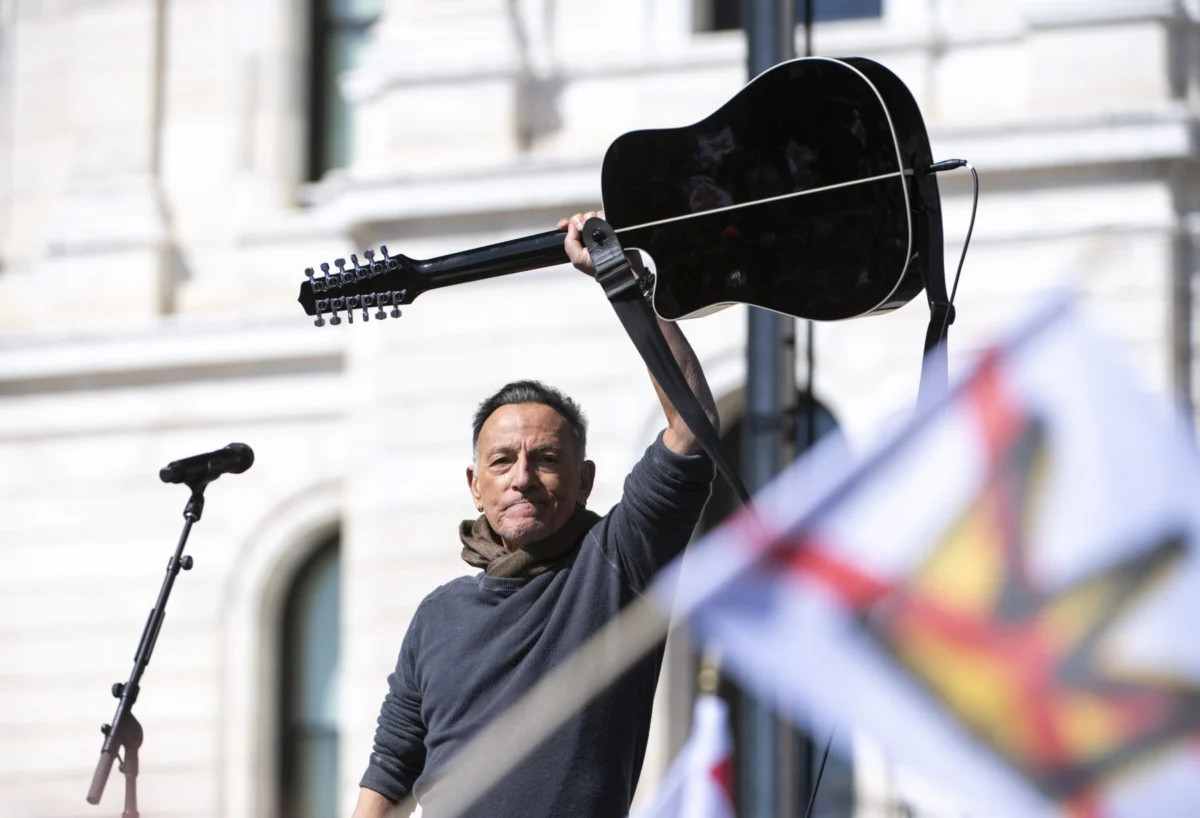
Bruce Springsteen delivered a powerful performance of his protest anthem "Streets of Minneapolis" at the flagship "No Kings" rally in St. Paul, Minnesota, on Saturday, March 28, 2026. The iconic musician addressed an estimated crowd exceeding 200,000 individuals gathered outside the Minnesota State Capitol, marking the third live rendition of the song since its release in January. Introduced by Minnesota Governor Tim Walz, Springsteen’s address preceded his performance, serving as a poignant tribute to the state’s staunch opposition to the Trump administration’s controversial "Operation Metro Surge" immigration enforcement initiative.
The protest, part of a nationwide movement dubbed "No Kings," represented the third major coordinated demonstration against the policies of the Trump administration. These rallies, designed to galvanize public opposition to what organizers deem authoritarian overreach, have become a significant feature of the political landscape. The "No Kings" moniker itself suggests a rejection of what participants perceive as an overreach of executive power, drawing parallels to historical struggles against unchecked authority.
A City’s Resistance and a Musician’s Response
Springsteen’s address to the massive assembly underscored the gravity of the situation that had galvanized Minnesota. "This past winter, federal troops brought death and terror to the streets of Minneapolis, but they picked the wrong city," he declared, his voice resonating with the conviction of a seasoned advocate. He continued, "The power and the solidarity of the people of Minneapolis and Minnesota was an inspiration to the entire country. Your strength and your commitment told us that this is still America, and this reactionary nightmare – and these invasions of American cities – will not stand. You gave us hope, you gave us courage."
His remarks directly referenced the tragic loss of life during Operation Metro Surge, specifically naming Renee Good, a mother of three, and Alex Pretti, a VA nurse, who were killed by U.S. Immigration and Customs Enforcement (ICE) agents. Springsteen recounted their deaths with palpable emotion: "Renee Good, mother of three, brutally murdered. Alex Pretti, VA nurse, executed by ICE. Shot in the back and left to die in the street without even the decency of our lawless government investigating their deaths. Their bravery, their sacrifice, and their names will not be forgotten." The crowd responded with a unified chant of "ICE out now" as Springsteen transitioned into his song, amplifying the collective demand for accountability and change.
"Streets of Minneapolis": A Song Born of Tragedy
"Streets of Minneapolis" was written and recorded by Springsteen in the immediate aftermath of the shootings, a testament to the urgency he felt in responding to the violence. The song was released within days of the incident, demonstrating a swift and powerful artistic reaction to the events.
The song’s live debut occurred on January 30 at a benefit concert held at Minneapolis’s historic First Avenue. This performance was particularly meaningful for Springsteen, who later reflected on the experience in an interview with the Minnesota Star Tribune. He described it as one of the most profound musical moments of his career: "There are certain moments where you’re in the right place at the right time and something deeply meaningful occurs that is bigger than the band. Being in Minneapolis goes way up to the top of the list as far as meaningful shows I’ve played."
Prior to the St. Paul rally, Springsteen performed "Streets of Minneapolis" a second time at Democracy Now!’s 30th-anniversary event in New York City, further solidifying the song’s role as a anthem of protest and remembrance. The St. Paul performance, however, represented the largest audience to date for the song, cementing its significance within the broader "No Kings" movement.
The Scope of the "No Kings" Movement
The "No Kings" rally in St. Paul served as the national flagship event for the third iteration of these widespread protests. According to organizers, the movement saw millions of participants across more than 3,100 registered events spanning all 50 states. This extensive reach highlights the deep and pervasive concerns regarding the Trump administration’s policies among a significant segment of the American populace.
The St. Paul event boasted an impressive lineup of speakers and performers, including Maggie Rogers, Joan Baez, Senator Bernie Sanders, Jane Fonda, and Tom Morello, among others. The inclusion of such prominent figures underscores the broad coalition of support the "No Kings" movement has garnered, transcending political affiliations and artistic disciplines.
However, the national protests were not without their challenges. Reports from Dallas indicated clashes between "No Kings" marchers and counter-protesters, illustrating the deep divisions and heightened tensions surrounding the issues being addressed. The White House, in response to the demonstrations, dismissed them as "Trump Derangement Therapy Sessions," a statement that critics argued further exacerbated the political polarization.

Context of Operation Metro Surge and Immigration Enforcement
Operation Metro Surge, the immigration enforcement campaign that precipitated the events in Minneapolis and Springsteen’s subsequent song, was part of a broader strategy by the Trump administration to increase immigration enforcement across the nation. These operations often involved the deployment of federal agents to cities deemed to be less cooperative with immigration authorities, leading to increased arrests and detentions of undocumented immigrants.
Critics of such operations frequently cite concerns about civil liberties, the militarization of domestic law enforcement, and the humanitarian impact on immigrant communities. The incidents in Minneapolis, particularly the fatal shootings, brought these concerns to the forefront, igniting outrage and demands for greater oversight and accountability from federal agencies.
The number of individuals apprehended during such surge operations can be substantial. For instance, in similar federal immigration enforcement actions across the country in preceding years, tens of thousands of individuals were often taken into custody during focused campaigns. The precise scale and impact of Operation Metro Surge in Minneapolis would have been a critical factor in the local community’s response and Springsteen’s artistic engagement.
Springsteen’s Political Activism and Upcoming Tour
Springsteen’s performance at the "No Kings" rally is consistent with his long history of using his platform to address social and political issues. His music has often reflected the concerns of working-class Americans and has frequently taken on themes of social justice and economic inequality.
The St. Paul appearance precedes the launch of Springsteen and the E Street Band’s highly anticipated "Land of Hope and Dreams" tour, set to commence on Tuesday, March 31, at Minneapolis’s Target Center. Tom Morello of Rage Against the Machine is slated to join Springsteen for every date of the tour, which is scheduled to run through a May 27 finale in Washington, D.C.
Springsteen has indicated that the tour will be deeply political and topical. In a statement to the Minnesota Star Tribune, he declared, "The tour is going to be political and very topical about what’s going on in the country. Minneapolis and St. Paul, that was the place I wanted to begin it, and I wanted to end it in Washington." He further articulated the tour’s thematic underpinnings, stating that fans were living through "dark, disturbing and dangerous times" but offering a message of hope: "The cavalry is coming." This suggests that the "Land of Hope and Dreams" tour will not merely be a musical retrospective but a platform for continued engagement with the pressing issues facing the nation.
Broader Implications and Analysis
The intersection of a prominent musician like Bruce Springsteen with a significant political protest movement carries considerable weight. Springsteen’s participation lends a cultural imprimatur to the "No Kings" rally, amplifying its message and potentially drawing broader public attention. His ability to connect with large audiences through his music has historically translated into influence on social and political discourse.
The "No Kings" movement, with its extensive reach and diverse participants, signifies a sustained and organized opposition to specific Trump administration policies. The focus on immigration enforcement and the tragic events in Minneapolis highlight the human cost of these policies and the growing demand for a more compassionate and just approach.
The White House’s dismissive response underscores the partisan divide surrounding these issues. However, the sheer scale of the protests suggests that these are not isolated incidents but rather manifestations of deep-seated concerns that resonate across a substantial portion of the electorate.
As Springsteen embarks on his tour, the political undertones of his performances are likely to be amplified. The choice to begin in Minneapolis, the epicenter of the events that inspired "Streets of Minneapolis," and to conclude in Washington, D.C., the nation’s capital, suggests a deliberate narrative arc that aims to connect local struggles to national policy and governance. The "Land of Hope and Dreams" tour, therefore, is poised to be more than just a concert series; it is likely to serve as a continuation of the dialogue and activism that characterized the "No Kings" rallies. The impact of such artist-driven political engagement on public opinion and policy debates remains a subject of ongoing analysis, but its ability to galvanize and mobilize is undeniable.