
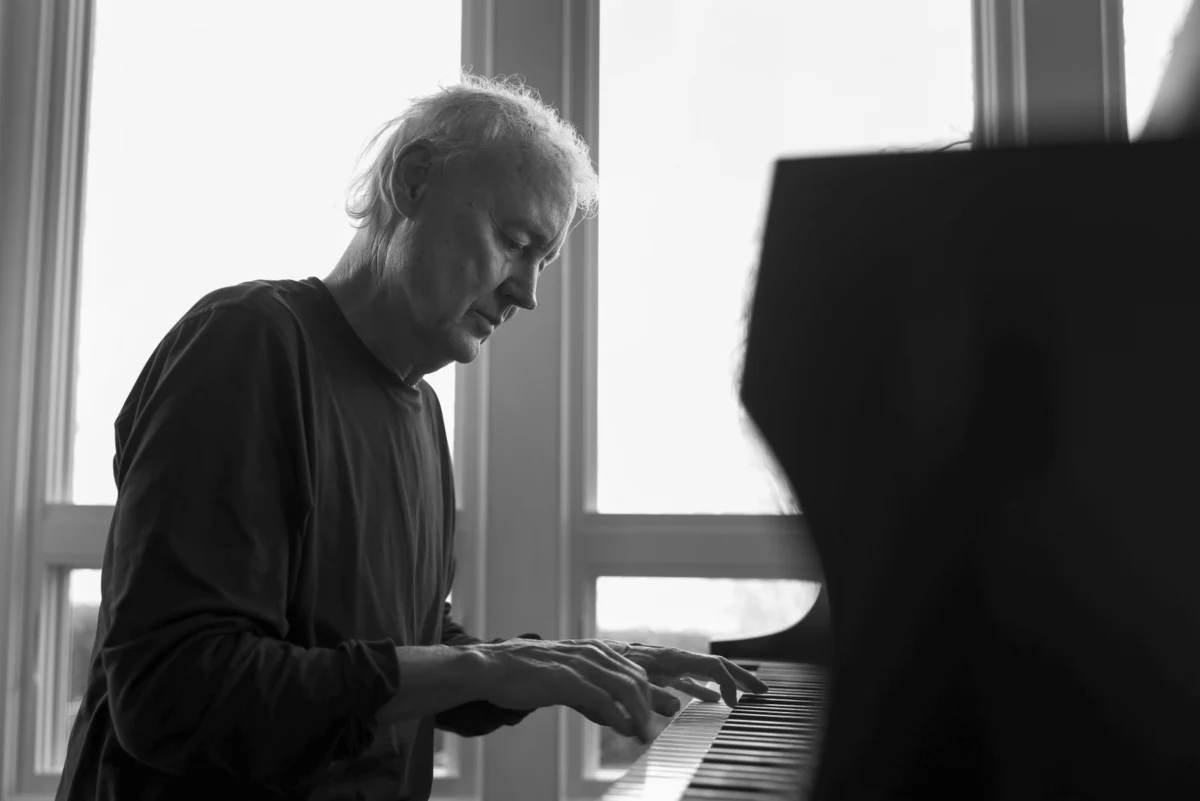
Bruce Hornsby, the acclaimed pianist and songwriter whose career has spanned four decades and countless genre explorations, has unveiled his latest studio album, Indigo Park, released on April 3rd. The genesis of this project, as Hornsby himself states, is “very clear” and, remarkably, entirely unplanned. This album emerges from a period of intense creative output for the artist, following a series of five albums released between 2019 and 2024, including the Spike Lee film score-inspired Absolute Zero and two collaborations with the New York chamber ensemble yMusic.
The Unforeseen Spark: From Burnout to Breakthrough
The "origin story" of Indigo Park is rooted in Hornsby’s deliberate attempt to step back from the relentless cycle of songwriting and production. "I was trying not to write songs," Hornsby shared in a recent virtual interview from his home in Williamsburg, Virginia. "I’d been so prolific and so fertile creatively, I was kind of burnt out with all that – not just with the writing process, but burnt out with the recording and producing. So, I was ready for a break from it all."
However, inspiration proved to be an insistent force. A nascent song idea, which would eventually become the reflective and autobiographical title track of Indigo Park, refused to be ignored. "It just wouldn’t let me go," Hornsby recounted. "I kept giving it the Heisman, giving it the stiff-arm, but to no avail. After about four or five months into trying to not deal with this and having it come roaring into my head at three in the morning, four in the morning, I finally succumbed to the insistence of this idea and decided, ‘OK, I’ll take a deep dive and write this song.’"
The creative breakthrough was palpable. "I was getting chills while I was writing it and recording it, and that’s telling you something because you can’t force chills," Hornsby explained. "It either happens or it doesn’t, but when it does happen, you need to listen to that. You need to follow the chills." This profound personal validation, coupled with enthusiastic feedback from a trusted inner circle of collaborators and friends, including his brother and former lyricist John Hornsby, solidified the album’s eventual trajectory. The overwhelming positive reception to the title track prompted a decisive shift in his creative plans: "It made me go, ‘OK, motherf***er, I guess you have to write nine more.’"
An Ambitious Tapestry of Sound and Collaboration
Indigo Park, Hornsby’s 22nd studio release, stands as one of his most ambitious and stylistically diverse offerings to date. The album features a remarkable lineup of guest artists, including the legendary Bonnie Raitt, Ezra Koenig of Vampire Weekend, and the acclaimed multi-instrumentalist Blake Mills. Further enriching the project are songwriting collaborations with the late, great Robert Hunter, lyricist for the Grateful Dead, and one of the final recordings by the iconic Bob Weir.
While Hornsby remains at the piano throughout the album’s ten tracks, he also explores new sonic territories, notably featuring his Rickenbacker 12-string guitar on six songs. He humorously refers to this as his "Bruce McGuinn" record, a nod to Roger McGuinn of The Byrds, who famously popularized the instrument. This willingness to experiment and push musical boundaries is a hallmark of Hornsby’s career, which has consistently defied easy categorization, moving fluidly between pop, rock, jazz, and contemporary classical influences.
"I’m just interested in pushing the norms and forms of the popular song and make a sound that I haven’t heard before," Hornsby articulated. Co-produced with Tony Berg and Will Maclellan, and largely recorded at the legendary Sound City studios in Van Nuys, California, Indigo Park aims to challenge listeners. "I know that sounds pompous, maybe, but I hope that every third song or so there’s something that’s hopefully gonna bend your ear and take you to a new and adventurous place where you may not have dealt with in the basically white-bread universe we live in in popular music."
Echoes of Legacy and the Pursuit of Novelty
The album’s distinctive sound is partly a result of Hornsby’s deep engagement with modern classical music, a significant influence on his work for years. This is particularly evident in his collaborations with Robert Hunter. The track "Alabama," for instance, is described by Hornsby as "a totally wild song lyrically," a piece he felt demanded an equally adventurous musical accompaniment, drawing inspiration from composers like Arnold Schoenberg. Other tracks on Indigo Park showcase influences from Elliott Carter, Gyorgy Ligeti, and Dmitri Shostakovich. Notably, the song "Silhouette Shadows" originates from an unused instrumental piece composed for one of Spike Lee’s films, demonstrating Hornsby’s ongoing commitment to repurposing and recontextualizing his creative output.

The inclusion of Bob Weir on the album carries particular weight for Hornsby. His long-standing connection to the Grateful Dead extended beyond his involvement as an adjunct member in the early 1990s to include participation in the spin-off band The Other Ones and the landmark Fare Thee Well concerts celebrating the band’s 50th anniversary in 2015. Weir’s contribution to "Might As Well Be Me, Florinda," another collaboration with Hunter, was recorded in May 2025. Hornsby recalled the profound sense of joy and shared accomplishment among everyone present at Sound City when Weir laid down his vocal track.
"Well, of course; it deepens the situation," Hornsby acknowledged regarding Weir’s presence. He further elaborated on Weir’s energetic performance, describing it as "fairly unbridled in the best way, kind of unhinged in a fantastic way, which of course fits the song." The poignant nature of this collaboration is underscored by Weir’s passing shortly after. Hornsby reflected on the sudden losses of Weir, Bill Walton, and Robbie Robertson, noting a shared sentiment of urgency expressed by Weir himself. "We were on the phone and I said, ‘Man, you’re always here, you’re there, playing with the National Symphony, the London Symphony, doing these symphonic Dead concerts. Why?’ He said, ‘Man, I just don’t know how much time I have left, and I want to get as much in as I can’ – which, of course, at this point feels (prophetic)."
Reflections on Time, Life, and the Human Experience
Mortality and the passage of time are palpable themes woven throughout Indigo Park. The album navigates nostalgia, sentimentality, and introspection, culminating in a celebratory embrace of life in the title track’s lyrics: "Oh let these days be your delight… It’s only life, and life is enough/So whatever, it’s life and life only." Hornsby elaborated on this sentiment, stating, "I thought, ‘OK, I’ve got this song, and it has a little bit to do with sort of aging and hopefully getting to be a little less of an idiot and a little smarter about things as you get older, ’cause you have a better perspective.’ That sent me heading into this idea that, ‘OK, I’m just going to write about where I am now.’ It’s the story of the record."
The album also injects moments of sheer fun and unexpected delight, exemplified by "Ecstatic," featuring Bonnie Raitt. This rhythmic, poetic track draws inspiration from AAU basketball cheers, even incorporating chanting and dancing from the Louisiana State University women’s basketball team in its music video. Raitt’s enthusiastic reception to the song highlights its unique appeal. "She did a great job," Hornsby said. "She heard it and was like, ‘Wow, I wasn’t expecting this.’ She said, ‘It’s so you,’ maybe because of the sports origin story, but she’s so good on it." The producer Tony Berg, upon receiving Raitt’s contribution, reportedly exclaimed to her, "Bonnie, I’ve always loved you, but now I’m in love with you…"
The Enduring Resonance of "The Way It Is"
The release of Indigo Park occurs almost precisely 40 years after the debut of Hornsby’s triple-platinum album, The Way It Is, which catapulted him to stardom with its Grammy-winning title track. While Hornsby has often expressed a critical detachment from his earlier work, finding his younger self’s vocal performances "unlistenable," he acknowledges the profound impact that song had on his career and global recognition.
"The mass of the world knows me for that one song," he admitted. "In America, I was sort of a four- or five-hit wonder, but in the rest of the world, it’s that song. Even (Don Henley’s) ‘The End of the Innocence’ wasn’t that big abroad. What I really feel in this area is that they missed the best part. I feel like I’ve continued to grow and develop through the years, evolve. I’ve just never allowed myself to be shackled in that prison people would like to place me in."
This conscious decision to resist creative confinement has sometimes led to friction with fans accustomed to his early hits. "Let’s face it; people go to a concert because they like more than a few songs by the artist, and they go hoping or, mostly, expecting to hear faithful interpretations that help them stroll down memory lane. I totally get it, but it’s a creative prison. I’ve never been constrained by that idea. So, I get nasty letters all the time, nasty Facebook screeds, and I’ve learned to live with that for 40 years now."
Looking Ahead: A Continual Creative Evolution
Undeterred by any potential audience backlash, Hornsby and his band, the Noisemakers, have embarked on a national tour commencing April 9th in Cincinnati, with dates scheduled through October. Beyond his touring commitments, Hornsby has also been collaborating with actor and musician Jeff Daniels on music for a new play.
Ever the innovator, Hornsby hints at future creative endeavors, already contemplating a new song inspired by Kazuo Ishiguro’s novel Klara and the Sun. "I’ve just about written a song about an artificial friend… and I kinda like this one," he shared. "It feels like a Beatles/Beach Boys thing, with some interesting chord movement. I can almost sit there and play it for someone so… maybe that’s the start of something." This forward-looking perspective, coupled with the unexpected arrival of Indigo Park, underscores Bruce Hornsby’s enduring commitment to artistic exploration and his remarkable ability to find inspiration in the most unexpected places.