




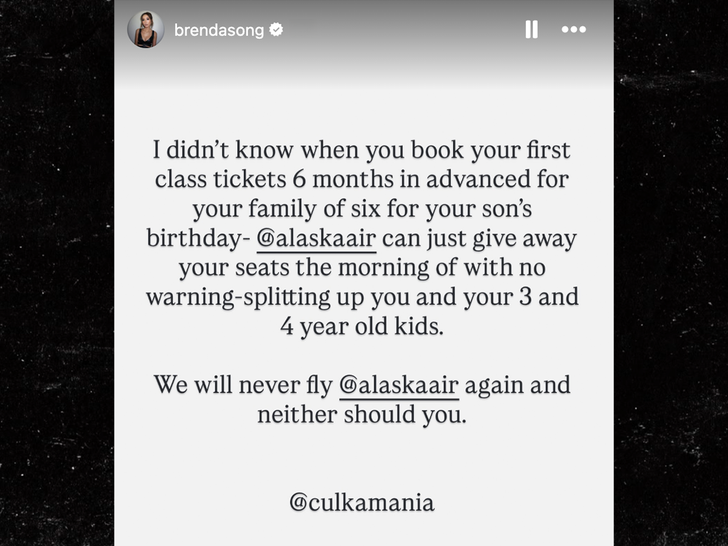
The tranquility of air travel for celebrity families was shattered on March 21, 2026, when actress Brenda Song publicly condemned Alaska Airlines for an allegedly "nightmare experience" that resulted in her being separated from her two young children, aged three and four, despite having pre-booked first-class tickets. The incident, which unfolded on the day of their flight, has ignited a fervent discussion on passenger rights, airline accountability, and the complexities of family travel in premium cabins. Song, known for her roles in "The Suite Life of Zack & Cody" and "Dollface," took to Instagram to express her profound frustration, declaring that her family, including partner Macaulay Culkin, would boycott the airline indefinitely and encouraged her substantial following to do the same.
The Unfolding Incident: A Chronology of Disruption
The genesis of the dispute traces back months, when Song and Culkin meticulously planned their family trip, securing first-class tickets on an Alaska Airlines flight. The decision to invest in premium seating, particularly with young children, is often driven by a desire for enhanced comfort, space, and the peace of mind that comes with a seamless travel experience. For many parents, the assurance of sitting together, especially with toddlers, is paramount, a factor typically guaranteed by advanced booking in higher fare classes.
However, the carefully laid plans began to unravel on the morning of March 21. According to Song’s account, upon arrival at the airport, the family was informed that their pre-booked first-class tickets had been inexplicably "given away." This revelation immediately plunged their travel plans into disarray. Airlines occasionally reassign seats due to operational necessities such as aircraft changes, weight distribution requirements, or accommodating passengers with special needs. However, the involuntary relinquishment of pre-paid first-class seats, particularly without adequate prior notification or justifiable compensation, constitutes a significant breach of contract and customer expectation.
The subsequent seating arrangement proved to be the core of Song’s distress. Despite the family’s attempts to remain together, the airline’s solution reportedly led to Brenda Song being seated separately from her three-year-old and four-year-old children. For any parent, being separated from young, dependent children during a flight, particularly without another adult immediately present, presents a considerable safety and emotional concern. The vulnerability of young children in an unfamiliar environment, coupled with the potential for distress, underscores the gravity of such a separation. Song’s Instagram post conveyed a sarcastic tone, highlighting her disbelief that an airline could unilaterally reallocate tickets booked "months in advance on the morning of the flight." Her public outcry swiftly garnered attention, resonating with countless parents who have faced similar, albeit perhaps less publicized, challenges with airline seating policies.
Background and Context: Family Travel in the Modern Age
The incident involving Brenda Song and Alaska Airlines casts a spotlight on several critical aspects of contemporary air travel. Family travel, particularly with young children, has grown significantly, becoming a major segment of the aviation industry. Airlines frequently market themselves as family-friendly, offering amenities and services designed to appeal to parents. However, the reality of airline operations, often driven by complex algorithms for maximizing revenue and efficiency, can sometimes clash with the practical needs and emotional expectations of traveling families.

Airline Seating Policies and Passenger Rights: While many airlines verbally commit to seating young children with at least one adult, explicit, universally enforced regulations can vary by region and carrier. In the United States, for instance, while there are guidelines and recommendations from the Department of Transportation (DOT) encouraging airlines to seat children aged 13 or under next to an accompanying adult at no extra cost, these are often not legally binding mandates. This ambiguity leaves room for interpretation and operational decisions that can inadvertently lead to family separations. The issue is compounded when premium cabins are involved, where seat reassignments can be more complex due to limited availability and higher passenger expectations. Denied boarding or involuntary downgrades, while subject to specific compensation rules, often fail to address the emotional distress and logistical nightmare they impose on families.
The Power of Social Media and Celebrity Influence: In the digital age, a celebrity’s personal experience, when shared on platforms like Instagram, can instantly transform a private grievance into a global news story. Brenda Song, with her considerable public profile, effectively leveraged her platform to amplify her complaint, reaching millions of followers. This "celebrity effect" can exert immense pressure on corporations, forcing a quicker and more public response than what a non-celebrity might receive. The virality of such posts often leads to a rapid dissemination of information, shaping public perception and potentially influencing consumer behavior on a large scale.
Premium Cabin Expectations: Passengers who pay for first-class tickets expect a superior level of service, comfort, and reliability. This includes guaranteed seating, personalized attention, and a smoother overall journey. The idea that a pre-booked first-class seat could be summarily "given away" without substantial justification or immediate, satisfactory remediation strikes at the core of the premium travel experience. It raises questions about the value proposition of expensive tickets if basic assurances, such as family cohesion, cannot be maintained.
Industry Perspectives and Supporting Data
The aviation industry operates under immense pressure, balancing operational efficiency, safety regulations, and customer satisfaction. Incidents like the one described by Brenda Song, while perhaps statistically infrequent on an individual flight basis, contribute to a broader narrative of passenger frustration.
Overbooking and Operational Changes: Airlines sometimes overbook flights to mitigate losses from no-shows, a practice that, while legal, can lead to involuntary denied boarding. Furthermore, unexpected aircraft changes, mechanical issues, or crew shortages can necessitate last-minute reconfigurations of seating charts, potentially disrupting pre-assigned seats. However, industry best practices dictate that in such scenarios, families with young children should be prioritized to remain seated together. The challenge lies in the execution of these policies during high-stress operational moments.
Customer Service Challenges: Despite efforts to enhance customer service, airlines frequently face criticism for long wait times, unhelpful staff, and a perceived lack of empathy. The complexity of airline systems, coupled with the sheer volume of passengers, can make personalized problem-solving a significant hurdle. When issues arise, particularly those involving sensitive matters like family separation, the quality of the immediate response from airline personnel can either de-escalate or exacerbate the situation.

Economic Impact of Negative Publicity: For an airline, negative publicity, especially stemming from a celebrity’s widely shared complaint, can have tangible economic consequences. Brand reputation is a critical asset, and a perceived failure to care for passengers, particularly vulnerable ones like young children, can deter future bookings. In a competitive market, consumers often factor in an airline’s track record for customer service when making travel choices. A boycott call from a figure like Brenda Song, with her broad reach, poses a direct threat to an airline’s revenue and market share. Public trust, once eroded, is difficult and costly to rebuild. Studies consistently show a direct correlation between customer satisfaction and loyalty, highlighting the long-term value of positive passenger experiences.
Official Response and Corporate Accountability
In the wake of Brenda Song’s viral Instagram post, Alaska Airlines swiftly issued an official statement, acknowledging the gravity of the situation. A spokesperson for the airline conveyed remorse, stating that Song and her family’s experience was "unacceptable and not reflective of the care" they aim to provide. The statement further emphasized the airline’s commitment to family travelers: "Traveling can be stressful, especially with young children, and we pride ourselves on being a top airline for traveling families. We are deeply sorry for adding friction to the experience."
The airline also confirmed that it had initiated contact with the Song-Culkin family "to make things right." This typical corporate response in crisis management situations usually involves a combination of sincere apologies, offers of compensation (such as refunds, travel vouchers, or loyalty program points), and a commitment to review internal procedures to prevent recurrence. The specific details of what Alaska Airlines intends to offer the family have not been publicly disclosed, but such gestures are crucial in mitigating reputational damage and demonstrating a genuine effort to rectify the situation.
From an industry standpoint, this incident serves as a critical reminder of the importance of robust internal protocols for managing seating assignments, particularly when operational disruptions occur. Training for frontline staff on handling sensitive family travel situations, clear guidelines for involuntary downgrades or reassignments, and proactive communication with affected passengers are all vital components of maintaining customer trust. The airline’s swift public apology and outreach signal an understanding of the potential impact of such a high-profile complaint.
Broader Impact and Implications for the Industry
The Brenda Song incident is more than just a single celebrity’s bad travel day; it resonates with broader themes concerning passenger rights, corporate responsibility, and the evolving landscape of air travel.
Consumer Advocacy and Policy Review: This event could catalyze renewed calls for stricter, legally binding regulations regarding family seating. Consumer advocacy groups have long pushed for clearer rules that ensure young children are seated with an accompanying adult without additional fees or undue hassle. The publicity generated by Song’s complaint might provide the impetus for legislative bodies or aviation authorities to revisit and strengthen existing guidelines or introduce new mandates. This could lead to a more standardized approach across the industry, minimizing the likelihood of similar incidents.
Reputational Damage and Brand Perception: While Alaska Airlines has traditionally enjoyed a strong reputation for customer service, this incident poses a significant challenge to its brand image, particularly its claim as a "top airline for traveling families." The long-term impact on consumer trust and booking decisions remains to be seen. Airlines invest heavily in marketing their services, and a single, widely publicized negative experience can quickly undermine years of positive branding efforts. The declaration by Song and Culkin to never fly Alaska Airlines again, coupled with Song’s encouragement for her followers to boycott, represents a direct threat to future revenue.
The Precedent of Celebrity Complaints: This incident reinforces the growing power of social media as a platform for consumer grievances, especially when articulated by influential figures. Airlines and other service industries must increasingly monitor social media for real-time feedback and be prepared to respond swiftly and transparently to high-profile complaints. The speed at which such stories can go viral necessitates robust crisis communication strategies.
Operational Best Practices and Training: For Alaska Airlines and other carriers, the incident will undoubtedly prompt an internal review of their procedures for handling overbooked flights, involuntary downgrades, and, crucially, family seating. This might involve enhanced training for gate agents and flight attendants on how to manage complex seating challenges, prioritizing family cohesion, and offering appropriate compensation or alternatives when issues arise. The focus will likely shift towards proactive communication and empathetic problem-solving, rather than reactive damage control.
Ethical Considerations in Aviation: Beyond the operational aspects, the incident also touches upon ethical considerations in the aviation industry. Airlines have a moral obligation to ensure the safety and well-being of all passengers, particularly vulnerable groups like young children. Separating a three-year-old and a four-year-old from their parent raises significant ethical questions about duty of care and the prioritization of profit over passenger welfare.
In conclusion, Brenda Song’s highly publicized "nightmare experience" with Alaska Airlines serves as a potent reminder of the delicate balance between airline operational demands and passenger expectations, particularly for families. As the travel industry continues to evolve, the demand for transparent policies, empathetic customer service, and an unwavering commitment to passenger well-being will only intensify. The resolution of this particular incident, and its broader implications for industry practices, will be closely watched by both consumers and aviation stakeholders alike, shaping the future landscape of family air travel. The airline, now facing a "Homecoming Warrior" in Brenda Song, must navigate this challenge with utmost care to rebuild trust and uphold its reputation in a fiercely competitive market.