



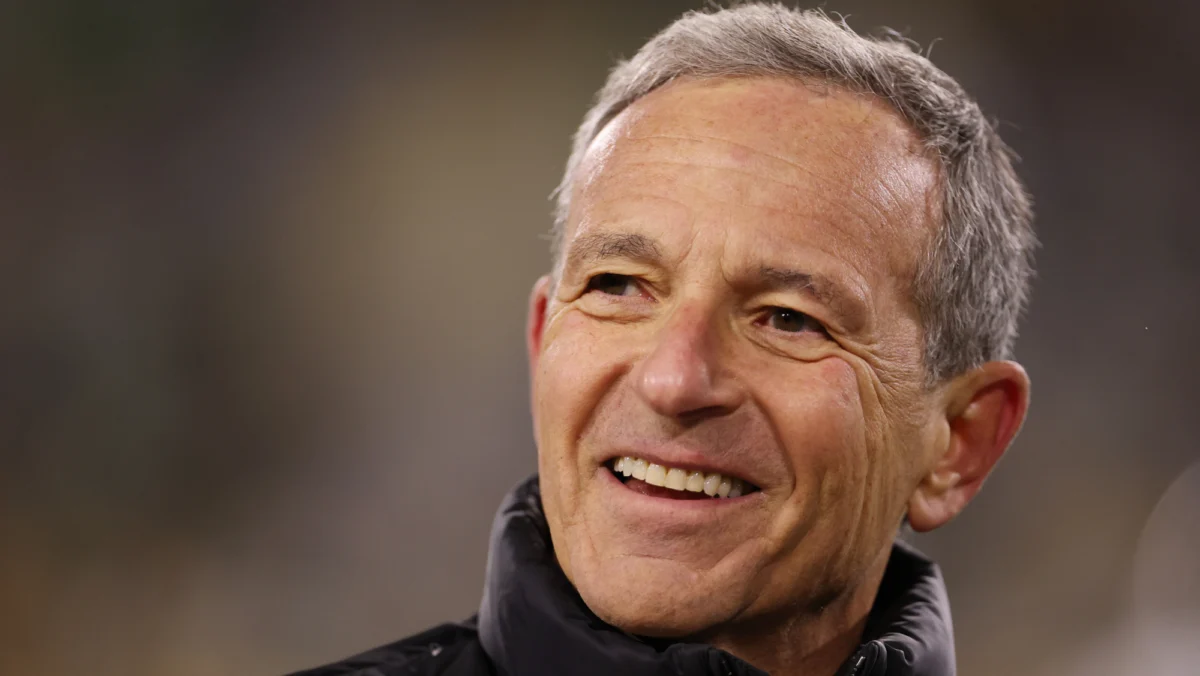
Burbank, CA – After a career spanning more than five decades with The Walt Disney Company, including two transformative stints as its chief executive, Bob Iger officially concluded his operational tenure as CEO on Wednesday, passing the leadership baton to Josh D’Amaro. The momentous transition unfolded at Disney’s Annual Shareholder Meeting, where Iger, following a heartfelt video montage celebrating his extraordinary journey from his early days at ABC to the apex of corporate leadership, reflected on his legacy and expressed profound optimism for the company’s future under its new stewardship. His departure, while marked by gratitude, also signaled the definitive close of an era that saw Disney expand its global footprint, acquire iconic intellectual properties, and navigate unprecedented industry shifts.
A Reflective Farewell and Renewed Confidence
Iger’s address to shareholders was steeped in reflection, particularly on his unexpected return to the helm in late 2022. He candidly acknowledged the significant challenges and the palpable dip in employee morale that had characterized the preceding period under his successor, Bob Chapek. "When I returned in 2022, people had lost confidence in the company they worked for," Iger stated, a powerful testament to the internal turmoil that necessitated his comeback. However, he quickly pivoted to a more positive present, asserting, "Today, everywhere I turn, I sense confidence and excitement about what lies ahead." This renewed vigor, he emphasized, was a testament to the collective effort to steer the company back to its creative and strategic foundations.
Expressing unwavering faith in the incoming leadership, Iger lauded Josh D’Amaro as a "wonderful choice to lead The Walt Disney Company." He highlighted D’Amaro’s "passion for our businesses and brands, respect for our people, and appreciation for what makes this company so unique." Furthermore, Iger underscored the critical role of Dana Walden, who will continue to focus on "our most critical endeavor, creativity," signaling a continued commitment to artistic excellence at the core of Disney’s storytelling empire. This public endorsement from Iger, a figure synonymous with Disney’s modern success, aims to instill stability and confidence among investors and employees alike as the company embarks on its next chapter.
The Architect of Modern Disney: Iger’s First Reign
Bob Iger’s influence on The Walt Disney Company is virtually unparalleled in recent corporate history. His first tenure as CEO, from 2005 to 2020, was defined by audacious strategic acquisitions that fundamentally reshaped Disney’s competitive landscape and propelled it into a new era of dominance in entertainment. Having joined ABC in 1974, which Disney later acquired, Iger steadily climbed the ranks, eventually becoming President and COO of Disney in 2000, before ascending to CEO in 2005.
His vision was clear: to fortify Disney’s intellectual property portfolio and expand its global reach. This strategy manifested in a series of landmark deals that are now widely regarded as some of the most successful corporate acquisitions in entertainment history. In 2006, Disney acquired Pixar Animation Studios for approximately $7.4 billion, integrating the beloved animation powerhouse and its creative genius, John Lasseter, into the Disney family. This move revitalized Disney’s own animation division and brought critically acclaimed franchises like Toy Story and Cars under its banner.
Four years later, in 2009, Iger orchestrated the acquisition of Marvel Entertainment for $4 billion. This masterstroke unleashed the Marvel Cinematic Universe, a sprawling, interconnected narrative that has since generated billions at the global box office and revolutionized superhero storytelling. The success of films like The Avengers (2012) and Black Panther (2018) cemented Marvel’s status as a cultural phenomenon and a cornerstone of Disney’s studio division.
Not content with two game-changing acquisitions, Iger followed up in 2012 with the purchase of Lucasfilm, the studio behind the Star Wars franchise, for $4.05 billion. This acquisition brought another generational storytelling universe into the Disney fold, leading to new films, television series, and theme park expansions that reignited fan enthusiasm. Finally, in 2019, Iger completed the ambitious $71.3 billion acquisition of 21st Century Fox’s entertainment assets, significantly expanding Disney’s film and television studios, securing control of Hulu, and adding properties like The Simpsons and the X-Men to its vast library.
Beyond acquisitions, Iger also spearheaded the launch of Disney+, the company’s flagship streaming service, in November 2019. This direct-to-consumer offering was a bold bet on the future of entertainment distribution, signaling a strategic pivot away from traditional linear television towards a streaming-centric model. Under his initial leadership, Disney’s market capitalization soared, its theme parks expanded globally, and its creative output reached new heights.
The Chapek Interregnum and Its Fallout
Iger’s initial retirement in 2020, after 15 years as CEO, was met with a mix of anticipation and apprehension. He handed the reins to Bob Chapek, a long-time Disney executive who had successfully led the Parks, Experiences and Products division. Chapek’s tenure, however, proved tumultuous and brief, lasting just under three years.
Chapek inherited the company at the onset of the global COVID-19 pandemic, which severely impacted Disney’s theme parks, cruise lines, and theatrical releases. While he navigated some of these immediate crises, his leadership style and strategic decisions quickly drew criticism. A major point of contention was his restructuring of the company, which centralized decision-making regarding film and TV budgets, finances, marketing, and distribution under a separate division led by Kareem Daniel, rather than empowering creative executives. This move, as Iger implicitly referenced, alienated many within Disney’s creative community, who felt their input was marginalized and that the company’s core storytelling ethos was being undermined by a focus on financial metrics above all else.
The Chapek era was also marked by several public relations missteps and internal discord. The highly publicized lawsuit with Scarlett Johansson over her compensation for Black Widow‘s hybrid theatrical and Disney+ release, and the company’s initially muted response to Florida’s "Don’t Say Gay" bill, eroded trust among talent, employees, and segments of the public. Financially, while Disney+ saw rapid subscriber growth, its path to profitability remained elusive, and the company’s stock performance lagged behind expectations, particularly as broader economic headwinds began to gather. The "lost confidence" Iger spoke of was a direct consequence of these accumulated challenges and a perceived deviation from Disney’s foundational principles.
The Unexpected Return: Stabilizing the Ship
Iger’s surprise return in November 2022, just 11 months after his initial "retirement," was widely seen as a necessary course correction. The board, acknowledging the company’s "increasingly complex period of industry transformation," brought back the veteran leader to restore stability and set a clear strategic path. His second tenure, though shorter, was equally intense and focused on several key priorities.
A primary goal was to "restore the creative engines" of the company. Iger quickly dismantled Chapek’s centralized distribution structure, re-empowering creative leaders like Alan Bergman (Co-Chairman, Disney Entertainment) and Dana Walden (Co-Chairman, Disney Entertainment) to have greater autonomy over their content decisions and budgets. This move was met with widespread relief internally and signaled a return to Disney’s artist-centric approach.
Another critical objective was to make Disney+ a profitable streaming site and a central pillar of the company’s future. Iger initiated aggressive cost-cutting measures across the company, targeting $5.5 billion in savings, which included significant layoffs. He also implemented price increases for Disney+ and explored new advertising tiers to boost revenue per user. These efforts began to bear fruit, with Disney+ achieving profitability in Q1 2024, a significant milestone that validated Iger’s strategic adjustments.
Iger also faced a formidable challenge in battling activist investors, most notably Nelson Peltz’s Trian Partners. Peltz, who sought multiple board seats, argued that Disney’s stock was undervalued and that the company needed clearer succession planning and improved financial performance. Iger successfully rallied shareholder support, defending his growth plans, which included substantial investments in Parks and Experiences and continued focus on streaming. His victory against Peltz in the proxy battle earlier this year solidified his authority and allowed him to continue implementing his strategic vision without significant external interference.
During this period, Iger also oversaw significant shifts in Disney’s traditional media business, acknowledging the decline of linear television. He openly discussed strategic options for ESPN, including potential partnerships or a direct-to-consumer offering, and explored the future of Disney’s linear networks.
The New Era: Josh D’Amaro Takes the Helm
The transition to Josh D’Amaro marks a new chapter for Disney. D’Amaro, a 26-year veteran of the company, most recently served as Chairman of Disney Experiences, overseeing the global theme parks, cruise lines, and consumer products. His background in this division, which consistently generates substantial revenue and profits for Disney, suggests a potential continued emphasis on enhancing the guest experience and leveraging the company’s physical assets.
D’Amaro’s journey within Disney has seen him hold key roles across various segments, including Chief Financial Officer of Walt Disney World Resort, Vice President of Disney’s Animals, Science and Environment, and President of the Disneyland Resort. His intimate knowledge of Disney’s operational complexities and his track record of driving innovation and profitability within the parks division make him a compelling choice to lead the entire enterprise. Analysts will closely watch how D’Amaro translates his success in experiences to the broader media and entertainment landscape, particularly as Disney continues to navigate the evolving streaming wars and the challenges facing traditional media.
Strategic Priorities and Future Outlook
Under D’Amaro, Disney is expected to continue pursuing the strategic priorities largely set in motion by Iger during his second tenure. These include:
- Streaming Profitability: Building on Disney+’s recent profitability, the focus will remain on subscriber growth, content optimization, and maximizing average revenue per user (ARPU) across all streaming platforms (Disney+, Hulu, ESPN+).
- Parks and Experiences Growth: Leveraging D’Amaro’s expertise, significant investments in theme park expansions, technological enhancements, and new guest offerings are likely to continue, aiming to capitalize on strong demand for experiential entertainment. Disney has already committed to investing approximately $60 billion in its Parks, Experiences and Products segment over the next decade.
- Creative Excellence: With Dana Walden specifically tasked with focusing on creativity, Disney will aim to bolster its studio output across film and television, ensuring a robust pipeline of compelling stories that resonate globally. The challenge will be to balance creative ambition with financial prudence in an increasingly competitive content landscape.
- Financial Discipline: The cost-cutting initiatives will likely continue, with a focus on optimizing operations and improving free cash flow generation. This financial rigor is essential for funding future growth and returning value to shareholders.
- Leveraging IP: Disney’s vast library of intellectual property remains its most potent asset. The company will continue to explore new ways to monetize and extend its beloved franchises across films, series, games, consumer products, and theme park attractions.
The broader implications of this transition are significant. D’Amaro’s leadership will be tested by the ongoing shifts in consumer behavior, technological advancements, and a dynamic competitive environment. His ability to balance the creative demands of a storytelling company with the financial imperatives of a global conglomerate will define his tenure.
Iger’s Enduring Influence: An Advisory Role
While Iger has stepped down as CEO, his connection to Disney is not entirely severed. He will remain with the company as a special adviser and a member of Disney’s board of directors until the end of 2026. This extended advisory role suggests a desire for a smooth transition and a continued guiding hand from a leader with unparalleled institutional knowledge. It also provides a continuity of strategic vision, allowing D’Amaro to benefit from Iger’s experience and insights during his initial years as CEO. However, Iger’s emphasis on this being the "end of his tenure as CEO (for real, this time)" underscores his intention to truly pass on the operational responsibilities.
A Spanning Career: From ABC to Disney’s Apex
Iger’s final remarks at the shareholder meeting encapsulated the vastness of his professional journey. "It’s also the end of a 52-year journey that began in 1974 and has spanned almost three-quarters of my life," he shared. Starting his career at ABC, which Disney later acquired, Iger rose through the ranks with dedication and strategic acumen. "I never dreamed I would end up as CEO of The Walt Disney Company, and I certainly never expected to step into the role a second time, but once I did, I was quickly reminded of the tremendous responsibility that being entrusted with something very special bears."
His journey reflects not just personal achievement but the evolution of the entertainment industry itself. He oversaw Disney’s transformation from a traditional media company into a diversified global entertainment and technology powerhouse. The outgoing CEO concluded, "What I couldn’t have fully known then was just how meaningful this journey would become because of the people, the creativity and the shared belief in what this company stands for and what we have all accomplished, particularly during this second time around."
As Josh D’Amaro takes the helm, he inherits a company with a rich legacy, a robust portfolio of assets, and a clear, albeit challenging, path forward. The optimism articulated by Iger in his farewell speech suggests that the foundational elements for continued success are firmly in place, ready for the next generation of leadership to build upon.