


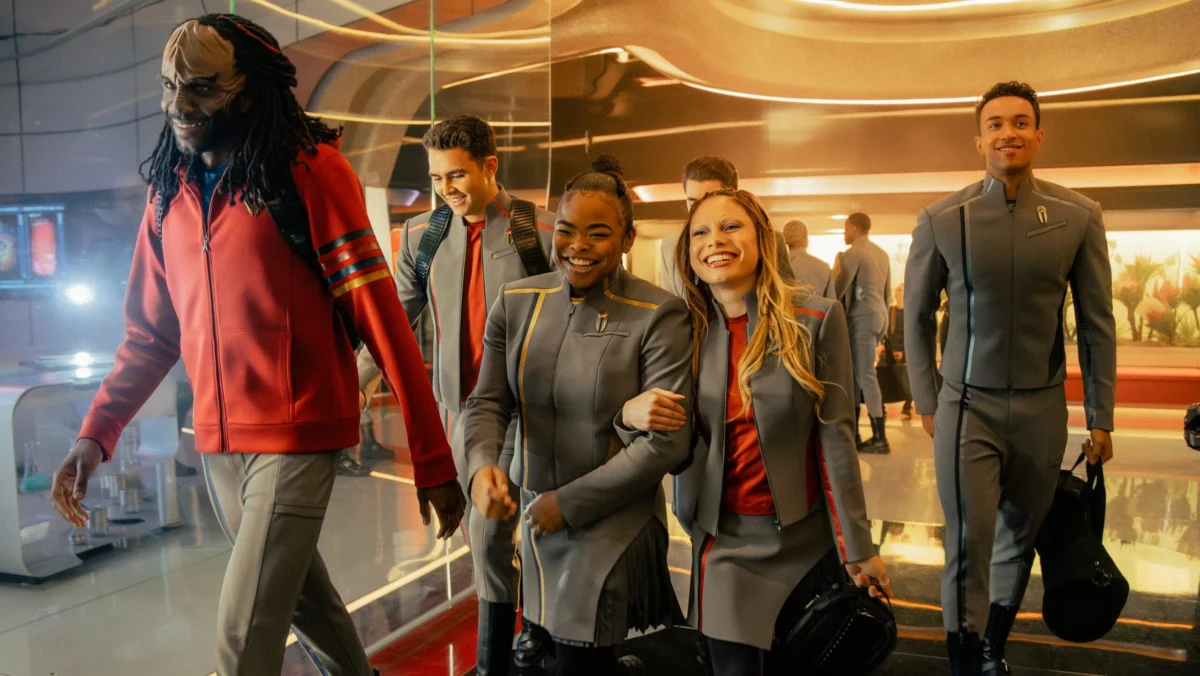
In a significant public critique that has reverberated across the science fiction community, Andy Weir, the acclaimed author behind the blockbuster novel Project Hail Mary, has launched sharp criticism at Paramount+’s current Star Trek television offerings. Speaking on The Critical Drinker podcast last week, Weir not only articulated his dissatisfaction with the contemporary direction of the beloved franchise but also disclosed that his own pitch for a Star Trek show was rejected by Paramount, adding a layer of personal context to his highly publicized remarks. His comments arrive at a pivotal moment for the franchise, coinciding with the recent confirmation that Star Trek: Starfleet Academy will conclude after its already-filmed second season, and amid broader speculation about the future leadership of the Star Trek television universe at Paramount.
The Genesis of the Critique: A Fan’s Discontent
The discussion that sparked Weir’s comments began with podcast host Matthew Marsden praising Project Hail Mary as a refreshing entry in the sci-fi genre, particularly for audiences who grew up with Star Trek and now perceive a scarcity of comparable, optimistic space exploration narratives. Marsden’s sentiment provided a direct lead-in for Weir’s pointed observations regarding the current state of Star Trek.
Weir initiated his critique by quoting an unnamed analyst, stating, "All modern science fiction TV shows and movies have been heavily influenced by the original Star Trek — except for the current batch of Star Trek shows." This provocative statement, met with Marsden’s enthusiastic agreement and shared laughter, underscored a prevalent sentiment among some long-time fans that modern Trek has diverged significantly from its foundational principles.
Delving deeper into his perspective, Weir, identifying as a Gen X fan, explained his formative experiences with science fiction. He cited reruns of the original Star Trek series and Lost in Space as his early touchstones, noting the relative dearth of new, compelling space-faring narratives until the advent of Star Trek: The Next Generation. This historical context highlights a generational connection to specific iterations of Star Trek, suggesting that his critique stems from a deeply ingrained understanding of what the franchise traditionally represented. For many fans of his generation, The Next Generation (TNG) epitomized a renaissance of thoughtful, optimistic, and exploratory science fiction that continued the spirit of Gene Roddenberry’s original vision.
Starfleet Academy‘s Demise and Calls for De-Canonization
The conversation later shifted to the recently canceled Star Trek: Starfleet Academy, a show that had already garnered mixed reactions since its announcement. Marsden’s lighthearted quip, "I think we can probably safely never talk about it again," was met with Weir’s cheerful affirmation, "It’s gone baby! It’s all gone," reflecting a palpable relief among some segments of the fanbase regarding the show’s premature end.
Marsden, taking a more radical stance, suggested that Paramount should consider de-canonizing all Star Trek content from Enterprise onward. This extreme proposal, while not fully endorsed by Weir, illustrates the depth of frustration and desire for a narrative reset among certain fans. Weir, however, offered a more nuanced opinion. While acknowledging Marsden’s severity, he articulated his personal preferences as a consumer: "I like Strange New Worlds. I think it’s pretty good. I didn’t hate Enterprise. I thought it was kind of weird. Lower Decks I thought was entertaining and fun. All the others, they can go."
This selective approval highlights a common division within the modern Star Trek fandom, where shows like Strange New Worlds (often praised for its episodic format and return to classic TOS aesthetics) and Lower Decks (an animated comedy lauded for its deep-cut Trek references and humor) tend to resonate more with traditionalists than other recent entries like Discovery or Picard, which have often faced criticism for darker tones, serialized storytelling, and perceived departures from Roddenberry’s optimistic ethos.
The Failed Pitch and Kurtzman’s Leadership
Adding significant weight to his critique, Weir then revealed his personal experience with Paramount: "I pitched a Star Trek show to Paramount and I was in Zoom with the showrunners with all the shows and spent a lot of time talking to [executive producer Alex Kurtzman]." He candidly expressed his disdain for much of the new Trek despite his interaction with its architect: "I don’t like a lot of the new Trek. He, as a person, is a really nice guy. But at the same time, those shows are shit. He is a nice guy. But they didn’t accept my pitch so, you know, fuck ‘em."
This statement is particularly impactful given Weir’s stature as a bestselling science fiction author, whose work, like The Martian and Project Hail Mary, is celebrated for its scientific accuracy, problem-solving narratives, and optimistic spirit—qualities often associated with classic Star Trek. His direct involvement in pitching a concept to the franchise’s creative leadership, followed by its rejection, offers a unique insider-outsider perspective. It suggests a potential disconnect between the creative vision of a successful contemporary sci-fi author and the current custodians of the Star Trek brand. The "fuck ‘em" comment, while delivered with a degree of jocularity, underscores a genuine frustration over the perceived misdirection of a franchise he clearly holds dear.
Paramount+’s Star Trek at a Crossroads: A Production Hiatus
Weir’s comments come at a critical juncture for Paramount+’s Star Trek franchise. For the first time in several years, there are reportedly no active Star Trek projects currently in production. This production hiatus, often referred to as a "Spacedock" period, signals a potential re-evaluation of the franchise’s strategy. While two more seasons of Strange New Worlds and one additional season of Starfleet Academy are slated to air, the lack of new greenlit projects or active filming marks a significant pause after a period of rapid expansion.
Since its revival with Star Trek: Discovery in 2017, the franchise has seen an unprecedented proliferation of series, including Picard, Lower Decks, Prodigy, Strange New Worlds, and Starfleet Academy. This aggressive content strategy was a cornerstone of Paramount+’s effort to establish itself as a major streaming player, leveraging Star Trek as a tentpole intellectual property to attract and retain subscribers. The current pause, therefore, could indicate a shift towards a more curated approach, perhaps driven by changing market dynamics, subscriber growth targets, or a re-evaluation of content spend.
The Future of Alex Kurtzman’s Leadership
Central to this re-evaluation is the future of executive producer Alex Kurtzman, who has served as the primary architect and showrunner for Paramount’s Star Trek television revival since 2017. His deal with CBS Studios is set to conclude at the end of 2026, and Paramount+ is currently engaged in discussions with Kurtzman and his Secret Hideout production company regarding a potential renewal or extension.
Kurtzman’s tenure has been characterized by both immense creative output and significant fan division. While he successfully brought Star Trek back to television with multiple concurrent series, his creative choices—particularly the darker tone and serialized nature of Discovery and Picard—have frequently drawn criticism from segments of the fanbase who yearned for a return to the more optimistic, episodic, and exploratory themes of previous Trek iterations. The decision to conclude Starfleet Academy, coupled with the overall production slowdown, places Kurtzman’s ongoing leadership under intense scrutiny. The outcome of his contract negotiations will undoubtedly shape the creative direction and strategic roadmap for Star Trek for years to come.
Official Response: Reaffirming Roddenberry’s Vision
In the wake of Star Trek: Starfleet Academy‘s cancellation, Alex Kurtzman, alongside Executive Producers Noga Landau and Gaia Violo, released an open letter aimed at addressing the broader criticism surrounding the show and, by extension, the current state of the franchise. The letter served as a powerful defense and reaffirmation of the core philosophies underpinning Star Trek.
The letter began by emphasizing Gene Roddenberry’s "transformative vision of the future," highlighting the "joy [that] comes from adventuring across boundaries of time, space, and the humanly possible in service to" this vision. It underscored Star Trek‘s "inexhaustible optimism," its belief in "the best in human nature," and its daring imagination of a society characterized by "infinite diversity in infinite combinations," free from war, hate, poverty, disease, and repression, and dedicated to "scientific inquiry and respect for all life."
Furthermore, the letter thoughtfully delved into Roddenberry’s background, reminding readers that he "wasn’t some starry-eyed dreamer" but a "decorated Army bomber pilot in the Pacific Theater," who had witnessed "first-hand the grim consequences of the worst of human nature." This context allowed the producers to articulate the dual message of Star Trek: not just "a promise of hope" but "also a warning." It posited that Star Trek essentially states: "Look! We made it! But just barely. First, we had to put all those ancient scourges behind us." The letter concluded by asserting that "what makes us glorious as a species, and gives us hope for the future and the galaxy is inextricably linked to what makes us dangerous to each other." This "dual message — of hope and of warning — isn’t just a pretty dream but a call to action, to think about who we are in a different way."
This comprehensive statement serves as an important insight into the creative intent behind the modern Star Trek shows. It suggests that while some fans perceive a departure from optimism, the creators believe they are honoring Roddenberry’s complete vision, including its cautionary elements and its challenge to contemporary society. However, the disconnect between this stated intent and the audience’s reception, as exemplified by Weir’s criticism, underscores the ongoing challenge of interpreting and modernizing a beloved franchise for new generations while retaining its essence for long-time fans.
A Historical Perspective on Star Trek Divisions
Divisions within the Star Trek fandom are not a new phenomenon. Each iteration of the franchise, from its original run (1966-1969) to its subsequent series, has faced scrutiny and varied reception. The Original Series itself was nearly canceled multiple times due to ratings, only to achieve cult status through syndication. Star Trek: The Next Generation (1987-1994) initially struggled to win over fans of the original crew but eventually became a critical and commercial success, defining Trek for a new generation.
Later series like Deep Space Nine (1993-1999), praised for its serialized storytelling and darker ethical dilemmas, contrasted sharply with Voyager (1995-2001) and Enterprise (2001-2005). Enterprise, in particular, faced an uphill battle, attempting to serve as a prequel while also trying to re-energize a franchise that many felt was suffering from fatigue. Its cancellation marked the end of an uninterrupted 18-year run of Star Trek television, leading to a decade-long hiatus from the small screen.
The "Kelvin Timeline" film series (2009-2016), directed by J.J. Abrams, successfully brought Star Trek back to the big screen with a more action-oriented, fast-paced approach that appealed to a broader audience but alienated some purists. When Star Trek: Discovery launched in 2017, it faced immense pressure and scrutiny. Its serialized narrative, darker tone, and reimagined Klingons were immediate points of contention. While it undeniably brought Trek back into the cultural conversation and attracted new viewers, it also solidified a growing schism within the fandom between those who embraced its modern aesthetic and those who yearned for a return to the classic episodic, optimistic exploration.
The subsequent deluge of shows – Picard‘s darker, more character-driven story; Lower Decks‘ comedic, referential take; Prodigy‘s animated entry for younger audiences; and Strange New Worlds‘ deliberate return to episodic, optimistic adventures – reflects Paramount’s strategy to cater to different segments of the audience. However, this diversification has also intensified the debate over what constitutes "true" Star Trek, making high-profile criticisms like Weir’s particularly resonant.
Implications and the Path Forward
Andy Weir’s critique, especially coming from a voice as respected in the sci-fi genre as his, carries significant weight. It validates the concerns of a substantial portion of the Star Trek fanbase and puts additional pressure on Paramount+ to carefully consider its creative direction. The cancellation of Starfleet Academy and the current production pause suggest that Paramount is already undergoing a strategic review.
The implications are manifold. For Paramount+, the challenge is to balance the need for fresh, engaging content that attracts new subscribers with the imperative to honor the legacy and core values that have sustained Star Trek for decades. Public criticism from influential figures like Weir can influence public perception, subscriber sentiment, and ultimately, investment in future projects.
For Alex Kurtzman, the ongoing contract negotiations will likely be influenced by these public discussions and the internal performance metrics of the various Trek shows. Should he renew his deal, it may signal a continued commitment to his creative vision, potentially with adjustments based on feedback and market trends. Alternatively, a change in leadership could usher in a new era for Star Trek television, potentially aligning more closely with the preferences articulated by Weir and a significant segment of the long-time fanbase.
Ultimately, Star Trek faces the perennial challenge of evolution versus tradition. The franchise has always been a reflection of its times, and its ability to adapt while staying true to Gene Roddenberry’s foundational ideals of hope, diversity, and exploration will determine its trajectory in the years to come. The current "Spacedock" period, whether a temporary pause or a significant strategic pivot, offers an opportunity for Paramount to recalibrate, listen to its diverse audience, and chart a course that ensures Star Trek continues to boldly go where it needs to, for both new and old fans alike.