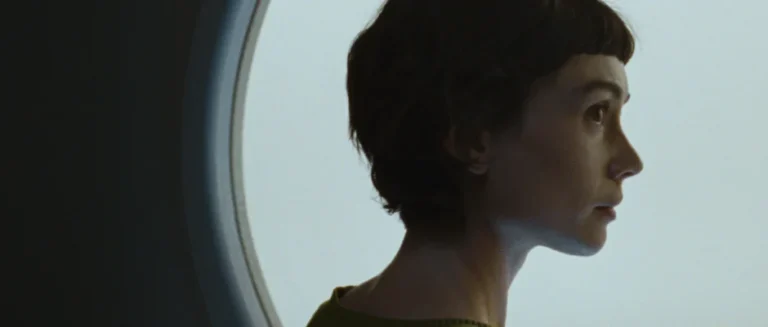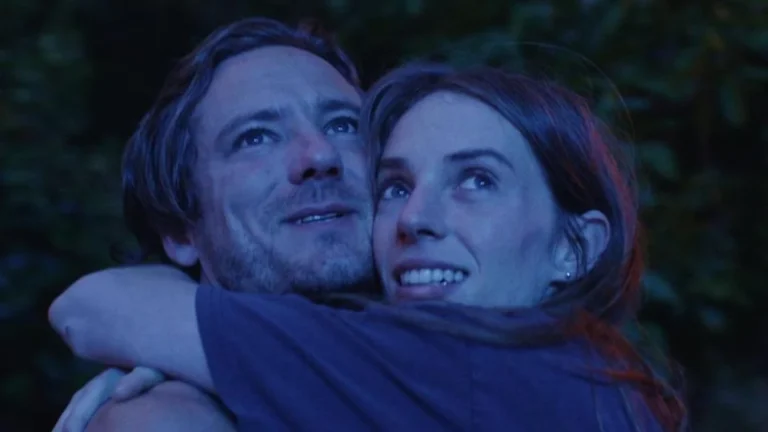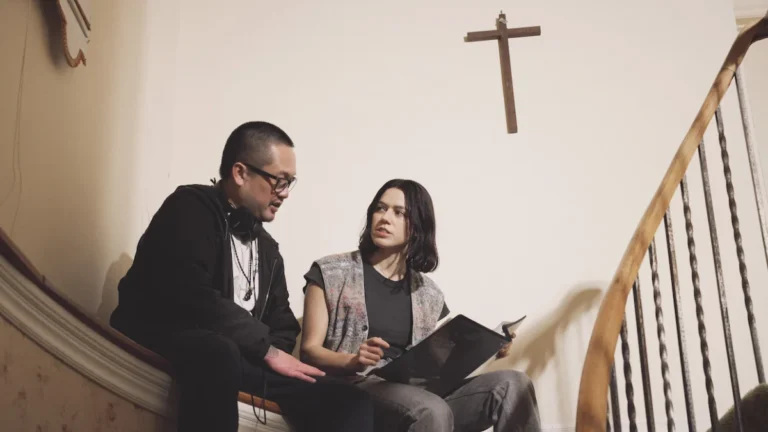



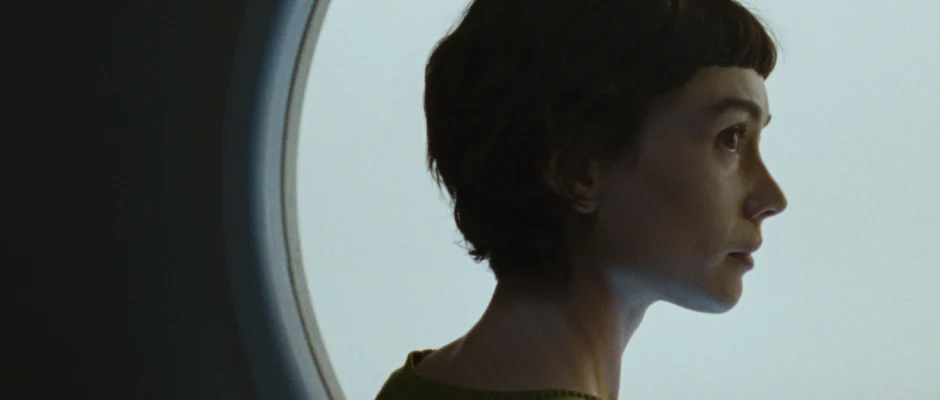
On March 12, the South by Southwest (SXSW) Film & TV Festival hosted the world premiere of Anima, a narrative feature directed by Brian Tetsuro Ivie that explores the metaphysical boundaries between digital immortality and the human soul. The film, a lo-fi science fiction road trip, marks a significant departure for Ivie, whose background is rooted in documentary filmmaking. Featuring Sydney Chandler as Beck and Takehiro Hira as Paul, the production utilizes a 16mm film aesthetic to ground its high-concept premise in a tactile, lived-in reality. The narrative follows Beck, a young woman who, on her first day of a new job, is tasked with escorting Paul to a specialized facility for an "end-of-life" procedure. Paul has elected to upload his consciousness into a cloud-based system, a process that promises a form of digital afterlife where his digitized self can be visited by others. However, the straightforward journey evolves into an existential odyssey as Paul insists on making several detours to seek absolution for past transgressions before his physical existence ceases.
Narrative Foundations and the Parable of the Rich Fool
The thematic core of Anima is deeply influenced by the Parable of the Rich Fool, found in the Gospel of Luke (12:13-21). Director Brian Tetsuro Ivie, who was raised in a Catholic household in California, sought to modernize the ancient story’s warning against the accumulation of material wealth at the expense of spiritual richness. In the context of Anima, the "wealth" being accumulated is time and existence itself. The film presents a society where the ultimate luxury is the circumvention of death through silicon-based transference.
Ivie’s approach to the adaptation focuses on the tension between the material and the immaterial. The director posits that the modern drive to upload consciousness treats the human person as "time and chance acting on matter," a view he fundamentally challenges. By framing the story as a parable, Ivie attempts to explore the divine through art, avoiding the tropes of traditional religious cinema in favor of a broader, more philosophical inquiry into what constitutes a meaningful life. The film suggests that the desire to preserve the self digitally may actually hinder the ability to be present in the physical world.
Character Dynamics and the Performance of Sydney Chandler
Sydney Chandler’s portrayal of Beck provides the emotional anchor for the film’s speculative elements. Chandler, who has recently gained attention for her role in upcoming major productions such as Alien: Earth, approached Beck as a "character of transaction." The role required a nuanced exploration of a young woman stunted by past abandonment—specifically the ambiguous loss of her father—which resulted in a protective "quiet rage."
During the production, Chandler worked to reconcile Beck’s initial coldness with the burgeoning connection she forms with Paul. The relationship between the two protagonists is described as "two sides of the same coin," with Paul representing the desperate desire to extend life and Beck representing the cynical detachment of those left behind. Chandler noted that the filming process allowed for a unique exploration of "acceptance," particularly in scenes where Beck must witness Paul’s final decision without being able to intervene. The actress highlighted that the most natural path of life includes death, a sentiment her character eventually embraces, contrasting with Paul’s technological avoidance of the "mystery" of the afterlife.
Technical Execution: The Resurgence of 16mm Film
A defining characteristic of Anima is Ivie’s decision to shoot entirely on 16mm film. This choice serves as a deliberate counter-aesthetic to the film’s themes of digital consciousness. While the story discusses the transition of the human soul into a digital cloud, the visual medium remains grain-heavy, imperfect, and chemical. Ivie described the use of film as a "chemical miracle" and a "prayer," emphasizing that the imperfections of the medium—such as light leaks and grain structures—mirror the imperfections of the human experience.
The production was supported by Kebrado, a company founded by Ivie with the mission of helping filmmakers maintain "humanity through the arts." The slower pace required by film cinematography forced the production to remain intimate and intentional. By using a tool of the past to tell a story of the future, the production team created a "broken reflection" of the modern age, ensuring that the sci-fi elements felt grounded in a felt reality rather than a sterile, computer-generated one.

Production Ethics and the "Crew Careline"
Drawing from his documentary background, Ivie implemented a leadership style on set that prioritized the well-being of the production crew, a rarity in the often-taxing environment of independent filmmaking. A notable addition to the film’s budget was the "Crew Careline," a dedicated fund used to provide enhanced amenities for the staff, such as improved catering, better lodging, and transportation services.
This initiative was designed to ensure that the crew was not "on the altar" of the director’s ambition. Ivie’s transition from documentary to narrative film also influenced his directing style, as he encouraged actors to find the "truth" of a scene through repetition and exploration, much like a documentarian waits for a genuine moment to unfold in real life. Chandler remarked that this approach created a safe environment for actors to work through personal complexities through their craft.
Aesthetic Design and Costume Philosophy
The visual world of Anima was further defined by costume designer Emily Costantino. Rather than relying on contemporary science fiction tropes or derivative futurism, Costantino drew inspiration from mid-century Japanese magazines and classical paintings. The result is a wardrobe that feels like a "cousin" to our current world—a blend of 1990s and early 2000s futuristic aesthetics with timeless silhouettes.
The contrast between the two leads is reflected in their attire: Beck’s "scroungy," functional outfits represent her grounded, transactional nature, while Paul’s "Matrix-inspired" clothing suggests his preoccupation with high-concept transcendence. Ivie noted that the success of the film’s atmosphere relied heavily on the synchronization of costume, cinematography, and production design. If these elements had not been in harmony, the director suggested, the film’s lo-fi sci-fi world would have lacked the necessary depth to sustain its existential themes.
Broader Implications: Sci-Fi in the Age of Artificial Intelligence
The premiere of Anima arrives at a time of heightened public and industry discourse regarding the role of Artificial Intelligence (AI) and digital duplication. During the production and subsequent press events, the cast and crew reflected on the canon of sci-fi works that emerge in the aftermath of global crises. Chandler, who wrote a college thesis on genre work following World War I and II, noted that science fiction often serves as a metaphor for current societal anxieties.
Anima joins a growing subgenre of "human-centric" science fiction that resists the glorification of technological advancement. The film posits that art created by humans—defined by mistakes, soul, and emotional capacity—is inherently superior to AI-generated content. Chandler argued that the "mystery" of life and the finality of death give existence its color and meaning, a sentiment that resonates with current cultural movements advocating for human connection over digital saturation.
Chronology of Development and Release
The development of Anima began as an inquiry into the director’s own spiritual journey and his observations of a society increasingly focused on material longevity. Following the completion of the script, the production sought to maintain an independent spirit, eventually securing a world premiere slot at SXSW 2024.
- Initial Concept: Ivie begins exploring the modernization of the Parable of the Rich Fool.
- Pre-Production: Sydney Chandler and Takehiro Hira are cast; the decision to shoot on 16mm is finalized.
- Principal Photography: The film is shot with a focus on lo-fi aesthetics and "Crew Careline" ethics.
- Post-Production: The 16mm grain and light leaks are integrated into the final edit to emphasize the "earthy" feel of the film.
- Premiere: March 12, 2024, at the SXSW Film & TV Festival in Austin, Texas.
As the film moves into the festival circuit and toward wider distribution, it stands as a testament to the enduring power of independent cinema to tackle complex spiritual questions. By eschewing the spectacle of high-budget sci-fi in favor of an intimate, road-trip narrative, Anima challenges audiences to consider whether the preservation of consciousness is worth the loss of the human experience. The film concludes that while technology may offer a way to extend our presence, it is our mortality and our capacity for making amends that truly define the "anima" or soul.