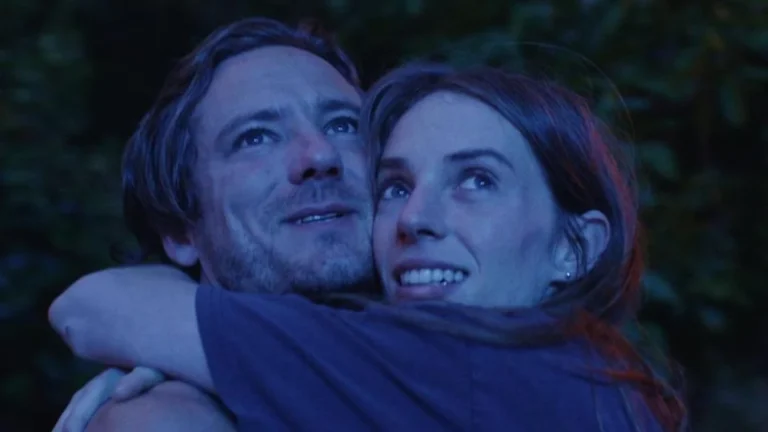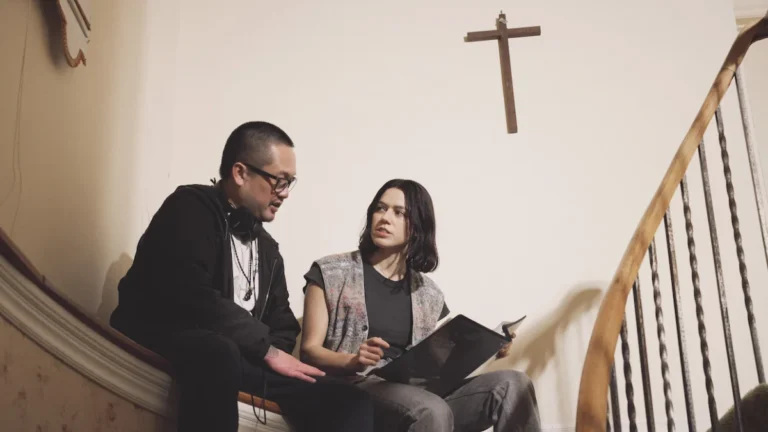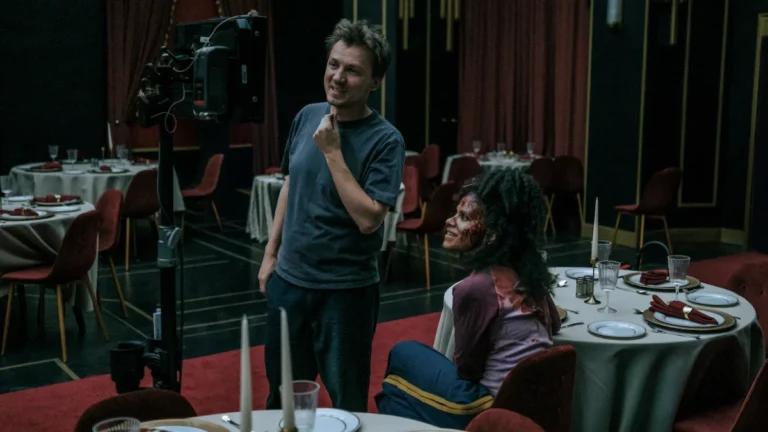

The independent film landscape is currently witnessing the rapid ascent of Alice Maio Mackay, a 21-year-old Australian filmmaker who has completed seven feature films before reaching the age of 22. Her latest project, The Serpent’s Skin, recently celebrated its American premiere at the Alamo Drafthouse in downtown Brooklyn, marking a significant milestone in a career defined by prolific output and a distinct DIY aesthetic. The film, a supernatural romance centered on queer identity and magical realism, has already garnered attention on the international festival circuit, with screenings in London and Montreal prior to its New York debut. This momentum underscores a growing interest in Mackay’s work, which often blends genre tropes with contemporary social commentary and a deep reverence for late-20th-century pop culture.
A Prolific Rise in Independent Cinema
Alice Maio Mackay’s trajectory is notable not only for her age but for the speed and consistency of her production schedule. In an industry where feature-length projects often take years to move from conception to distribution, Mackay has managed to build a substantial filmography in a fraction of the time. The Serpent’s Skin arrives on the heels of her previous genre-bending works, such as Carnage for Christmas, and she has already completed production on her subsequent eighth feature. This high rate of production is characteristic of a new generation of "lo-fi" filmmakers who utilize accessible digital technology and tight-knit creative networks to bypass traditional gatekeeping in the film industry.
Mackay’s work is deeply rooted in the queer indie genre scene, a movement that prioritizes authentic representation within the frameworks of horror, sci-fi, and fantasy. By focusing on stories that place queer characters at the center of supernatural narratives, Mackay contributes to a broader shift in media where LGBTQ+ identities are no longer relegated to the subtext or tragic tropes. Instead, her films often treat queerness as a fundamental, celebrated aspect of the characters’ lives, even as they face external demonic or societal threats.
Narrative Foundations and Thematic Evolution
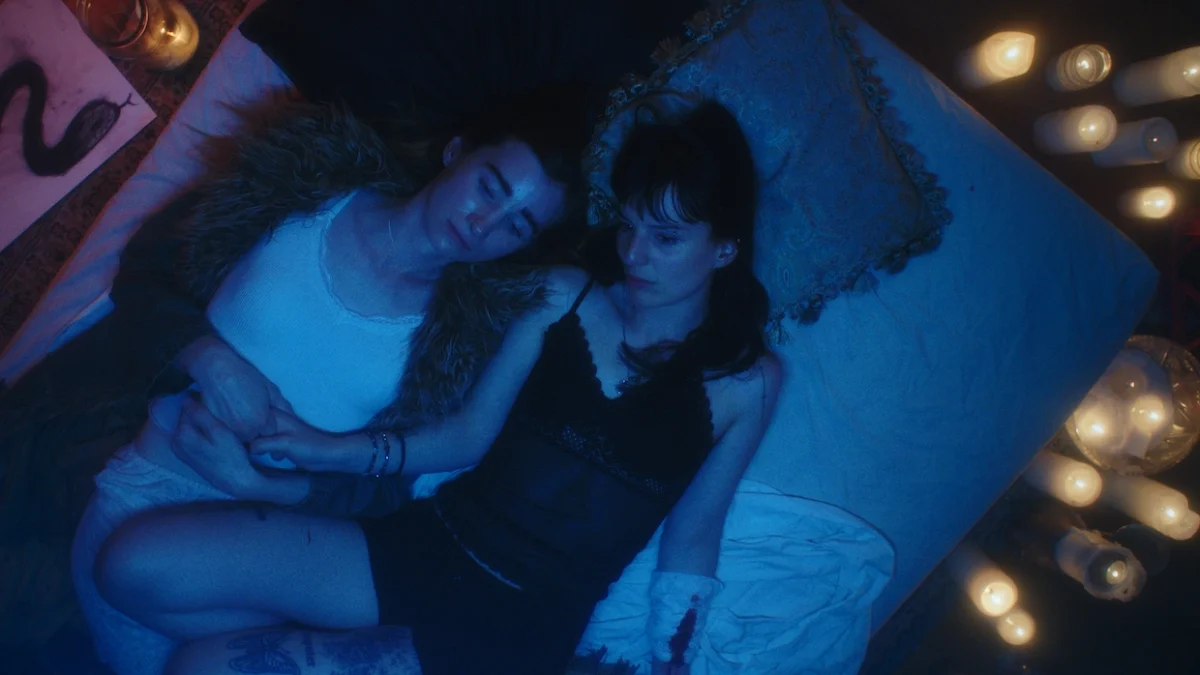
The Serpent’s Skin follows the story of Anna, played by Alexandra McVicker, a newcomer to town who possesses an air of innocence. Her life takes a dramatic turn when she meets Jen, portrayed by filmmaker and actor Avalon Fast. Jen is a mysterious, goth-coded tattoo artist who serves as both a romantic interest and a mentor. As the two women discover they share latent magical abilities, the narrative shifts toward a supernatural confrontation. They are forced to battle a demon that has possessed Danny (Jordan Dulieu), a character Mackay describes as the "dreamy alt-boy-next-door."
The character of Danny represents a thematic shift in Mackay’s writing. In her earlier works, villains were often characterized by overt bigotry or traditional antagonistic traits. However, in The Serpent’s Skin, Mackay explores a more contemporary and nuanced form of conflict. Danny is framed as a "progressive" young man who nevertheless embodies toxic masculinity. This choice reflects a desire to move beyond "bigoted" villains toward an exploration of how harmful behaviors can persist even within social circles that claim to be enlightened or progressive. This thematic evolution suggests a maturing perspective on social dynamics, moving toward a critique of internal community behaviors rather than just external threats.
Artistic Influences: From the Bassoon to Bat Out of Hell
Mackay’s creative process is heavily influenced by her background in music and theater, which informs the rhythm and structure of her films. Before transitioning into filmmaking, Mackay was a classically trained musician who attended a specialized music school for the bassoon. Her artistic foundation also includes competitive dance—spanning ballet, tap, and contemporary styles—from the ages of eight to fourteen. This multidisciplinary background is evident in the theatricality of her dialogue scenes, which she often rehearses with her actors as if preparing for a stage play.
Music remains a central pillar of her world-building. During the development of The Serpent’s Skin, Mackay drew significant inspiration from the operatic rock of Meatloaf, specifically the Bat Out of Hell trilogy. She cites the "operatic nature" of Meatloaf’s music as a key influence on the film’s emotional stakes, where love and conflict are heightened to a grand, almost mythic scale. This musical influence extends to her editing process, where she utilizes specific character playlists and "temp music" to establish the tone of individual scenes. This approach ensures that the final product maintains a cohesive "vibe," a term Mackay frequently uses to describe the atmospheric goals of her work.

The Y2K Resurgence and the Legacy of 90s Television
The Serpent’s Skin is intentionally in conversation with the "teen witch" media boom of the late 1990s and early 2000s. Mackay identifies shows like Buffy the Vampire Slayer and Charmed as foundational texts that provided a sense of escapism during her childhood. These programs often utilized the supernatural as a metaphor for the trials of adolescence, a tradition Mackay continues but updates for a modern audience.
A key difference in Mackay’s approach is the transition from subtext to text regarding queer representation. While 90s supernatural dramas often featured queer-coded characters or secondary LGBTQ+ storylines (such as Willow in Buffy), Mackay places these identities at the forefront. This reflects a broader trend in the "Y2K resurgence" currently seen in independent cinema, where filmmakers who grew up on early aughts television are now reclaiming and diversifying the genres that shaped them. Mackay’s work shares a certain nostalgic DNA with recent critical successes like Jane Schoenbrun’s I Saw the TV Glow, though Mackay maintains a more comedic and "witty romp" tone compared to the psychological horror of her contemporaries.
Collaborative Synergy in the Queer Indie Scene
The production of The Serpent’s Skin highlights the collaborative nature of the current queer indie landscape. Mackay frequently works with a recurring group of artists, creating a self-sustaining ecosystem of talent. For this film, she collaborated with Vera Drew, the filmmaker and editor known for the acclaimed transgressive feature The People’s Joker. Drew’s involvement as an editor brings a sharp, rhythmic quality to the film’s pacing, aligning with Mackay’s fast-moving narrative style.
The cast also features notable figures from the indie world, including Avalon Fast, who directed the 2022 lo-fi horror hit Honeycomb. Mackay herself often appears in the projects of her peers, such as the durational films of Louise Weard. This cross-pollination of talent—where directors act in each other’s films and editors share resources—allows these filmmakers to produce high-quality work on limited budgets. It also fosters a sense of community that is often absent in the more competitive, high-stakes environment of major studio production.
Chronology of Production and Festival Recognition
The journey of The Serpent’s Skin from concept to international premiere follows a timeline that illustrates Mackay’s efficient workflow. Mackay typically begins her process by writing stories in a narrative, novel-like format before collaborating with her long-term co-writer, Benjamin Pahl Robinson, to adapt them into screenplays. This literary foundation allows for a depth of character development that persists even within the constraints of low-budget genre filmmaking.
The film’s festival run has been the most extensive of Mackay’s career to date. After successful screenings in London and Montreal, the New York premiere at the Alamo Drafthouse served as a significant validation of her appeal to American audiences. The venue, known for its support of genre cinema and independent voices, provided an ideal platform for a film that balances cult-movie sensibilities with modern queer themes.
Broader Impact and Industry Implications
The success of filmmakers like Alice Maio Mackay signals a shift in how the film industry perceives young, independent creators. By the age of 21, Mackay has demonstrated that it is possible to maintain a consistent presence in the global festival circuit while remaining true to a DIY, community-focused ethos. Her ability to tap into Y2K nostalgia while providing contemporary representation addresses a specific demand in the market for "vibes-based" storytelling that resonates with Gen Z and millennial audiences.
Furthermore, Mackay’s work highlights the viability of the "supernatural romance" genre when stripped of the heteronormative constraints of major studio releases like Twilight. By focusing on the "feelings" of watching classic supernatural shows rather than just replicating their aesthetics, Mackay creates a space for nostalgic reflection that is also forward-looking. As she moves toward her eighth feature and potentially a future in novel writing, Mackay remains a central figure in a movement that is redefining the boundaries of queer cinema, one genre film at a time. The Serpent’s Skin stands as a testament to the power of prolific creation and the enduring appeal of the supernatural as a canvas for human—and queer—experience.