

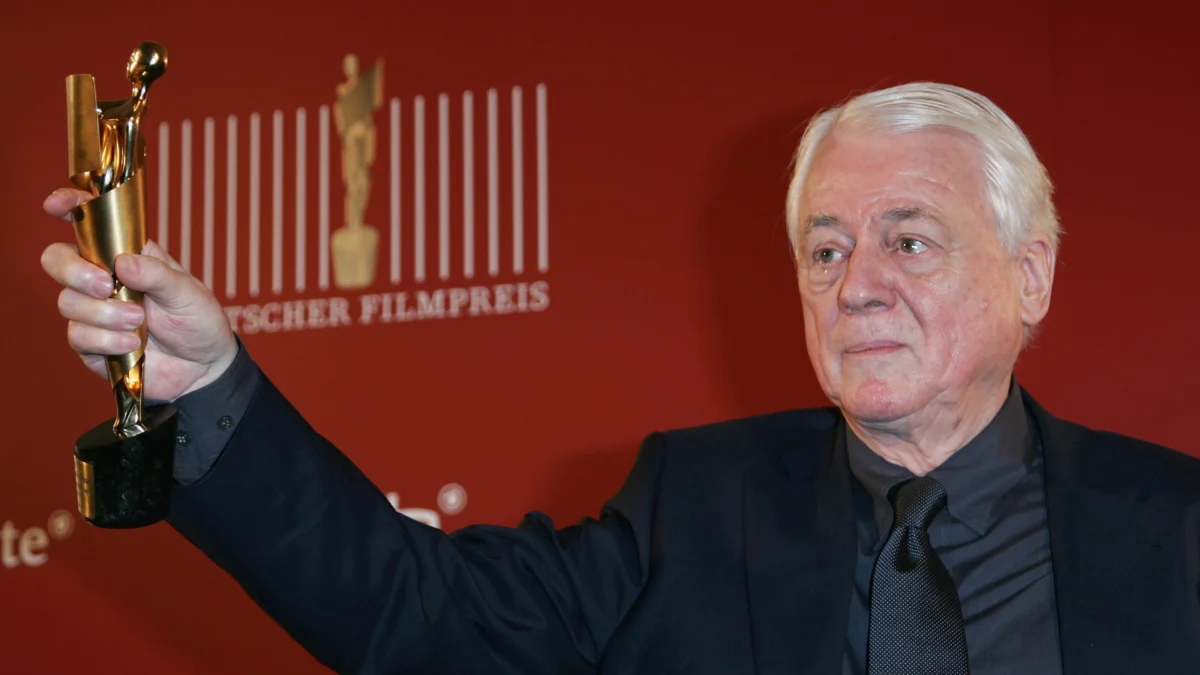
Alexander Kluge, the German filmmaker, writer, and television producer whose profound career spanned more than six decades and played a pivotal role in defining the New German Cinema movement, has passed away at the age of 94. His family confirmed his death to German media on Wednesday, though a cause of death was not immediately provided. Kluge’s passing marks the end of an era for German and international culture, as he was a true polymath who seamlessly navigated the worlds of film, literature, philosophy, and media, leaving an indelible mark on each.
A Pioneer of Post-War German Cinema: The Oberhausen Manifesto
Born in Halberstadt, Germany, in 1932, Kluge emerged onto the cultural scene during a critical juncture in post-war Germany. The nation was grappling with its past, and its cinematic landscape was largely dominated by uninspired, commercial productions often derisively referred to as "Papa’s Kino" – a cinema perceived as escapist and devoid of artistic ambition or critical engagement. This creative vacuum spurred a generation of young filmmakers to action. Kluge was one of the pivotal signatories of the seminal 1962 Oberhausen Manifesto. This radical declaration, penned by 26 young German filmmakers, boldly proclaimed, "Papa’s Kino is dead!" It was a passionate call for a new, independent, and auteur-driven German cinema, one that would break free from commercial constraints and embrace artistic freedom, social commentary, and intellectual rigor.
The Manifesto advocated for a cinema rooted in personal vision and critical engagement with contemporary society and history, aiming to re-establish a German film culture that could stand on the international stage with artistic integrity. Kluge, alongside fellow luminaries like Volker Schlöndorff, Edgar Reitz, and Peter Lilienthal, became a leading figure in this burgeoning movement, which soon gained international recognition as the New German Cinema. His contributions were not merely theoretical; he quickly translated the Manifesto’s ideals into groundbreaking cinematic works that challenged conventions and provoked thought.
Early Life and Intellectual Formations: From Jurisprudence to Critical Theory
Before embarking on his illustrious film career, Kluge pursued a rigorous academic path. He earned a doctorate in jurisprudence, initially practicing as a lawyer. This early training in law instilled in him a meticulous analytical mind and a deep understanding of societal structures and justice, themes that would permeate his later artistic endeavors. His intellectual journey took a significant turn during his time at the Frankfurt Institute for Social Research, where he came into close contact with the renowned German philosopher Theodor W. Adorno.
Adorno, a leading figure of the Frankfurt School of critical theory, became a profound mentor to Kluge, shaping his intellectual trajectory and artistic philosophy. Adorno’s theories, which critiqued mass culture, the commodification of art, and the potential for reason to become irrational in modern society, resonated deeply with Kluge. This mentorship fostered in Kluge a lifelong commitment to critical thinking, a dialectical approach to understanding complex social phenomena, and a keen awareness of the power dynamics inherent in media and representation. Adorno’s influence can be seen throughout Kluge’s oeuvre, in his interrogation of historical narratives, his skepticism towards simplistic truths, and his innovative blending of documentary and fictional elements to expose underlying societal contradictions.
By 1958, Kluge’s burgeoning interest in cinema led him to shift professions, accepting a position as an assistant to the legendary German director Fritz Lang. Lang, a master of German Expressionism and film noir, whose iconic works like Metropolis and M had left an indelible mark on cinematic history, provided Kluge with invaluable practical experience and a direct link to the golden age of German filmmaking. This period of apprenticeship under Lang, combined with his solid intellectual grounding in critical theory, provided Kluge with a unique foundation from which to launch his distinctive and influential career.
Defining Works of New German Cinema and International Acclaim
Kluge’s directorial debut, Abschied von gestern (released in the U.S. as Yesterday Girl), premiered in 1967 and immediately established him as a significant new voice. The film, which dramatized the struggles of Anita G., a young Jewish refugee from East Germany attempting to navigate life in the West, captivated audiences and critics alike. It won the Silver Lion at the Venice Film Festival, a momentous achievement as it marked the first post-war Italian festival prize for a German director, signaling the resurgence of German cinema on the international stage. Yesterday Girl was praised for its innovative narrative structure, blending documentary-style realism with fictional elements, and its poignant exploration of alienation, memory, and the search for identity in a divided Germany. The film’s protagonist, often feeling like an outsider in a society still grappling with its past, became a resonant symbol for a generation.
Just two years later, Kluge solidified his reputation with Die Artisten in der Zirkuskuppel: ratlos (Artists under the Big Top: Perplexed). This highly experimental film, a collage of newsreels, interviews, and fictional sequences, explored societal ideals, protest movements, and the disillusionment of the late 1960s. Its daring form and intellectual ambition earned Kluge Venice’s top prize, the Golden Lion, affirming his status as an avant-garde filmmaker unafraid to challenge conventional storytelling. The film’s fragmented structure and its critical gaze at the promises and failures of revolution were deeply reflective of the turbulent socio-political climate of the era.
Kluge’s cinematic output continued to garner critical acclaim and prestigious awards. His 1976 film Starke Männer (Strongman Ferdinand), a satirical critique of authoritarianism and state power, earned the Fipresci international critics prize at the Cannes Film Festival. This film, like many of Kluge’s works, probed the mechanisms of control and the individual’s relationship to institutional power, themes deeply rooted in his Adornian philosophical background.
A particularly significant work in his filmography is the 1978 anthology film Germany in Autumn. Made in collaboration with other leading New German Cinema directors, including Volker Schlöndorff and Rainer Werner Fassbinder, this powerful and urgent film addressed the "German Autumn" – a period of intense political crisis in Germany marked by far-left terrorism (specifically by the Red Army Faction, or RAF) and the subsequent severe crackdown by the German state. Kluge’s segments within the film, characterized by their incisive analysis and blend of documentary and staged footage, contributed to a collective artistic response that grappled with the profound moral and political questions facing the nation. The film was a raw, immediate, and unflinching examination of a society under immense pressure, and it remains a vital historical document of that tumultuous period.
Late Career Milestones and Enduring Intellectual Curiosity
Kluge’s intellectual curiosity and artistic ambition showed no signs of diminishing in his later years. One of his most ambitious and monumental works was the nine-hour News From Ideological Antiquity: Marx-Eisenstein-Capital, released in 2008. This daring project was a reimagining of Sergei Eisenstein’s unfinished cinematic adaptation of Karl Marx’s Das Kapital. The film, a vast intellectual undertaking, explored complex philosophical and economic ideas through a unique blend of historical footage, animation, interviews, and theoretical discourse, demonstrating Kluge’s unwavering commitment to engaging with foundational texts and pressing contemporary issues. That same year, in recognition of his extraordinary contributions to German cinema, he received a lifetime achievement award from the German Film Academy.
Even into his 90s, Kluge remained remarkably active and engaged. His final major work, the 2025 visual essay Primitive Diversity, explored the burgeoning field of Artificial Intelligence and its implications for the future of moving images. This film, which premiered posthumously at the International Film Festival Rotterdam, underscored his lifelong fascination with technology, media, and the evolving nature of human perception and creativity. It served as a testament to his intellectual vitality and his capacity to consistently address the most cutting-edge topics of his time.
Beyond the Screen: A Prolific Writer and Media Innovator
Alexander Kluge’s influence extended far beyond the realm of cinema. He was a truly prolific writer, producing an extensive body of work that included short stories, essays, and philosophical texts. His literary output was as intellectually rigorous and formally innovative as his films, often employing fragmented narratives, a blend of factual and fictional elements, and a critical lens on history and society. For his literary achievements, Kluge received numerous prestigious accolades, solidifying his standing as one of Germany’s foremost public intellectuals. These included the Georg Büchner Prize, one of the most distinguished literary awards in the German-speaking world, recognizing authors whose work has significantly shaped contemporary German literature; the Theodor W. Adorno Prize, awarded for outstanding achievements in philosophy, theater, music, and film, directly linking his work to his mentor’s legacy; the Heinrich-Heine-Preis; and the Klopstock Prize. These honors collectively underscore the breadth and depth of his literary and intellectual contributions.
In 1987, Kluge ventured into television, founding the television production company dctp (Development Company for Television Program). Through dctp, he created groundbreaking news and debate programs such as 10 vor 11, News & Stories, and Mitternachtsmagazin. These programs provided an alternative to mainstream commercial television, offering in-depth analysis, critical perspectives, and a platform for intellectual discourse. Kluge’s foray into television demonstrated his commitment to shaping public discourse and bringing critical thinking to a broader audience, applying his unique, essayistic approach to the format of television news and current affairs. He understood that media, in all its forms, was a powerful tool for societal reflection and change.
His creativity was not confined to moving images or printed words; Kluge also engaged with visual arts, actively designing art exhibitions even in his nineties. This multidisciplinary engagement underscored his belief that artistic expression and intellectual inquiry were interconnected and mutually enriching.
A Lasting Legacy: The Interdisciplinary Public Intellectual
Alexander Kluge was a unique figure in German and international culture, a true polymath who fundamentally believed that art could not be separated from politics or philosophy. Throughout his remarkable career as a filmmaker, writer, and television producer, he relentlessly interrogated modern life, memory, and society, leaving an indelible mark on German culture and inspiring generations of artists and thinkers. His work consistently challenged audiences to think critically, to question dominant narratives, and to engage with the complexities of history and contemporary existence.
The Berlin Film Festival, where Kluge was a cherished and frequent guest for decades, remembered him with profound respect. In a statement, the festival highlighted his "passion for filmmaking, critical thinking, and storytelling [that] shaped German cinema and inspired generations of filmmakers." This sentiment resonates deeply across the cultural landscape, as Kluge’s influence extended to subsequent generations of filmmakers who adopted his experimental approaches, his commitment to social commentary, and his innovative narrative techniques.
His legacy is one of intellectual rigor, artistic daring, and an unwavering commitment to the public sphere. Kluge’s interdisciplinary approach, his ability to seamlessly blend critical theory with poetic imagery, factual reporting with fictional narratives, and academic inquiry with popular media, positions him as one of the most significant and multifaceted German public intellectuals of the post-war era. He demonstrated that art could be both aesthetically profound and deeply engaged with the pressing issues of its time, encouraging a holistic understanding of culture, politics, and society. His work will continue to serve as a vital resource for understanding the complexities of the 20th and 21st centuries, and his pioneering spirit will undoubtedly inspire future generations to explore the frontiers of creative and critical thought.