

Vine FX has once again demonstrated its prowess in delivering sophisticated visual effects, serving as the sole vendor for the second season of ITV’s acclaimed crime thriller, After the Flood. The studio successfully executed a demanding workload of 336 shots across 94 sequences, spanning all six episodes of the new season. This season plunges viewers back into the aftermath of the devastating floods that submerged the town of Waterside one year prior, with DI Jo Marshall now confronting a new investigation amidst the unsettling backdrop of simmering moorland fires and the ever-present threat of renewed flooding. This expansion of the show’s narrative scope necessitated a significant leap in visual effects complexity, pushing Vine FX to integrate innovative techniques.

The production’s creative direction, led by Director Azhur Saleem and Quay Street Productions (QSP), fostered a collaborative environment that allowed Vine FX to explore ambitious visual ideas. Michael Illingworth, Executive VFX Supervisor at Vine FX, highlighted this synergy: "There was a real spirit of creativity on set, especially as we had established a great relationship with Director Azhur Saleem and the QSP team on Season 1. Azhur trusted us to explore bold ideas, and we were able to take on much more ambitious shots as the collaboration evolved during filming." This trust extended to early pre-production, with Vine FX’s team actively participating in on-set recces. "Being part of those early recces meant that the team and I could offer direct insights on what was captured on set, which made a huge difference for our work, such as the Gaussian Splatting, later in the pipeline," Illingworth elaborated. This proactive engagement ensured that the visual effects pipeline was seamlessly integrated with the filming process, anticipating challenges and maximizing the potential of on-set material.
The Peril of Moorland Fires: A Simulated Inferno
A significant undertaking for Vine FX was the creation of extensive moorland fire sequences for the season’s opening episode. These scenes were particularly challenging as they were filmed in a protected area where practical burns were strictly prohibited. Kaitlyn Beattie, Executive Producer, detailed the process: "A lot of our initial work was the big fire sequence in Episode One. It was filmed in a protected area, so they couldn’t actually burn anything on it. Our job was to build upon the smoke captured on set, using a combination of 3D and 2D techniques and close collaboration among departments to bring everything together."

The team meticulously researched and recreated the nuanced behavior of moorland fires, which differs significantly from structural fires. VFX Supervisor Alesja Surubkina explained, "We gathered reference photography and studied how grass and smoke behave, which is very different from structural fires. Using custom fire simulation systems, procedural controls, and wildfire references, the team created varied fire behavior across scales without repetition." This involved developing specialized tools to simulate the erratic and widespread nature of wildfires. CG Supervisor Tim Kilgour emphasized the need for organic realism: "The fires had to feel natural at every scale, from wide open landscapes to closer medium shots, without repetition. We couldn’t rely on a single asset repeated across shots; it had to feel random and organically develop over time." The successful execution of these sequences provided a visually arresting and thematically relevant opening, underscoring the environmental fragility of the show’s setting.
Reconstructing Reality: The Power of Gaussian Splatting
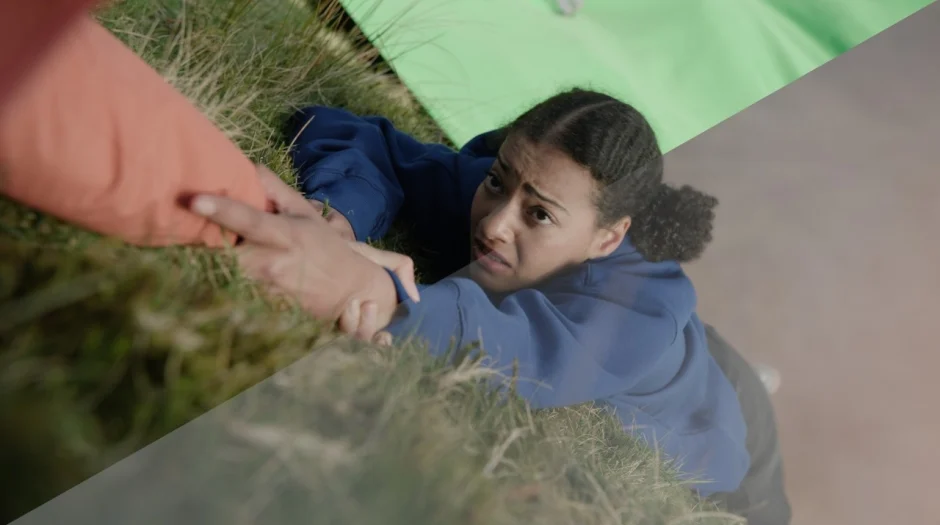
The season’s climax presented another complex visual challenge, requiring the reconstruction of a low cliff edge into a more dramatic and imposing environment. Vine FX employed a cutting-edge hybrid workflow, integrating drone-captured photography with Gaussian splats. This technique generates volumetric scene representations derived from spatially solved image data, moving beyond the limitations of traditional mesh geometry.

Peter Noble, Research and Development Engineer, elucidated the process: "We start with photography and solve for camera positions, which gives us a spatial understanding of the scene. From that, we train Gaussian splats, points that carry colour and can vary in shape and density, to reconstruct the environment." The inherent advantage of this method lies in its fidelity to the real world. "The splats form a highly realistic base because they directly represent what was captured in the real world," Noble continued. However, he also acknowledged the evolving nature of the technology: "But the tools are still evolving, so when stitching different areas together or resolving gaps and edges, we relied on CG and compositing to smooth those transitions and maintain continuity across the environment." This "hybrid approach" allowed Vine FX to leverage the photorealism of Gaussian splatting while using established CG and compositing techniques to ensure seamless integration and a polished final output. CG Lead Jake Newton further commented on the developmental aspect of this workflow: "We saw real progression on this show from earlier experimentation to a production-ready workflow. The hybrid approach brought together the strengths of each technique we had at hand."
Invisible Effects: The Unseen Art of Storytelling
Beyond the large-scale simulations of fire and reconstructed landscapes, Vine FX was responsible for a vast array of "invisible" visual effects. Simon Carr, VFX Supervisor and Creative Director, highlighted the breadth of this work, which included photographic inserts, continuity fixes, and performance enhancements. The production required numerous shots featuring photographic inserts, such as incident boards, CCTV frames, and even scenes that had not yet been filmed. Vine FX seamlessly integrated these elements, ensuring narrative coherence.

Crucially, the team utilized advanced face-tracking techniques for performance enhancements. This involved the subtle integration of details like blood, sweat, and injuries, all while ensuring that the actors’ performances remained the central focus. "For performance work, the team applied face-tracking techniques to integrate subtle details such as blood, sweat, and injuries while maintaining focus on actors’ performances," Carr stated. "With this type of work, it’s always about supporting the story, not drawing attention to the VFX." This commitment to subtlety is a hallmark of high-quality visual effects, where the technology serves the narrative rather than overwhelming it.
Water simulation also played a critical role in maintaining continuity with the first season. A particularly detailed shot involved the construction of a flood wall, a direct consequence of the events in the previous season. Although ostensibly a minor element, the detailed rendering of the flood wall and the water surrounding it was crucial for grounding the narrative and reinforcing the lasting impact of the initial catastrophe. This attention to detail in seemingly small elements contributes significantly to the overall believability and immersive quality of the series.

Context and Background: The Enduring Threat of Flood and Fire
The return of After the Flood for its second season amplifies the thematic resonance of environmental instability. The fictional town of Waterside, ravaged by floods in the first season, now faces a dual threat of ongoing flood risk and burgeoning moorland fires. This narrative choice reflects real-world concerns about climate change and its impact on communities. Extreme weather events, including both intense flooding and prolonged dry spells leading to wildfires, have become increasingly prevalent globally.
The initial flooding depicted in Season 1 likely drew inspiration from historical flood events that have impacted numerous communities worldwide. For instance, the 2007 UK floods saw widespread disruption across England, causing billions of pounds in damage and necessitating significant infrastructure changes in affected areas. The subsequent inclusion of moorland fires in Season 2 directly addresses another pressing environmental concern. Moorland fires, particularly in the UK and other temperate regions, are often linked to drier weather conditions and human activity. These fires can have devastating ecological consequences, destroying habitats, releasing significant amounts of carbon into the atmosphere, and posing risks to nearby communities.

The narrative of After the Flood Season 2, therefore, taps into a contemporary and pressing reality. The show’s creators, through the use of sophisticated visual effects, are not merely creating dramatic set pieces but are also reflecting and engaging with the anxieties and challenges faced by many communities in the face of environmental change. The meticulous reconstruction of these natural disasters by Vine FX serves to heighten the dramatic tension and underscore the precariousness of life in a region vulnerable to such forces.
Production Timeline and Technical Evolution
The production of After the Flood Season 2, and consequently Vine FX’s involvement, likely spanned several months, with visual effects work often commencing during principal photography and continuing through post-production. The decision to utilize Gaussian Splatting for environmental reconstruction suggests an embrace of emerging technologies within the VFX industry. Gaussian Splatting, while still developing, offers a promising alternative to traditional 3D modeling for capturing and rendering real-world environments with high fidelity. Its ability to derive volumetric scene data directly from imagery streamlines the process of creating realistic digital doubles of locations.

Vine FX’s hybrid approach, as described by their team, is indicative of a maturing VFX pipeline that can integrate novel techniques with established workflows. The company’s ability to scale its operations from intricate invisible effects to large-scale simulations, all while maintaining a consistent visual quality, speaks to its robust infrastructure and skilled personnel. The successful delivery of 336 shots within the timeframe of a six-episode series is a testament to efficient project management and a deep understanding of the production’s creative goals.
Broader Impact and Implications
The success of Vine FX’s work on After the Flood Season 2 has several implications for the broader visual effects industry and the television production landscape. Firstly, it highlights the increasing sophistication of VFX in television, blurring the lines between feature film and episodic content. The ability to render complex natural phenomena like wildfires and reconstruct intricate environments with such realism is now more accessible to television productions.

Secondly, Vine FX’s pioneering use of Gaussian Splatting in a production context showcases the industry’s ongoing exploration and adoption of new technologies. As these tools mature, they have the potential to revolutionize how digital environments are created, offering more efficient and photorealistic solutions. This could lead to greater creative freedom for directors and a more immersive experience for viewers.
Finally, the show’s thematic engagement with environmental issues, amplified by its visual execution, contributes to a growing trend in storytelling. As global concerns about climate change intensify, audiences are increasingly drawn to narratives that reflect these realities. The visual effects employed in After the Flood serve not only to entertain but also to provoke thought and discussion about our relationship with the natural world and the consequences of its disruption. The series, therefore, stands as a compelling example of how advanced visual effects can elevate narrative storytelling and contribute to a more engaged and informed audience.

All six episodes of After the Flood Season 2 are currently available for streaming on ITV.