


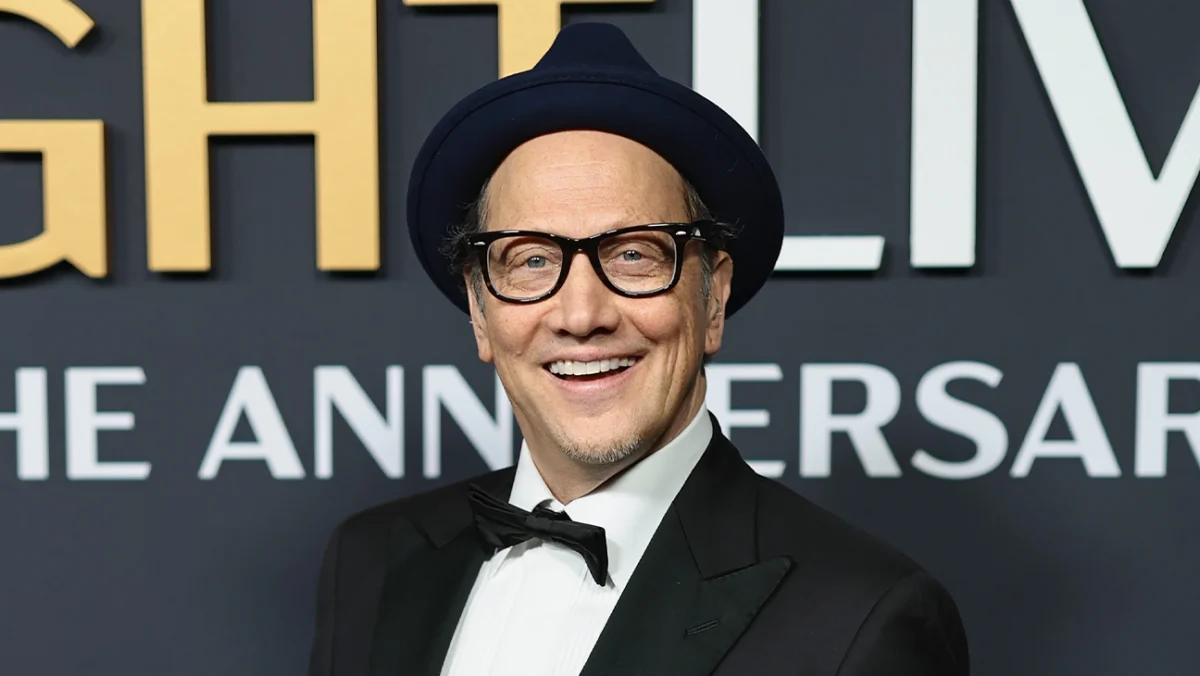
In a significant intervention into national security discourse, actor and comedian Rob Schneider has publicly called for the United States to reinstate a mandatory military draft for its young people. His proposal, articulated through a series of posts on X (formerly Twitter), comes amidst a period of heightened geopolitical tensions and ongoing discussions regarding America’s role in global conflicts, including those involving Iran. Schneider, who has no personal military service record, laid out a detailed vision for a conscription system he believes would foster national unity, ensure military readiness, and instill civic duty in the nation’s youth.
Schneider’s impassioned plea, shared recently, urged a recommitment to the principles of "one Nation under God, indivisible." Central to his argument is the assertion that the unparalleled freedoms and opportunities afforded to American citizens come with a profound cost, a cost that should be borne by all young people through mandatory service. He proposed that every American, upon reaching 18 years of age, should be required to serve two years of military service. This service, he suggested, could include options for deployment overseas or domestic volunteer capacities, offering flexibility while maintaining the core requirement of national contribution.
The Core of Schneider’s Argument: Unity and Responsibility
The actor, known for roles in films like Grown Ups and Deuce Bigalow: Male Gigolo, elaborated on the multifaceted benefits he believes a reinstated draft would bring to American society. He posited that such a system would transcend racial, creedal, and religious divides, uniting young people in a shared purpose of service to their country and to one another. This aspect of his proposal speaks to a desire for a more cohesive national identity, particularly relevant in an era often characterized by deep societal polarization.
Beyond fostering unity, Schneider outlined several practical advantages. He argued that mandatory service would subject all young men and women to rigorous physical training, equipping them with skills beneficial throughout their lives. Furthermore, he contended that a standing army, constantly replenished by conscription, would always be ready for both conventional defense operations and domestic emergencies, such as natural disasters. This point taps into concerns about military readiness and the capacity for rapid mobilization in times of crisis, a perennial debate in defense planning.
Schneider also touched upon the educational and patriotic aspects of his proposal. He suggested that military service, unlike contemporary university environments, would educate young people on the "truly great" nature of their country and the "unique and incredible" freedoms it bestows. For Schneider, service serves as a solemn reminder of the sacrifices made by previous generations, who "paid the last full measure of devotion" to secure these liberties. This perspective aligns with a broader conservative sentiment emphasizing patriotism and a sense of historical continuity.
Perhaps one of the most significant implications of Schneider’s proposal is its potential impact on political decision-making regarding military engagement. He argued that if "every segment of our society represented" were subject to service, elected officials would be "more hesitant and not cavalier about sending their own sons and daughters off to a faraway war unless it was truly in our Nation’s interests." This point echoes a long-standing criticism of volunteer armies, where the burden of war often falls disproportionately on certain socioeconomic groups, potentially insulating policymakers from the direct consequences of their decisions. Schneider concluded his remarks by framing the discussion as a critical step towards securing the nation’s future, entrusting it to the hands of its youth.
Historical Context: The U.S. Military Draft Through the Ages
To understand the weight of Schneider’s call, it is essential to revisit the history of military conscription in the United States. The concept of compulsory military service is not new to America, dating back to the colonial militias. Formal federal conscription first appeared during the American Civil War (1861-1865) with the Enrollment Act of 1863, which sparked significant social unrest, including the infamous New York City draft riots. Despite the controversy, it established a precedent for federal government power to compel service.
The modern era of the draft began with World War I. The Selective Service Act of 1917 established a national system for conscription, ultimately registering millions and inducting nearly 2.8 million men into service. This system was largely dismantled after the war but was reactivated with the Selective Training and Service Act of 1940 in anticipation of World War II, marking the first peacetime draft in U.S. history. During WWII, over 10 million men were drafted, forming the backbone of the American fighting force.
Conscription continued through the Cold War, supplying personnel for the Korean War (1950-1953) and, most notably, the Vietnam War (1955-1975). The Vietnam War era saw widespread public opposition to the draft, fueled by perceptions of an unjust war and inequities in the conscription system itself, which allowed for deferments based on education or occupation, often favoring the more affluent. The last U.S. military draft call was held on December 7, 1972, amidst the winding down of American involvement in Vietnam.
Following the tumultuous Vietnam period, the United States transitioned to an All-Volunteer Force (AVF) in 1973. This monumental shift was driven by a confluence of factors: the desire to end the social divisions caused by the draft, the belief that a professional, voluntary military would be more effective, and the recommendations of the Gates Commission. Since then, the U.S. military has relied entirely on volunteers, becoming a highly professional and technologically advanced fighting force.
Despite the absence of an active draft, the Selective Service System (SSS) remains in place. It requires nearly all male U.S. citizens and immigrants between the ages of 18 and 25 to register. While currently a dormant organization in terms of active conscription, the SSS maintains a database that could be used to implement a draft should Congress and the President decide it is necessary. The last time the SSS was seriously considered for activation was during the lead-up to the Persian Gulf War in the early 1990s, but it was ultimately deemed unnecessary.
The Shadow of Geopolitical Tensions: U.S.-Iran Relations
Schneider’s call for a draft is explicitly framed within the context of perceived geopolitical instability, specifically mentioning an "ongoing war with Iran." While the United States and Iran are not currently engaged in a declared, conventional "war," their relationship is characterized by decades of deep animosity, proxy conflicts, and periodic escalations. The reference to a "conflict" that "started at the end of February" with coordination by the "Trump administration and Israel" likely refers to a period of intense U.S.-Iran tensions that peaked in late 2019 and early 2020, rather than a recent, broadly recognized "war" initiation in the immediate past. Key events during that period included the U.S. drone strike that killed Iranian General Qassem Soleimani in January 2020, followed by Iranian retaliatory missile strikes on U.S. bases in Iraq. More broadly, tensions persist over Iran’s nuclear program, its support for regional proxy groups, and its missile capabilities.
Recent years have continued to see flare-ups, including attacks on shipping in the Gulf, drone incidents, and cyber warfare. The complex, multi-faceted nature of this rivalry, often played out through proxies in the Middle East, means that the specter of direct confrontation is a constant concern for policymakers and the public alike. Such persistent tensions naturally raise questions about military readiness and potential resource demands, providing a backdrop for discussions about manpower and conscription, even if the White House has consistently stated there are "no immediate plans for a draft." The notion of an "ongoing war" may reflect a public perception of continuous, low-intensity conflict and proxy engagements that require sustained vigilance and readiness.
Implications and Broader Debate: A Return to Conscription?
The prospect of reinstating a military draft in the United States ignites a passionate and complex debate, touching upon issues of individual liberty, national security, economic efficiency, and social justice.
Arguments for a Draft:
- Shared Sacrifice and National Unity: Proponents like Schneider argue that a draft ensures that the burdens of national defense are equitably distributed across all segments of society, fostering a stronger sense of collective responsibility and civic identity. This can reduce the perception that wars are fought by a specific, often socioeconomically disadvantaged, segment of the population.
- Military Readiness and Manpower: A draft could rapidly expand the military’s manpower in times of large-scale conflict, ensuring a robust force capable of meeting national security challenges that might overwhelm an all-volunteer system. It also provides a broad pool of individuals from which to select for specialized roles.
- Deterrent to War: As Schneider highlighted, a draft might make political leaders more cautious about committing troops to combat, knowing that their own constituents, including potentially their own children, would bear the direct consequences.
- Civic Education and Discipline: Mandatory service could instill discipline, teamwork, and an understanding of democratic values in young people, contributing positively to their development and societal engagement.
Arguments Against a Draft:
- Individual Liberty: Critics argue that conscription is a fundamental infringement on individual freedom and the right to choose one’s path in life. It forces individuals into service against their will, a concept antithetical to many core American values.
- Effectiveness of the All-Volunteer Force (AVF): The AVF has been lauded for its professionalism, high morale, and superior training. Volunteers are generally more motivated and dedicated, leading to a more effective fighting force. A drafted military might introduce individuals lacking motivation, potentially affecting unit cohesion and performance.
- Economic Inefficiency: A draft could be economically inefficient. Forced labor, even for national service, may not be as productive as voluntary labor. Furthermore, the cost of training, equipping, and compensating a significantly larger drafted force would be enormous, potentially diverting resources from other critical areas.
- Social Unrest: The Vietnam-era draft led to widespread protests, civil disobedience, and deep societal divisions. Reinstating conscription risks rekindling such unrest, particularly if a conflict is perceived as unjust or unnecessary.
- Modern Warfare Needs: Contemporary warfare often relies on highly specialized technical skills and advanced training rather than sheer numbers. Critics argue that a mass conscription system might not be the most effective way to meet the demands of modern, technologically intensive combat.
- Logistical Challenges: Reactivating a large-scale conscription apparatus would present immense logistical and administrative challenges, requiring significant infrastructure and resources.
Official Responses and Public Sentiment:
As stated by the White House, there are currently "no immediate plans for a draft." This position reflects the long-standing preference for the All-Volunteer Force among military leadership and policymakers, who generally view the AVF as highly effective and adaptable. While the Selective Service System remains operational, its primary function is to maintain readiness for a potential future draft, not to indicate an imminent one.
Public opinion on the draft has historically been complex. In peacetime, support for conscription is typically low, with polls consistently showing a preference for an all-volunteer military. However, in times of perceived existential threat or major conflict, public sentiment can shift, though often with significant divisions. The memories of the Vietnam War and the social upheaval it caused continue to weigh heavily on discussions about conscription.
The Road Ahead: Legal and Political Hurdles
Should a military draft ever be considered, it would face formidable legal and political hurdles. Any reinstatement would require an act of Congress, signed into law by the President. Such a legislative effort would undoubtedly trigger extensive public debate, fierce lobbying, and intense political maneuvering. It would also likely face legal challenges concerning constitutional rights and due process.
Furthermore, the logistical challenges of transitioning from an AVF to a conscription system would be immense. The military’s recruitment, training, and deployment infrastructure is built around a voluntary model. Adapting to a massive influx of draftees would necessitate fundamental changes across all branches of service, from basic training facilities to personnel management systems.
Rob Schneider’s call for a return to mandatory military service, while perhaps surprising from a Hollywood figure, serves as a poignant reminder of the enduring questions surrounding national service, civic responsibility, and military readiness. His arguments, rooted in a desire for unity and a perceived need for shared sacrifice, inject a celebrity voice into a debate that has profound historical echoes and significant implications for the future of American society and its defense posture. While the current policy remains firmly committed to an All-Volunteer Force, the ongoing discussions about geopolitical challenges ensure that the conversation around conscription, however remote its implementation, remains a relevant part of the national discourse.