

The independent film landscape has long served as a fertile ground for high-concept horror, but few recent entries have managed to synthesize personal trauma with technical innovation as effectively as Ian Tuason’s undertone. Released under the A24 banner, the film has emerged as a significant commercial and critical success, signaling a shift in how modern audiences consume "found footage" narratives. By pivoting from the visual-centric tropes of the genre to a "found audio" format, Tuason has leveraged his background in immersive media to create a cinematic experience that prioritizes the auditory imagination over graphic depiction. The film’s journey from a modest $500,000 production to a multi-million dollar box office performer highlights the growing appetite for "elevated horror" that explores the psychological intersections of caregiving, grief, and the occult.
The Narrative Core and Mythological Foundations
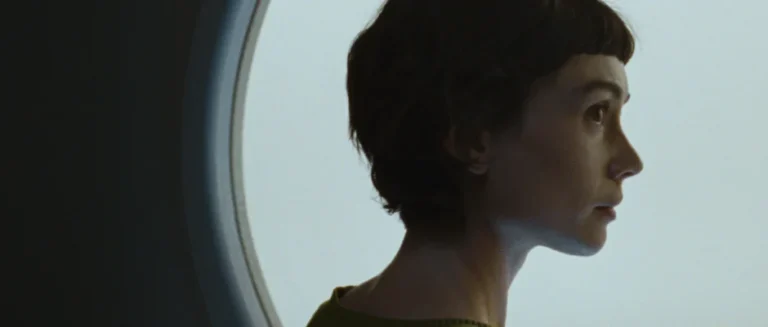
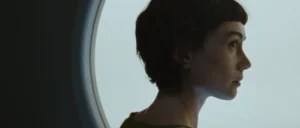
At the center of undertone is Evy, portrayed by Nina Kiri, a young woman who has returned to her childhood home to provide palliative care for her comatose mother. This domestic isolation is punctuated only by her work as the co-host of The Undertone, a paranormal investigation podcast. Her partner in the venture, Justin (Adam DiMarco), serves as the quintessential believer, a foil to Evy’s hardened skepticism. The film’s tension is built upon the logistical reality of their collaboration: due to a significant time difference, Evy records her segments during the "witching hour," a period traditionally associated with heightened supernatural activity between 3:00 a.m. and 4:00 a.m.
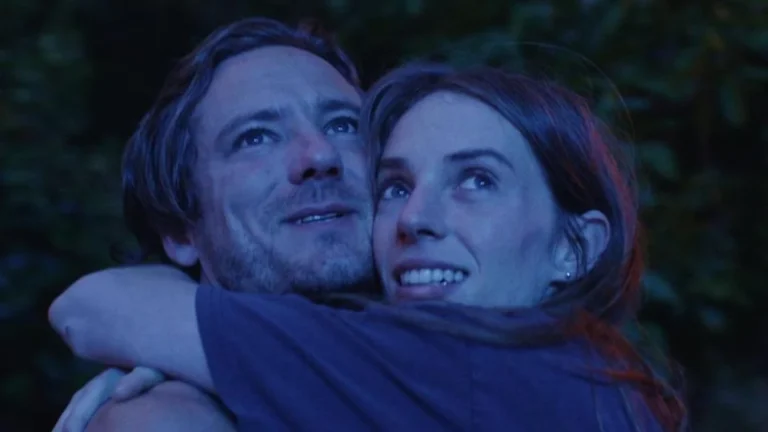
The plot accelerates when the duo receives a mysterious audio file from a listener. The recording purports to document a paranormal encounter between a couple, Jessa and Mike, and a demonic entity known as Abyzou. In Near Eastern mythology, Abyzou is a female demon often blamed for miscarriages and infant mortality, motivated by her own infertility. By rooting the film’s horror in this specific folklore, Tuason ties the supernatural threat directly to the film’s themes of maternal health and the burden of caregiving. While Justin expresses hesitation about the authenticity and potential danger of the audio, Evy’s skepticism leads her to dismiss the recording as a hoax, prompting her to investigate the sounds in real-time—a decision that serves as the catalyst for her psychological and physical unraveling.
A Chronology of Development and Distribution
The path to undertone’s theatrical success began years before its first frame was shot, rooted in Tuason’s experimentation with 360-degree video and virtual reality (VR). Tuason first gained international attention with short-form horror projects like Continuity Problems (2009) and Close Up (2011). These projects served as proofs of concept for his ability to manipulate viewer attention within a digital space. His 2016 breakthrough, 3:00am, a 360-degree live-action short, amassed over 9 million views on YouTube and was featured at the Cannes Film Festival’s NEXT Pavilion.
The transition from VR shorts to a feature-length theatrical release was marked by a strategic festival run. Undertone premiered at the Sundance Film Festival in early 2024, where it immediately became a subject of intense bidding among independent distributors. A24, known for its successful stewardship of horror hits like Hereditary and Talk to Me, eventually secured the rights. Following Sundance, the film screened at Montreal’s Fantasia International Film Festival in July, further cementing its reputation among genre enthusiasts.
The film’s commercial performance has exceeded industry expectations. Produced on a lean budget of $500,000, undertone demonstrated immediate drawing power, grossing $1 million during its Thursday night previews alone. To date, the film has grossed over $9 million domestically. This 18-to-1 return on investment places it among the most profitable indie releases of the year, underscoring a trend where low-budget, high-concept horror continues to outperform mid-budget traditional dramas.
The Technical Innovation of 3D Soundscapes
Tuason’s primary objective with undertone was to translate the immersive qualities of VR into a traditional cinema environment. This was achieved through a rigorous focus on spatial audio and sound design. "I always felt like surround sound in the theater would be a great opportunity to take what I learned and play around with it—to create a 3D soundscape and guide the viewer’s attention to different spaces around them," Tuason noted in post-release interviews.

The film utilizes Dolby Atmos technology to create a "sonic haunting," where the audience hears footsteps, whispers, and rhythmic flickering in specific quadrants of the theater, mimicking the experience of being in the room with Evy. A recurring motif in the film involves the "backmasking" of nursery rhymes. Tuason explores the unsettling nature of childhood songs like "Baa Baa Black Sheep," which, when played in reverse, allegedly reveal sinister lyrics. This focus on audio serves a dual purpose: it builds tension without the need for expensive visual effects and engages the viewer’s imagination, which Tuason argues is "always going to be scarier than what I can show you."
Production Context: The Intersection of Art and Personal Grief
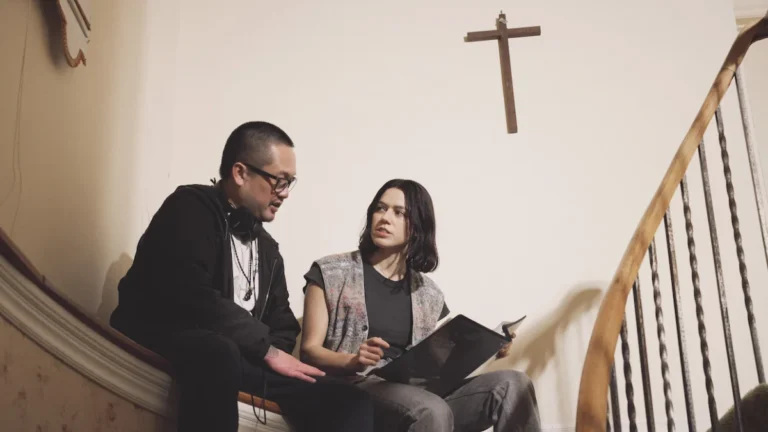
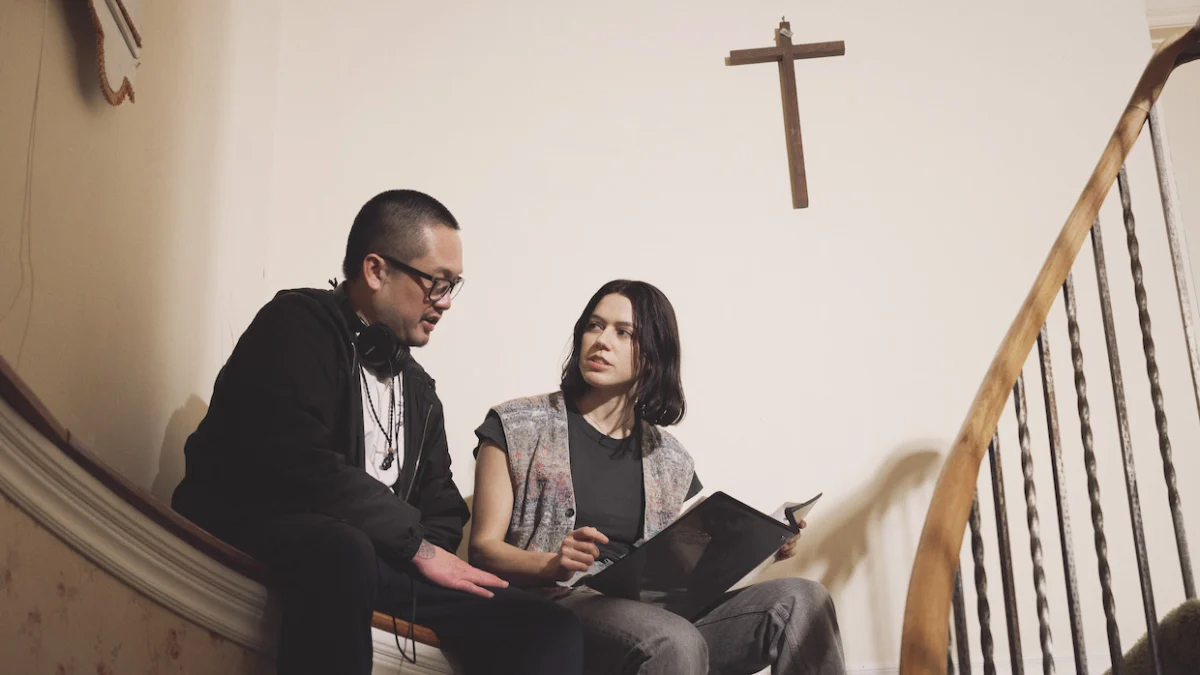
Perhaps the most haunting aspect of undertone is the environment in which it was filmed. In a move that blurred the lines between professional production and personal catharsis, Tuason chose to film the entire movie in his family home—the same location where he had cared for both of his parents before they passed away from cancer. This decision informed every aspect of the film’s atmosphere. Production designer Mercedes Coyle enhanced the existing space with heavy Catholic iconography, including an abundance of crucifixes and a bedside statue of the Virgin Mary that plays a pivotal role in the film’s scares.
Tuason moved back into the house during pre-production, marking the first time he had lived there since his parents’ deaths. The director reported several unexplained occurrences during the shoot, such as lights flickering in patterns that mirrored the script. While he remains largely desensitized to these phenomena—attributing his lack of fear to the "darkness" of the real-life caregiving experience—the cast and crew reportedly felt the weight of the location’s history. For Tuason, the filmmaking process served as a therapeutic exercise, allowing him to process the trauma of his parents’ illness through a controlled, creative medium.
Critical Analysis and Industry Implications
The success of undertone offers several insights into the current state of the film industry. First, it validates the "creator-to-cinema" pipeline. Like the Philippou brothers (Talk to Me) or David F. Sandberg (Lights Out), Tuason’s transition from digital platforms like YouTube to the silver screen demonstrates that a deep understanding of digital engagement and niche audience psychology can translate into box office success.
Second, the film’s focus on "found audio" suggests a diversification of the found footage subgenre. As audiences become increasingly accustomed to podcasts and long-form audio storytelling, the incorporation of these mediums into film provides a contemporary sense of realism. The "found audio" format allows for a more internal, psychological horror that contrasts with the often-shaky camerawork of traditional found footage.
Finally, the film’s performance reinforces A24’s dominance in the "boutique horror" market. By selecting projects that offer unique directorial voices and personal stakes, the studio has built a brand that audiences trust to deliver more than just jump scares. Undertone is not merely a ghost story; it is a meditation on the exhaustion of terminal care and the way grief can make one’s own home feel like a foreign, hostile environment.
Future Prospects and the Expansion of the Genre
Ian Tuason’s trajectory following undertone suggests a long-term commitment to genre-bending cinema. In December, it was officially announced that Tuason would take the helm of Paranormal Activity 8, the latest installment in the franchise that pioneered the modern found footage movement. His appointment is seen as an attempt to revitalize the series with the same sound-first philosophy that made undertone a success.
However, Tuason has expressed a desire to move beyond pure horror. His long-term creative roadmap includes a transition into sci-fi-horror, followed by a full pivot into hard science fiction. This ambition suggests a director who views genre as a tool for exploring human conditions rather than a restrictive category. As undertone continues its theatrical and eventually streaming life, it stands as a testament to the power of minimalist filmmaking, proving that with a compelling personal narrative and a sophisticated approach to sound, a $500,000 investment can resonate across the global cultural landscape.