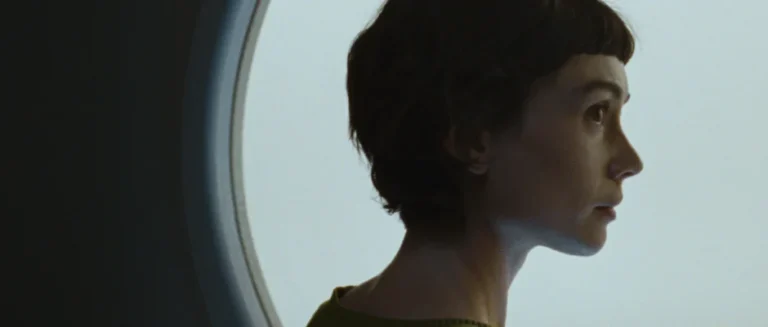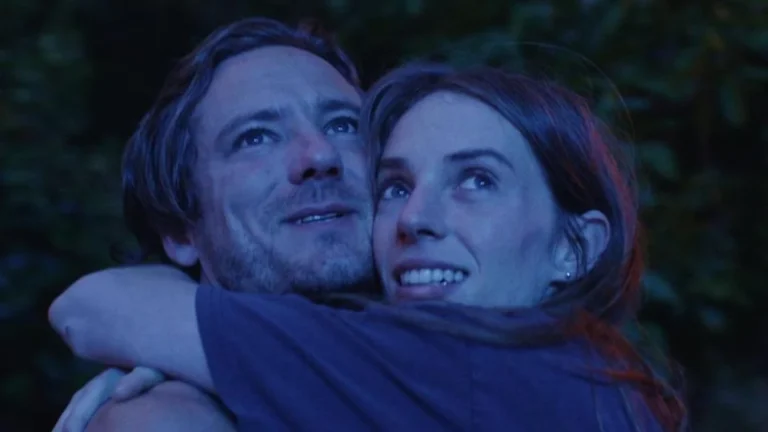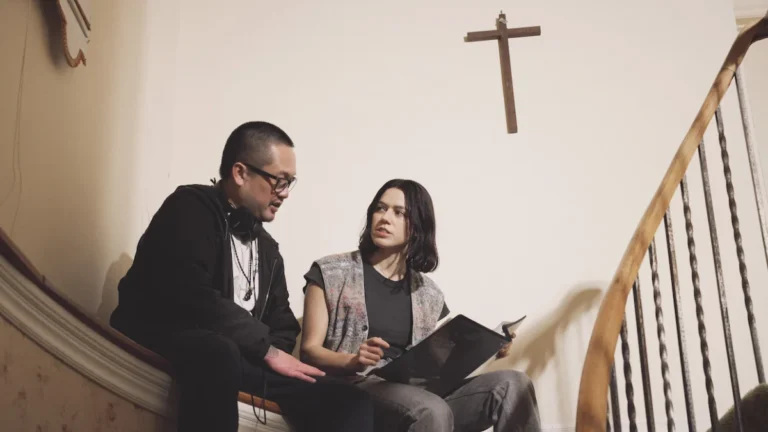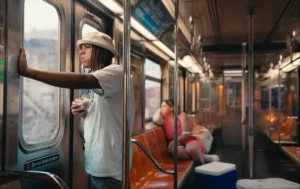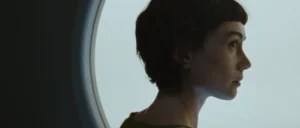
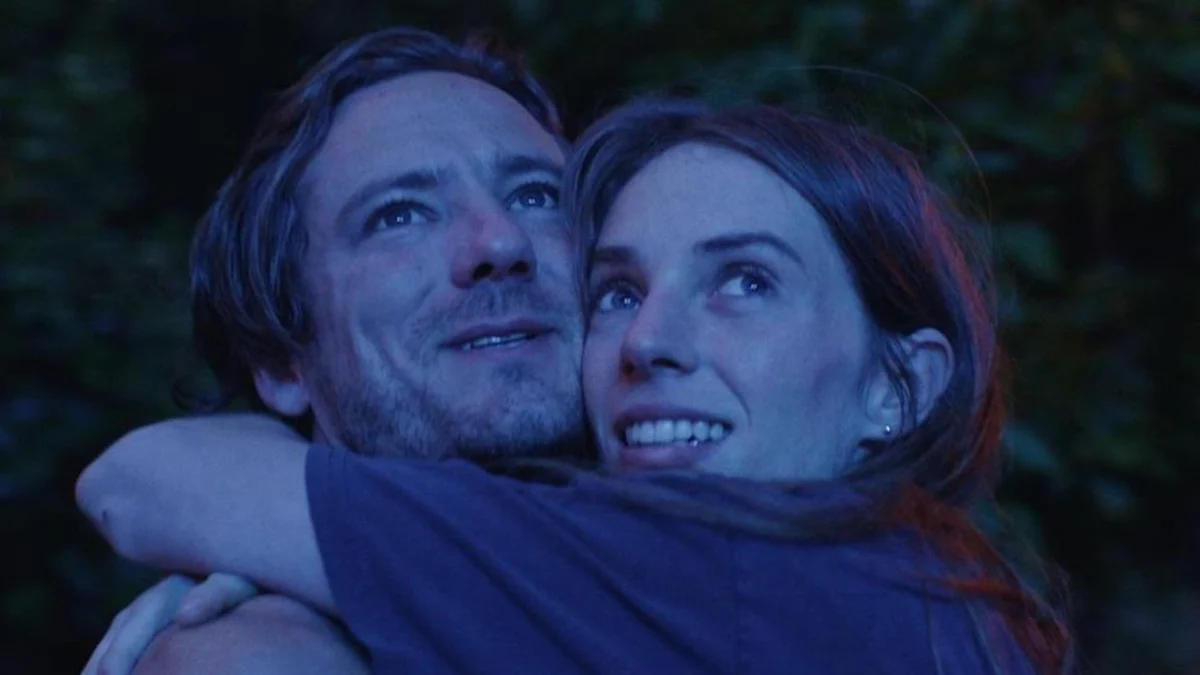
Set against the atmospheric backdrop of Portland, Oregon, the narrative follows Charlie (Pullman) and Julie (Hawke), a couple whose mundane struggles are suddenly amplified by a supernatural discovery. After attending a cryptic couples therapy summit, the pair realizes that their collective emotional state possesses the power to manifest physical outcomes in the world around them. When the relationship is harmonious, the environment reflects a series of serendipitous and positive events; conversely, interpersonal conflict triggers destructive and often tragic external consequences. This conceit transforms the private internal workings of a relationship into a matter of public and global safety, forcing the protagonists to confront the weight of their own desires and neuroses.
The Genesis of a Metaphysical Concept
The conceptual framework for the film originated from Parkes’ observation of contemporary "manifesting" culture, specifically the ideologies popularized by Rhonda Byrne’s 2006 self-help phenomenon, The Secret. While the "law of attraction" is often marketed as an empowering tool for personal gain, Parkes identified a latent horror in the premise. The filmmaker noted that for individuals struggling with clinical anxiety or emotional volatility, the idea that one’s internal mood dictates external reality is not a promise of prosperity, but a source of profound terror.
By shifting the focus from an individual to a couple, the screenplay introduces a complex layer of accountability. The film suggests that the "energy" a couple puts into the world is not merely a metaphor but a tangible force. This transition from a comedic "what-if" scenario into a dramatic exploration of vulnerability occurred during the writing process, as Parkes drew from his own experiences with relationship dynamics and emotional transparency. The result is a genre-bending narrative that balances dark humor with a somber examination of human nature.
Technical Innovation and the Split-Screen Device
To visually represent the dual perspectives of its protagonists, Wishful Thinking employs an extensive and calculated use of split-screen cinematography. Director of Photography Christopher Ripley collaborated closely with Parkes to ensure the technique served as a narrative engine rather than a mere stylistic flourish. The film avoids a singular "main" perspective, instead maintaining a balanced focus on both Charlie and Julie. This "two-hander" approach is reinforced by shots that place the characters’ individual points of view side-by-side, emphasizing their shared but often diverging experiences of the same reality.
The technical execution of these sequences involved a blend of practical photography and meticulous visual effects (VFX). Ripley utilized double exposures and specific compositional alignments—such as matching cloud formations across divided frames—to create a sense of cosmic synchronicity. Parkes and Ripley opted for longer lenses and more chaotic framing in the film’s first half to simulate the sensation of an escalating panic attack. As the narrative progresses toward its climax, the visual language shifts, slowing down to allow the characters, and the audience, to process the inevitable truths emerging from the supernatural chaos.
Casting and Collaborative Chemistry
The production benefited from a series of serendipitous events during the casting phase. Lewis Pullman, a frequent collaborator of Parkes who has appeared in the director’s previous short films, was attached early in the process. The search for the character of Julie led the production team to Maya Hawke, whose involvement was facilitated by a chance encounter years prior. Parkes had previously met Hawke’s manager on a cross-country flight, a connection that expedited the offering process and fostered an immediate sense of trust.

Despite a limited rehearsal period—Hawke reportedly arrived on set only one day before principal photography commenced—the leads developed a highly intuitive rapport. Parkes utilized a directing style he refers to as "Supermarket Sweep," a high-velocity approach designed to maximize the volume of footage captured within a tight indie schedule. This method prioritized improvisation and variation over rigid perfectionism, allowing Pullman and Hawke to explore the "margins" of their scenes. By directing for the edit rather than the take, Parkes encouraged a raw, honest performance style that anchors the film’s high-concept premise in emotional reality.
SXSW 2024 Context and Critical Reception
The Grand Jury Prize win at SXSW places Wishful Thinking in the company of previous winners such as Tiny Furniture and Short Term 12, films that went on to define the careers of their respective creators. The 2024 Narrative Feature Competition was noted for its diversity of genre and tone, making Parkes’ victory particularly significant. The jury, tasked with evaluating films based on innovation, narrative cohesion, and technical excellence, highlighted the film’s ability to use a supernatural lens to magnify universal human truths.
Industry analysts suggest that the film’s success in Austin is a testament to the enduring appeal of "smart" science fiction—films that prioritize psychological depth over expensive spectacle. Following the March 12 premiere, the film garnered praise for its atmospheric use of Portland’s landscape, which serves as more than just a setting; it acts as a canvas for the couple’s manifesting powers. The production’s ability to achieve high-concept visual storytelling on an independent budget has also been cited as a model for future genre filmmakers.
Chronology of Production and Festival Path
- Development Phase: Parkes spent several years refining the script, transitioning the tone from a dark comedy to a romantic drama with supernatural elements.
- Pre-Production: Christopher Ripley joined as DP, establishing the visual grammar of the split-screen and the "anxiety-driven" camera movements.
- Casting: Lewis Pullman was cast, followed by the addition of Maya Hawke through a chance managerial connection.
- Principal Photography: Filmed on location in Portland, Oregon, the shoot was characterized by a rapid pace and an emphasis on improvisational exits from scripted scenes.
- Post-Production: Extensive work on VFX to seamlessly integrate the split-screen compositions and the manifesting events.
- World Premiere: March 12, 2024, at the SXSW Film & TV Festival in Austin, Texas.
- Award Recognition: Announced as the winner of the Narrative Feature Grand Jury Prize at the conclusion of the festival competition.
Implications for Modern Relationship Narratives
Beyond its technical achievements, Wishful Thinking offers a pragmatic, albeit somber, thesis on the nature of modern love. Parkes suggests that true intimacy requires an acceptance of one’s inherent nature—ambitions, temperaments, and moods included. The film posits that while individuals can work on themselves, there is an "inherent nature" that cannot be fundamentally altered, only navigated.
The story’s conclusion moves away from the heightened anxiety of its premise toward a moment of stillness and clarity. By forcing the characters to slow down, the film allows the "truth" of the relationship to emerge. This thematic shift resonates with contemporary audiences who navigate the pressures of curated happiness and the relentless drive for self-improvement. The film argues that love does not necessarily require the "manifestation" of a perfect world, but rather the courage to exist in a flawed one together.
As the film moves toward wider distribution, it stands as a significant contribution to the "lo-fi sci-fi" subgenre, joining the ranks of films like Eternal Sunshine of the Spotless Mind and Safety Not Guaranteed. By grounding its extraordinary elements in the mundane realities of a struggling relationship, Wishful Thinking achieves a balance of intellectual curiosity and emotional resonance that marks Graham Parkes as a filmmaker of considerable promise and vision.