


Narrative Expansion and the Le Domas Legacy
The plot of the sequel commences immediately following the explosive conclusion of the 2019 film. In the original finale, the Le Domas family succumbed to a supernatural pact after failing to complete a ritualistic game of "Hide and Seek." Grace, the sole survivor, is depicted in the opening of the sequel collapsing on the steps of the estate as the mansion burns behind her. The narrative continuity serves to emphasize the relentless nature of the film’s antagonists; the directors noted that they intended to demonstrate that the world of corruption and evil is far more expansive than a single family.
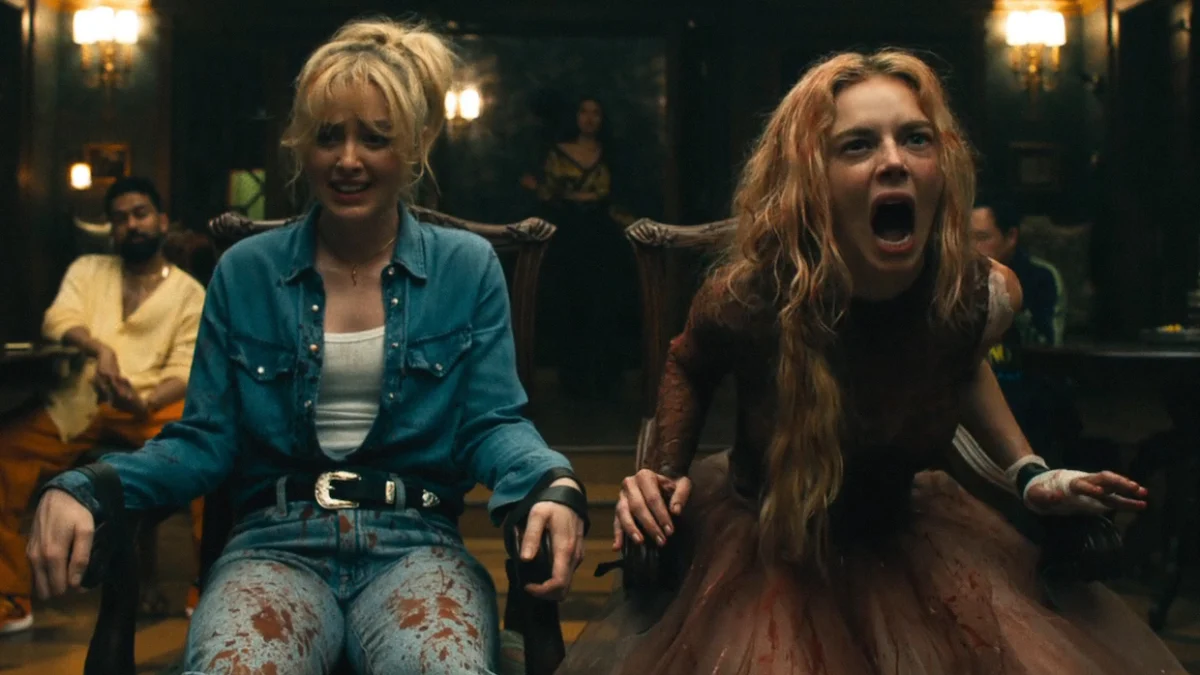
The story introduces Grace’s estranged sister, Faith, played by Kathryn Newton. Their reunion is cut short when they are captured by a rival faction of the capitalist Satanic cult to which the Le Domas family belonged. This new group is led by siblings Titus (Shawn Hatosy) and Ursula (Sarah Michelle Gellar). The stakes are heightened as these families compete for leadership within the cult’s hierarchy, a position that can only be secured by the ritualistic sacrifice of Grace and Faith before dawn. This structure mirrors the "survive the night" trope of the first film but elevates the scale of the threat from a domestic dispute to a broader corporate-occult conspiracy.
Production Evolution and the "Blood Budget"
The transition from the original film to the sequel involved a substantial increase in production resources. Industry data regarding the 2019 film highlights its efficiency; produced on a modest $6 million budget, it grossed over $57 million worldwide, making it a significant financial success for Searchlight. This profitability paved the way for an expanded budget in the sequel, which the directors have humorously referred to in terms of "blood and candles."
During the production of the first film, the crew operated under strict logistical constraints, often moving a limited number of candles and candelabras between shots to create the illusion of a sprawling, opulent estate. In the sequel, the visual language has been upgraded to reflect a more formidable and prepared antagonist force. The "cosplay" element of the Le Domas family—who often appeared bumbling or uncertain of their own rituals—has been replaced by families who are more proficient and traditional in their occult practices. This shift is reflected in the cinematography and production design, which utilize more elaborate lighting and practical effects to ground the supernatural elements in a tangible, albeit heightened, reality.
The Psychology of Antagonism: The Le Domas Successors
A critical component of the sequel’s narrative depth is the characterization of its villains. Shawn Hatosy’s portrayal of Titus serves as a psychological study of inherited trauma and ambition within a corrupt system. Throughout the film, Titus is subjected to physical and emotional abuse from his father and sister, a cycle illustrated through a series of significant slaps that gradually erode his psyche.
The directors have suggested that Titus mirrors the trajectory of Alex (Mark O’Brien) from the first film, but with a darker inflection. While Alex was a reluctant participant in his family’s brutality, Titus actively seeks to embrace the power offered by the cult. This exploration of villainy adds a layer of interiority to the characters that is often absent in standard slasher or horror fare. By humanizing the antagonists, the film heightens the tension, making their eventual "devilish comeuppance" more narratively satisfying for the audience.
Satire and the Cronenberg Connection
The film continues the Radio Silence tradition of blending archaic ritual with modern absurdity. One of the most discussed sequences involves a cameo or reference to legendary filmmaker David Cronenberg. In a moment that satirizes the influence of the ultra-wealthy on global affairs, Cronenberg’s character is shown participating in a group chat where he exerts his power to resolve a major international conflict within seconds.
Bettinelli-Olpin and Gillett have highlighted this scene as a tonal touchstone for the film. It serves to establish the "new world order" of the sequel, where the supernatural and the mundane coexist through the lens of corporate efficiency. This brand of subversion—using a group chat to signal the end of a war—functions as a critique of how power is wielded in the 21st century, suggesting that for the elite, global tragedy is merely a matter of administrative convenience.

Socio-Political Underpinnings: Resistance vs. Cynicism
At its core, the film addresses a central thematic question: when faced with a corrupt and overwhelming system, does an individual join that system to survive, or do they perish trying to dismantle it? Grace’s journey in the sequel articulates a rejection of this binary. Rather than succumbing to the bloodlust that typically transforms horror protagonists into "superheroes," Grace remains grounded and human.
The directors have emphasized that Grace’s strength lies in her imaginative resistance. She refuses to adopt the worldview of her oppressors, even when presented with the opportunity to gain power within their ranks. This refusal of cynicism is a deliberate choice by the filmmakers to offer a more hopeful, albeit bittersweet, conclusion. In an era of "elevated horror" that often leans into nihilism, the Ready or Not franchise maintains a commitment to the "cathartic thrill" of seeing the good guys get a shot at victory, however costly that victory may be.
Market Context: The "Eat the Rich" Cinematic Movement
The release of the sequel occurs within a broader cultural and cinematic trend often categorized as "Eat the Rich" horror and satire. This subgenre, which includes films like The Menu, Triangle of Sadness, and Glass Onion, uses the trappings of the thriller or mystery genre to examine class disparity and the moral decay of the elite.
Ready or Not 2 Here I Come distinguishes itself within this movement by leaning heavily into the supernatural. While its peers often remain in the realm of social realism or dark comedy, Radio Silence utilizes the "Satanic capitalist cult" as a literal manifestation of corporate greed. This approach allows the film to engage in high-octane genre thrills while simultaneously delivering a nutritive message about systemic corruption.
Chronology of Development and Release
The development of the sequel followed a steady trajectory after the 2019 film’s success. Following their work on the Scream franchise (2022 and 2023) and the horror film Abigail (2024), Bettinelli-Olpin and Gillett returned to the Ready or Not IP with writers Guy Busick and R. Christopher Murphy.
- August 2019: Ready or Not premieres to critical acclaim and strong box office returns.
- 2020–2023: Radio Silence establishes themselves as major players in the horror genre through the revitalization of the Scream series.
- 2024: Official confirmation of the sequel with Samara Weaving set to return.
- 2025: Principal photography takes place, featuring an expanded cast including Kathryn Newton and Sarah Michelle Gellar.
- March 2026: Ready or Not 2 Here I Come is released theatrically.
The film’s reception has been bolstered by the return of key creative personnel, including cinematographer Brett Jutkiewicz. The continuity of the creative team has ensured that the sequel retains the specific tonal balance of "gleeful subversion" and "grounded humanity" that defined the original, while successfully scaling the production for a wider audience.
Broader Impact and Industry Implications
The success of the Ready or Not franchise signals a robust appetite for original horror properties that balance gore with intellect. In an industry often dominated by established franchises and reboots, the ability of Radio Silence to build a sustainable "universe" around a new IP is noteworthy.
Furthermore, the film’s exploration of "imaginative resistance" resonates with contemporary audiences who are increasingly skeptical of institutional power. By providing a narrative where the protagonist finds a "third way" outside of joining or being crushed by a corrupt system, the film transcends its genre roots to become a timely allegory for modern survival. As the film begins its theatrical run, industry analysts expect it to perform strongly among younger demographics who gravitate toward its blend of social satire, practical effects, and high-stakes storytelling.