


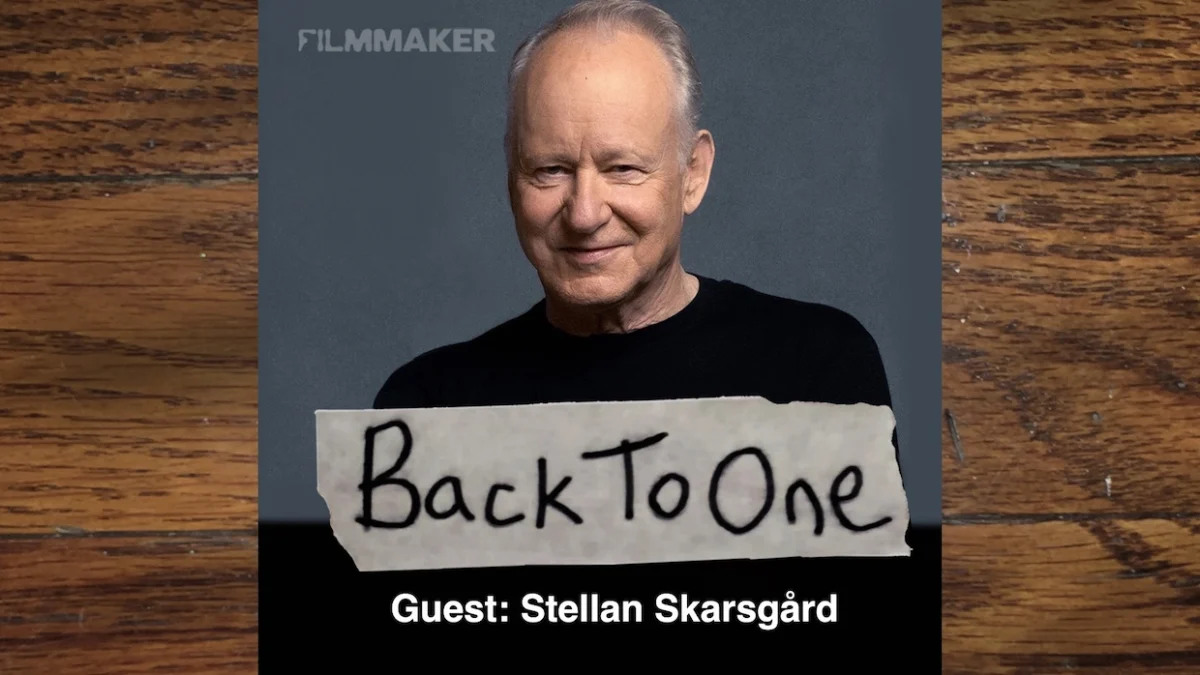
The Philosophy of the Reactor: Defining the Skarsgård Method
At the heart of the episode is Skarsgård’s self-identification as a "reactor" rather than a traditional "actor." This distinction is central to his reputation as a performer who prioritizes the ensemble and the immediate reality of the set over pre-planned gestures or emotional beats. Skarsgård explains that his goal on any set is to be a vessel for the director’s vision and a sensitive respondent to his co-stars. This "reactive" mode requires a high degree of vulnerability and a refusal to rely on a "bag of tricks"—the pre-packaged emotional responses that many veteran actors develop to ensure a safe, consistent performance.
The concept of "sabotaging your tools," which Skarsgård discusses at length, refers to the intentional disruption of his own professional habits. He argues that once an actor becomes aware of a specific technique that works—a certain way of crying, a specific vocal cadence, or a reliable facial expression—that technique becomes a liability. By "sabotaging" these tools, Skarsgård forces himself back into a state of uncertainty, which he believes is the only place where genuine, unpredictable human behavior can occur on screen. This philosophy aligns him with the naturalistic traditions of European cinema while allowing him to maintain a grounded presence in large-scale Hollywood spectacles.
Chronology of a Global Career: From Stockholm to Arrakis
Skarsgård’s journey to becoming a cornerstone of both independent and blockbuster cinema is marked by a deliberate expansion of his creative boundaries. Born in 1951 in Gothenburg, Sweden, his early career was rooted in the prestigious Royal Dramatic Theatre in Stockholm.
- The Scandinavian Foundation (1970s–1980s): Skarsgård became a household name in Sweden through television and film, most notably winning the Silver Bear for Best Actor at the 32nd Berlin International Film Festival for his role in The Simple-Minded Murderer (1982). This period established his ability to play complex, often morally ambiguous characters with profound empathy.
- The International Breakthrough (1990s): His collaboration with Lars von Trier in Breaking the Waves (1996) served as a major turning point, introducing his raw, understated style to global audiences. This was followed by his role as Professor Gerald Lambeau in Good Will Hunting (1997), which solidified his place in the American film industry as a formidable character actor capable of elevating high-stakes drama.
- Genre Versatility and Blockbuster Success (2000s–2010s): Skarsgård successfully navigated the transition into major franchises, appearing in the Pirates of the Caribbean series as Bootstrap Bill Turner and joining the Marvel Cinematic Universe as Dr. Erik Selvig. Despite the scale of these productions, he maintained his commitment to challenging roles in projects like The Girl with the Dragon Tattoo (2011).
- The Modern Renaissance (2019–Present): His recent work has seen a surge in critical acclaim, particularly for his portrayal of Boris Shcherbina in the HBO miniseries Chernobyl, for which he won a Golden Globe. His performance as Baron Vladimir Harkonnen in Denis Villeneuve’s Dune (2021) and Dune: Part Two (2024), along with his complex portrayal of Luthen Rael in the Star Wars series Andor, has demonstrated his continued relevance and ability to command the screen in diverse formats.
Sentimental Value and the Collaborative Environment of Joachim Trier
The catalyst for Skarsgård’s appearance on "Back To One" is his role in Sentimental Value, the latest project from Joachim Trier. The film features Skarsgård as Gustav, a formerly celebrated filmmaker attempting to navigate a reconciliation with his daughters. Skarsgård describes the environment Trier cultivates as one of "love, attention, and enthusiasm." This atmosphere is not merely a comfort but a functional requirement for the "robust and rich" work Skarsgård delivers in the film.

In the podcast, Skarsgård emphasizes that a director’s primary job is to create a safe space where actors feel permitted to fail. He notes that Trier’s methodology involves a deep respect for the actor’s autonomy while maintaining a clear, unwavering vision for the narrative. Skarsgård is famously careful not to "infect" a director’s vision with his own ego; instead, he views his role as a tool to be sharpened and utilized by the filmmaker. This humility is rare among actors of his stature and explains why he remains a first-choice collaborator for directors ranging from David Fincher to Hans Petter Moland.
Technical Mastery: Emotional Agility and the Fincher Effect
A significant portion of the interview delves into the technical rigors of working with David Fincher on The Girl with the Dragon Tattoo. Fincher is notorious for demanding a high number of takes—sometimes exceeding 60 or 70 for a single scene. While some actors find this process exhausting or demoralizing, Skarsgård views it as an opportunity to achieve "emotional agility."
He explains that after the twentieth take, the conscious mind begins to tire, and the "performer" starts to disappear. What remains is a raw, instinctive reaction that is no longer being managed by the actor’s ego. This repetition strips away the "acting" and leaves only the "being." Skarsgård’s ability to remain present and flexible through such an arduous process is a testament to his physical and mental stamina. He posits that this level of repetition allows for a degree of precision that is impossible to achieve in a standard two- or three-take environment, allowing the director to sculpt the performance in the editing room with surgical accuracy.
Data and Industry Impact: The "Acting Addict" in the Modern Marketplace
Skarsgård’s career longevity is supported by impressive data. According to industry tracking, the films in which Skarsgård has appeared have grossed a cumulative total of over $7 billion worldwide. This makes him one of the most commercially successful character actors in history. However, his "Back To One" interview reveals that his motivations remain strictly artistic. He describes himself as an "acting addict," but clarifies that he is not seeking "relief" from the craft. Rather, he is driven by the perpetual challenge of the next role.
The impact of Skarsgård’s approach is visible in the current trend toward "prestige" genre television. His work in Andor and Chernobyl has been cited by critics as a benchmark for how veteran actors can bring Shakespearean weight to contemporary streaming content. By treating a Star Wars monologue with the same gravity and technical scrutiny as a scene in a Joachim Trier drama, Skarsgård has helped bridge the gap between "high art" and "mass entertainment."

Official Responses and Inferred Reactions
While there are no official press releases responding directly to this specific podcast episode, the industry’s reception of Skarsgård’s recent work serves as a proxy for the respect he commands. Peers often describe him as a "gentle giant" on set—someone who provides stability and mentorship to younger actors without overstepping his bounds.
Directors who have worked with him frequently highlight his lack of vanity. In past interviews, Joachim Trier has noted that Skarsgård’s presence on set brings a "grounded reality" that helps the entire production feel more authentic. Similarly, Denis Villeneuve has praised Skarsgård’s willingness to undergo hours of prosthetic application for Dune, noting that his dedication to the physical reality of the character is absolute. These reactions suggest that Skarsgård’s "reactor" philosophy is not just a personal mantra but a highly effective professional strategy that fosters a productive creative environment.
Broader Implications: The Future of the Craft
The insights shared in Episode 382 of "Back To One" offer a masterclass for aspiring actors and a roadmap for the future of the industry. In an era where digital de-aging and AI-generated performances are becoming more prevalent, Skarsgård’s emphasis on the "unpredictable human moment" serves as a defense of the essential human element in cinema.
His discussion of "sabotaging tools" suggests that the future of acting lies not in perfection, but in the embrace of imperfection and spontaneity. As cinema continues to evolve, the demand for actors who can bridge the gap between the technical requirements of modern production and the emotional requirements of the human experience will only increase. Stellan Skarsgård, through his refusal to settle into the comfort of his own expertise, remains the preeminent example of this balance.
The episode concludes with a reflection on the nature of "the work" itself. For Skarsgård, acting is not a destination but a continuous process of discovery. By remaining a "reactor," he ensures that his performances remain as vital and surprising today as they were when he first stepped onto the stage of the Royal Dramatic Theatre decades ago. As Sentimental Value prepares for its release, audiences can expect to see the culmination of these philosophies in a performance that, by Skarsgård’s own admission, is among his most robust and personal to date.