



The Intersection of Ancestral Wisdom and Western Academia
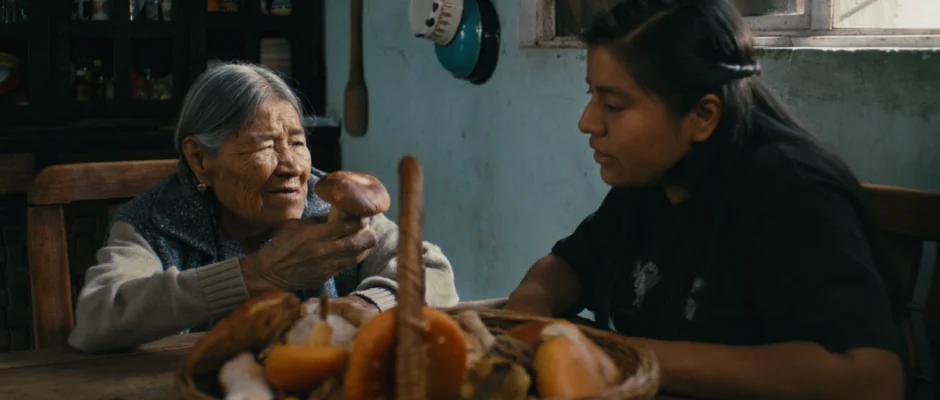
At the heart of the narrative are Lis and Juli, two young Indigenous women who have spent their lives navigating the dense forests of their ancestors. For generations, the women in their families have served as the primary custodians of mycological knowledge, identifying species that range from the culinary and medicinal to the spiritually transformative and the lethally toxic. However, Lis and Juli are part of a shifting tide in which traditional homeopathy seeks a seat at the table of formal science. Both women have transitioned into the realm of agricultural sciences and academic mycology, aiming to bridge the gap between "legitimate" institutional study and the practical, lived expertise of their communities.
This transition is not presented as a rejection of their heritage but as a strategic move toward cultural preservation. By obtaining academic credentials, Lis and Juli aim to secure formal recognition for the contributions their communities have made to the field of mycology for centuries. This endeavor, however, is fraught with systemic obstacles. The film highlights the institutional discrimination often faced by Indigenous students in Mexican universities, where ancestral knowledge is frequently sidelined in favor of Western-centric methodologies. Despite these hurdles, the protagonists view their education as a tool to protect their lands and their legacy from the encroaching forces of modernity and environmental degradation.
Architectural Foundations and Ecosystemic Filmmaking
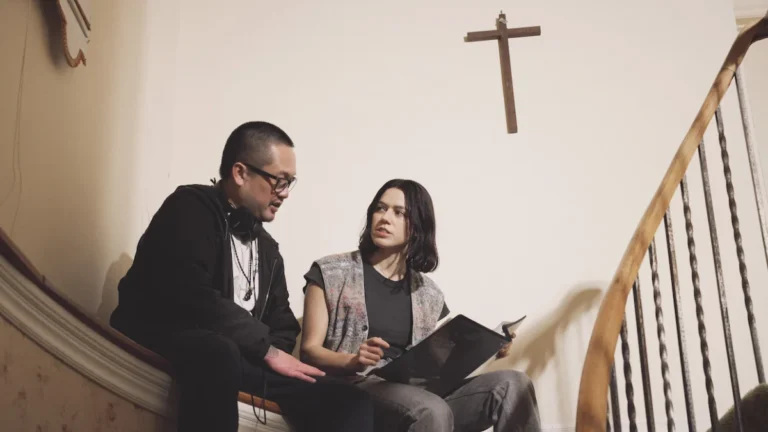
Otilia Portillo Padua’s approach to the documentary is heavily influenced by her professional background in architecture. This foundation provides a unique structural perspective, where the film itself is treated as a built environment or a living ecosystem. During the production process, Portillo Padua emphasized the collaborative nature of the medium, drawing parallels between the design of physical spaces and the construction of a narrative. She describes her filmmaking style as "ecosystemic," where the subjects, the environment, and the audience are situated within a shared, interconnected space.
The structural integrity of Daughters of the Forest is dictated not by traditional three-act tropes or a linear "hero’s journey," but by the biological behavior of fungi. Portillo Padua allowed the non-linear, sprawling nature of the mycelial network to guide the storytelling. This choice reflects a desire to make the "invisible visible," highlighting the microscopic spores and the vast underground webs that sustain life above ground. The result is a film that feels organic and fluid, moving away from human-centric narratives to embrace a more holistic view of the natural world.
Visual Innovation and the Sci-Fi Lens
One of the most distinctive elements of the documentary is its use of a "science-fiction" lens to portray the natural world. Portillo Padua avoids the common trap of "magical realism," instead leaning into speculative fiction and Indigenous futurism to reimagine the relationship between humans and nature. To achieve this, the production utilized innovative visual techniques. Rather than relying on 3D computer-generated imagery (CGI), the team filmed actual fungal spores in a controlled garage environment. These images were then layered into 2D composites and projected into 3D spaces, creating a visceral, immersive experience that Portillo Padua describes as "the journey of the spore."
This aesthetic choice extends to the mushrooms themselves, which are given a voice within the film. Through a layered soundscape of multiple voices—including those of the protagonists and their family members—the organisms meditate on their divine purpose: "transforming death into life." This anthropomorphism is handled with care, intended to evoke emotion and provide a non-human perspective on existence. The film’s "sci-fi" categorization is a deliberate attempt to use the genre as a tool for "rupture" and "imagination," allowing viewers to envision a future where traditional knowledge and scientific inquiry coexist in a non-dystopian framework.
Environmental Challenges and the Threat of Illegal Logging
The verdant enclaves where Lis and Juli reside are under constant threat from external economic pressures. Mexico’s forests are currently battling a crisis of illegal logging, often driven by organized crime and the global demand for timber. According to data from Global Forest Watch, Mexico lost approximately 4.5 million hectares of tree cover between 2001 and 2023, representing a significant decline in biodiversity. For the Indigenous communities featured in the film, the loss of the forest is not merely an environmental concern; it is an existential threat to their way of life and their specialized knowledge of mycology.

In addition to environmental destruction, the film addresses the gradual erasure of Indigenous languages. As younger generations are pushed toward urban centers and formal education systems that prioritize Spanish, the linguistic nuances of mycological classification—names that often describe a mushroom’s relationship to specific trees or weather patterns—are at risk of being lost. Daughters of the Forest captures the urgency of this moment, portraying the efforts of Lis and Juli as a desperate race against time to document and preserve their heritage before the forests and the languages that describe them disappear entirely.
The Global Mycology Boom vs. Indigenous Reality
The documentary arrives at a time when global interest in mycology is at an all-time high. From the "shroom boom" in the wellness industry to the use of fungi in sustainable packaging and carbon sequestration, mushrooms are increasingly viewed as a panacea for modern environmental and psychological ills. However, Portillo Padua notes a stark contrast between this "capitalistic" interest and the reality of Indigenous foragers. While the global north often asks how mushrooms can "serve" human needs, the women in Daughters of the Forest view themselves as "caretakers" of the fungi.
The film serves as a critical counter-narrative to the commodification of Indigenous knowledge. It highlights how the recent global fascination with foraging often overlooks the centuries of poverty, racism, and survival that necessitated the Indigenous mastery of mycology. For many of these communities, eating mushrooms was not a lifestyle choice but a necessity born of economic marginalization. By centering the voices of those who have lived in symbiosis with these organisms for generations, the film challenges the extractive nature of the modern wellness industry.
Scientific Risks and the Matrilineal Chain of Knowledge
A pivotal sequence in the film explores the fine line between life and death inherent in the study of fungi. Portillo Padua recounts a specific instance involving the consumption of white Amanita mushrooms. While some species within the Amanita genus are edible, they often closely resemble lethal varieties, such as the Amanita phalloides (Death Cap). The knowledge required to prepare these mushrooms—knowing how to cook them to neutralize certain toxins—is the result of centuries of trial and error, often at the cost of human lives.
This high-stakes reality underscores the importance of the matrilineal chain of knowledge. The film demonstrates that this information is not merely academic; it is a vital survival skill passed from grandmother to granddaughter. This theme is further explored during a sequence involving the "holy mushroom" (a psychedelic species), where Juli seeks guidance from the same organism her father consulted years prior. The film treats these spiritual experiences with the same gravity as scientific inquiry, validating the protagonist’s belief that the two worlds are not mutually exclusive.
Broader Impact and the Future of Indigenous Futurism
Daughters of the Forest stands as a significant contribution to the growing movement of Indigenous Futurism. By utilizing speculative storytelling to address real-world environmental and social issues, the film offers a path forward that is not reliant on Western technological solutions alone. It advocates for a "speculative fiction" of the present, where small, localized actions—much like the dispersal of spores—can lead to transformative changes in the surrounding environment.
The broader implications of the film are already being felt in the documentary community. Critics and festival programmers have noted its ability to blend high-concept visual artistry with grounded, social-issue filmmaking. For the subjects, Lis and Juli, the film represents a rare instance of Indigenous people being granted agency over their own story, rather than being treated as passive objects of ethnographic study. As Portillo Padua concludes, the goal of the film is to inspire a new generation to believe that "the holy mushroom and the laboratory can coexist." By imagining these alternatives, Daughters of the Forest provides a blueprint for a future that honors ancestral roots while embracing the possibilities of the scientific horizon.