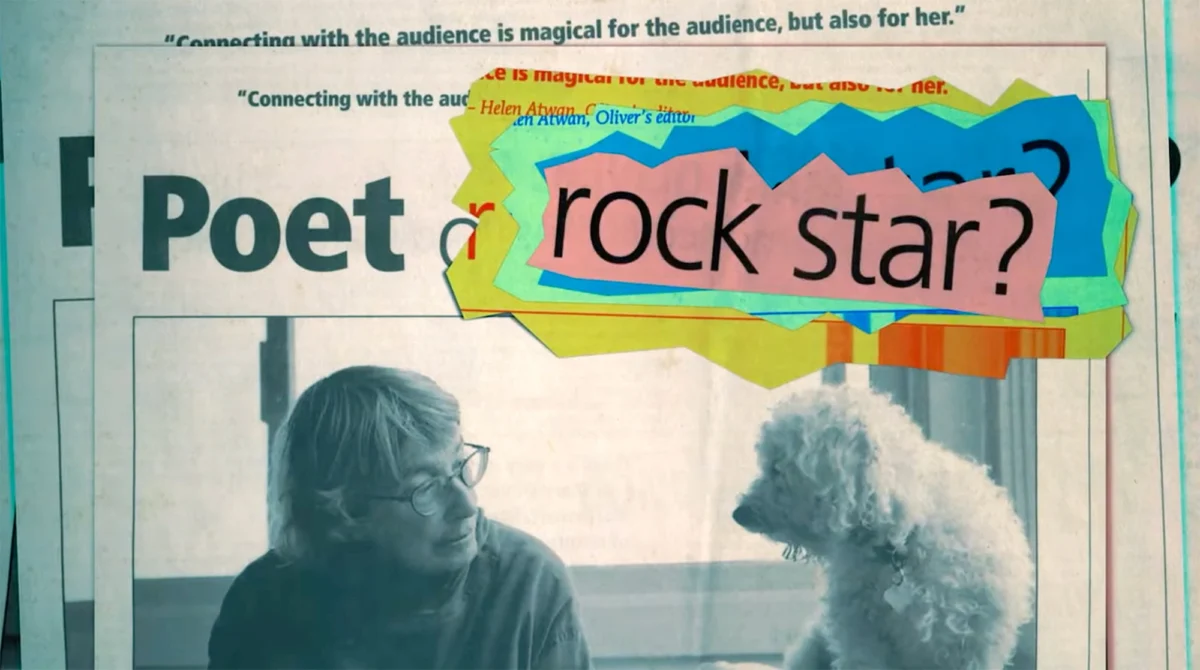
Pieshake Pictures has released the official trailer for Mary Oliver: Saved by the Beauty of the World, a highly anticipated biopic documentary poised to offer an intimate exploration into the life, work, and enduring wisdom of the Pulitzer Prize-winning poet, Mary Oliver. Set to premiere on PBS’s esteemed American Masters series in late summer 2026, the film promises a comprehensive look at an artist whose profound connection to nature and accessible verse captivated millions, cementing her status as one of America’s most cherished literary figures. The trailer, launched on April 17, 2026, provides a compelling glimpse into the narrative, featuring Oliver’s own resonant words and testimonials from an eclectic array of public figures who have found solace and inspiration in her poetry.
The Enduring Legacy of Mary Oliver
Mary Oliver, who passed away in 2019 at the age of 83, left behind a monumental body of work spanning over thirty collections of poetry and essays. Her unique voice, characterized by its clarity, spiritual depth, and unwavering focus on the natural world, resonated deeply with a broad readership. Born in Maple Heights, Ohio, in 1935, Oliver’s childhood was marked by difficulty and a profound sense of solitude, which she often credited as the crucible for her poetic sensibility. It was in the woods and fields surrounding her home that she found refuge and began to hone her observational skills, developing a practice of deep attention that would become the hallmark of her verse. This early immersion in nature laid the foundation for a lifetime dedicated to articulating the sacredness of the ordinary, the wonder in a single blade of grass, or the profound lessons gleaned from observing the flight of a bird.
Oliver’s ascent in the literary world was a testament to the universal appeal of her themes. Her ability to bridge the gap between the mundane and the mystical, inviting readers to share in her moments of epiphany, earned her widespread acclaim. She was honored with the Pulitzer Prize for Poetry in 1984 for New and Selected Poems, a collection that solidified her place among contemporary literary giants. Further recognition came with the National Book Award in 1992 for New and Selected Poems, Volume One, underscoring her consistent output of work that was both critically lauded and immensely popular. Her poetry often explored themes of spirituality, mindfulness, death, and the transformative power of beauty, inviting readers to pause, observe, and engage more deeply with their own lives and surroundings. She was a master of the lyric poem, often employing free verse to create an immediate, conversational tone that belied the profound philosophical undercurrents of her work.
A Poet for the People: Oliver’s Unique Appeal
The documentary’s subtitle, "Saved by the Beauty of the World," encapsulates a central tenet of Oliver’s philosophy and artistic practice. Her work frequently articulated how nature served as a sanctuary, a teacher, and a source of profound spiritual sustenance. This message, delivered with an almost deceptively simple eloquence, has endeared her to a diverse audience, encompassing individuals from various walks of life, political persuasions, and spiritual beliefs. The film’s synopsis notes, "If poetry had a pop icon, Mary Oliver would be it," a characterization that speaks to her extraordinary popularity outside traditional poetry circles. Her books consistently sold in numbers typically reserved for best-selling fiction, a rare feat for a poet in the modern era.
This widespread appeal, however, occasionally placed her at odds with certain segments of the literary establishment. The documentary candidly explores this paradox, acknowledging how Oliver was "paradoxically acclaimed (by fans) and derided (by some poetry elites) for being ‘accessible’." While her accessibility was precisely what made her work resonate with so many, some critics found her directness and lack of overt intellectual complexity to be a stylistic limitation, labeling her work as overly sentimental or simplistic. Mary Oliver: Saved by the Beauty of the World promises to contextualize this debate, illustrating how her deliberate choice of clarity and emotional immediacy was a profound artistic statement, an invitation rather than a simplification. Her intention was never to mystify, but to illuminate, to draw the reader into a shared experience of wonder. This approach, though sometimes misunderstood by academic critics, cemented her bond with a vast readership who found her words to be a comforting and enlightening presence in their lives.

Crafting the Narrative: The Filmmaking Vision
Directed by acclaimed documentary producer and filmmaker Sasha Waters, Mary Oliver: Saved by the Beauty of the World is poised to be a visually stunning and emotionally resonant portrait. Waters, known for her nuanced biographical work and keen eye for cultural narratives, brings a wealth of experience to this project. Her previous directorial credits include This American Gothic, Chekhov for Children, and Garry Winogrand: All Things are Photographable, in addition to contributions to the "American Masters" series itself. This background suggests a filmmaker adept at weaving complex personal stories into broader cultural tapestries, making her an ideal choice to helm a documentary about a figure as beloved and multifaceted as Mary Oliver.
The film’s production, helmed by Pieshake Pictures, emphasizes authenticity and immersion. The narrative is rooted in Oliver’s own language, drawing extensively from her poems, excerpts from her prose, essays, and rare archival interviews. This meticulous approach ensures that Oliver’s voice remains at the heart of the story, allowing her unique perspective to guide the audience through her life and artistic evolution. Complementing these textual and auditory elements are "dazzling visual imagery of the landscapes that shaped her writing, and as well as archival photographs and films." These visuals are crucial for capturing the essence of Oliver’s world, depicting the natural beauty that served as her constant muse and primary subject. The film aims to not only chronicle her life but also to visually interpret the spiritual and ecological environments that were so integral to her creative process.
Voice and Vision: Notable Contributions
The documentary’s trailer highlights the profound impact of Oliver’s work by featuring testimonials from a diverse group of notable individuals. Stephen Colbert, Oprah Winfrey, Steve Buscemi, and Lucy Dacus are among the voices sharing how Oliver’s poetry continues to resonate today. This cross-section of cultural figures – from a late-night satirist and media mogul to an acclaimed actor and an indie musician – underscores the broad, cross-generational appeal of Oliver’s verse.
Oprah Winfrey, a known admirer of literature and spiritual wisdom, has often championed works that promote introspection and personal growth, aligning perfectly with Oliver’s contemplative style. Stephen Colbert, despite his comedic persona, frequently delves into deeper philosophical and spiritual discussions, suggesting he finds intellectual and emotional depth in Oliver’s seemingly simple lines. Steve Buscemi, known for his gritty, character-driven roles, might be drawn to the raw honesty and grounded perspective present in Oliver’s observations of the natural world. Indie musician Lucy Dacus represents a younger generation of artists who continue to find relevance and inspiration in Oliver’s themes of solitude, observation, and emotional honesty. Their collective endorsements serve as powerful indicators of Oliver’s enduring cultural footprint, demonstrating how her work transcends traditional literary boundaries and speaks to a universal human experience. These contributions are not merely celebrity endorsements but rather reflections of how Oliver’s poetry acts as a shared language for understanding the complexities of life and nature.
A Chronology of Recognition
The journey of Mary Oliver: Saved by the Beauty of the World to audiences has followed a thoughtful trajectory. The film first premiered at the prestigious True/False Film Festival in 2025, an event known for showcasing innovative and thought-provoking non-fiction cinema. This festival debut allowed the documentary to gain initial critical traction and build anticipation within the film community. Following its festival and theatrical run, the film is slated for a nationwide broadcast on PBS, specifically as part of the celebrated "American Masters" series. The official broadcast date is set for August 25th, 2026. This strategic rollout ensures that the film reaches both dedicated cinephiles and a broad public television audience, maximizing its potential impact.

The "American Masters" series, a cornerstone of PBS programming since 1986, is renowned for its comprehensive and insightful biographical documentaries on America’s most influential cultural figures. Its commitment to meticulous research and high production values makes it an ideal platform for a documentary of this caliber. Being featured on "American Masters" not only grants the film significant exposure but also formally cements Mary Oliver’s place within the pantheon of American cultural icons. The series has historically brought the lives and works of artists, writers, musicians, and thinkers to millions of homes, fostering a deeper appreciation for the nation’s rich artistic heritage. For Mary Oliver: Saved by the Beauty of the World, this partnership signifies a powerful validation of Oliver’s enduring legacy and the film’s artistic merit.
Cape Cod and the Muse of Nature
A significant portion of Oliver’s life and work was intrinsically linked to Cape Cod, Massachusetts, and the broader New England landscape. For nearly five decades, she made her home there, finding profound inspiration in its ponds, forests, beaches, and wildlife. The documentary meticulously captures this symbiotic relationship, showcasing how the specific ecology of Cape Cod – its changing seasons, its unique flora and fauna, its wild, untamed beauty – became a central character in her poetry. Oliver’s long walks in the woods, often accompanied by her beloved dogs, were not merely recreational; they were a spiritual practice, a form of active meditation that allowed her to open herself "to the known & unknowable world."
Her poems frequently feature specific natural elements of Cape Cod: the egrets in the marshes, the wild geese flying overhead, the delicate dance of sunlight through pine needles, the vastness of the Atlantic. These natural observations were never merely descriptive; they served as metaphors for human experience, pathways to understanding love, loss, wonder, and the cyclical nature of life. The film’s "dazzling visual imagery" of these landscapes will undoubtedly transport viewers into the very environments that shaped Oliver’s perspective, allowing them to experience, even vicariously, the profound connection she felt to the natural world. This geographical and ecological anchoring is crucial to understanding the full scope of her work, illustrating how her physical environment became an extension of her spiritual and creative self.
Broader Implications and Future Impact
The release of Mary Oliver: Saved by the Beauty of the World carries significant implications for both literary appreciation and the broader cultural landscape. At its core, the documentary serves as a powerful reaffirmation of Mary Oliver’s indispensable contribution to American letters. For her devoted readers, it offers a deeper, more intimate understanding of the woman behind the beloved words. For those unfamiliar with her work, it provides an accessible and compelling introduction to a poet whose insights into nature and the human spirit remain profoundly relevant.
In an increasingly digitized and often disconnected world, Oliver’s emphasis on presence, observation, and the solace found in nature offers a timely antidote. The film’s exploration of her life and philosophy could inspire new generations to engage with poetry, to seek out moments of quiet contemplation, and to foster their own connections with the natural environment. Furthermore, the documentary’s portrayal of Oliver as a "gay woman – out, but intensely private" adds another layer of important context, highlighting her personal courage and her quiet defiance of societal norms, all while maintaining an unwavering focus on her art. This aspect enriches the understanding of her identity and how it subtly informed her perspectives, even if not overtly expressed in her poetry.
By presenting Oliver’s life story and artistic journey through the lens of a major public television series, the documentary ensures that her legacy will continue to flourish and reach an exceptionally wide audience. It underscores the vital role of biographical documentaries in preserving cultural memory, fostering critical discourse, and introducing iconic figures to contemporary audiences. As the film makes its way through festivals and towards its PBS premiere, it promises to be an emotional, honest, and ultimately celebratory tribute to a poet who truly saw the beauty of the world and taught countless others to see it too.