


On April 14, 2026, the popular "Tested" YouTube channel, helmed by the renowned science communicator Adam Savage, released an extensive 20-minute video offering an unprecedented look into the inner workings of IMAX’s 70mm film projection system at their Los Angeles headquarters. This immersive tour, chronicled by Savage, serves not only as a captivating exploration for cinephiles but also as a timely educational piece, coinciding with a resurgence of major motion pictures being presented in the grand, analog format. The video provides a detailed examination of the intricate process involved in handling, preparing, and projecting 70mm IMAX film, a format celebrated for its unparalleled visual fidelity and immersive experience.
The featurette arrived as the film industry, and particularly discerning filmmakers and audiences, were once again turning their attention to the unique grandeur of 70mm IMAX. With highly anticipated blockbusters such as Christopher Nolan’s The Odyssey and Denis Villeneuve’s Dune: Part Three slated for releases that heavily leverage this premium format, the interest in the technical marvel behind these cinematic spectacles has intensified. Savage’s visit underscores the complex craft and dedicated expertise required to maintain and operate these sophisticated projection systems, a testament to IMAX’s commitment to preserving a legacy of visual excellence.
The Allure of 70mm IMAX: A Technical Marvel
At the core of the fascination explored by Adam Savage is the inherent technical superiority of the IMAX 70mm film format. Unlike standard 35mm film, which runs vertically through a projector with four perforations per frame, IMAX 70mm film is 70mm wide and runs horizontally, utilizing 15 perforations per frame. This significantly larger frame area—nearly ten times that of a standard 35mm frame—allows for an extraordinary level of detail, clarity, and color reproduction that remains unmatched by most other exhibition formats, including many digital systems.
The resolution equivalence of a 15/70mm IMAX print is often estimated to be upwards of 18K, far exceeding the 4K or even 8K resolutions commonly found in digital cinema. This immense visual information translates into a sharper image, finer grain structure, and a broader dynamic range, contributing to a truly immersive experience on the colossal IMAX screens. The unique aspect ratio, typically around 1.43:1 for traditional IMAX 70mm, fills the audience’s peripheral vision, drawing them deeper into the cinematic world. Coupled with IMAX’s proprietary sound systems, which deliver precise audio through numerous speakers, the combined effect is an unparalleled sensory engagement designed to transport viewers into the film.
A Legacy of Immersion: The History of IMAX Film

The origins of IMAX trace back to the late 1960s, developed by a Canadian team seeking to create a more impactful film experience for Expo ’67 in Montreal. The system, formally launched in 1970, initially found its niche in educational documentaries, museum theaters, and science centers, where its ability to project stunning large-format imagery captivated audiences with subjects ranging from space exploration to natural wonders. For decades, IMAX was synonymous with these non-narrative, often breathtaking, visual journeys.
The integration of IMAX 70mm into mainstream feature filmmaking began to gain significant traction in the early 2000s, with directors recognizing its potential for epic storytelling. Landmark films like Apollo 13 (1995), The Dark Knight (2008), and Mission: Impossible – Ghost Protocol (2011) prominently featured sequences shot with IMAX cameras, demonstrating the format’s capacity for grand spectacle. Filmmakers like Christopher Nolan, known for his ardent advocacy of celluloid, have become champions of the 15/70mm format, insisting on its use for key sequences, or even entire films, to achieve his specific artistic vision. This commitment has been instrumental in maintaining the relevance and perceived value of film projection in an increasingly digital landscape.
Behind the Curtains: Adam Savage’s Unprecedented Access
Adam Savage’s "Tested" video offers a rare and detailed glimpse into the meticulous process of preparing a 70mm IMAX film print. The tour begins in what can only be described as a sacred space for film purists: IMAX’s vault, housing massive reels of film prints. Savage, known for his infectious enthusiasm and deep appreciation for craftsmanship, embarks on a journey with Irving, a seasoned print manager whose expertise and passion for the medium are palpable.
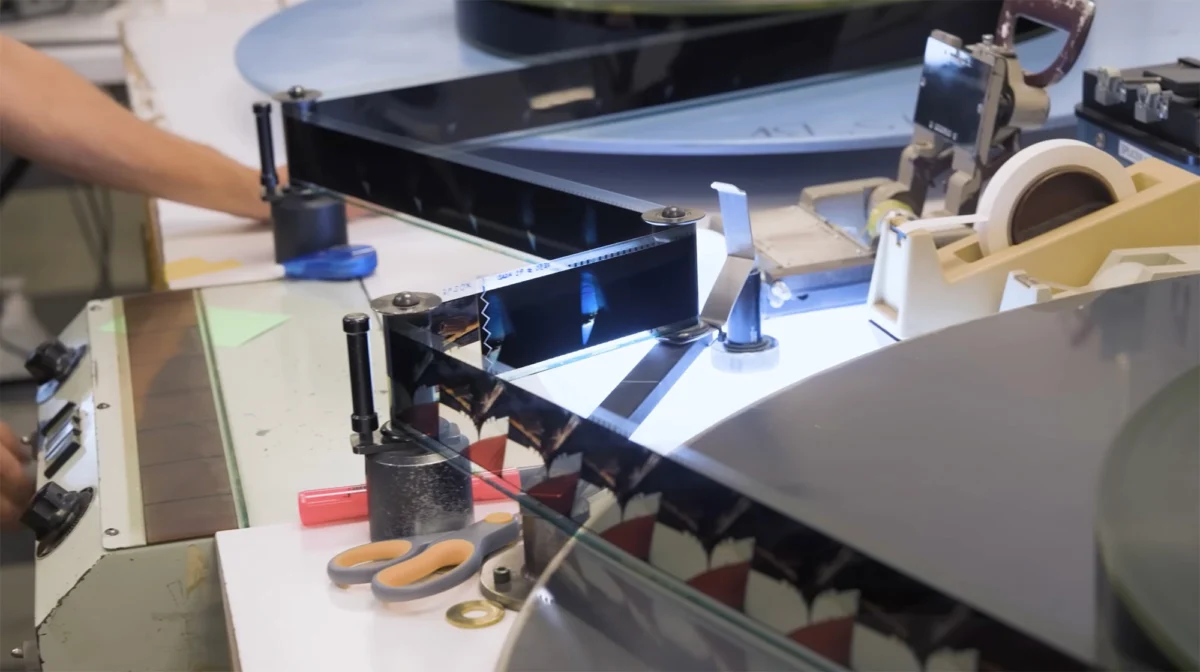
The video captures the physical demands and precision required to handle these colossal film reels. Unlike standard 35mm prints that arrive in multiple smaller reels, an IMAX 70mm feature film can consist of several reels, each weighing hundreds of pounds and requiring specialized equipment to move. The splicing room, where individual reels are carefully joined to form a single, continuous platter, is a highlight. Irving demonstrates the delicate art of "leadering up" a print—attaching blank film leaders to the beginning and end of the feature—and meticulously inspecting each frame for dust, scratches, or imperfections. This labor-intensive process, which can take hours or even days for a single film, ensures that the audience experiences the film as the director intended, free from distractions. During this segment, Savage and Irving are seen preparing a print for Nolan’s eagerly anticipated The Odyssey, adding a tangible connection to current cinematic events.
The tour culminates in the projection booth of IMAX’s in-house theater, a crucial facility where directors review and sign off on their vision. Here, Savage witnesses the operation of the massive IMAX 70mm projector, a mechanical marvel weighing over a ton and featuring a powerful xenon lamp capable of illuminating a screen tens of feet high with breathtaking clarity. The precision required to thread the film, align the lenses, and maintain constant tension on the platter system is highlighted, underscoring the role of the projectionist not just as an operator, but as a skilled artisan.
The Guardians of Grain: Preserving a Premium Format

The continued operation of IMAX 70mm projection systems represents a significant commitment from IMAX Corporation and a select number of exhibition partners. The challenges are manifold:
- Cost: The manufacturing of 70mm film stock and the creation of prints is substantially more expensive than digital alternatives. A single print for a feature film can cost tens of thousands of dollars.
- Logistics: The sheer size and weight of the film reels necessitate specialized shipping and handling, increasing logistical complexity and costs.
- Equipment Maintenance: IMAX 70mm projectors are intricate machines requiring regular, expert maintenance. Spare parts can be scarce, and the technical knowledge to service them is highly specialized.
- Skilled Personnel: The dwindling number of experienced 70mm projectionists capable of managing these complex systems is a critical concern. The art of film projection requires a deep understanding of optics, mechanics, and film handling that is distinct from operating digital projectors.
- Theater Infrastructure: Only a limited number of theaters worldwide are equipped with the necessary projection booths, large screens, and sound systems to accommodate IMAX 70mm. The majority of these are located in the United States and Canada, making the experience a rarity for international audiences.
Despite these hurdles, IMAX has maintained its commitment to supporting the format, recognizing its unique value proposition. This commitment is driven by the demand from high-profile filmmakers and a passionate segment of the audience that seeks out the ultimate cinematic experience.
Filmmakers’ Vision: Why 70mm Endures
The enduring appeal of 70mm IMAX among visionary directors is a key factor in its continued relevance. Christopher Nolan, perhaps the format’s most vocal advocate, frequently discusses his belief that film provides a superior capture medium and an unparalleled exhibition experience. He argues that film’s organic nature, its ability to render light and shadow with nuanced detail, and its sheer physical presence in the projector imbue the cinematic experience with an authenticity that digital often struggles to replicate. For Nolan, using IMAX 70mm is not merely a technical choice but an artistic one, integral to his storytelling. His upcoming film, The Odyssey, is expected to push the boundaries of this format once again.
Similarly, Denis Villeneuve, director of the critically acclaimed Dune series, while embracing digital for certain aspects of his production, has expressed profound respect for the immersive qualities of large-format film. The anticipation for Dune: Part Three suggests it will also seek to leverage the most impactful presentation methods available, potentially including a robust 70mm IMAX rollout for its most ambitious sequences. These filmmakers view 70mm IMAX not as a nostalgic relic, but as a powerful tool for achieving their artistic goals and delivering maximum impact to their audiences. Their influence is crucial in sustaining the demand and infrastructure for this niche format.
The Tested Channel’s Role in Cinematic Education
Adam Savage’s "Tested" channel has built a substantial following by delving into the science, technology, and craftsmanship behind various facets of pop culture, engineering, and entertainment. Savage, widely recognized from his tenure on MythBusters, brings a unique blend of scientific curiosity, practical expertise, and genuine enthusiasm to his explorations. This deep dive into IMAX 70mm film projection aligns perfectly with the channel’s mission to demystify complex processes and celebrate the artistry of creation.

The video serves as an invaluable educational resource, not only for aspiring filmmakers and projectionists but also for general audiences who may be unaware of the intricate work behind the silver screen. By showcasing the hands-on nature of film handling and the precision of projection, "Tested" contributes significantly to film literacy. This particular video joins a rich catalog of "Tested" content that explores cinematic techniques and props, including features on making an original Blade Runner ID badge prop, restoring a 100-year-old animated film, visiting Jim Henson’s archives, and exploring props from The Fifth Element, as well as a visit to the set of Project Hail Mary. These explorations collectively highlight the tangible and often overlooked aspects of filmmaking that contribute to the magic of cinema.
The Broader Implications: A Future for Analog Grandeur
The meticulous preservation and showcasing of IMAX 70mm film, as highlighted by Adam Savage’s tour, carries broader implications for the future of cinematic exhibition and appreciation. In an era dominated by digital distribution and projection, the continued commitment to analog film formats represents a vital counter-narrative. It signifies that while digital offers convenience, accessibility, and cost-efficiency, there remains an irreplaceable value in the tangible, high-fidelity experience that only film can provide for certain artistic endeavors.
This commitment fosters a symbiotic relationship where cutting-edge digital technologies coexist with revered analog methods. It ensures that future generations of filmmakers and audiences can still access and appreciate the distinct aesthetic and immersive qualities of film. Economically, maintaining this infrastructure is a strategic investment for IMAX, positioning them at the pinnacle of premium cinematic experiences. Culturally, these efforts contribute to a deeper understanding of cinematic heritage and the craft involved in bringing stories to the big screen. The video effectively serves as a powerful argument for the enduring relevance of film as an artistic medium and the importance of preserving the expertise required to present it in its most magnificent form.
In conclusion, Adam Savage’s detailed exploration of IMAX’s 70mm film projection system is more than just a "geek out" session; it is a critical examination of a highly specialized craft that stands at the intersection of art and technology. Released at a time when 70mm IMAX is experiencing a renewed prominence thanks to visionary filmmakers, the video not only educates but also inspires appreciation for the immense effort and passion that go into delivering the ultimate cinematic experience. It reaffirms that in the evolving landscape of film exhibition, the grandeur of analog 70mm IMAX continues to hold a unique and cherished place.