
The Federal Aviation Administration (FAA) has officially initiated a modern recruitment strategy aimed at narrowing a persistent and widening gap in the United States’ air traffic control workforce by specifically targeting the gaming community. This unconventional approach, highlighted by a high-energy promotional campaign, seeks to leverage the cognitive and technical proficiencies inherent in video game enthusiasts to bolster a profession currently grappling with a staffing crisis that threatens the efficiency and safety of the National Airspace System (NAS). The campaign, which features a promotional video incorporating Xbox branding and esports imagery, signals a significant shift in how the federal government views the intersection of digital entertainment and professional aptitude.
The Strategic Pivot to Gaming Demographics
The FAA’s new recruitment drive, titled "It’s Not a Game, It’s a Career," represents a calculated attempt to appeal to a younger demographic that possesses high levels of spatial awareness, rapid information processing, and the ability to multitask under significant pressure—traits common among competitive gamers. The promotional video, which began circulating across digital platforms this week, opens with the recognizable Xbox logo before transitioning into a montage of professional esports players celebrating victories. The messaging is clear: the skills honed in virtual environments are not only valuable but potentially essential for the next generation of air traffic controllers (ATCs).
Transportation Secretary Sean Duffy emphasized the necessity of this evolution in recruitment. In a formal statement regarding the initiative, Duffy noted that the department must adapt to reach a new generation of workers. He argued that the growing demographic of young adults who have spent years navigating complex digital environments possesses "many of the hard skills it takes to be a successful controller." By framing the career as the ultimate "level up," the FAA is attempting to bridge the gap between recreational gaming and high-stakes professional responsibility.
A Growing National Staffing Deficit
The urgency behind this recruitment push is underscored by a chronic shortage of qualified air traffic controllers. For over a decade, the FAA has struggled to keep pace with the rate of retirements and the increasing volume of domestic and international air traffic. According to recent Department of Transportation (DOT) audits and industry reports, the FAA is currently thousands of controllers short of its optimal staffing targets. As of early 2024, the workforce of certified professional controllers was at its lowest point in nearly 30 years, despite the fact that air traffic volume has returned to—and in some sectors exceeded—pre-pandemic levels.
This shortage has had tangible effects on the aviation industry. In late 2023 and early 2024, the FAA was forced to request that airlines reduce their flight schedules at major hubs, including New York’s John F. Kennedy International Airport and LaGuardia Airport, due to insufficient staffing in regional radar facilities. Furthermore, reports of increased controller fatigue and a rise in "near-miss" runway incursions have prompted congressional inquiries and calls for immediate action. The FAA’s decision to target gamers is a direct response to the failure of traditional recruitment methods to fill the pipeline at the necessary speed.
The Recruitment Timeline and Application Process
The FAA has set a specific window for the next round of applications, inviting prospective candidates to apply starting April 17. This window is typically brief, often lasting only a few days, as the agency processes thousands of applicants to find a few hundred viable candidates for the FAA Academy. The recruitment drive specifically targets "off-the-street" applicants—individuals without prior air traffic control experience in the military or private sector.
Candidates must meet several baseline requirements: they must be U.S. citizens, be under the age of 31 at the time of the application closing date, pass a rigorous medical examination, and undergo a comprehensive security clearance. Successful applicants are sent to the FAA Academy in Oklahoma City for several months of intensive training. Those who graduate from the Academy are then assigned to air traffic facilities across the country as Developmental Controllers, where they begin years of on-the-job training to become fully certified.
Analyzing the Transferable Skills of Gamers
The logic behind targeting gamers is supported by various cognitive studies suggesting that high-level gaming improves "useful field of view" and the ability to track multiple moving objects simultaneously. Modern air traffic control involves managing complex data sets, communicating clearly with pilots, and visualizing three-dimensional space based on two-dimensional radar screens—tasks that bear a striking resemblance to the mechanics found in real-time strategy (RTS) games and complex simulations.
However, the transition from a gaming chair to a control tower is not without its critics. Michael O’Donnell, an aerospace consultant and former senior FAA official, expressed a degree of caution regarding the campaign. While acknowledging that gaming experience provides an "edge" in terms of technical skill sets, O’Donnell warned that virtual success does not automatically translate to professional reliability. "It doesn’t replace aptitude, or discipline, or decision making under pressure," O’Donnell stated. He noted that in a gaming environment, a mistake results in a "game over" screen; in air traffic control, a mistake can result in the loss of hundreds of lives.
Financial Incentives and Career Stability
One of the primary levers the FAA is using to attract gamers is the promise of high compensation and job security. The promotional materials explicitly mention the opportunity to "make a lot of money." According to the Bureau of Labor Statistics, the median annual wage for air traffic controllers was approximately $137,380 in 2023, with the highest-earning 10 percent making more than $200,000.
In addition to the base salary, controllers receive comprehensive federal benefits, including robust retirement plans and health insurance. For a demographic often characterized by participation in the "gig economy" or facing precarious job markets in the tech and media sectors, the FAA is positioning air traffic control as a stable, high-status alternative that rewards technical proficiency with long-term financial security.
Historical Context: The Long Road to the Current Crisis
The current staffing crisis is not a sudden phenomenon but the result of decades of structural challenges. The roots of the problem can be traced back to the 1981 Professional Air Traffic Controllers Organization (PATCO) strike, when President Ronald Reagan fired more than 11,000 striking controllers. This led to a massive, simultaneous hiring wave to replace the workforce. Decades later, that "Reagan-era" cohort reached retirement age almost all at once, creating a massive demographic cliff that the FAA has been struggling to climb for the last ten years.
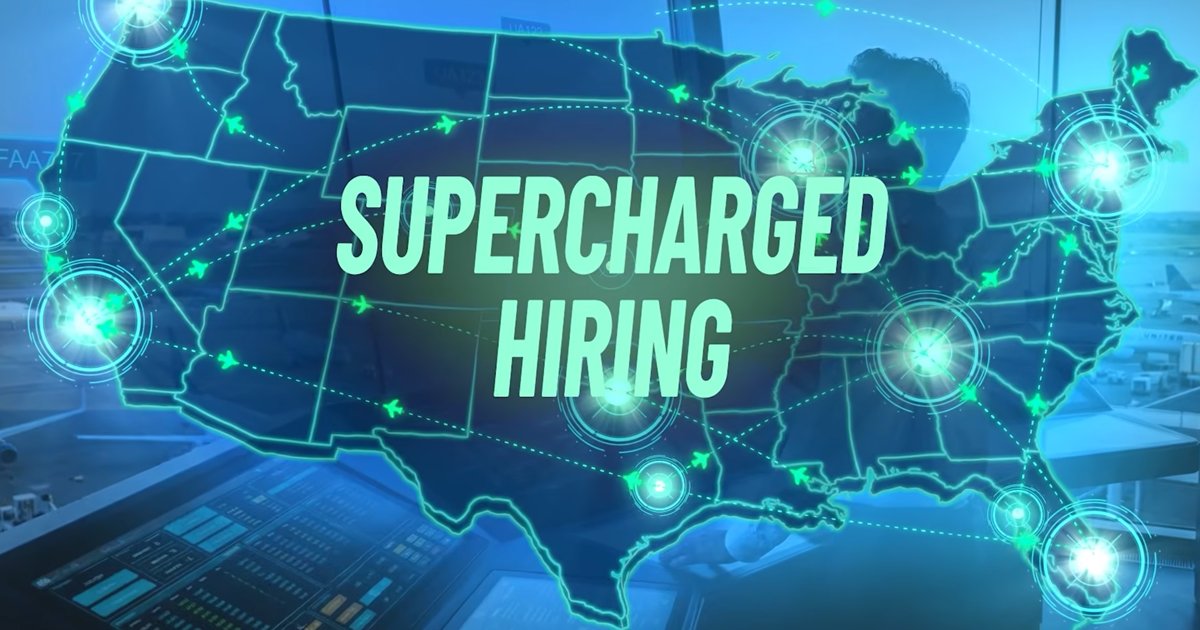
Compounding the issue was the COVID-19 pandemic, which forced the temporary closure of the FAA Academy in Oklahoma City, halting the pipeline of new controllers for several months. During the same period, many veteran controllers opted for early retirement rather than navigating the stresses of the pandemic-era aviation environment. The current push for "supercharged hiring" is an attempt to finally move past these historical bottlenecks.
Industry Reactions and Safety Implications
The aviation industry has reacted to the FAA’s new strategy with a mixture of hope and scrutiny. The National Air Traffic Controllers Association (NATCA), the union representing controllers, has long advocated for increased hiring and more consistent funding for the FAA. While the union supports the influx of new talent, it has consistently emphasized that recruitment is only half the battle; retention and the quality of training are equally critical.
Safety remains the paramount concern. The FAA’s primary mission is the "safe and efficient" flow of air traffic. Critics of the "gamified" recruitment approach worry that it might prioritize speed over the rigorous screening of temperament and psychological resilience. The FAA maintains that its standards remain the highest in the world and that the recruitment campaign is merely about widening the "top of the funnel" to ensure they are finding the best possible candidates from a modern talent pool.
The Path Forward: Can Gamers Save the Skies?
As the April 17 application date approaches, the aviation community will be watching closely to see if this digital-first recruitment strategy produces a higher volume of qualified candidates. The success of the initiative will not be measured by the number of applications received, but by the graduation rates at the FAA Academy and the performance of these new recruits in high-stress tower environments five to ten years from now.
The move to target gamers is a recognition that the nature of work is changing. As air traffic control technology evolves toward more automated and data-heavy systems, the "hard skills" of the digital native are becoming increasingly relevant. If the FAA can successfully mold the discipline and decision-making of the gaming community into the professional rigor required for aviation safety, it may provide a blueprint for other government agencies struggling to modernize their workforces. For now, the message to the nation’s gamers is clear: the skills used to conquer virtual worlds may soon be the same ones used to keep the American skies safe.