


The 2023 contract negotiations between United Parcel Service (UPS) and the International Brotherhood of Teamsters represented the largest private-sector collective bargaining effort in United States history, involving approximately 340,000 workers. This pivotal moment in American labor history is the central focus of the documentary Who Moves America, directed by Yael Bridge. The film explores the intricate dynamics of labor organizing, the internal shifts within the Teamsters union, and the broader socioeconomic implications of a workforce that moves approximately 6% of the nation’s Gross Domestic Product (GDP). Premiering at the True/False Film Fest and featured in the DOC NYC Selects series, the documentary provides a granular look at the lives of drivers and warehouse workers who stood on the precipice of a nationwide strike that could have cost the U.S. economy billions of dollars.
The Catalyst for Conflict: 2018 Discontent and the Rise of Sean O’Brien
The roots of the 2023 labor dispute can be traced back to the 2018 contract, which many rank-and-file members viewed as a significant loss for the union. Despite a majority of voting members rejecting the deal, a technicality in the Teamsters’ constitution—the "two-thirds rule"—allowed leadership to ratify the contract because voter turnout was low. This event catalyzed a movement for internal reform, leading to the 2021 election of Sean O’Brien as General President. O’Brien ran on a platform of militancy and transparency, promising to eliminate the controversial "22.4" tier of lower-paid drivers and to secure better protections for part-time workers.
Director Yael Bridge, alongside producer Yoni Golijov and cinematographer Erick Stoll, recognized the significance of this shift early on. Having previously explored socialist themes in The Big Scary ‘S’ Word and teacher strikes in When We Fight, Bridge sought to document the trajectory of a union preparing for what appeared to be an inevitable confrontation with corporate management. The film captures the transition of the Teamsters from a period of perceived stagnation to one of active mobilization, highlighting the "radicalizing" effect of the organizing process itself.
Working Conditions and the Demand for Dignity
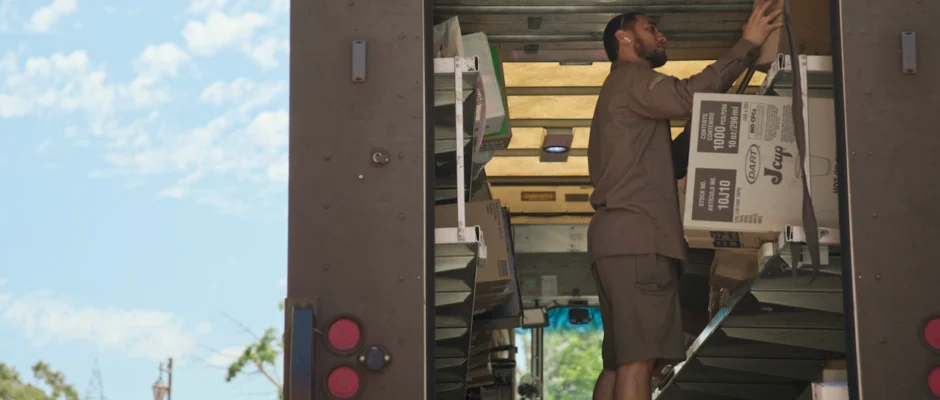
The documentary identifies three primary areas of contention that fueled the 2023 negotiations: workplace safety regarding extreme heat, the economic precarity of part-time employees, and the stagnation of wages relative to the rising cost of living. UPS delivery vehicles, famously lack air conditioning, a policy that became a life-or-death issue as record-breaking heatwaves swept across the country. Reports of drivers suffering from heat stroke and, in some cases, dying on the job, turned the demand for vehicle cooling systems into a non-negotiable point of the contract.
Furthermore, the film highlights the "two-tier" wage system that had created deep divisions within the workforce. Part-time employees, who constitute the majority of the UPS workforce, often struggled with poverty wages and lacked the same path to benefits enjoyed by full-time drivers. The "22.4" classification, created in 2018, had essentially established a class of drivers who performed the same work as senior drivers but for less pay and with fewer protections. Bridge’s narrative focuses on these systemic inequities, showing how they served as the primary motivators for the strike authorization vote, which passed with 97% support from the membership.
Geographic and Demographic Diversity in the Modern Labor Movement
To illustrate the scale of the Teamsters’ reach, Who Moves America follows workers in three distinct hubs: New York City, San Diego, and Louisville, Kentucky. Each location offers a unique perspective on the union’s internal diversity and the specific challenges faced by workers in different regions.
In New York, the film follows Tony, a politically active member whose involvement reflects the union’s strength in urban, high-density environments. In contrast, the San Diego segments explore the challenges of organizing in a more politically conservative landscape, featuring Justin, a worker navigating the complexities of bipartisan solidarity. The most critical geographic focus, however, is Louisville, home to "Worldport," the massive UPS global air hub. As the largest fully automated package handling facility in the world, Worldport is the nerve center of the UPS network. The film introduces two sisters working at this facility—one a union member and the other not—providing a rare look at the generational and ideological gaps that organizers must bridge.
Bridge’s choice to highlight these diverse locations underscores the fact that the Teamsters are not a monolith. The union includes a wide range of political affiliations, age groups, and racial backgrounds. Particularly notable is the significance of UPS jobs in communities of color, where a position as a full-time driver can provide a rare pathway to a six-figure income without a college degree.

The Strategy of the Strike Threat: A Chronology of Negotiations
The documentary meticulously tracks the timeline of the 2023 negotiations, which began in earnest in April. Throughout the spring and early summer, the Teamsters engaged in "practice pickets" across the country, a visible demonstration of their readiness to walk off the job. These actions were designed to exert maximum pressure on UPS management by signaling that the union’s threat of a strike on August 1 was credible.
The chronology of the dispute highlights several key milestones:
- June 16, 2023: Teamsters announce that 97% of members voted to authorize a strike if a deal was not reached by July 31.
- July 1, 2023: Negotiations break down as the union accuses UPS of failing to provide a fair economic package for part-time workers.
- July 25, 2023: With only days remaining before the deadline, UPS returns to the bargaining table and reaches a tentative agreement with the union.
- August 22, 2023: The contract is officially ratified, with 86.3% of voting members in favor.
The resulting contract was hailed as "historic" by union leadership. It included the total elimination of the "22.4" tier, a commitment to equip all new larger delivery vehicles with air conditioning, and significant wage increases for both full-time and part-time workers. Starting pay for part-timers was raised to $21 per hour, a substantial jump from the previous $15.50.
Analysis of Leadership and Rank-and-File Power
A central theme of Who Moves America is the relationship between union leadership and the rank-and-file membership. While Sean O’Brien is a prominent figure, Bridge intentionally avoids portraying him as a solitary hero. Instead, the film emphasizes that his power is derived entirely from the 340,000 members behind him. The documentary posits that a union leader is as much "led" by the members as he is a leader of them.
This perspective challenges traditional media narratives that often focus exclusively on the personalities at the top of labor organizations. By centering the "emotional journey" on the workers themselves, the film illustrates the concept of "economic democracy." It shows how organizing allows individuals who have little say in their daily working conditions to collectively demand a seat at the table. The title of the film—notably lacking a question mark—serves as a declarative statement: the workers are the ones who keep the country functioning, and therefore, they are the ones who hold the ultimate leverage.
Broader Implications for the American Labor Landscape
The success of the UPS Teamsters in 2023 has had a ripple effect across the American labor movement. The documentary situates the UPS struggle within the context of the "Summer of Strikes," which saw simultaneous actions by the United Auto Workers (UAW), SAG-AFTRA, and healthcare workers. This resurgence of labor militancy comes at a time when union popularity in the U.S. is at its highest point in decades, even as union density (the percentage of the total workforce that is unionized) remains near historic lows.
Bridge’s work suggests that the labor movement is at a "pivot point." Younger generations, in particular, are showing an increased inclination toward organizing as they face job insecurity and stagnating wages. The film also points toward 2028 as a potential watershed year. Several major unions, including the UAW and the Teamsters, have expressed interest in aligning their contract expiration dates to May 1, 2028 (May Day). This strategic alignment is intended to create the possibility of a coordinated general strike, a move that would represent an unprecedented level of solidarity across different sectors of the economy.
Conclusion: The Enduring Power of Collective Action
Who Moves America serves as both a historical record of a specific labor victory and a broader meditation on the nature of power in the United States. By documenting the meticulous, often grueling work of organizing, Bridge provides a roadmap for how disparate groups of people can find common ground to challenge corporate interests.
The film concludes that while the 2023 UPS contract was a significant victory, the struggle for labor rights is an ongoing process. As the 2028 deadline approaches, the lessons learned during the UPS negotiations—the importance of transparency, the necessity of rank-and-file involvement, and the power of a credible strike threat—will likely serve as the foundation for the next chapter of American unionism. For the workers featured in the film, the experience of organizing was not just about securing a better paycheck; it was about reclaiming their dignity and asserting their essential role in the American economy.