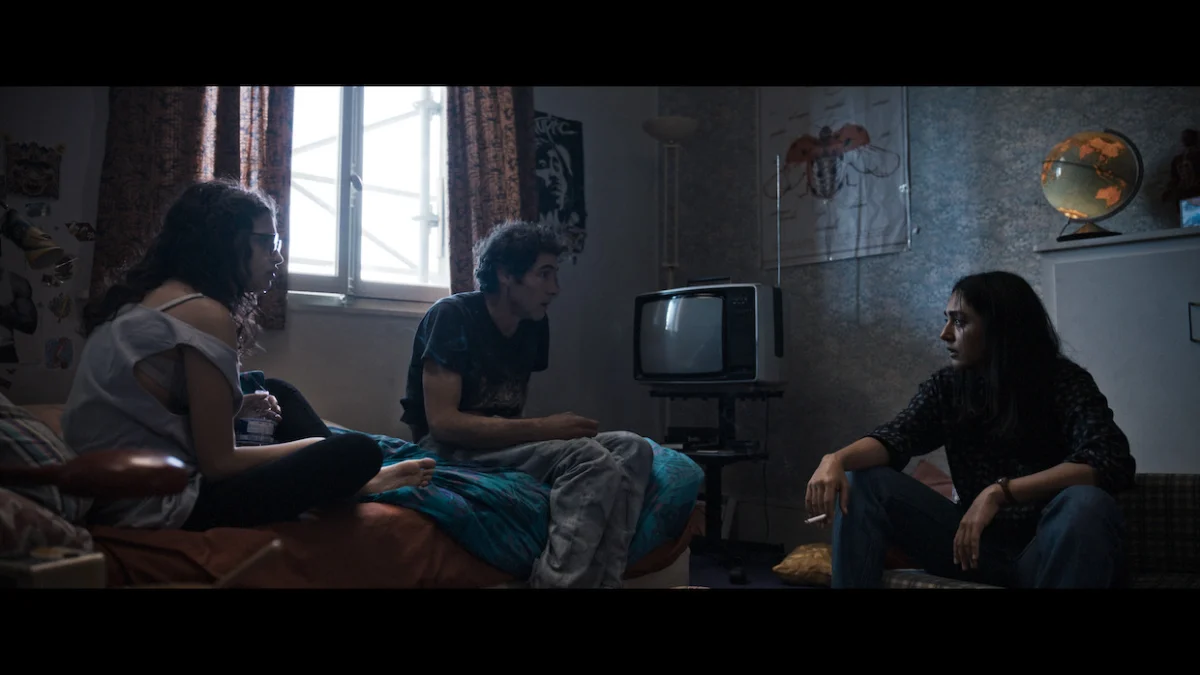
Renowned French writer-director Julia Ducournau, whose previous works ignited global conversations regarding the boundaries of body horror, is set to release her third feature film, Alpha, on March 27. Distributed by NEON, the film represents a significant narrative pivot for the filmmaker, who gained international acclaim for her 2016 cannibalistic coming-of-age story Raw and her 2021 Palme d’Or-winning masterpiece Titane. In a comprehensive dialogue with fellow visionary director Robert Eggers, Ducournau detailed the creative impetus behind Alpha, describing it as a "grounded family drama" that utilizes surrealist imagery to explore the profound complexities of unconditional love and social stigma.
The film stars newcomer Mélissa Boros as the titular Alpha, a 13-year-old girl navigating a world besieged by a peculiar viral outbreak. In this cinematic reality, the disease causes human organic tissue to gradually transform into marble, while blood metamorphoses into red sand. Supporting the young lead are established international stars Tahar Rahim, known for his work in A Prophet and The Mauritanian, and Golshifteh Farahani, an acclaimed actress and activist. The narrative centers on a fractured family unit—a mother who serves as a compassionate physician, her estranged brother who is succumbing to the disease, and a daughter caught in the crosshairs of a public health crisis that mirrors real-world history.
Historical Context and the AIDS Epidemic Parallel
While Alpha presents a fantastical biological premise, its emotional and social foundations are deeply rooted in the historical reality of the 1980s and 1990s. Ducournau explicitly draws parallels between the "marbleization" virus and the AIDS epidemic, which significantly impacted France during her formative years. According to historical health data, France experienced one of the highest rates of HIV infection in Europe during the late 20th century, a period marked by intense social stigmatization of queer men and intravenous drug users.
In the film, the quarantined hospital wards are filled with patients whose care is often neglected by fearful staff—a direct reflection of the early years of the HIV/AIDS crisis when medical professionals and the public alike grappled with the terror of contagion. By replacing the biological reality of the virus with the "noble" material of marble, Ducournau seeks to reframe the victims not as "others" to be feared, but as figures worthy of memorialization. This stylistic choice serves as a visual eulogy for those marginalized by society during times of medical upheaval.
A Chronology of Julia Ducournau’s Cinematic Evolution
To understand the weight of Alpha, one must look at the trajectory of Ducournau’s career, which has consistently challenged the "New French Extremity" label.
- Raw (2016): Her debut feature introduced a world where the transition into adulthood was literalized through cannibalism. It established her interest in the physical body as a site of psychological transformation.
- Titane (2021): This film made Ducournau only the second woman to ever win the Palme d’Or at the Cannes Film Festival. It pushed the boundaries of "body horror" by exploring a protagonist’s relationship with machines and a surrogate father figure, ultimately questioning the nature of gender and identity.
- Alpha (2026): Moving away from the high-octane intensity of its predecessors, Alpha focuses on the "frontal" expression of love. Ducournau noted that while Titane required a two-hour buildup to reach a moment of affection, Alpha is built entirely around the vulnerability of saying "I love you" in the face of mortality.
This evolution signifies a director moving from the shock of the flesh to the intimacy of the spirit, though the physical body remains her primary canvas.
Casting Strategy and the Synergy of Performance
The casting of Alpha reflects Ducournau’s preference for mixing seasoned professionals with non-actors to create a unique onscreen energy. Tahar Rahim and Golshifteh Farahani were selected not only for their technical prowess but for their public personas and physical approaches to acting. Rahim, in particular, is noted for his meticulous preparation and willingness to engage with the physical demands of playing a character whose body is literally turning to stone.
For the role of Alpha, Ducournau chose 19-year-old Mélissa Boros. Despite the character being 13, the director opted for an older actress to handle the dark subject matter and the exploration of burgeoning sexuality within a pandemic context. Boros, who has no formal acting background, was selected for her "quirky" and "awkward" physical presence, which Ducournau felt perfectly captured the discomfort of adolescence. This casting choice creates a dynamic where the experienced actors feed off the newcomer’s unpredictable energy, resulting in performances that feel spontaneous rather than over-rehearsed.

Artistic Influences: Beyond the Cinematic Frame
During her conversation with Robert Eggers—the director behind The Lighthouse and the upcoming Nosferatu—Ducournau emphasized that her visual language is rarely inspired by other films. While critics frequently cite David Cronenberg as a primary influence due to the shared "body horror" themes, Ducournau points toward the world of fine art.
Her collaborations with her long-time Director of Photography (DP) involve studying the lighting of paintings rather than analyzing film scenes. For Alpha and her previous works, she draws inspiration from:
- Winslow Homer: Specifically his use of "freakishly modern" light in 19th-century maritime scenes.
- Francis Bacon: Whose distorted figures reflect the internal agony of the human condition.
- Robert Mapplethorpe: Whose photography finds beauty and nobility in the unconventional and the marginalized.
- Louise Bourgeois and Frida Kahlo: Artists who used the female form and bodily pain to express deep-seated psychological truths.
The imagery of marble in Alpha is a continuation of this artistic lineage. By utilizing a material traditionally reserved for statues of kings and saints, Ducournau elevates the status of the "junkies and queer men" who occupy her hospital wards, transforming a site of suffering into a gallery of human dignity.
The Screenwriting Process and the "Two Percent of Ecstasy"
The dialogue between Ducournau and Eggers also touched upon the grueling nature of the creative process. Ducournau described screenwriting as "ninety-eight percent despair and chaos," a solitary endeavor that requires a "masochistic" level of dedication. She views directing as an extension of the writing process—a method of "sharpening" an intention through the camera lens rather than the computer screen.
A pivotal moment in the production of Alpha was the "lunch scene," which Ducournau fought to keep despite its lack of narrative advancement. This scene, inspired by her own French-Algerian upbringing, depicts a chaotic, matriarchal family environment where love and bickering coexist. It highlights the theme of "elected family"—the idea that familial bonds are not just inherited through blood but are actively chosen and maintained every day.
Broader Implications and Industry Impact
The release of Alpha via NEON underscores the distributor’s commitment to high-concept, auteur-driven cinema. Following the success of films like Parasite and Anatomy of a Fall, NEON has positioned itself as a champion for international directors who blend genre elements with sophisticated social commentary.
The industry will be watching Alpha closely to see how Ducournau’s shift toward "grounded drama" resonates with both critics and the box office. While her previous films were celebrated for their visceral impact, Alpha’s focus on the emotional toll of a public health crisis may broaden her appeal to a wider audience. Furthermore, the film’s exploration of the French-Algerian identity adds a layer of cultural relevance, addressing the complexities of dual heritage in contemporary Europe.
As the film approaches its late March release, the conversation surrounding it is likely to focus on its ability to bridge the gap between high art and accessible human drama. By using the surreal metaphor of marble to discuss the very real experience of grief and stigma, Julia Ducournau continues to assert herself as one of the most vital voices in modern cinema, proving that the most profound transformations are often those of the heart rather than the skin.