The 2025 edition of CPH:DOX, the Copenhagen International Documentary Film Festival, commenced its programming with the world premiere of Facing War, directed by Tommy Gulliksen. The documentary provides a granular examination of the Russo-Ukrainian conflict through the perspective of Jens Stoltenberg during his final year as NATO Secretary General. While some early critical assessments suggested the film maintained a degree of caution regarding the intricacies of high-level political lobbying, its debut arrived at a period of heightened geopolitical sensitivity. The film’s focus on European security alliances and the return of isolationist rhetoric in Western politics provided a somber opening for a festival increasingly defined by its engagement with global crises.
As one of the world’s preeminent documentary festivals, CPH:DOX has solidified its reputation as a venue where aesthetic experimentation intersects with political mediation. The 2025 lineup underscored a prevailing trend in contemporary non-fiction: the move away from traditional reportage toward a more lyrical, yet no less urgent, cinematic language. This shift is most evident in the festival’s continued commitment to Ukrainian narratives, moving beyond the immediate shock of breaking news to explore the long-term psychological and physical erosion caused by protracted warfare.
A Decadelong Chronicle of the Donbas
A centerpiece of the festival’s international competition was Pieter-Jan De Pue’s Mariinka. De Pue, known for his 2016 Sundance-winning film The Land of the Enlightened, spent over a decade filming in and around the city of Mariinka, located on the frontline of the Donbas region. The film serves as a companion piece to his earlier work, which followed orphaned children in Afghanistan. In Mariinka, De Pue applies a similar "celluloid dreamlike" lens to a landscape that has been visually defined by devastation since the initial Russian incursions in 2014.
The documentary follows a group of orphaned children whose formative years have been entirely consumed by conflict. Among the subjects are brothers who find themselves on opposing sides of the ideological and military divide, and Natascha, a young paramedic whose poetic narration provides the film’s emotional spine. De Pue’s choice to utilize 16mm film rather than high-definition digital equipment is a deliberate aesthetic intervention. The texture of the celluloid offers a visceral quality to images that might otherwise feel clinical—from the pulsing of a wound to the star-filled skies over a trench. By prioritizing visual dignity over digital immediacy, Mariinka challenges the "austere immediacy" that characterizes much of modern war cinematography, offering instead a "bipolar" portrait of war that is simultaneously graphic and tender.
Award-Winning Perspectives on Youth and Social Crisis
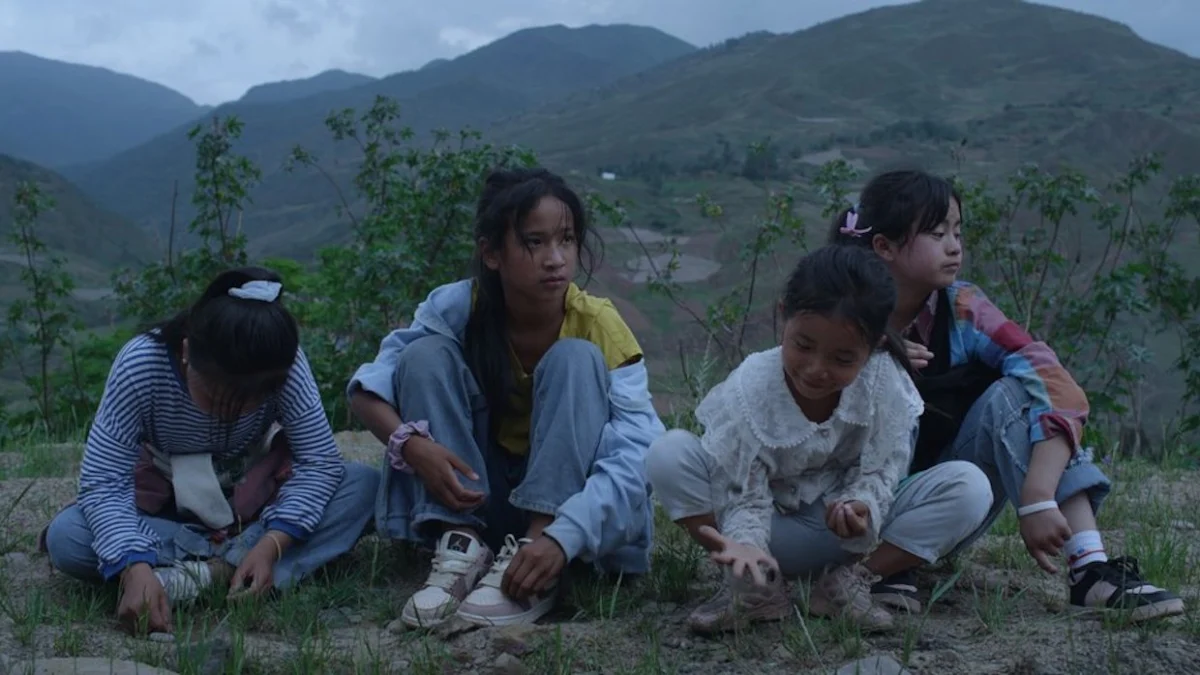
The festival’s top honor, the DOX:AWARD, was presented to Whispers in May, directed by Chinese filmmaker Dongnan Chen. The film exemplifies the "improvised fiction" style, a hybrid approach that blends documentary observation with narrative structure to capture the spontaneity of its subjects. Set in the Liangshan Mountains, the film follows fourteen-year-old Qihuo and her friends as they navigate the transition into womanhood.
The narrative is anchored by a road trip as the girls seek a traditional skirt to mark Qihuo’s first menstruation. This journey serves as a vehicle to explore broader socio-economic issues in rural China, including the impact of migrant labor on family structures. Qihuo’s mother, working in a distant factory, communicates primarily through phone calls, oscillating between encouraging her daughter toward education and considering the transactional potential of an early marriage. Chen’s cinematography oscillates between intimate proximity and wide-angle shots of the breathtaking mountain landscape, which serves as both a cultural sanctuary and a looming threat to the girls’ innocence. The inclusion of oral myths regarding the figure of Coqotamat adds a layer of folk horror and traditional lore, enriching the documentary’s exploration of a vanishing way of life.
The Global Surveillance State and Forensic Truth
In a stark contrast to the character-driven narratives of the competition, Kenya-Jade Pinto’s debut feature, The Sandbox, offers a macro-level investigation into the global surveillance industry. The film argues that borders have become "profitable trial grounds" for the deployment of AI, drones, robots, and thermal imaging. Pinto traces the development of these technologies across North America, Europe, and Africa, illustrating how migrants are often the first subjects of invasive digital policing.

The Sandbox utilizes a formal structure that mirrors its subject matter, alternating between the "inhuman gaze" of drone footage and the ground-level testimonies of survivors and humanitarian volunteers. While some critics noted that the film’s vast geographic scope occasionally sacrificed depth for breadth, its impact lies in its cumulative exposure of a borderless surveillance apparatus. The documentary posits that as governments perfect the technology of exclusion, the fundamental concept of shared humanity is increasingly compromised.
Complementing this technological inquiry is Manuel Correa’s Atlas of Disappearance. A member of the Forensic Architecture research agency, Correa spent eight years documenting the efforts to exhume and identify the remains of those disappeared during the Franco dictatorship in Spain. The film centers on three families navigating a bureaucratic labyrinth to secure the right to mourn.
Correa utilizes 3D reconstructions and digital mapping to visualize sealed mausoleums and hidden graves, effectively turning the cinema screen into a "cultural forum" for legal and historical evidence. The film emphasizes the symbolic and scientific weight of human remains—substances from which truth cannot be erased despite decades of state-mandated silence. Atlas of Disappearance represents a growing movement in documentary filmmaking where the director acts as a forensic mediator, weaving together archival fragments, situated testimony, and cutting-edge technology.
Re-evaluating the Utopian Ideal: Christiania
The festival also turned its attention to domestic themes with Karl Friis Forchhammer’s Christiania, a retrospective and contemporary look at the famous Danish freetown. Founded in 1971 by anarchists and idealists who occupied a former military barracks in Copenhagen, Christiania has long been a symbol of radical democracy and social experimentation.
Forchhammer’s documentary avoids the pitfalls of pure nostalgia by addressing the "inconvenient cracks" in the community’s history, including the rise of organized crime, drug-related violence, and the pressures of mass tourism. The film utilizes a wealth of archival footage, interspersed with animated sequences that elevate local legends—such as the story of an alcoholic bear named Rikke—into the realm of folklore. By questioning the limits of total tolerance and the challenges of open dialogue, Christiania serves as a cautionary tale. In the context of the 2025 festival’s broader themes, the film suggests that if even a "paradise" like Christiania struggles to maintain its utopian promise, the global outlook for consensual democracy is increasingly fraught.
Chronology and Industry Impact
CPH:DOX 2025 followed a structured 12-day timeline, beginning with the high-profile NATO documentary and concluding with a series of industry-focused forums. The "CPH:FORUM" segment saw a 15% increase in participation from international co-producers compared to the previous year, reflecting a growing demand for high-production-value documentaries that can compete in both theatrical and streaming markets.
| Event Phase | Focus Area | Key Highlight |
|---|---|---|
| Opening Night | Geopolitical Leadership | Premiere of Facing War |
| Competition Week | Aesthetic Innovation | Screenings of Mariinka and Whispers in May |
| Science & Tech Forum | Digital Ethics | Debut of The Sandbox and Atlas of Disappearance |
| Closing Weekend | Awards and Retrospectives | DOX:AWARD ceremony and Christiania screening |
Analysis of Implications
The 2025 festival highlighted a significant evolution in the documentary genre. The traditional "fly-on-the-wall" approach is being supplemented, and in some cases replaced, by "forensic aesthetics" and "improvised fiction." This shift suggests that filmmakers no longer believe that simply showing the truth is enough; they must now reconstruct it using every technological and artistic tool available.
Furthermore, the prominence of films focusing on surveillance and historical erasure indicates a growing anxiety regarding the permanence of data versus the fragility of human life. The success of Whispers in May and Mariinka demonstrates that audiences and juries are gravitating toward works that provide a "humanist impulse" amidst the noise of digital warfare and state-sponsored technology. As CPH:DOX continues to bridge the gap between art and activism, its role as a barometer for global sentiment remains undisputed. The 2025 edition serves as a definitive record of a world in transition, caught between the desire for utopian freedom and the reality of a highly monitored, conflict-prone global landscape.