
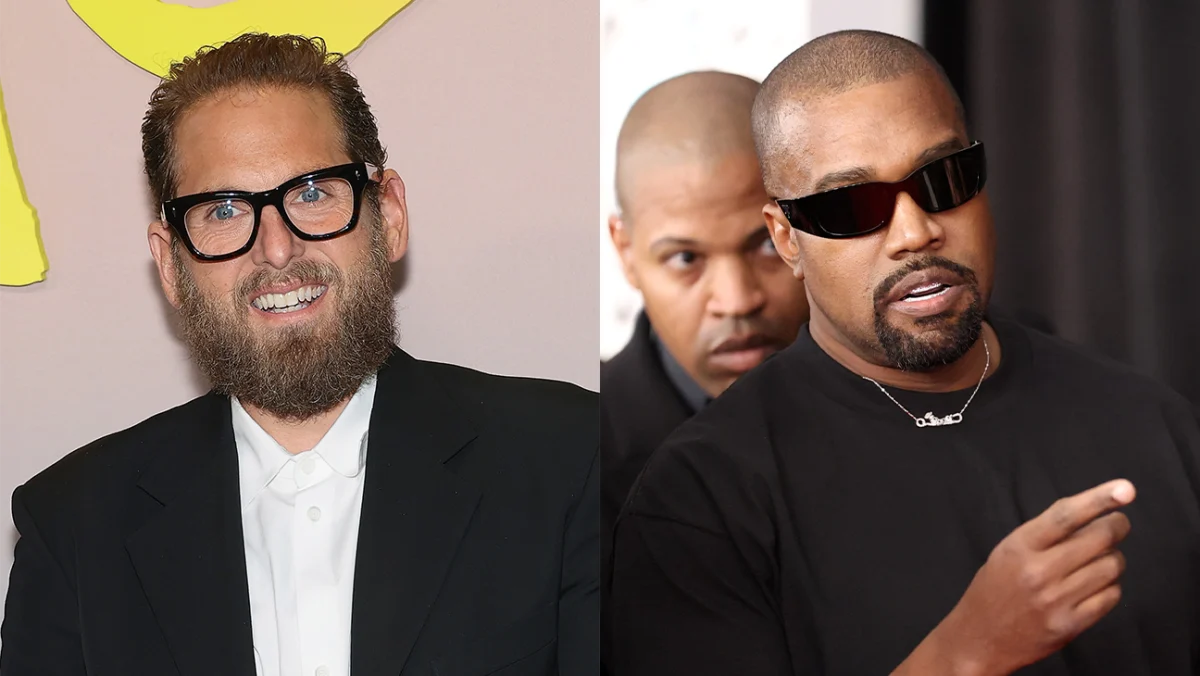
The esteemed actor and filmmaker Jonah Hill has integrated a pointed commentary on Kanye "Ye" West into his forthcoming movie, Outcome, a satirical jab directly inspired by a peculiar 2023 Instagram post from the controversial rapper. This cinematic retort stems from West’s declaration that Hill’s performance in the 2012 comedy 21 Jump Street had, in West’s words, made him "like Jewish people again," a statement made in the wake of widespread condemnation for a series of antisemitic remarks. Hill, who is Jewish, has since elaborated on his motivations, transforming a moment of bizarre public reconciliation into a significant piece of cultural critique within his new work.
The Genesis of the Joke: Kanye’s 2023 Instagram Post
The catalyst for Hill’s comedic insertion arrived in March 2023, amidst a period of intense scrutiny and backlash against Kanye West for his increasingly vitriolic antisemitic rhetoric. West, whose public persona had become synonymous with controversy, posted on Instagram, "Watching Jonah Hill in 21 Jump Street made me like Jewish people again. No one should take anger against one group of people and turn it into hatred towards millions of innocent people. Thank you Jonah Hill, I love you." This unexpected message, delivered after months of promoting conspiracy theories, praising Hitler, and making numerous derogatory comments about Jewish individuals, was met with a mixture of bewilderment and cautious optimism by some, while others viewed it as a shallow and self-serving attempt at damage control.
For Hill, the sentiment, though seemingly positive, carried a profound weight. As he articulated during a recent appearance on Apple Music’s The Zane Lowe Show, he perceived it as a "bizarre public thing to kind of make up, like, ‘It’s all good cause I love Jonah.’" The actor acknowledged the complexity of the situation, expressing a personal lack of animosity towards West while simultaneously highlighting the gravity of the rapper’s actions. "It just sat with me in a way that it’s, like, all good. I love him still, and I hope whatever happens, he can heal or whatever, and everyone can heal from all that stuff," Hill stated, adding, "I hope he can heal and make it right with the people he needs to make it right [with] in the Jewish community. Me and him got no beef." This measured response underscores a personal desire for reconciliation and healing, distinct from a blanket endorsement of West’s actions.
Jonah Hill’s Perspective: Navigating Controversy with Humor
The specific joke in Outcome involves Hill’s character’s assistant stating, "We did the research and it turns out hating Jews doesn’t hurt your career, it helps it," immediately followed by a cut to a photograph of Kanye West. This satirical juxtaposition serves as the core of Hill’s commentary, a moment designed to provoke thought rather than simply elicit laughter. Hill clarified his intentions with Lowe, emphasizing that the joke was "not just to take a shot at Kanye." He reiterated his long-standing admiration for West’s artistic genius, stating, "I love the Kanye that I’ve met over the years. I love the artist. I think there is no artist I probably love more across any genre ever. I think he is probably the greatest artist ever to live. And he thinks that," he added with a laugh, acknowledging West’s self-perception.
Hill further elaborated on the painful reality behind the humor: "He’s a genius, and the stuff with the hate stuff sucks. What are you going to say? It sucks, no matter who you are, to hear that." He maintained a compassionate stance, expressing reluctance to "punch someone while they’re down" while still holding West accountable for the impact of his words. The joke, therefore, becomes a nuanced expression of both personal sentiment and broader cultural observation. "I just put that in there like, yo, you’re going to put the 21 Jump Street poster up there and say you don’t hate Jews anymore? That’s pretty wild," Hill explained. "I’m gonna put a picture of you saying that hating Jews helps your career. Obviously, that’s a joke on my part. It doesn’t help your career, but it’s me just having fun. I’m a comedian."
In a separate interview with SiriusXM’s Julia Cunningham, Hill expanded on the broader societal implications he sought to highlight. The joke, he suggested, also serves to point out how "culture’s fucking weird and it always has been and it always will be. And one of the funny things about it is like you can go on a Jew-hating tour and then sell out [SoFi Stadium]." This observation delves into the paradoxical reality of public figures facing severe backlash for hate speech yet retaining significant commercial viability and fan bases, prompting a critical examination of societal values and the mechanisms of public accountability.
Kanye West’s Antisemitic Remarks: A Troubling Chronology
To fully grasp the context of Hill’s joke, it is essential to revisit the troubling chronology of Kanye West’s antisemitic statements and actions. The rapper’s descent into overt antisemitism began to escalate significantly in late 2022, following a pattern of controversial public statements that had long characterized his career, albeit none previously centered on such explicit hate speech.
In October 2022, West’s Twitter account was suspended after he threatened to go "death con 3 on JEWISH PEOPLE." This was quickly followed by an appearance on the Drink Champs podcast, where he made further antisemitic comments, including false claims about Jewish control of media and business. The podcast episode was subsequently removed. Later that month, he propagated conspiracy theories about Jewish people during an interview with Tucker Carlson on Fox News, though many of his most egregious remarks were edited out of the televised broadcast.
The controversy deepened with his infamous appearance on Alex Jones’ Infowars in December 2022, where he openly expressed admiration for Adolf Hitler and denied the Holocaust. During this interview, West declared, "I like Hitler," and stated that "every human being has something of value that they brought to the table, especially Hitler." He also wore a full-face mask during the interview, further adding to the surreal and disturbing nature of the broadcast. Around this time, he was also photographed with white nationalist Nick Fuentes.
Further compounding the issue, West was reportedly associated with a song titled "Heil Hitler" or containing such lyrics, as referenced in the original article. While a full official release under this specific title is not widely confirmed, the sentiment and association align with his public statements during this period. Moreover, a Super Bowl ad in 2025 (likely a typo in the original article, possibly referring to 2024 or an unfulfilled intention) was intended to direct viewers to his Yeezy website, which at one point featured swastika-emblazoned t-shirts, though these were swiftly removed after public outcry. West’s controversial statements led to the termination of lucrative partnerships with major brands, including Adidas, Gap, and Balenciaga, resulting in significant financial losses and a dramatic downturn in his business empire.
Industry and Public Backlash: The Fallout for West
The backlash against West was swift, severe, and unprecedented in its scale. Organizations dedicated to combating antisemitism, such as the Anti-Defamation League (ADL), condemned his statements unequivocally, highlighting the dangerous proliferation of hate speech and its real-world consequences. The ADL, for instance, tracked a significant rise in antisemitic incidents in the United States, and West’s comments were frequently cited as contributing to a climate of increased hostility towards Jewish communities. Numerous celebrities, public figures, and political leaders denounced his rhetoric, emphasizing the historical weight and danger of antisemitism.
The economic ramifications for West were particularly stark. Adidas, which had a highly successful partnership with his Yeezy brand, terminated their collaboration in October 2022, citing his "unacceptable, hateful and dangerous" comments. This decision alone cost West an estimated $1.5 billion, effectively removing him from Forbes’ billionaire list. Gap and Balenciaga followed suit, severing their ties and dismantling lucrative ventures. Creative Artists Agency (CAA) dropped him as a client, and MRC studio scrapped a completed documentary about him. These actions by major corporations underscored a collective industry refusal to condone or profit from hate speech, setting a precedent for accountability in the entertainment and fashion worlds.
The Resurgence and Continued Controversy: West’s Commercial Viability
Despite the widespread condemnation and significant financial losses, Kanye West has demonstrated a remarkable, if controversial, ability to retain and even regain commercial traction. His recent activities, including sold-out concerts and festival bookings, highlight a complex dynamic within the entertainment industry and among his fan base.
West recently sold out two nights at SoFi Stadium in Inglewood, California, for concerts supporting his album Bully. These events, held in a major venue, attracted thousands of fans, indicating a segment of the public willing to overlook or compartmentalize his controversies in favor of his musical output. Furthermore, he is set to headline the U.K. Wireless Festival, a decision that sparked considerable debate and led to several companies, including Pepsi, pulling their sponsorships. The festival’s managing director publicly defended West’s booking, urging people to "offer some forgiveness and hope to him." This stance reflects a broader societal tension between accountability and the concept of redemption, particularly for highly influential public figures.
These developments pose critical questions about the nature of "cancel culture," the longevity of public outrage, and the commercial viability of artists whose personal conduct is widely condemned. While many argue that supporting artists who propagate hate speech normalizes such behavior, others contend that separating the art from the artist, or offering a path to forgiveness, is essential for creative expression and societal progress. Hill’s joke directly taps into this paradox, satirizing the notion that such extreme views can, in certain contexts, seemingly not impede, and perhaps even enhance, a public figure’s notoriety and commercial appeal.
Comedy as Commentary: Hill’s Artistic Statement
Jonah Hill’s decision to embed this specific joke in Outcome transcends simple humor; it serves as a potent piece of social commentary. As a Jewish actor and filmmaker, Hill occupies a unique position to address West’s antisemitic remarks, transforming personal offense into artistic expression. His comedic approach allows for a critique that is both sharp and accessible, inviting audiences to confront uncomfortable truths through laughter.
Satire has long been a powerful tool for dissecting societal absurdities and challenging prevailing norms. By presenting a hyperbolic statement ("hating Jews doesn’t hurt your career, it helps it") followed by West’s image, Hill forces viewers to consider the chilling reality that, for some public figures, extreme views do not always result in career-ending consequences. Instead, they can paradoxically generate attention, solidify a loyal (albeit niche) following, and even translate into commercial success, as evidenced by West’s recent concert attendance.
Hill’s statement, "I’m a comedian," underscores his reliance on humor as a primary mode of engagement. This isn’t merely about taking a "shot" at Kanye, but about processing and reflecting a perplexing cultural phenomenon. It highlights the role of comedy in articulating the discomfort, frustration, and moral quandaries faced by those directly affected by hate speech, as well as the broader public grappling with such events. His joke is not an act of vengeance but a comedian’s response to a situation he finds both personally impactful and culturally baffling.
Broader Implications: Celebrity, Responsibility, and Public Discourse
The intersection of Kanye West’s controversies and Jonah Hill’s artistic response illuminates several broader implications regarding celebrity culture, public responsibility, and the ongoing evolution of public discourse. Celebrities, by virtue of their platforms and influence, wield immense power to shape opinions and disseminate ideas. When that power is used to propagate hate speech, the ripple effects can be profound, impacting vulnerable communities and normalizing dangerous ideologies.
Hill’s joke forces a confrontation with the uncomfortable reality that accountability in the public sphere is often inconsistent. While some public figures face swift and irreversible consequences for controversial statements, others, like West, manage to navigate the storm, retaining a significant following and continued commercial success. This disparity fuels ongoing debates about "cancel culture," artistic freedom versus social responsibility, and the criteria by which society judges and punishes public figures.
The very fact that Hill felt compelled to address West’s remarks through his art underscores the lasting impact of such statements. It suggests that while formal apologies (like West’s Wall Street Journal ad apology earlier this year, which hasn’t been further addressed by him publicly) might be issued, the wounds caused by hate speech linger, prompting creative responses and continued dialogue. Hill’s Outcome serves as a cultural artifact, capturing a specific moment in time when a major celebrity’s descent into antisemitism prompted both widespread condemnation and a complex, often contradictory, public reaction.
Ultimately, Jonah Hill’s joke in Outcome is more than just a comedic interlude; it is a thoughtful, albeit humorous, contribution to a vital conversation about the responsibilities of public figures, the insidious nature of hate speech, and the perplexing ways in which society grapples with both. It invites audiences to laugh, but more importantly, to reflect on the deeper cultural currents it so sharply satirizes.