


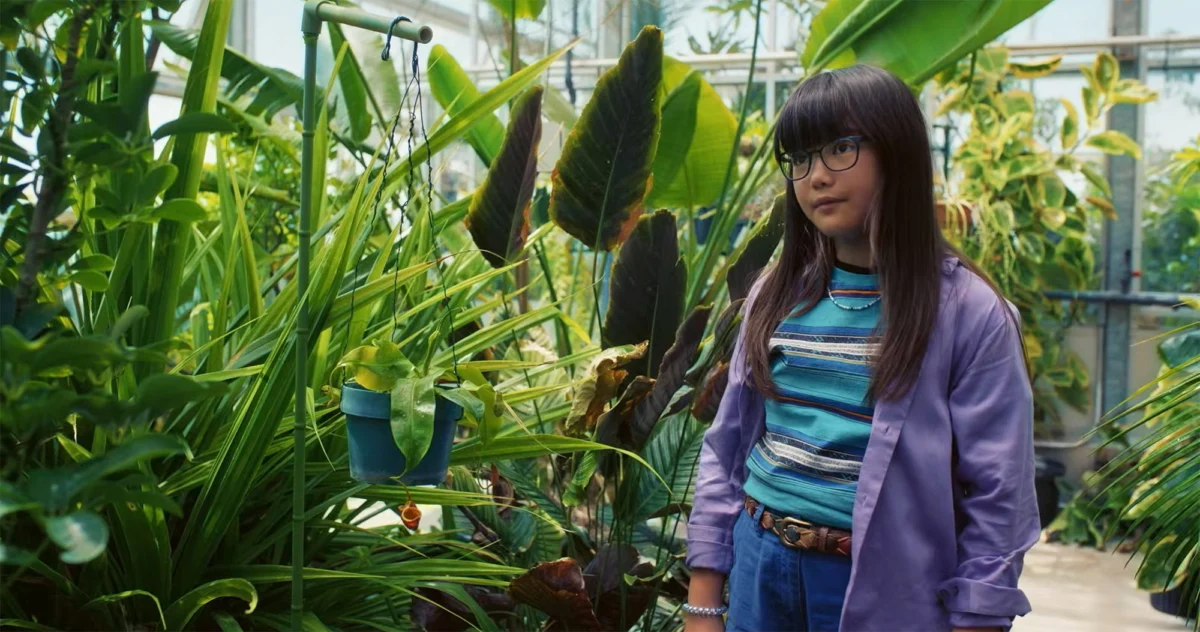
Tribeca Films has officially unveiled the trailer for Mabel, an eagerly anticipated independent coming-of-age film from debut feature director Nicholas Ma, slated for a limited theatrical release in New York and Los Angeles on April 17, 2026. This charming production, which first garnered attention at the 2024 San Francisco Film Festival, introduces audiences to Callie, an awkward pre-teen whose singular bond with a houseplant named Mabel sets her on an extraordinary journey of self-discovery amidst the burgeoning field of "plant intelligence." The film features a notable cast including Judy Greer, Christine Ko, Lexi Perkel in the titular role, Quincy Dunn-Baker, and Lena Josephine Marano, promising a narrative that is both "warm and welcoming" and "joyfully geeky," as described by early viewers.
A Deep Dive into Mabel‘s Narrative Core
At the heart of Mabel lies the unconventional protagonist, Callie, portrayed by Lexi Perkel. A biracial pre-teen grappling with the awkwardness of adolescence and the disruption of relocating and changing middle schools, Callie finds solace not in typical childhood friendships but in the silent, verdant companionship of her plants, particularly Mabel. Her initial surliness towards her parents and intolerance for those who don’t share her interests paint a picture of an isolated, yet deeply passionate, young individual. This internal world is beautifully encapsulated in the film’s poignant dialogue: "Sometimes I feel like plants are more interesting than people." To which, the resonant reply, "They are," perfectly frames Callie’s unique perspective and the film’s central theme.
The narrative gains significant momentum with the introduction of Ms. G, played by the versatile Judy Greer. As a substitute teacher, Ms. G initiates a botany unit in a high school science class, inadvertently opening Callie’s world to the captivating, and somewhat controversial, realm of "plant intelligence." This concept, which posits that plants possess forms of communication, memory, and sensory perception often underestimated by humans, becomes Callie’s new obsession. Driven by a desperate desire to impress Ms. G and delve deeper into this fascinating subject, Callie embarks on an ambitious project: constructing a secret greenhouse in her backyard. Within this clandestine sanctuary, she begins a meticulous experiment, raising chrysanthemums in darkness, a scientific endeavor that mirrors her own journey of growth and hidden potential.
As Callie’s dedication to her botanical pursuits intensifies, her burgeoning obsession creates friction within her family, particularly with her mother, leading to relatable parent-child conflicts inherent in many coming-of-age stories. Simultaneously, her project inadvertently brings her into contact with Agnes (Lena Josephine Marano), her ebullient younger neighbor. This unexpected alliance marks Callie’s first genuine opportunity for a "real friendship," an experience that challenges her previous solitary existence and adds another layer of emotional complexity to her journey. The film thus navigates the delicate balance between academic passion, family dynamics, and the tentative steps towards social connection, all through the lens of Callie’s unique affinity for the botanical world.

The Filmmaker’s Vision: Nicholas Ma’s Feature Debut
Mabel marks a significant milestone for Nicholas Ma, serving as his feature directorial debut. While a new name to the feature film landscape, Ma is not entirely unacquainted with the craft, having directed several short films prior to Mabel. Notably, the same year Mabel premiered, Ma also directed the documentary Leap of Faith, showcasing a versatile directorial approach that spans both narrative and non-fiction storytelling. This dual experience likely contributed to his ability to craft a story like Mabel, which blends fictional character development with a factual, albeit unconventional, scientific premise.
Ma collaborated with Joy Goodwin on the screenplay, a partnership that seems to have resulted in a script that is both intelligent and emotionally resonant. The production team, comprising Ben Howe, Luca Borghese, and Helen Estabrook, brings a wealth of experience in independent cinema, known for championing projects with distinct voices and compelling narratives. Their involvement underscores the film’s commitment to quality storytelling within the indie framework. Early impressions suggest Ma’s directorial style in Mabel is characterized by its warmth and inviting nature, perfectly complementing the film’s "joyfully geeky" spirit and wholesome narrative about a young girl finding her place through an uncommon passion. This approach is critical in making a potentially niche subject matter accessible and endearing to a broad audience.
Chronology of Mabel‘s Journey to Release
The path of an independent film from conception to screen is often a protracted one, and Mabel‘s journey exemplifies this trajectory.
- 2024 Premiere: The film first emerged into the public eye in 2024, making its debut at the prestigious San Francisco Film Festival. Premiering at such a respected festival is a crucial step for indie films, offering a vital platform for critical review, industry buzz, and attracting potential distributors. Festivals like San Francisco often act as launchpads, where films can secure the necessary attention to move towards wider release.
- Post-Festival Period (2024-2026): Following its festival premiere, Mabel entered a phase common for many independent productions: the strategic waiting period for distribution. This time is typically dedicated to refining marketing strategies, securing distribution deals (in this case, with Tribeca Films), and meticulously planning the theatrical rollout. The two-year gap between its premiere and general release indicates a deliberate approach to positioning the film for maximum impact.
- April 6, 2026: Trailer Debut: The official trailer, released by Tribeca Films, marks a significant milestone, initiating the public marketing push. Trailers are instrumental in building anticipation, introducing the film’s tone, themes, and key performances to a global audience. The positive reception to the trailer suggests that the wait has built considerable interest.
- April 17, 2026: Limited Theatrical Release: The film is set for a limited theatrical release, starting in New York and Los Angeles. This strategy is typical for independent films, allowing them to build critical momentum and word-of-mouth in key cinematic markets before a potential wider expansion. These initial engagements are crucial for garnering reviews from major publications and establishing a foundation for the film’s commercial and critical success.
The Resurgence of Coming-of-Age Narratives and Indie Cinema

Mabel arrives in a cinematic landscape that has seen a significant resurgence and evolution of the coming-of-age genre. Contemporary coming-of-age films frequently move beyond traditional tropes, focusing on unique protagonists, unconventional friendships, and deeply personal journeys of growth. Films exploring niche interests, identity formation through specific passions, and the complexities of adolescent emotional landscapes have found a receptive audience. Mabel, with its central theme of plant intelligence and an introverted protagonist, aligns perfectly with this trend of celebrating individuality and the quirky facets of youth.
Independent cinema, in general, continues to be a vital space for exploring themes that might be deemed too unconventional or niche for mainstream studios. The freedom inherent in indie filmmaking allows for creative risks, character-driven narratives, and the exploration of subjects like plant intelligence without the pressures of blockbuster commercial expectations. In recent years, audiences have increasingly demonstrated an appetite for authentic, character-rich stories that offer fresh perspectives on familiar human experiences. Mabel‘s distribution by Tribeca Releasing, an entity known for championing independent voices, further solidifies its position within this thriving segment of the film industry. The challenges of indie distribution remain, particularly in a market often dominated by tentpole releases and streaming giants, but strategic limited theatrical runs followed by broader digital availability continue to be a viable path for films of Mabel‘s caliber.
The Ensemble Cast: Bringing Callie’s World to Life
The success of a character-driven film like Mabel heavily relies on the strength of its ensemble cast, and this production boasts a compelling lineup.
- Lexi Perkel as Callie: As the protagonist, Lexi Perkel’s portrayal of Callie is central to the film’s emotional resonance. Described as "precocious, determined, and wryly funny," Perkel appears to imbue Callie with the necessary depth and nuanced awkwardness that makes her journey relatable and endearing. Her ability to convey Callie’s intense passion for botany and her internal struggles with social connection will be key to the film’s impact.
- Judy Greer as Ms. G: Judy Greer’s casting is a significant asset. Known for her extensive career in both comedic and dramatic roles, Greer brings a unique blend of warmth, intelligence, and a touch of eccentricity to her characters. Her involvement as Ms. G, the teacher who introduces Callie to plant intelligence, lends significant weight and credibility to the film’s exploration of unconventional scientific theories, while also providing a crucial mentorship figure for Callie. Industry observers anticipate that Greer’s performance will ground the more fantastical elements of the story in relatable human interaction.
- Christine Ko, Quincy Dunn-Baker, and Lena Josephine Marano: While specific details about their roles are less prominent in the initial release information, the inclusion of these talented actors suggests a well-rounded supporting cast. Lena Josephine Marano’s role as Agnes, the "ebullient younger neighbor," is particularly important as she represents Callie’s "first chance at a real friendship," offering a foil to Callie’s introverted nature and providing opportunities for character development through their interactions. Their collective performances are expected to create a vibrant and believable world around Callie’s unique journey.
Broader Implications: Science, Nature, and Adolescent Identity
Mabel delves into themes that extend beyond a simple coming-of-age narrative, touching upon scientific discourse, environmental appreciation, and the complexities of identity formation.

- The Plant Intelligence Debate: The film’s premise hinges on the "controversial world of plant intelligence." This is not merely a plot device but reflects a genuine and evolving field of scientific inquiry. While often debated and sometimes sensationalized, research into plant communication, memory, and even problem-solving capabilities has gained traction in botany and ecology. By featuring this concept, Mabel could potentially spark curiosity and discussion among its audience about the natural world and our understanding of non-human life forms, bridging the gap between scientific theory and popular culture.
- Environmental Themes: Through Callie’s profound connection with plants, the film implicitly, and perhaps explicitly, fosters an appreciation for nature and botany. In an era of increasing environmental consciousness, stories that highlight the intricate beauty and hidden wonders of the plant kingdom can serve as subtle calls to greater ecological awareness and stewardship. Callie’s secret greenhouse and her dedicated experiments symbolize a deep, almost spiritual, connection to the earth.
- Identity Formation Through Passion: Callie’s journey is a powerful portrayal of how an unconventional passion can be a cornerstone of adolescent identity. In a world that often pressures young people to conform, Callie’s unwavering commitment to her unique interest empowers her to navigate the turbulent waters of middle school, family conflict, and the daunting prospect of forming new friendships. Her story underscores the universal truth that finding one’s authentic self often involves embracing what makes us different and leveraging those passions to propel personal growth.
- Parent-Child Dynamics: The conflict between Callie and her mother, fueled by Callie’s growing obsession, is a relatable depiction of the challenges parents face in understanding and supporting their children’s emerging individuality, especially when those interests diverge significantly from parental expectations. This dynamic adds a layer of realism and emotional depth, reflecting the common struggles of communication and acceptance within families during the formative teenage years.
Tribeca Releasing and the Path Forward
Tribeca Releasing’s decision to distribute Mabel speaks volumes about the film’s perceived quality and potential impact. As a distributor known for its discerning taste in independent cinema, Tribeca typically champions films that are character-driven, artistically significant, and often emerge from the festival circuit. Their strategy for Mabel begins with a limited theatrical release in New York and Los Angeles, a standard practice designed to maximize critical reviews and generate word-of-mouth in the industry’s most influential markets. Success in these initial engagements is crucial for an independent film, as positive reviews from major publications and strong audience reception can pave the way for a wider expansion into more cities across the United States. Following its theatrical run, it is highly probable that Mabel will become available on various video-on-demand (VOD) platforms, ensuring broader accessibility for audiences who may not have access to the limited theatrical release. This phased approach allows Mabel to build a steady following and establish its presence in the crowded film market of 2026.
In conclusion, Mabel stands out as a distinctive and heartfelt addition to the coming-of-age genre. Under Nicholas Ma’s directorial guidance, and with a compelling performance from Lexi Perkel supported by Judy Greer and the rest of the cast, the film promises to be a thoughtful exploration of identity, scientific curiosity, and the profound connections we forge, whether with people or, indeed, with plants. Its journey from a festival premiere to a carefully orchestrated theatrical release highlights the enduring power and strategic pathways of independent cinema. As it prepares for its April 2026 debut, Mabel invites audiences to consider the quiet wonders of the natural world and the equally profound journey of a young girl finding her unique place within it.