The highly anticipated fifth and final season of "The Boys," showrunner Eric Kripke’s audacious deconstruction of the superhero genre, has arrived on Prime Video, promising a definitive conclusion to the saga of vigilantes battling corrupt, superpowered individuals. However, early episodes of this concluding chapter suggest that while the series’ signature blend of extreme violence and pointed social commentary remains, its narrative momentum has significantly waned, potentially tarnishing the legacy of a show that once redefined the landscape of adult-oriented comic book adaptations. This review, based on the first seven episodes made available for preview, indicates a show struggling to maintain its edge as it hurtles towards an inevitable, and perhaps overdue, conclusion.
Premiering in 2019, "The Boys" emerged as a critical and commercial success, offering a starkly different vision from the prevailing, often sanitized, superhero narratives epitomized by the Marvel Cinematic Universe. Based on the Garth Ennis and Darick Robertson comic series, the show quickly garnered a dedicated following for its unflinching portrayal of corporate greed, political corruption, and the dark underbelly of celebrity, all filtered through the lens of a group of morally ambiguous, yet ultimately relatable, anti-heroes. Its initial seasons were lauded for their innovative storytelling, gratuitous gore, and sharp satire, establishing a unique tone that resonated deeply with audiences seeking more mature and critical content. Season 3, in particular, is often cited as a narrative and stylistic peak, marked by the ambitious "Herogasm" storyline. Yet, as the series enters its final arc, a growing sentiment among critics and fans suggests a decline in originality and impact, with Season 4 widely perceived as a placeholder, meticulously arranging pieces for the ultimate confrontation rather than delivering compelling standalone narratives. The current season, therefore, faces the considerable challenge of reigniting the spark that made "The Boys" a cultural phenomenon, a task that, based on initial episodes, appears to be an uphill battle.
The Shifting Tides of Power and Rebellion
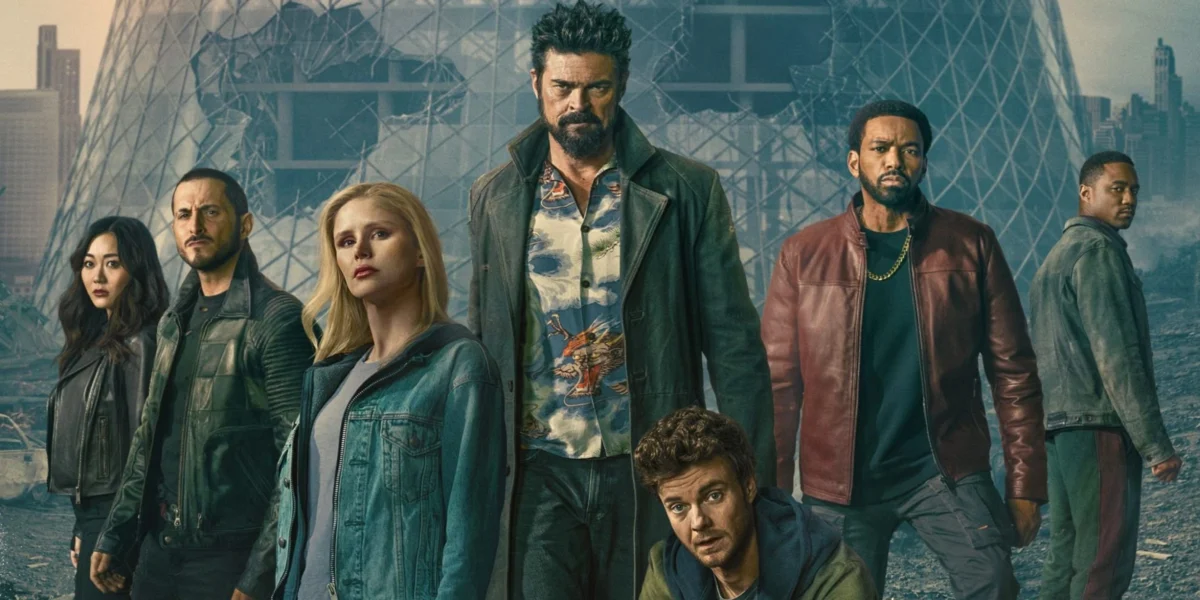
Season 5 picks up approximately one year after the events of the previous season’s finale, thrusting viewers into a world where the lines between hero and villain have become irrevocably blurred, and the established order has been brutally overturned. Erin Moriarty’s Starlight, once a beacon of hope within the superhero collective known as The Seven, is now a pariah, branded a terrorist by the monolithic Vought International. Her current status as a fugitive underscores the perilous stakes of her continued defiance against the burgeoning authoritarian regime.
Meanwhile, Antony Starr’s Homelander, the narcissistic and terrifyingly unstable leader of The Seven, has solidified his dominion, extending his influence not just across America but on a global scale. His self-anointed status as a messianic figure highlights the terrifying success of his ideological conquest, a chilling reflection of how power can corrupt and be wielded with absolute impunity. The narrative presents Homelander’s ascent as a direct consequence of the public’s fear and the systematic erosion of trust in traditional institutions, a commentary that resonates deeply with contemporary anxieties surrounding leadership and propaganda.
The titular "Boys," the ragtag group dedicated to exposing and dismantling Vought’s corrupt superheroes, find themselves fractured and in dire straits. Karl Urban’s William "Billy" Butcher, still grappling with his personal demons and the ticking clock of his Vought-induced terminal illness, has retreated into a solitary, destructive crusade. His isolation mirrors the group’s internal disarray, suggesting a desperate attempt to maintain control in a world spiraling into chaos. The remaining core members of The Boys – Hughie Campbell (Jack Quaid), Mother’s Milk (Laz Alonso), and Frenchie (Tomer Capone) – are depicted as prisoners within a Vought-controlled concentration camp. This grim setting, filled with dissenters to Homelander’s regime, serves as a stark visualization of the oppressive new order and the dire consequences for those who dare to oppose it. The juxtaposition of Butcher’s lone wolf approach with the imprisonment of his former comrades immediately establishes the season’s central conflict: a desperate struggle for survival and a unified front against an overwhelming enemy.
Narrative Stagnation Amidst Escalating Stakes
The initial separation of the core team is, as the review notes, "short-lived, as expected," a predictable narrative beat that serves to reintroduce the ensemble and re-establish their collective mission. The season’s premiere is described as a "fiery" opening, effectively raising the stakes and setting a somber tone for the events to unfold. However, this initial surge of momentum appears to dissipate as the season progresses, with the narrative reportedly "spinning its wheels" once more.
The protracted quest to eliminate Homelander, a central objective since the series’ inception, is presented not as genuine progression but as a deliberate "delay of the inevitable showdown." This recurring criticism suggests that the writers are struggling to devise new narrative avenues or maintain a sense of urgency, instead relying on familiar plot devices and character dynamics to propel the story forward. The review indicates that as of the preview period, with the series finale yet to be revealed, the audience is left in a state of suspended anticipation, waiting for a conclusion that feels preordained and potentially anticlimactic. This feeling of narrative inertia is a significant concern for a show known for its bold storytelling and unpredictable twists.
Showrunner Eric Kripke and his team are acknowledged for their continued ability to generate visceral reactions through their signature "cartoonish violence and digs at right-wing lunacy." These elements, once groundbreaking, are now facing scrutiny for their diminishing impact. The narrative’s perceived stall, particularly in the pursuit of Homelander, has led to a sense of the show "slowly dragging us toward that goal" since its apex in Season 3. This implies a reliance on a predetermined endgame that may not fully satisfy viewers who have invested years in the characters’ journeys.
The review specifically points to the stagnation in character relationships, highlighting the "wishy-washy" romance between Frenchie and Kimiko (Karen Fukuhara). This perceived lack of development in established relationships further contributes to the sense that the narrative is treading water. Even the dynamic between Homelander and his estranged father, Soldier Boy (Jensen Ackles), while noted for its "amusing, wise-cracking bravado," is presented as a retread, failing to introduce fresh narrative impetus. This suggests that the show, in its final season, is struggling to find new ground for its characters to explore, leading to a feeling of repetition.

Homelander’s God Complex and a Shifting Satirical Landscape
The direction taken with Homelander’s character in this final season is described as potentially his "biggest stretch yet." His escalating desire for pure adoration, bordering on a delusion of divinity, is a focal point of his character arc. Antony Starr’s performance as the psychopathic supervillain is once again lauded as "brilliant" and "captivating," with the review emphasizing his nuanced ability to convey complex emotions through subtle expressions. Starr’s portrayal remains the "best aspect of the show," a testament to his mastery of the role. However, the review also notes that even his exceptional performance might not reach the same heights as previous seasons, a consequence, perhaps, of the narrative’s limitations.
While Starr’s performance stands out, the review suggests that it is the only performance that truly shines this season. This is not attributed to a lack of talent from the rest of the ensemble cast, who are described as "solid as ever," but rather to the perceived lack of new narrative territory for them to explore. The addition of Daveed Diggs as Oh Father, a charismatic televangelist figure who aligns himself with Homelander’s mission, is noted as a "welcome spark" for a series that appears to be in dire need of renewed energy. This suggests that new characters and plot threads are being introduced to inject vitality into a show that might otherwise feel exhausted.
The effectiveness of "The Boys’" satirical edge is also under scrutiny. The review posits that the series’ "diminishing comedic impact" and its "signature lack of subtlety in satire" are major factors holding it back. The targets of Kripke’s critique, including "TPUSA-style conferences" and "misinformation campaigns," are seen as reflections of real-world absurdities. However, the review argues that the "absurdity of the real world has largely outpaced the show," thereby dulling its satirical bite. What once felt "sharp" now feels "blunt," rendering the show’s "juvenile elements more eye-rolling than effective." The example of Chace Crawford’s The Deep transforming into a manosphere podcaster to curry favor with Homelander illustrates the show’s attempts to remain relevant, but the review suggests these attempts are falling flat.
Enduring Appeal Amidst Fading Brilliance
Despite these criticisms, the series is acknowledged as remaining "immensely watchable," particularly for its long-standing audience. The core elements that defined "The Boys"—its flawed characters narrowly escaping peril, the "grotesque spectacle of blood spilling from ungodly places," and its signature "vulgar gags"—continue to provide a degree of entertainment. However, the review emphasizes that these moments "no longer carry the same weight they once did," indicating a decline in their overall impact and surprise factor.
The conclusion drawn is that "it’s for the best that ‘The Boys’ is ready to call it quits," rather than artificially extending a narrative that has seemingly exhausted its potential. The final season is characterized by "higher stakes," with the anticipation of "numerous character deaths" and the resolution of various plotlines as the confrontation with Homelander looms. The proliferation of spin-off series, loosely connected to the final season, is presented as a more promising avenue for exploring new ideas within the established universe, suggesting that the core series has reached its narrative limitations.
While this concluding season may not reach the heights of "The Boys’" most celebrated installments, it is expected to offer sufficient closure and reward for viewers who have been with the show from its inception. The review concludes with a rating of 6/10, reflecting a season that, while watchable and featuring standout performances, ultimately suffers from narrative stagnation and a diluted satirical impact.
Broader Implications and Legacy
The trajectory of "The Boys" final season raises important questions about the sustainability of genre deconstruction and the challenges of maintaining narrative freshness over multiple seasons. The series’ initial success stemmed from its bold subversion of superhero tropes, offering a much-needed counterpoint to more mainstream fare. However, as the show has matured, it has seemingly grappled with the inherent difficulty of continuously reinventing itself while staying true to its core identity.
The review’s assertion that the "absurdity of the real world has largely outpaced the show" is a critical observation regarding the evolving nature of satire. In an era where political discourse and societal issues are often more extreme and bizarre than fictional portrayals, the impact of even the most biting satire can be diminished. "The Boys" succeeded by mirroring and exaggerating societal flaws, but the real world has, in many ways, caught up, making its commentary feel less groundbreaking and more like a reflection of existing anxieties.
Furthermore, the stagnation in character development, particularly within established relationships, suggests a common pitfall in long-running series. As characters evolve and their core conflicts are explored, finding new dramatic tension and emotional resonance becomes increasingly challenging. The review’s critique of the "wishy-washy" romance between Frenchie and Kimiko exemplifies this issue, pointing to a lack of forward momentum in character arcs that were once compelling.
The eventual conclusion of "The Boys" marks the end of an era for adult-oriented superhero storytelling. While this final season may not be a triumphant capstone, its enduring watchability and the standout performance of Antony Starr suggest that it will still offer a satisfying, if imperfect, send-off for its dedicated fanbase. The series’ legacy will likely be defined by its groundbreaking initial seasons and its fearless approach to challenging superhero conventions. The challenges faced in its final season, however, serve as a cautionary tale about the difficulties of sustaining narrative innovation and satirical relevance in a rapidly changing media landscape. The existence of spin-offs indicates a universe with potential, but the core series’ struggle to conclude its own narrative arc suggests that its storytelling capacity may have been fully realized, making a definitive end a pragmatic choice for preserving its overall impact.