

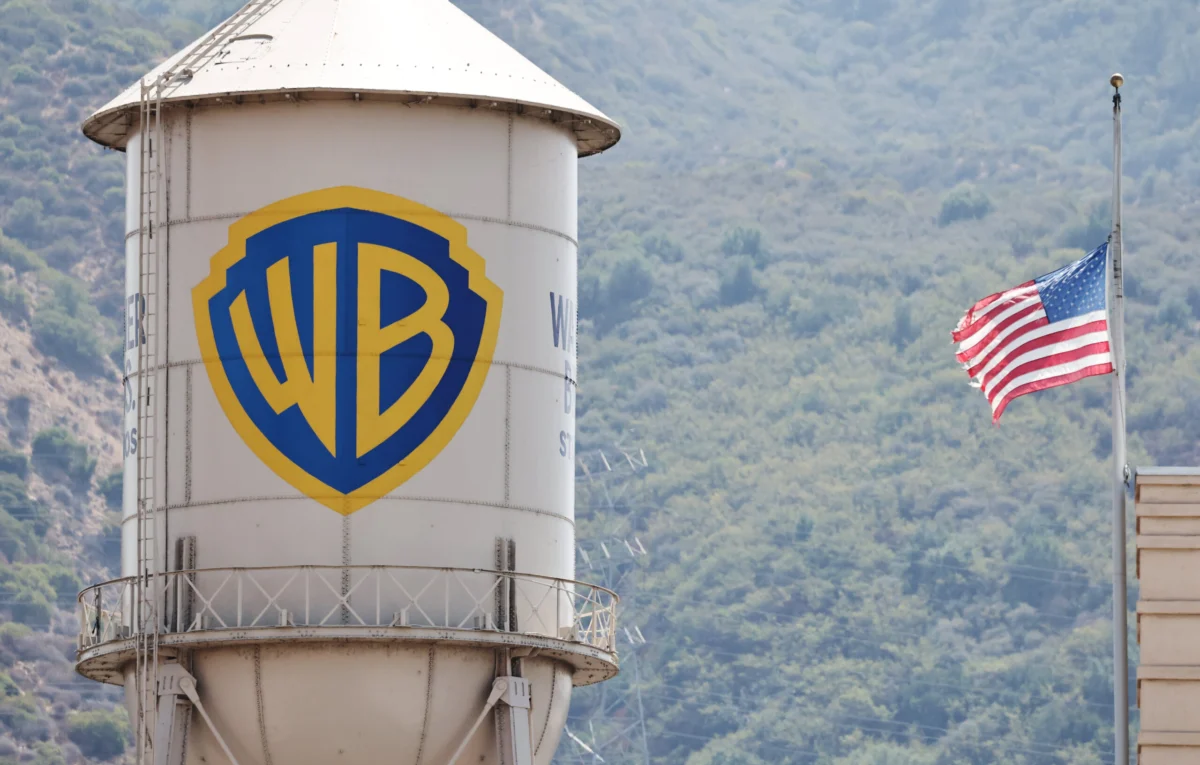
The board of directors at Warner Bros. Discovery (WBD) has reached a definitive decision to accept an acquisition offer from Paramount Skydance, valuing the media giant at $31 per share. This move, finalized on Thursday, concludes a high-stakes bidding war that saw Netflix emerge as a formidable but ultimately unsuccessful suitor with a lower offer of $27.75 per share. While the decision aims to maximize shareholder value, it has simultaneously ignited a wave of apprehension across WBD’s global workforce, as thousands of employees grapple with the implications of a massive corporate merger characterized by significant operational overlap and a daunting debt load.
The transaction, which carries a total enterprise value of approximately $111 billion, represents one of the most significant consolidations in the history of the American media landscape. However, the path to completion remains fraught with challenges. WBD Chief Executive Officer David Zaslav, speaking at an all-hands meeting on Friday, acknowledged the internal "whiplash" felt by employees who had anticipated a potential partnership with Netflix. Zaslav also cautioned that the deal is not yet a certainty, citing the rigorous regulatory scrutiny it must undergo in both the United States and the European Union.
A Tale of Two Bids: Financial Gain vs. Operational Stability
The financial rationale behind the WBD board’s decision is rooted in the immediate premium offered by Paramount Skydance. The $31-per-share bid represented a significant increase over the $27.75-per-share offer from Netflix. For institutional investors and major shareholders, the Paramount Skydance deal offers a more lucrative exit strategy or a larger stake in the newly formed entity.
However, for the rank-and-file employees at Warner Bros. Discovery, the Netflix offer was widely viewed as the more "stable" alternative. CNBC spoke with ten WBD employees across various divisions—ranging from news and sports to theatrical production and streaming—all of whom expressed a preference for the Netflix bid. The primary reason for this preference was the lack of operational overlap. Netflix co-CEO Ted Sarandos had signaled a strategy of non-interference, suggesting that WBD’s theatrical business would remain distinct and that HBO Max would continue as an independent streaming service.
Crucially, the Netflix proposal did not include WBD’s linear cable assets. Under a Netflix acquisition, employees at CNN, TNT Sports, and the legacy Discovery networks would have likely remained in their positions, with those units spun off into a standalone, publicly traded company. In contrast, the Paramount Skydance merger brings two massive, legacy media infrastructures together, creating redundant departments in nearly every sector of the business.
The Looming Threat of "Duplicative Operations"
The anxiety permeating the halls of Warner Bros. Discovery is largely driven by the prospect of aggressive cost-cutting. Paramount executives, including Chief Strategy Officer Andy Gordon, have already outlined plans to achieve $6 billion in synergies by eliminating what they term "duplicative operations." This target focuses on back-office functions, including finance, legal, corporate administration, technology, and infrastructure.
The reality for many WBD employees is that they have already weathered several rounds of layoffs following the 2022 merger between WarnerMedia and Discovery. The prospect of another multi-billion-dollar "efficiency" drive has led to a sense of exhaustion and morale decay. "It’s fair to say people are deflated by the news," a long-term WBD executive noted, reflecting a sentiment shared across the company’s Burbank and New York offices.
The merger also raises questions about creative independence. With two major film studios and two vast television production arms coming together, industry analysts worry about a "too many cooks" scenario. The combined entity will feature a leadership roster of heavy hitters, including Paramount President Jeff Shell, Direct-to-Consumer Chair Cindy Holland, and TV Chair George Cheeks. Integrating this group with WBD’s existing entertainment leadership—many of whom are veterans of high-level roles at NBCUniversal and Netflix—poses a significant cultural and organizational challenge.
Editorial Shifts and the Future of CNN
One of the most contentious aspects of the merger involves the future of CNN. The news organization has undergone significant leadership changes in recent years, currently operating under the direction of Mark Thompson. However, the merger with Paramount introduces a new set of variables. Bari Weiss, the editor-in-chief at CBS News, could potentially see her purview expanded to include CNN, leading to fears of a dramatic shift in the network’s editorial tone and anchor lineup.
Reports have circulated suggesting that Paramount CEO David Ellison has engaged in discussions regarding potential changes at CNN to align more closely with a different political or commercial vision. While Mark Thompson issued a memo to staff urging them not to "jump to conclusions," the internal atmosphere remains tense. CNN media reporter Brian Stelter noted that while the network is a "highly profitable business," any attempt to drastically alter its identity could risk alienating its core audience and devaluing the asset.

The tension highlights a broader concern regarding the consolidation of news media. A combined CNN and CBS News entity would hold unprecedented influence over the American news cycle, drawing the attention of antitrust regulators concerned about the diversity of voices in the media.
The Debt Burden and Market Valuation
Beyond the human cost, the financial structure of the deal has raised alarms. The $111 billion enterprise value includes a staggering $64 billion in debt. WBD has struggled for years to service the debt load inherited from the Discovery-WarnerMedia merger, a burden that has often restricted its ability to invest in new content and technology.
Employees pointed to the stark contrast between the market caps of the involved parties. Netflix, with a market capitalization exceeding $400 billion, offered the security of a "big tech" balance sheet. In contrast, the combined Paramount Skydance entity has a market valuation of approximately $15 billion. The disparity has led to fears that the new WBD-Paramount entity will be "debt-rich and cash-poor," forced to prioritize interest payments over creative innovation.
Sports Integration: A Silver Lining?
While much of the news surrounding the merger is met with trepidation, the sports division offers a rare point of optimism. TNT Sports, led by Luis Silberwasser, has focused on a younger demographic through platforms like Bleacher Report and House of Highlights. CBS Sports, headed by David Berson, has traditionally catered to an older, broadcast-oriented audience.
The two divisions have a history of successful collaboration, most notably on the production of the NCAA Men’s Basketball Tournament (March Madness). This existing relationship could facilitate a smoother integration than other departments. Furthermore, WBD’s recent loss of NBA media rights has left a void in its sports portfolio. By merging with CBS, which holds rights to the NFL, the Masters, and major collegiate sports, WBD effectively re-establishes itself as a titan in sports broadcasting.
Regulatory Roadblocks and the Path Ahead
The merger faces a gauntlet of regulatory hurdles. California Attorney General Rob Bonta has already signaled that the deal is "not a done deal," and federal regulators at the Department of Justice (DOJ) and the Federal Trade Commission (FTC) are expected to scrutinize the transaction for potential antitrust violations.
In his Friday address, David Zaslav remained pragmatic, noting that if the deal fails to clear regulatory hurdles, WBD would receive a $7 billion breakup fee. "If it doesn’t close, we get $7 billion, and we get back to work," Zaslav told employees, according to leaked audio. This "Plan B" provides a significant financial cushion for WBD but does little to alleviate the current state of limbo for its workforce.
Timeline of the WBD-Paramount-Netflix Saga
- Late 2025: Initial rumors surface regarding Paramount Global seeking a merger partner amid declining linear TV revenues.
- December 2025: Paramount Skydance submits a hostile bid for WBD, sparking interest from other media players.
- January 2026: Netflix enters the fray with a counter-offer, emphasizing a "hands-off" approach to WBD’s creative assets.
- February 17, 2026: Netflix and WBD engage in waiver deal talks, signaling a serious pursuit by the streaming giant.
- February 24, 2026: Paramount Skydance raises its bid to $31 per share, creating a significant valuation gap with Netflix.
- February 26, 2026: The WBD board officially votes to accept the Paramount Skydance offer, citing superior financial terms for shareholders.
- February 27, 2026: CEO David Zaslav holds a town hall meeting to address employee concerns and the regulatory outlook.
Broader Industry Implications
The WBD-Paramount Skydance merger is a watershed moment for the "Streaming Wars." It signals a move away from the fragmented landscape of the last decade toward a consolidated model where fewer, larger players control the majority of content and distribution.
This consolidation is driven by the harsh realities of the current media economy: declining cable cord-cutting, the high cost of original content production, and the dominance of tech-first platforms like Netflix and Amazon. By joining forces, WBD and Paramount hope to achieve the scale necessary to compete with these giants, even if it comes at the cost of thousands of jobs and a massive restructuring of their corporate identities.
As the legal and regulatory process unfolds over the coming months, the industry will be watching closely to see if this "mega-merger" can deliver on its promise of shareholder value without destroying the creative culture that made Warner Bros. and Paramount icons of American cinema and television. For the employees currently caught in the middle, the future remains a period of profound uncertainty, defined by the balance between financial synergy and human capital.