


The latest iteration of Faces of Death, directed by Daniel Goldhaber and co-written by Goldhaber and Isa Mazzei, has ignited discussion with its ambitious claims of exploring societal desensitization to violence, the ethical complexities of consuming violent imagery, and the pervasive human appetite for real-life carnage. Promoters for the film assert an intent to "hold a mirror up to the toxic media ecosystem we live inside of," a declaration that positions the production as a thoughtful commentary on modern media consumption. However, this stated intellectual depth is immediately challenged by the filmmakers’ own description of the work as "an exploitation of an iconic exploitation film," suggesting a potentially contradictory approach that has left some critics, including an initial review, questioning its ultimate sincerity, summarizing its impact as "not nearly as thoughtful as it thinks it is." The film, rated R and running 1 hour and 38 minutes, is set for release on Friday, April 10, featuring a cast including Barbie Ferreira, Dacre Montgomery, Josie Totah, Aaron Holliday, Jermaine Fowler, Charlie XCX, Kurt Yue, Ash Maeda, Sam Malone, Tiffany Colin, Tadasy Young, and Jared Bankens.
The Enduring Legacy of Mondo Horror and the Original Faces of Death
To fully grasp the context surrounding the new Faces of Death, it is imperative to revisit the original 1978 film and the "mondo horror" genre from which it emerged. The term "mondo" originates from the 1962 Italian shockumentary Mondo Cane (meaning "A Dog’s World"), a film that presented a sensationalized and often staged compilation of bizarre, grotesque, and exotic cultural practices from around the globe. This genre, characterized by its pseudo-documentary style and controversial blend of authentic and fabricated footage, aimed to shock audiences with depictions of death, violence, and taboo subjects, often under the guise of cultural exploration or journalistic exposé.
The original Faces of Death, released during a burgeoning era of independent and exploitation cinema, quickly became a prime example of mondo horror. Presented as a series of clips compiled by a fictional pathologist, "Dr. Frances B. Gross," the film purported to showcase various methods of death, from animal slaughter and accidental fatalities to executions and rituals. While a significant portion of its footage was indeed real – drawn from news archives, medical films, and legitimate documentaries – a considerable amount was painstakingly faked, employing special effects and actors to simulate gruesome scenarios. This deliberate blurring of lines between reality and artifice was central to its appeal and controversy.
Despite its low budget and often crude production values, Faces of Death proved to be immensely profitable. Its distribution, particularly through the burgeoning home video market, transformed it into a cult phenomenon. The advent of VHS players in homes across the world allowed the film to bypass traditional cinematic gatekeepers, fostering a dedicated fanbase eager for its forbidden glimpses into mortality. The film’s notoriety spawned a veritable cottage industry of sequels, spin-offs, and imitators, both official and unofficial, cementing its status as a benchmark of morbid curiosity and a testament to the public’s fascination with the macabre. The film faced numerous censorship challenges and was banned in several countries, further amplifying its allure as a forbidden artifact. Its success highlighted a persistent human interest in the extreme, an often-unacknowledged aspect of media consumption that continues to manifest in various forms today.
Modernizing Morbidity: The Remake’s Digital Age Premise
The new Faces of Death attempts to translate this controversial legacy into a contemporary narrative, replacing the grainy VHS aesthetic with the ubiquitous, often unfiltered landscape of online video platforms. The story centers on Margo (Barbie Ferreira), a content moderator at Kino, a fictional video-sharing website reminiscent of YouTube. Margo’s role places her at the frontline of the digital "attention economy," where she is tasked with the unenviable job of sifting through a constant stream of objectionable uploads, making instantaneous decisions about their compliance with platform guidelines. Her character is burdened by a tragic backstory, having experienced her own brush with internet notoriety, which presumably informs her sensitivity to the content she moderates.
The psychological toll of content moderation is a critical, often overlooked, aspect of the digital age. Moderators frequently encounter disturbing, graphic, and illegal material, leading to significant mental health challenges, including PTSD, anxiety, and depression. The film touches upon this reality through Margo’s experiences, contrasting her ethical struggles with the cynical pragmatism of her supervisor (Jermaine Fowler), who embodies the commercial pressures of the platform, advising Margo to "Give the people what they want!" This dialogue underscores the tension between user safety and engagement metrics, a real-world dilemma faced by every major social media company. The supervisor’s dismissal of graphic content, such as a man being electrocuted or a dinner party featuring the consumption of human brains, serves to highlight the desensitization that can occur within such environments and the profit motives that often override moral considerations.
The narrative takes a sinister turn when Margo identifies several recently uploaded videos as being eerily similar to scenes from the original Faces of Death. A casual comment from an online user, "This reminds me of Faces of Death," further fuels her suspicion. Her subsequent discovery of a VHS copy of the 1978 film in her office library allows her to conduct a grim comparison, providing a meta-textual opportunity for the new film to integrate clips from its notorious predecessor. This interweaving of past and present not only pays homage to the original but also serves to underscore the cyclical nature of sensationalism and the enduring power of certain morbid tropes.
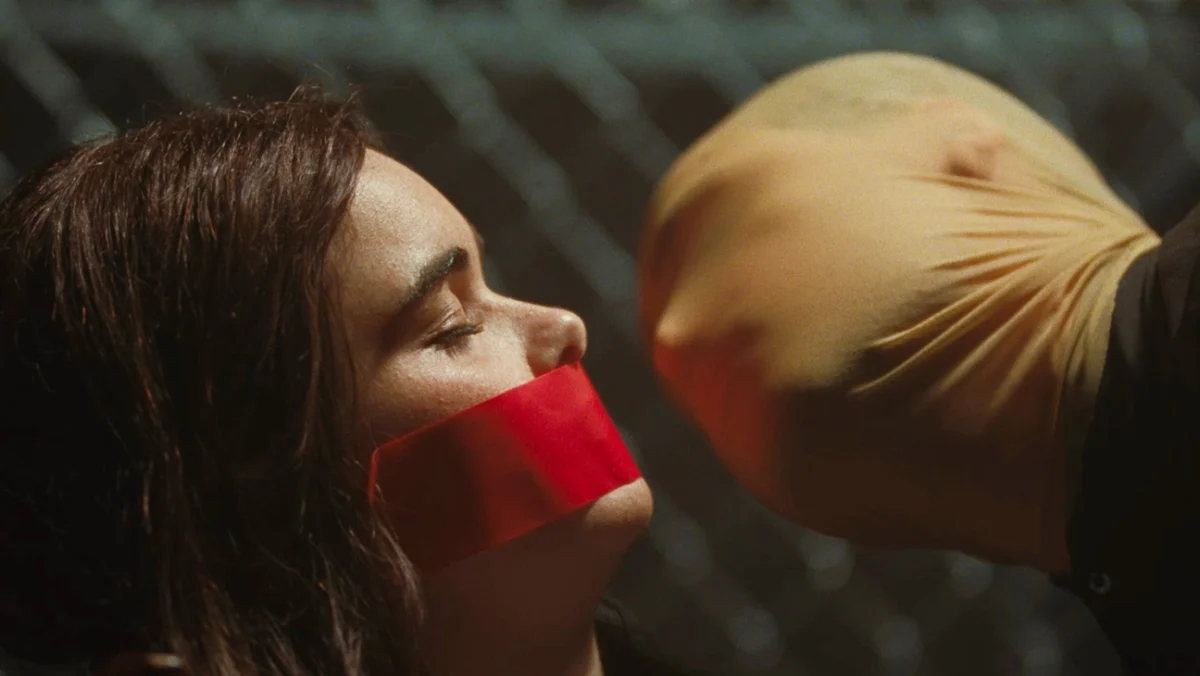
The mystery unravels to reveal Arthur (Dacre Montgomery) as the orchestrator of these new, increasingly disturbing videos. Arthur, portrayed as a serial killer who gleefully pursues his "avocation," operates with a chilling awareness of the digital landscape. His character, often disguised with red contact lenses and a mask, symbolizes the anonymity and performative nature of online violence. He holds several individuals captive in his basement, transforming their suffering into content for his macabre digital empire. When Arthur realizes Margo is closing in on his activities, he shifts his focus, targeting her directly, setting the stage for a confrontation that aims to articulate the film’s core themes.
Filmmakers’ Intentions Versus Execution: A Critical Appraisal
The climactic encounter between Margo and Arthur serves as the primary vehicle for the new Faces of Death to vocalize its commentary. Arthur, eager for the attention his work garners, confronts Margo with the question, "Are you a fan of my work?" This interaction allows the antagonist to function as a mouthpiece for the filmmakers’ thematic concerns, explicitly articulating the forces driving the film’s narrative. He boasts, "It’s the attention economy… And baby, business is booming!" This statement directly critiques the contemporary digital environment where virality often trumps veracity and shock value can translate into significant engagement and, by extension, profit.
Arthur’s meta-commentary extends further, drawing parallels between his methods and the entertainment industry’s reliance on familiar formulas: "The algorithm loves remakes… people love remakes. If it’s a remake, you can get away with murder." This line, laden with irony, reflects a broader critique of Hollywood’s increasing reliance on intellectual property and established brands, particularly within the horror genre, where reboots and sequels are commonplace. It challenges the notion that revisiting controversial material under the guise of commentary automatically grants immunity from the criticisms leveled against the original.
Despite these overt attempts at thematic depth and social critique, the initial review suggests that the film ultimately struggles to transcend its genre conventions. The reviewer posits that the new Faces of Death, "despite its cinematic inspiration, ultimately feels like just another horror film culminating in a sequence where the plucky young heroine battles with a psycho villain." While acknowledging Barbie Ferreira’s appealing performance as Margo and Dacre Montgomery’s creepy portrayal of Arthur, the film is perceived as falling short of its intellectual ambitions, becoming another entry in the saturated horror market rather than a groundbreaking piece of media criticism. This assessment implies a disconnect between the stated intention to "hold a mirror up" to the toxic media ecosystem and the film’s execution, which may inadvertently replicate the very exploitation it purports to critique. The challenge for any film attempting such a feat is to engage with controversial material in a way that genuinely prompts reflection without merely indulging in the sensationalism it claims to examine.
Broader Implications and Industry Trends
The release of the new Faces of Death and its critical reception highlight several ongoing trends within the entertainment industry and broader media landscape. The decision by IFC Films to grant this movie its "widest release ever" is noteworthy, particularly given the original’s cult status and the remake’s potentially polarizing content. This strategic move suggests a calculated gamble on the enduring power of the Faces of Death brand and the continued public appetite for provocative, albeit controversial, horror. It also reflects a broader industry trend where distributors are increasingly willing to invest in genre films that tap into existing fanbases, even if the critical reception is mixed. The economic logic is clear: a pre-existing title carries brand recognition, which can translate into audience interest and box office returns, especially in an era where discovery of new IP is increasingly challenging.
The reviewer’s concluding observation — that "as the original proved, you can’t go broke underestimating the public’s taste" — resonates deeply with the commercial success of countless films, television shows, and online content that push boundaries. This sentiment speaks to a persistent human fascination with the forbidden, the grotesque, and the tragic. In an age of unprecedented access to information and imagery, the line between reality and simulation, and between entertainment and genuine suffering, has become increasingly blurred. From true-crime documentaries and live-streamed events to viral videos of accidents and confrontations, the digital era has amplified the very "ravening appetite for real-life carnage" that the film ostensibly aims to critique.
The new Faces of Death therefore stands as a cultural artifact at the intersection of nostalgia, modern media critique, and the enduring allure of exploitation. Its attempt to update the mondo horror formula for the algorithmic age raises pertinent questions about our relationship with violent media, the responsibilities of content platforms, and the ethical compromises made in the pursuit of attention and profit. While its success in fulfilling its ambitious claims remains a subject of critical debate, its mere existence and the discussions it provokes serve as a contemporary echo of the controversies that surrounded its notorious predecessor over four decades ago. The film implicitly asks whether, in our hyper-connected world, we are more or less susceptible to the morbid fascinations that first gave rise to the original Faces of Death, or if the mirror it holds up simply reflects a more technologically advanced, yet equally insatiable, human condition.