

Internal emails obtained through a Freedom of Information Act (FOIA) request have revealed that a senior official within the Federal Communications Commission (FCC) privately offered to support Chairman Brendan Carr’s regulatory offensive against the Walt Disney Company and late-night host Jimmy Kimmel. The correspondence, sent during a period of intense political friction between the commission and the broadcaster, suggests a level of internal coordination between career enforcement staff and politically appointed leadership that legal experts describe as highly irregular.
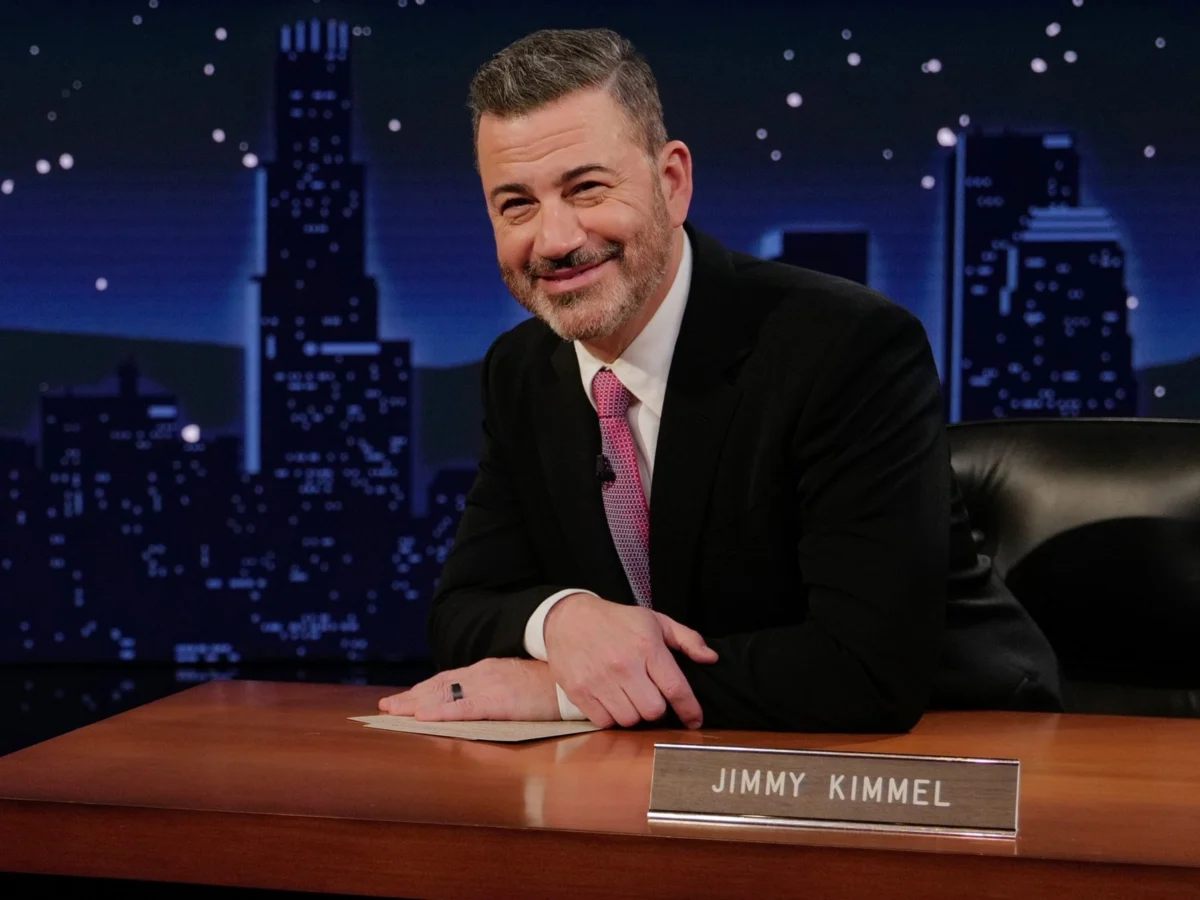
The emails center on a September 2023 incident in which Chairman Carr threatened Disney with severe regulatory repercussions following a monologue on Jimmy Kimmel Live! regarding conservative activist Charlie Kirk. The fallout from Carr’s public statements led to major television affiliates pulling the broadcast and prompted Disney to temporarily suspend the program. The newly released documents indicate that Lark Hadley, the FCC’s West Coast enforcement director—who oversees the very jurisdiction where Kimmel’s show is produced—actively encouraged Carr’s aggressive stance.
The Catalyst: A Monologue and a Regulatory Threat
The controversy began on September 17, 2023, when Brendan Carr, a Republican member of the FCC who has since been elevated to Chairman, took to social media and conservative media outlets to denounce a segment on Jimmy Kimmel Live! The segment in question featured a satirical monologue regarding Charlie Kirk, the founder of Turning Point USA. Carr characterized the comedy bit as a "very, very serious issue" and suggested that Disney, ABC’s parent company, was potentially in violation of federal broadcasting standards.
During an interview with conservative podcaster Benny Johnson, Carr escalated his rhetoric, stating, "This is a very, very serious issue right now for Disney. We can do this the easy way or the hard way." The "hard way," in this context, implied a formal investigation into ABC’s broadcast licenses, a move that could jeopardize billions of dollars in corporate valuation and operational stability.
The impact was immediate. Fearing regulatory retaliation, major station groups including Nexstar Media Group and Sinclair Broadcast Group—both of which had significant business interests and pending merger approvals before the FCC at the time—refused to air the episode. Under this mounting pressure, Disney opted to pull the show from the airwaves temporarily to mitigate further conflict with the commission.
Internal Coordination and the "Personal Note of Support"
While Carr’s public campaign was well-documented, the internal reaction within the FCC’s enforcement arm remained shielded from public view until the recent FOIA disclosure. On the same day Carr issued his "easy way or the hard way" ultimatum, Lark Hadley, the FCC West Coast enforcement director, sent an email to Carr and FCC Chief of Staff Scott Delacourt.
The email, titled "personal note of support re Charlie Kirk ABC/Disney issue," explicitly aligned the enforcement director with Carr’s political pressure campaign. Hadley, a career civil servant, quoted Carr’s interview remarks back to him and expressed a personal grievance against the broadcasting industry.
"Noting that I had been a broadcaster myself, the absolute lack of accountability has always confused (and sickened) me," Hadley wrote. He concluded the message with a direct offer of assistance: "Please, do not let up, and let me know if I can help in any way."
The significance of this communication lies in Hadley’s specific role. As the West Coast enforcement director, Hadley holds direct authority over the physical ABC-owned stations within his jurisdiction, most notably KABC-TV in Glendale, California. KABC-TV serves as the broadcast origin for Jimmy Kimmel Live!. For a career official responsible for impartial enforcement to pledge services to a targeted campaign against a specific broadcaster under his oversight raises significant ethical and legal questions.
Legal and Ethical Standards for Federal Employees
The disclosure of Hadley’s email has sparked concerns regarding the violation of federal ethics rules. Under 5 C.F.R. § 2635.101, federal employees are required to "act impartially and not give preferential treatment to any private organization or individual." Furthermore, the rules state that employees should avoid any actions that create the appearance of violating the law or ethical standards.
Legal analysts point out that the FCC is designed to function as an independent quasi-judicial body. When career staff, who are expected to provide objective oversight regardless of the political administration, offer to assist in what critics call a "retaliation effort," it undermines the perceived neutrality of the agency.
Will Creeley, legal director at the Foundation for Individual Rights and Expression (FIRE), expressed alarm over the communications. "Regional directors like Hadley have no business cheering on the FCC chairman’s regulatory threats against broadcasters that air views the president or the chairman doesn’t like," Creeley told reporters. "Just like Brendan Carr, they swore an oath to uphold the Constitution—and that includes the First Amendment, which bars the government from coercing private broadcasters into censoring dissent."
Creeley further noted the problematic nature of a public servant using taxpayer-funded resources to support the suppression of satire. "This is a public servant paid by our taxpayer dollars. Is it too much to ask for him not to sound so excited about the chairman abusing the power of his office?"
The Leverage of Pending Mergers
The effectiveness of Carr’s campaign against Disney and Kimmel was bolstered by the economic landscape of the broadcast industry. At the time of the threats, Nexstar and Sinclair—two of the largest owners of television stations in the United States—were navigating complex regulatory environments.
Nexstar Media Group, which owns or operates some 200 stations, and Sinclair Broadcast Group, which owns nearly 300, both rely on the FCC for license renewals and the approval of multibillion-dollar acquisitions. Industry analysts suggest that these companies likely viewed the Kimmel controversy through the lens of risk management. By preemptively pulling the program, they signaled compliance to the FCC leadership, potentially protecting their broader corporate interests from regulatory friction.
This dynamic illustrates what legal scholars call "regulation by raised eyebrow," where a regulator does not need to file a formal charge to achieve a result; instead, a public threat is sufficient to coerce private entities into "voluntary" censorship to avoid the risk of more formal, costly sanctions.
Timeline of the Controversy
- Early September 2023: Jimmy Kimmel Live! airs a segment satirizing the rhetoric of Charlie Kirk.
- September 17, 2023 (Morning): Brendan Carr publicly denounces the segment on social media and conservative media outlets, threatening "the hard way" for Disney.
- September 17, 2023 (Afternoon): Lark Hadley sends a "personal note of support" to Carr, offering to assist in the campaign against Disney.
- September 17–18, 2023: Nexstar and Sinclair affiliates refuse to air the scheduled broadcast of Jimmy Kimmel Live!.
- September 18, 2023: Disney temporarily suspends the program to address the regulatory pressure.
- Late 2023 – Early 2024: FOIA requests are filed to uncover internal FCC communications regarding the incident.
- Present: Internal emails are released, revealing the extent of internal support for the pressure campaign.
Broader Implications for the First Amendment
The revelation of these emails comes at a time of increasing debate over the role of the FCC in policing speech on the airwaves. Historically, the FCC has been barred from censoring content under Section 326 of the Communications Act. While the commission has the authority to regulate "indecency" and "obscenity" during certain hours, political satire and commentary generally fall under the highest level of First Amendment protection.
The use of the FCC’s enforcement apparatus to target a specific entertainer for political reasons sets a precedent that many civil liberties groups find troubling. If a career enforcement director can "help" a chairman target a broadcaster for content that is "sickening" to them personally, the firewall between political ideology and federal law becomes dangerously thin.
The FCC has traditionally focused its enforcement on technical violations—such as signal interference or public file discrepancies—rather than the editorial content of late-night comedy. The Hadley-Carr correspondence suggests a shift toward a more interventionist approach, where the personal sensibilities of regulators might dictate the survival of media content.
Responses and Non-Responses
As of the publication of this report, Brendan Carr’s office has not responded to requests for comment regarding the emails or the nature of his coordination with regional enforcement directors. Lark Hadley has also declined to comment on his private offer of assistance.
An ABC spokesperson did not immediately respond to a request for comment, though sources close to the network indicate that the suspension of Kimmel’s show was viewed internally as a necessary, albeit reluctant, move to protect the network’s broader licensing interests during a volatile political period.
Analysis of the Regulatory Climate
The disclosure of these emails provides a rare glimpse into the internal mechanics of a federal agency under political strain. The fact that a career official felt comfortable expressing such strong personal bias to the agency’s leadership suggests a culture where political alignment may be eclipsing traditional civil service neutrality.
For the broadcasting industry, the implications are clear: the risk of regulatory retaliation is no longer a theoretical concern but a practical reality that can affect programming decisions in real-time. As the FCC continues to navigate its role in a polarized media environment, the transparency of its internal communications will remain a focal point for those seeking to protect the independence of the American press.
The story remains a defining example of how regulatory power can be leveraged not through formal orders or fines, but through the strategic use of public pressure and internal coordination, effectively bypassing the traditional due process afforded to broadcasters. Whether this leads to a formal ethics investigation into Hadley’s conduct or a broader congressional inquiry into Carr’s methods remains to be seen.