


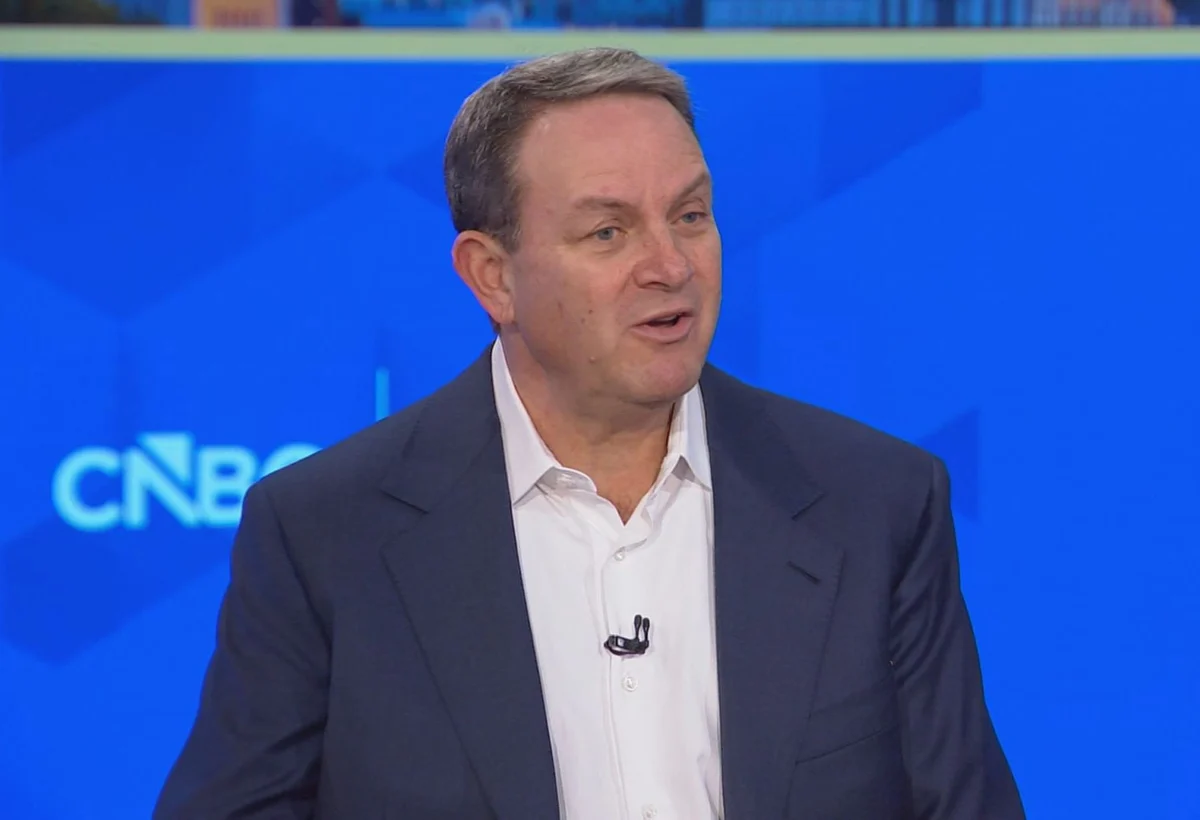
Versant Media Group, the newly independent entity comprising a suite of cable networks and digital assets formerly under Comcast Corporation’s NBCUniversal umbrella, released its inaugural earnings report on Tuesday, providing the first comprehensive look at the financial health of the spinout. The report, which covers the full fiscal year of 2025 and the final quarter ending December 31, 2025, highlights a company in the midst of a structural transition as it navigates the ongoing decline of the traditional linear television market while pivoting toward digital and platform-based revenue streams.
For the full year 2025, Versant reported total revenue of approximately $6.69 billion, representing a 5% decline compared to the previous year. This figure reflects the company’s performance during its final year of operational integration within Comcast, a period during which management was already laying the groundwork for its separation. The decline was primarily driven by headwinds in the cable industry, specifically in linear distribution and traditional advertising, which have long been the bedrock of the portfolio’s valuation.
Despite the top-line contraction, the company demonstrated significant profitability and a commitment to shareholder returns. Net income attributable to Versant reached $930 million for the year, while stand-alone adjusted earnings before interest, taxes, depreciation, and amortization (EBITDA) stood at $2.18 billion. These figures underscore the high-margin nature of the cable business, even as its total reach narrows due to the proliferation of streaming alternatives.
Financial Performance and the Linear Downturn
The fourth-quarter results further illustrated the challenges facing legacy media assets. For the period ended December 31, 2025, Versant’s total revenue fell nearly 7% year-over-year to $1.61 billion. The breakdown of this revenue reveals a stark contrast between traditional and emerging segments. Linear distribution revenue—the fees paid by cable and satellite providers to carry Versant’s networks—dropped nearly 6% to $997 million. Advertising revenue saw a more pronounced decline of 9%, falling to $370 million, as marketers increasingly shift budgets toward targeted digital platforms and programmatic buying.
The company’s adjusted EBITDA for the fourth quarter was $521 million, a 19% decrease from the same period in 2024. This contraction in earnings power highlights the operating leverage inherent in the cable business; as revenue from high-margin carriage fees declines, the impact on the bottom line is often magnified. However, Versant’s management has pointed to the company’s lean debt profile as a stabilizing factor that allows for flexibility in capital allocation that many of its more leveraged peers in the media sector lack.
The Path to Independence: A Chronological Overview
The formation of Versant Media Group was the result of a strategic decision by Comcast to separate its slower-growth cable networks from its high-growth assets, such as the Peacock streaming service, Universal Destinations & Experiences (theme parks), and the NBC broadcast network. This move was designed to allow Versant to operate as a "pure-play" entity, focused on maximizing the cash flow of its legacy assets while reinvesting in a digital-first future.
The timeline of the spinout began in earnest in late 2024:
- November 2024: Comcast officially announced its intent to spin off its cable networks into a new, publicly traded company. The announcement was met with interest from Wall Street, as it signaled a potential trend for other media conglomerates looking to "de-risk" their portfolios from the decline of the pay TV bundle.
- January–December 2025: Throughout the year, Versant’s management team, led by CEO Mark Lazarus and COO/CFO Anand Kini, worked on the operational separation. This included establishing independent corporate functions, branding the new entity, and defining the long-term strategic roadmap.
- January 5, 2026: Versant Media Group officially began trading on the Nasdaq under the ticker "VSNT." The debut marked a significant milestone, as it became one of the largest independent collections of cable networks in the United States.
- March 3, 2026: The company released its first post-spinout earnings report, setting the stage for its first full year of independent operation.
Asset Portfolio and Revenue Diversification
Versant’s portfolio is a mix of influential news, entertainment, and sports-adjacent brands, alongside a collection of digital commerce and data platforms. The linear television segment includes CNBC, the leader in business news; MS Now, a rebranded evolution of the MSNBC cable network; and entertainment staples such as USA Network, Syfy, E!, Oxygen, and the Golf Channel.
While these networks continue to generate the majority of the company’s cash flow, the "Platforms" segment is where management sees the most significant growth potential. This unit includes:
- Fandango: The leading digital movie ticketing service.
- Rotten Tomatoes: A premier destination for film and television reviews and recommendations.
- GolfNow and Sports Engine: Digital platforms focused on tee-time bookings and youth sports management, respectively.
In 2025, the platform business was the only segment to record year-over-year revenue growth. Total platform revenue reached approximately $826 million, accounting for 19% of the company’s total annual revenue. This segment is viewed as a critical hedge against the erosion of the cable bundle, as it relies on transactional and subscription-based models rather than just carriage fees and traditional advertising.
The "Digital 50" Ambition: Transitioning the Business Model
CEO Mark Lazarus has been vocal about the necessity of evolving Versant’s revenue mix. During Tuesday’s earnings call, Lazarus outlined a goal to transform the company from one that is 80% dependent on pay TV to one where at least 50% of revenue is derived from digital, platform, subscription, and ad-supported transactional businesses.
"We are entering 2026 as a company in transition," Lazarus stated. "Our focus is on leveraging the strong cash flows of our linear business to fuel the expansion of our digital properties. We have a clear roadmap to increase our non-pay TV revenue share to 33% within the next three to five years, with the ultimate goal of reaching parity at 50%."
To achieve this, Versant is betting on several key initiatives:
- MS Now Direct-to-Consumer (DTC): An upcoming standalone streaming product for the MS Now brand, aimed at capturing viewers who have moved away from traditional cable.
- CNBC Pro and Retail Investor Products: Expanding the premium subscription offerings of the CNBC brand to provide deeper data and analytics for individual investors.
- Fandango at Home: The launch of an ad-supported version of the Fandango at Home service (formerly Vudu) in 2026, which is expected to tap into the growing demand for Free Ad-Supported Streaming TV (FAST) services.
Shareholder Value and Capital Allocation
A central component of the Versant investment thesis is its ability to return capital to shareholders. Because the company was spun out with a relatively low debt load compared to other media firms that have undergone massive mergers, it has the liquidity to support an aggressive return-of-capital strategy.
On Tuesday, the board of directors declared a quarterly dividend of 37.5 cents per share. On an annualized basis, this represents a dividend of $1.50 per share, offering an attractive yield for investors seeking income. Furthermore, the board authorized a $1 billion share repurchase program, signaling management’s belief that the current stock price may not fully reflect the long-term value of the company’s diversified assets.
"Returning capital to shareholders remains a top priority for us, alongside disciplined investing to support long-term growth," said Anand Kini, Versant’s COO and CFO. Kini emphasized that the company’s "stand-alone adjusted EBITDA" of $2.18 billion provides a solid cushion to maintain these returns even as the company invests in its digital pivot.
Market Context: The Evolution of the Pay TV Landscape
Versant’s performance is being closely watched by industry analysts as a bellwether for the "pure-play" cable network model. For years, the prevailing wisdom in media was that "scale is king," leading to massive consolidations like the Warner Bros. Discovery merger. However, as the "cord-cutting" trend accelerates—with millions of households exiting the traditional pay TV bundle annually—the strategy of separating legacy assets is gaining traction.
The challenge for Versant is to manage the decline of its linear networks gracefully. Brands like USA Network and Syfy still command significant audiences, but their value to advertisers is changing. By focusing on niche, high-intent audiences (such as business professionals through CNBC or sports enthusiasts through the Golf Channel), Versant hopes to maintain higher per-subscriber rates even as the total subscriber base shrinks.
The success of the platform segment—specifically Fandango and Rotten Tomatoes—is also pivotal. These assets provide Versant with a direct relationship with the consumer, something that traditional cable networks lack. This first-party data is increasingly valuable in an era where third-party tracking is being curtailed by privacy regulations and technological shifts.
Future Outlook and Upcoming Product Launches
Looking ahead to the remainder of 2026, Versant executives expect the transition to remain the primary narrative. The company will likely face continued pressure on its linear segments, but the launch of new digital products is expected to begin offsetting some of those losses.
The launch of the ad-supported Fandango at Home service in 2026 is viewed as a major catalyst for the Platforms division. By entering the FAST and AVOD (Advertising Video On Demand) space, Versant can monetize its deep library of content in a way that aligns with modern viewing habits. Additionally, the expansion of CNBC’s digital footprint into retail investor tools addresses a growing market of self-directed investors who require high-quality, real-time financial information.
As an independent company, Versant also has the freedom to pursue partnerships or acquisitions that might not have fit within the broader Comcast corporate structure. Analysts suggest that Versant could become a consolidator of other "orphaned" cable networks or digital media properties as the industry continues to fracture.
In conclusion, Versant Media Group’s first earnings report paints a picture of a company that is clear-eyed about the structural decline of its core business but optimistic about its ability to reinvent itself. With a disciplined approach to costs, a robust plan for digital growth, and a strong commitment to shareholder returns, Versant is attempting to prove that there is still a profitable future for the brands that once defined the cable era.