The independent horror landscape has witnessed a significant shift in 2024 with the theatrical release of Undertone, a low-budget supernatural thriller that has defied industry expectations. Directed by Ian Tuason and distributed by A24, the film has transitioned from a niche festival darling to a commercial powerhouse, signaling a renewed interest in the "found footage" subgenre through a specialized focus on "found audio." Produced on a modest budget of $500,000, the film’s financial trajectory has been nothing short of remarkable, grossing $1 million during its Thursday night previews alone and subsequently climbing to a domestic total of $9 million. This 1,800% return on investment highlights a growing trend where high-concept, sound-driven horror outperforms traditional jump-scare-heavy studio productions.
The Genesis of a Sound-Centric Horror Visionary
Ian Tuason’s ascent to the forefront of contemporary horror was not an overnight occurrence but rather the culmination of over a decade of experimentation with immersive digital media. Long before the conception of Undertone, Tuason established himself as a pioneer in the 360-degree VR horror space. His early works, such as Continuity Problems (2009) and Close Up (2011), were early indicators of his ability to manipulate viewer perspective. These projects gained significant traction on YouTube, eventually earning him a place at the Marché du Film’s NEXT Pavilion at the Cannes Film Festival.
However, it was his 360-degree live-action short, 3:00am, that solidified his reputation, amassing over 9 million views. Industry analysts suggest that Tuason’s background in VR provided him with a unique understanding of spatial awareness and audience psychology. By transitioning from the visual immersion of VR to the auditory immersion of surround-sound cinema, Tuason has successfully translated the feeling of "being watched" into "being surrounded." In Undertone, he utilizes a 3D soundscape to guide the audience’s attention, effectively turning the movie theater into a localized haunted environment.
Narrative Structure and the Found Audio Concept
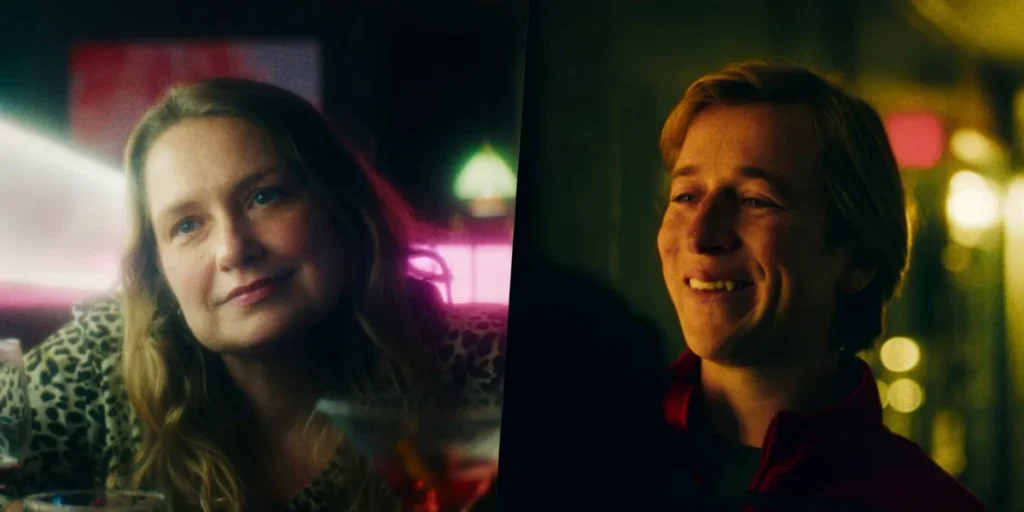
Undertone centers on Evy, portrayed by Nina Kiri (The Handmaid’s Tale), a woman who has recently returned to her childhood home to provide palliative care for her comatose mother. To escape the grim reality of her daily life, she co-hosts a paranormal-themed podcast titled The Undertone with her best friend Justin, played by Adam DiMarco (The White Lotus). The narrative dynamic serves as a classic homage to the skeptical/believer trope, with Evy acting as the pragmatic foil to Justin’s Mulder-esque obsession with the occult.
The plot is set in motion when the duo receives an anonymous email containing an audio file of a couple, Jessa and Mike, who claim to be under siege by a demonic entity. The entity is identified as Abyzou, a female demon from ancient Near Eastern mythology, traditionally blamed for miscarriages and infant mortality. Within the film’s lore, Abyzou is reimagined as a spirit that possesses mothers to destroy their children. The "found audio" within the film acts as a psychological virus; as Evy listens to the recordings during the "witching hour" to accommodate Justin’s time zone, the horrors depicted in the files begin to manifest in her physical reality.
A Chronology of Production and Market Ascent
The timeline of Undertone’s success reflects a strategic rollout often employed by A24 to build grassroots momentum.
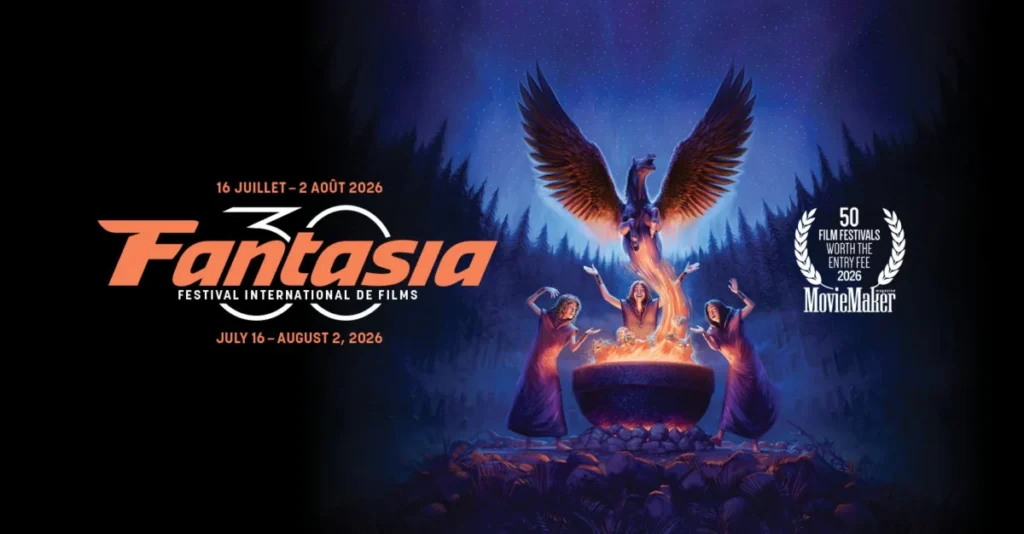
- July 2023: Undertone premieres at Montreal’s Fantasia International Film Festival. It receives critical acclaim for its innovative use of sound design and its grounded portrayal of grief.
- January 2024: The film screens at the Sundance Film Festival, where it becomes one of the most talked-about titles in the Midnight category. The buzz leads to a competitive bidding war, ultimately won by A24.
- Late 2023 – Early 2024: Post-production sound mixing is finalized to optimize the film for Dolby Atmos and 7.1 surround sound systems, emphasizing the "audio nightmare" aspect of the script.
- March 2024: The film opens to limited previews on a Thursday night, earning $1 million and signaling a strong appetite for the project.
- April 2024: The film reaches a $9 million domestic gross, cementing Ian Tuason as a profitable director in the indie horror circuit.
Personal Trauma as the Catalyst for Authenticity
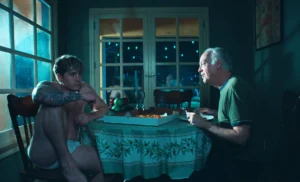
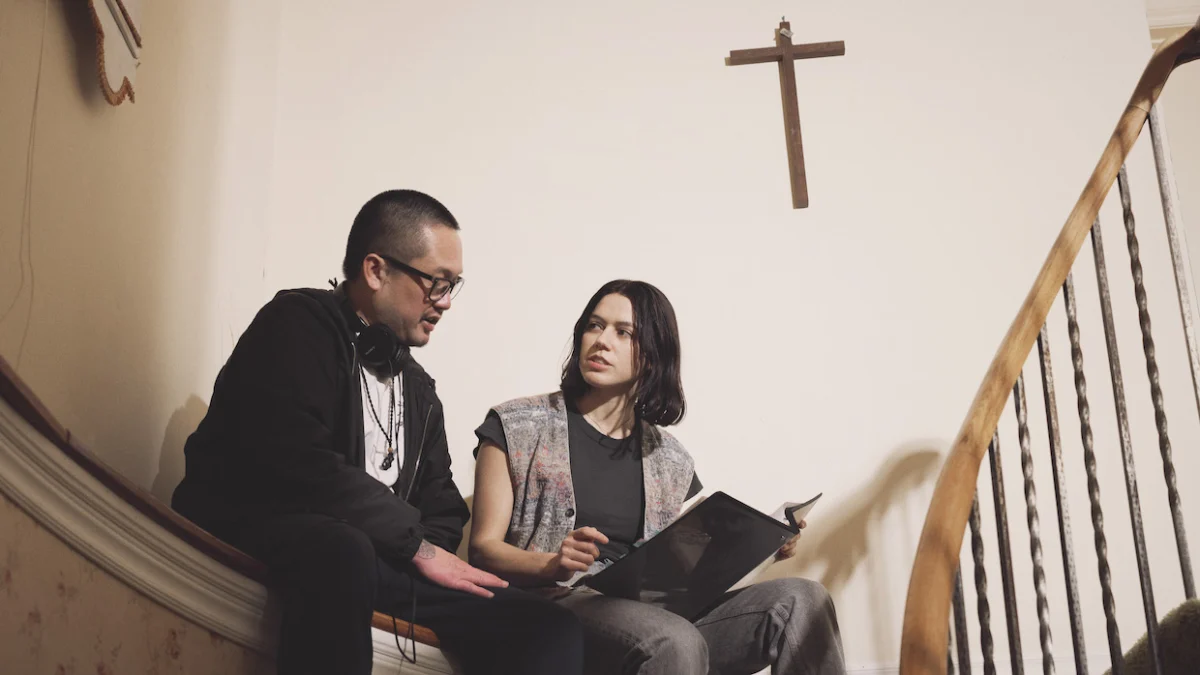
While the supernatural elements of Undertone provide the genre thrills, the film’s emotional resonance is rooted in Tuason’s personal history. The director has been transparent about the fact that the screenplay was informed by his own experience of caring for both of his parents as they battled terminal cancer. In a move that adds a layer of chilling authenticity to the production, the film was shot entirely within the house where Tuason’s parents passed away.

Production designer Mercedes Coyle was tasked with refitting the family home with heavy Catholic iconography, including an array of crucifixes and religious statues. This transformation created a surreal environment for Tuason, who moved back into the house for the duration of the shoot. This was the first time he had resided in the home since his parents’ deaths.
Reports from the set indicated a palpable, somber atmosphere. Tuason noted that the cast and crew were often unsettled by the location’s history, particularly when filming in the same bedroom where his parents spent their final days. Despite several reported instances of flickering lights and unexplained equipment malfunctions—phenomena that mirrored scenes in the script—Tuason remained largely unfazed. He attributed this to a "desensitization" caused by the prolonged trauma of caregiving, stating that the darkness of real-life illness had eclipsed his fear of the supernatural.
Technical Analysis: The Importance of Audio in Horror
The success of Undertone has sparked a broader conversation within the film industry regarding the hierarchy of sensory input in horror. Tuason’s philosophy—that audio is more critical than visual—challenges the traditional "show, don’t tell" mantra of cinema. By utilizing nursery rhymes with hidden backmasked messages (such as the disturbing reinterpretation of "Baa Baa Black Sheep") and binaural recording techniques, the film forces the audience to participate in the construction of the horror.
Psychological studies in film theory suggest that the human imagination is capable of generating more intense fear than any visual prosthetic or CGI effect can provide. Undertone leverages this by using "room tone" and low-frequency oscillations to induce a physical state of unease in the viewer. This approach mirrors the success of early found-footage films like The Blair Witch Project and Paranormal Activity, which relied on what was unseen and unheard to create tension.
Industry Implications and Future Outlook
The financial success of Undertone has already had a tangible impact on Ian Tuason’s career trajectory. In December, it was officially announced that Tuason would take the helm of Paranormal Activity 8, the latest installment in the multi-billion dollar franchise. This appointment is viewed by industry insiders as a logical progression, given Tuason’s mastery of the found-footage aesthetic and his ability to modernize the format for a new generation of viewers.
Furthermore, Tuason’s success suggests a viable path for filmmakers who start in the digital and VR space to transition into traditional feature filmmaking. His "creative roadmap"—moving from horror to sci-fi horror and eventually into pure science fiction—reflects a strategic ambition to avoid genre pigeonholing while building a brand based on technical precision.
The broader implications for A24 and the indie market are equally significant. Undertone proves that high-concept horror remains one of the most reliable genres for high returns on investment. As theatrical windows continue to shift, the "event" nature of a sound-driven film like Undertone provides a compelling reason for audiences to choose the cinema experience over streaming, as the nuances of the 3D soundscape cannot be fully replicated on standard home television speakers.
Ultimately, Undertone stands as a testament to the power of personal storytelling disguised as genre fiction. By confronting his own grief through the lens of a demonic audio recording, Ian Tuason has created a work that is as emotionally taxing as it is terrifying, ensuring his place as a pivotal figure in the next decade of horror cinema.