The digital landscape of social media has recently been dominated by a surreal and increasingly controversial trend: the rise of episodic, AI-generated dramas featuring anthropomorphic fruit. Over a period of just five days, an Instagram account operating under the handle FruitvilleGossip garnered more than 300,000 views for its series titled Fruit Paternity Court. The show, which utilizes high-fidelity generative artificial intelligence, depicts a clementine mother seeking to confirm the paternity of her baby tangerine. The narrative tension peaks when a character named Dr. Lime presents a DNA test result to a fruit judge, revealing that the prospective father, a mango named Mr. Mike, is not biologically related to the child. While the premise appears absurd, the engagement metrics suggest a significant shift in how audiences consume short-form, algorithmically driven content.
The Mechanics of the AI Fruit Phenomenon
The proliferation of "fruit dramas" represents a convergence of high-end generative AI technology and the "brainrot" aesthetic—a term used to describe low-effort, high-stimulation content designed to capture dwindling attention spans. These videos are not merely static images but fully voiced, animated segments with narrative arcs. According to creators within this space, the production process involves a suite of emerging AI tools. Prominent among these are Google’s Veo, Kling AI, and OpenAI’s Sora, though the latter has recently faced internal shifts, including reports of service adjustments and the dissolution of high-profile partnerships, such as a rumored deal with Disney.
The technical execution of these videos is often driven by highly specific text-to-video prompts. One creator, a 20-year-old computer science student based in the United Kingdom, revealed that achieving the "Pixar-meets-brainrot" style requires detailed instructions. A typical prompt might specify an "anthropomorphic strawberry character with a sassy facial expression, glossy red skin, and thin cartoon arms," framed in a 9:16 vertical format optimized for mobile viewing. The goal is to create characters that are visually "appealing" while placing them in "super dramatic and scandalous" scenarios that trigger platform algorithms.
Narrative Themes and the Normalization of Violence
Despite the whimsical appearance of the characters, the thematic content of these AI fruit videos is frequently dark and exclusionary. Analysts have noted a recurring pattern: female fruit characters are often the targets of humiliation, verbal abuse, and physical violence. The plotlines frequently revolve around infidelity, "out-of-wedlock" births, and domestic disputes. In many viral clips, female fruit are slapped, berated, or subjected to extreme scenarios, such as being ground in blenders or thrown from windows.
A particularly bizarre sub-genre involves the punishment of female fruit for minor or biological functions, such as passing gas, which results in the character being jailed or evicted from their "fruit home." Jessica Maddox, an associate professor of media studies at the University of Georgia, suggests that these videos mimic the structural violence often seen in reality television but without the traditional regulatory "guardrails." In the absence of human actors or production standards, creators are free to escalate misogynistic tropes to their logical extremes.

Chronology of the Trend and Market Saturation
The timeline of the AI fruit trend highlights the velocity at which AI-generated content can achieve market saturation:
- Early March 2024: Initial experiments with anthropomorphic food items begin appearing on TikTok and Instagram, drawing inspiration from previous trends like the "Italian brainrot" characters (e.g., Ballerina Cappuccina).
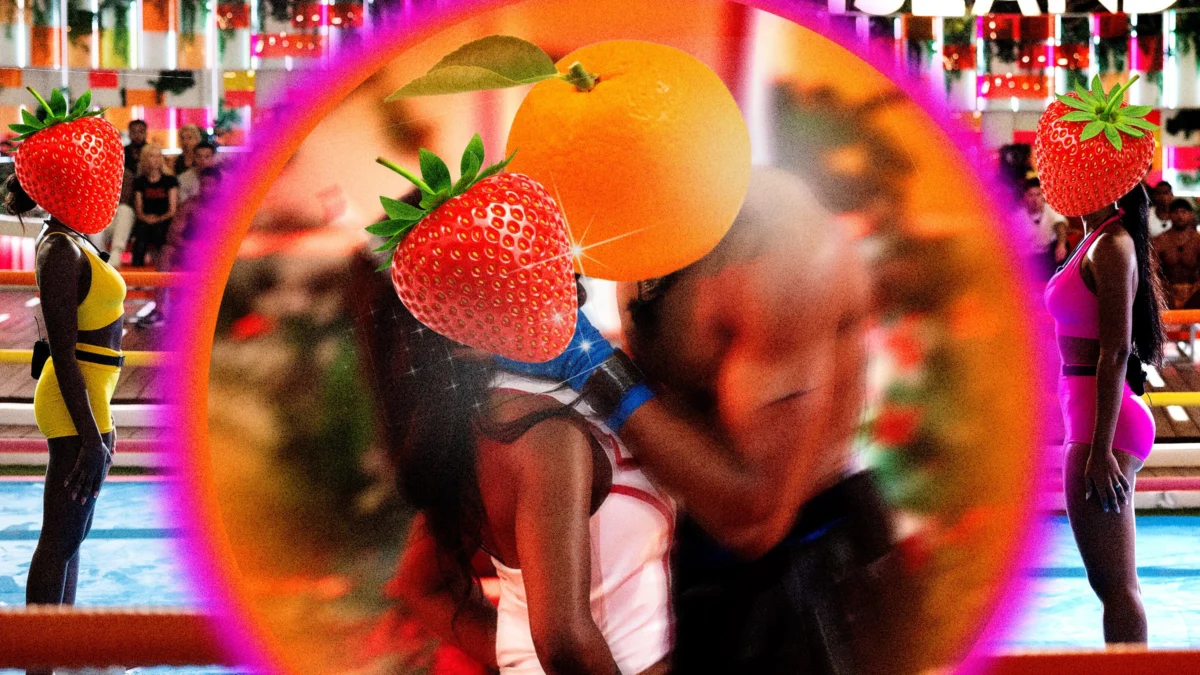
- Mid-March 2024: The account "Ai Cinema" launches Fruit Love Island, a parody of the popular reality dating show. Within 10 days, the account amasses 3.3 million followers and over 200 million combined views.
- Late March 2024: Spin-off series emerge, including The Summer I Turned Fruity, The Fruitpire Diaries, and Food Is Blind, indicating a rapid diversification of the genre.
- Present: Mainstream brands, including Olipop and Slim Jim, begin engaging with the content in comment sections, signaling the trend’s transition from a niche subculture to a commercially recognized phenomenon.
The Shift from Human Actors to Algorithmic "Slop"
The rise of AI fruit dramas poses a significant challenge to the emerging industry of vertical microdramas. These are short, scripted, live-action series—often produced in China or Los Angeles—that feature human actors in highly dramatized roles. Ben L. Cohen, a Los Angeles-based actor who has appeared in numerous vertical dramas, notes that the AI-generated versions share a common DNA with human-led productions: both rely on jarring, "clickbait" titles and heightened emotional stakes, often involving domestic conflict or betrayal.
However, the economic disparity between the two models is stark. Producing a human-led microdrama involves casting, filming, and post-production costs. In contrast, AI fruit episodes can be generated in a fraction of the time for a fraction of the cost. This shift raises concerns about the future of the acting profession in the digital age. If audiences find a one-minute clip of a cheating strawberry as engaging as a professionally acted scene, the incentive for platforms to fund human-centric content diminishes.
Platform Moderation and Community Response
The rapid growth of these accounts has not occurred without friction. On March 26, 2024, the creator of Fruit Love Island reported that nine of their videos had been removed by TikTok for violating community guidelines. While the specific violations were not disclosed, the move followed reports of "mass reporting" by users who found the content’s themes of violence and misogyny offensive.
Despite the backlash, the engagement remains largely organic. Media researchers who have analyzed the comment sections of these videos report that the majority of interactions come from legitimate profiles rather than bot networks. This suggests a genuine, if controversial, appetite for this type of content. The phenomenon has even caught the attention of celebrities; pop singer Zara Larsson recently referenced the trend before deleting her post following public criticism regarding the "brainrot" nature of the videos.
Financial Implications and the Creator Economy
While many of these accounts are currently in the growth phase, the earning potential is substantial. TikTok’s Creator Rewards Program (formerly the Creator Fund) and similar revenue-sharing models on Instagram and YouTube reward high-volume, high-engagement content. An account with millions of views per video can potentially earn thousands of dollars in monthly ad revenue.

Furthermore, the "paywall" model used by traditional microdrama apps—where viewers watch the first few episodes for free before paying for the conclusion—is likely the next evolution for AI fruit creators. By building a loyal audience through free social media clips, these creators can eventually transition to subscription-based models or direct monetization.
Broader Impact and Ethical Considerations
The emergence of AI fruit dramas is a case study in the "uncanny valley" of digital entertainment. It highlights the ability of generative AI to democratize content creation while simultaneously bypassing the ethical and social norms that govern traditional media. The use of Disney-esque animation styles to depict scenes of domestic abuse is a particularly poignant irony, especially as major studios navigate their own complicated relationships with AI technology.
As these tools become more accessible, the distinction between "premium" content and "algorithmic slop" continues to blur. The primary concern for media critics is not the absurdity of the fruit characters themselves, but the underlying messages being reinforced. When violence against women is repackaged as a cartoonish strawberry being "blended," it risks desensitizing younger audiences to the gravity of the themes being parodied.
In conclusion, the AI fruit drama trend is more than a fleeting internet fad; it is a signal of a new era in the attention economy. It represents a shift toward content that is optimized for the algorithm, produced at a near-zero marginal cost, and unburdened by the traditional constraints of human storytelling. Whether this trend leads to a new form of digital art or a further degradation of the online discourse remains a subject of intense debate among creators, platforms, and audiences alike.