



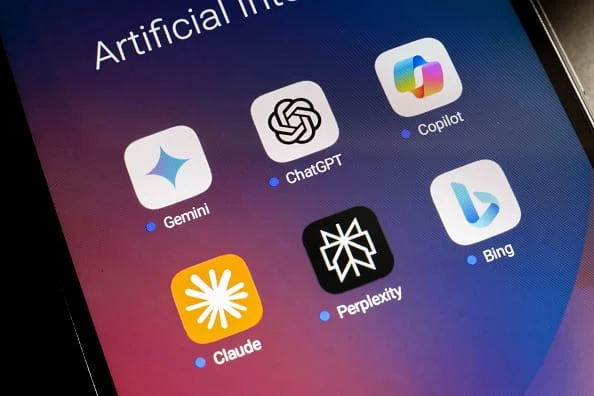
A significant divide in the perception and utilization of artificial intelligence is emerging within the professional landscape, revealing a stark gender gap that could have long-term implications for career advancement and economic equity. According to the fifth annual CNBC SurveyMonkey Women at Work survey, men are increasingly viewing generative AI as a vital tool for career success, while women remain more skeptical, with many expressing ethical concerns that the technology facilitates a form of workplace "cheating." The findings come at a critical juncture, roughly three years after the public launch of OpenAI’s ChatGPT sparked a global technological arms race, and suggest that the rapid integration of AI into the enterprise stack is not being met with equal enthusiasm across all demographics.
The survey, which polled 6,330 individuals between February 10 and February 16, 2026, highlights a fundamental disagreement regarding the value of AI in a professional setting. While 69% of men categorized AI as a "valuable assistant and collaborator," only 61% of women shared this sentiment. This eight-point disparity is compounded by a deeper psychological hesitation among female workers: 50% of women surveyed believe that using AI at work "feels like cheating," a view held by only 43% of men. This ethical friction points to a potential cultural barrier that could prevent women from leveraging productivity-enhancing tools at the same rate as their male counterparts.
Chronology of the Generative AI Boom: 2022–2026
To understand the current state of workplace AI adoption, it is necessary to trace the trajectory of the technology over the last several years. The "Big Bang" of the current AI era occurred in late 2022 with the release of ChatGPT, which introduced the general public to the capabilities of Large Language Models (LLMs). By 2023, the focus shifted from novelty to utility, as Microsoft, Google, and Meta integrated AI "copilots" into standard office software.
Throughout 2024 and 2025, the technology evolved from simple text generation to complex multimodal capabilities, including AI-generated imagery, video, and sophisticated coding agents. Companies began moving beyond experimental phases, implementing internal LLMs to handle proprietary data. By the start of 2026, AI had become a central pillar of corporate strategy, as evidenced by the high-level discussions at major financial institutions and technology firms. Wall Street’s response to this evolution has been volatile; software stocks faced significant downward pressure over the past year as investors bet that AI would disrupt traditional enterprise software models, leading to a wave of mergers, acquisitions, and restructuring.
Statistical Breakdown of Workplace Usage and Attitudes
The disparity in attitudes toward AI translates directly into usage patterns. The SurveyMonkey data reveals that men are significantly more likely to be "power users" of the technology. Approximately 14% of men reported using AI multiple times a day, compared to just 9% of women. At the other end of the spectrum, 64% of women stated they never use AI at work, whereas 55% of men fell into the same category.
The "enthusiasm gap" is also reflected in how employees perceive the risks of ignoring the technology. Some 39% of men expressed a "fear of missing out" (FOMO) regarding AI, believing that a failure to embrace the tools would put them at a disadvantage. Only 35% of women shared this concern. More tellingly, 42% of women "strongly disagreed" with the idea that failing to use AI would result in missed professional opportunities, compared to 36% of men who felt that way.
Paradoxically, despite their higher usage rates, men were more likely to admit they need additional training. Nearly 60% of men (59%) indicated a desire for more education on how to effectively implement AI in their workflows. This suggests a proactive stance among male workers who, despite already using the tools, recognize the need for continuous skill development to maintain a competitive edge.
Corporate Leadership and the Mandate for Integration
The push for AI adoption is coming from the highest levels of corporate leadership, where the technology is viewed as an existential necessity rather than an optional perk. Jamie Dimon, CEO of JPMorgan Chase, has been a vocal proponent of this shift. During the bank’s 2026 investor day, Dimon described AI as "critical to our company’s future success," revealing that nearly two-thirds of the organization now utilizes an internal LLM for various tasks.
Dimon’s assessment of the technology is pragmatic. He has acknowledged that while AI will inevitably eliminate certain roles, the responsibility of the modern corporation is to retrain and redeploy staff. This top-down mandate creates a high-pressure environment where employees who are hesitant to use AI may find themselves increasingly out of sync with their company’s strategic goals.

The financial sector’s aggressive pivot toward AI is being mirrored in other industries, including legal, healthcare, and software development. In February 2026, the rise of AI coding agents reached a new milestone, with tools now capable of building entire applications from simple natural-language prompts. This automation of high-level tasks is what Jamie Dimon and other executives refer to when they discuss the "disproportionate impacts" on the workforce.
Psychological Barriers and the "Cheating" Narrative
The finding that half of women view AI as "cheating" is a significant data point that warrants deeper analysis. Sociologists and workplace experts suggest that this sentiment may be rooted in the different ways men and women are socialized to view merit and hard work. For many women, who historically have had to work harder to prove their competence in male-dominated environments, the idea of a machine performing a task may feel like it undermines their personal credibility or the authenticity of their contributions.
Furthermore, the "imposter syndrome" often cited in professional development literature may play a role. If a worker feels they must be twice as good to be considered equal, using a tool that automates their output might feel like a shortcut that invalidates their expertise. In contrast, the survey suggests men are more likely to view AI as a "collaborator," a framing that positions the technology as an extension of their own capability rather than a replacement for their effort.
Long-term Career Implications and the "Broken Rung"
The danger of this gender gap lies in its potential to exacerbate existing inequalities. Sheryl Sandberg, founder of LeanIn.Org and former Chief Operating Officer of Meta, has warned that the early adoption phase of AI is a critical window for professional development. In a recent interview, Sandberg noted that AI will be most challenging for those who do not know how to use the tools, and if men are the primary adopters, the gender gap in management could widen.
For years, researchers have identified the "broken rung" in the corporate ladder—the phenomenon where women miss out on the first promotion to a manager-level position. If AI proficiency becomes a key metric for leadership potential, women who remain skeptical of the technology may find it even harder to secure that initial advancement.
"We are going to see disproportionate impacts," Sandberg warned, noting that a lack of gender parity in AI usage would be "bad for our economy." As AI tools become more integrated into performance reviews and productivity metrics, the "usage gap" could translate into a "promotion gap" and, eventually, a wider "wage gap."
Strategic Recommendations for HR and Management
To bridge this divide, organizational leaders and Human Resources departments must address the root causes of skepticism. Simply providing access to AI tools is insufficient if a significant portion of the workforce feels that using them is ethically dubious or professionally risky.
- Reframing the Narrative: Companies need to move away from the "efficiency at all costs" messaging and instead frame AI as a tool for "augmentation" and "creative liberation." By highlighting how AI can remove the drudgery of administrative tasks, leaders can help skeptical employees see the technology as a way to focus on high-value, human-centric work.
- Inclusive Training Programs: Given that 59% of men already recognize the need for more training, companies should implement structured, inclusive AI education programs. These programs should address the specific concerns raised in the SurveyMonkey data, including the ethical implications of AI and how to maintain "human-in-the-loop" oversight.
- Transparent Ethics Guidelines: To combat the feeling that AI is "cheating," firms must establish clear guidelines on what constitutes acceptable use. When employees understand the boundaries and are encouraged by management to experiment with AI, the stigma of "cheating" is likely to diminish.
Future Outlook: A Competitive Necessity
As the generative AI boom enters its fourth year, the technology is no longer a futuristic concept but a daily reality of the modern office. The data from the 2026 SurveyMonkey Women at Work survey serves as a warning that the benefits of this technological revolution are not being distributed equally.
The divide between those who view AI as a "valuable collaborator" and those who view it with suspicion is not merely a matter of personal preference; it is a burgeoning professional crisis. If the trend continues, the workplace of the future may see a reinforced glass ceiling, powered not just by old biases, but by a new technological disparity. For companies aiming for true equity and maximum productivity, the mission is clear: the AI revolution must be as inclusive as it is innovative. If half the workforce remains on the sidelines of the AI era, the full potential of the technology—and the economy—will remain unrealized.