The cinematic landscape is often a challenging terrain for capturing the ephemeral nature of yearning. Love stories, by their very definition, frequently weave in threads of tragedy, and the delicate nuances between moments of romantic bliss can elude even the most seasoned filmmakers and dedicated performers. In this regard, director Yun Su-ik, alongside leading actresses Han So-hee and Han Hae-in, has embarked on a strikingly unconventional journey with "Heavy Snow," a series of poignant, albeit brief, snapshots chronicling a high school romance whose reverberations extend far beyond its initial spark. This intimate portrayal, while seemingly slight, offers a cutting examination of youthful affection and its enduring impact, presenting a narrative that resonates with the quiet ache of unspoken emotions and the profound consequences of transient connections.
The Unconventional Spark: A Tale of Two Lives Intersecting
The film introduces us to Su-an, portrayed by Han Hae-in, a fiercely independent acting student residing in a secluded coastal town. Her initial appearance is marked by an almost theatrical intensity; she is seen wielding a loaded paintball gun as part of a drama class exercise. Her rendition of Shakespeare is less a traditional interpretation and more akin to a school shooter’s calculated aggression, unsettling her classmates and highlighting her unwavering commitment to her idiosyncratic artistic vision. Su-an is presented as unpredictable and highly strung, her outward stoicism revealing little of the emotional turmoil beneath. Her carefully constructed facade begins to crumble, however, with the arrival of Se-ol, played by Han So-hee, a new student who captivates Su-an’s attention immediately. Se-ol, a rising star in the world of popular television dramas, is introduced to Su-an through the fictional, yet hilariously accurate, K-drama parodies of "Teenage Love Counselling" and "School of Hip-Hop." Su-an’s initial starstruck admiration rapidly transforms into a profound and consuming infatuation.
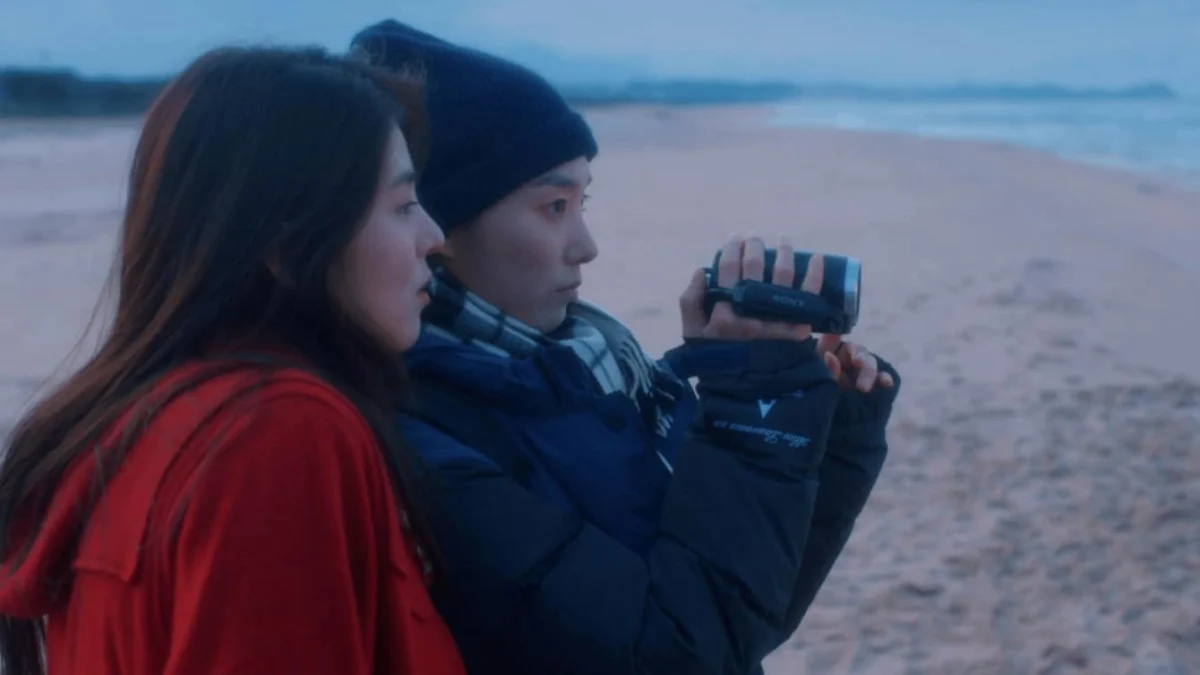
The burgeoning friendship between Su-an and Se-ol blossoms through shared experiences, including excursions to the beach and nocturnal drives to Myeong-dong, a bustling hub of Seoul’s vibrant shopping scene. What begins as an enthusiastic camaraderie quickly deepens, culminating in a moment of profound romantic intimacy. However, as swiftly as this pivotal kiss ignites, the flame extinguishes. Se-ol departs, returning to her demanding life as a television starlet, leaving Su-an’s heart fractured and her world irrevocably altered.
Structural Nuances and Stylistic Comparisons
"Heavy Snow" is meticulously structured into three distinct chapters: "Seol," "Su-an," and "The Sea." This tripartite division allows Yun Su-ik to dissect the narrative with precision, carefully selecting moments of both exquisite beauty and profound heartbreak. The film’s concise runtime, reminiscent of the works of renowned director Hong Sang-soo, belies the depth of its emotional exploration. However, Yun’s stylistic and narrative approach draws more striking parallels with two critically acclaimed Korean films from recent years: Davy Chou’s "Return to Seoul" and Celine Song’s "Past Lives." These comparisons are not merely superficial; they highlight a shared commitment to exploring themes of identity, displacement, and the enduring power of past connections, even when separated by vast distances and the passage of time.
The pervasive ache of regret is a palpable undercurrent throughout "Heavy Snow." This sentiment manifests in various forms, from moments of drug-induced clarity to a poignant Shakespearean soliloquy that offers more insight into the actor performing it than the character she embodies. The film’s approach is resolutely naturalistic and observational, maintaining a quiet simmer of unresolved emotions between the two estranged protagonists. This deliberate restraint allows the audience to witness the internal struggles and unspoken desires of the characters, fostering a sense of empathy and shared understanding.
Performance and Subtext: A Delicate Balance
A significant strength of "Heavy Snow" lies in its respectful and subtextually rich portrayal of the inherent imbalance in first love. Se-ol’s established role as a teen idol imbues her with a maturity that belies her years, yet also a precociousness that hints at potential danger for herself and those around her. Han So-hee delivers a masterful dual performance, seamlessly transitioning between performative emotion and stark, cold bluntness. This nuanced portrayal stands in sharp contrast to Han Hae-in’s doe-eyed earnestness as Su-an. Su-an is depicted as a creatively frustrated aspiring director trapped in the role of an actor, and her role as an observer of Se-ol’s radiant beauty serves as a subtle mirror to her crush’s potential narcissism. Both actresses exhibit remarkable skill in navigating the film’s unannounced time jumps, effortlessly conveying the physical and emotional toll that years have taken. Their performances are so compelling that they easily rival those of the stars from more widely publicized Korean dramas, particularly given the film’s demonstrably lower budget.
A Narrative Metamorphosis: From Romance to Existential Drift
By its conclusion, "Heavy Snow" has undergone a significant metamorphosis, diverging considerably from its initial premise. The narrative takes a sharp turn, shifting from a focused romantic entanglement to a more profound exploration of existential stakes. This dramatic shift is handled with remarkable formal control by Yun Su-ik and met with courageous commitment from both Han So-hee and Han Hae-in. Their tempestuous love affair, set against the backdrop of burgeoning careers and personal struggles, becomes a literal representation of their love being "on the rocks." The trajectory of the narrative opens up alarming dramatic possibilities, pushing the boundaries of conventional storytelling and leaving a lasting impression on the viewer.
The film’s reception among audiences will likely depend on their willingness to shed preconceived notions of romantic narratives and embrace Yun Su-ik’s ambitious vision. "Heavy Snow" ventures into uncharted territory, fraught with existential and physical dangers, challenging viewers to confront the complexities of love, ambition, and self-discovery. The film’s bleak final note is not merely a somber conclusion but an appropriately staged culmination of the characters’ journey, a poignant reminder of fumbled opportunities and missed chances.
A Tapestry of Restraint and Obsession
Yun Su-ik’s "Heavy Snow" is best understood as a succession of scenes, often presented with a deliberate lack of complete context, fostering an enticing sense of mystery through its inherent restraint. It is understandable for viewers to desire a more comprehensive understanding of Se-ol and Su-an’s external lives, as they often appear to exist in a self-contained bubble, orbiting only each other. However, this very insularity can be interpreted as a potent metaphor for the all-consuming nature of first love. The film masterfully encapsulates the obsessive, suffocating, deafening, and enveloping qualities of this formative emotional experience, imbuing it with care and profound affection.
Broader Implications and Artistic Merit
The success of "Heavy Snow" in capturing the essence of young love and its lasting consequences speaks to the power of independent filmmaking and the artistry of its creators. The film’s ability to evoke deep emotional resonance on a smaller scale, compared to mainstream productions, highlights a burgeoning trend in cinema where intimate storytelling and nuanced performances can achieve significant impact. The critical acclaim and audience engagement, particularly within festival circuits such as the BFI Flare London LGBTQ+ Film Festival where it was featured, underscore the film’s significance in exploring diverse narratives of love and identity.
The performances of Han So-hee and Han Hae-in have been lauded for their authenticity and emotional depth. Han So-hee, already a prominent figure in Korean entertainment, further solidifies her versatility with this role, demonstrating a capacity for portraying complex, morally ambiguous characters. Han Hae-in, in her significant role, proves herself a compelling talent, holding her own against a more established co-star. Their chemistry, though often tinged with the melancholy of unspoken desires, is palpable and forms the emotional core of the film.
The thematic exploration of regret and missed opportunities resonates universally, making "Heavy Snow" a relatable experience for a broad audience. In an era where romantic comedies often prioritize predictable resolutions and idealized relationships, "Heavy Snow" offers a refreshing and poignant counterpoint. It acknowledges the messy, imperfect, and often painful realities of human connection, particularly during the formative years of adolescence and early adulthood. The film’s deliberate pacing and understated approach allow these themes to unfold organically, inviting contemplation rather than dictating conclusions.
Yun Su-ik’s directorial vision, characterized by its minimalist aesthetic and focus on character interiority, positions "Heavy Snow" as a significant contribution to contemporary cinema that explores the complexities of human relationships. The film’s subtle yet powerful narrative, coupled with the exceptional performances of its leads, ensures its place as a memorable and thought-provoking exploration of a love that, though brief, leaves an indelible mark. The film’s success suggests a growing audience appetite for narratives that delve into the psychological and emotional landscapes of their characters, offering a more mature and introspective perspective on the universal experience of love and loss.