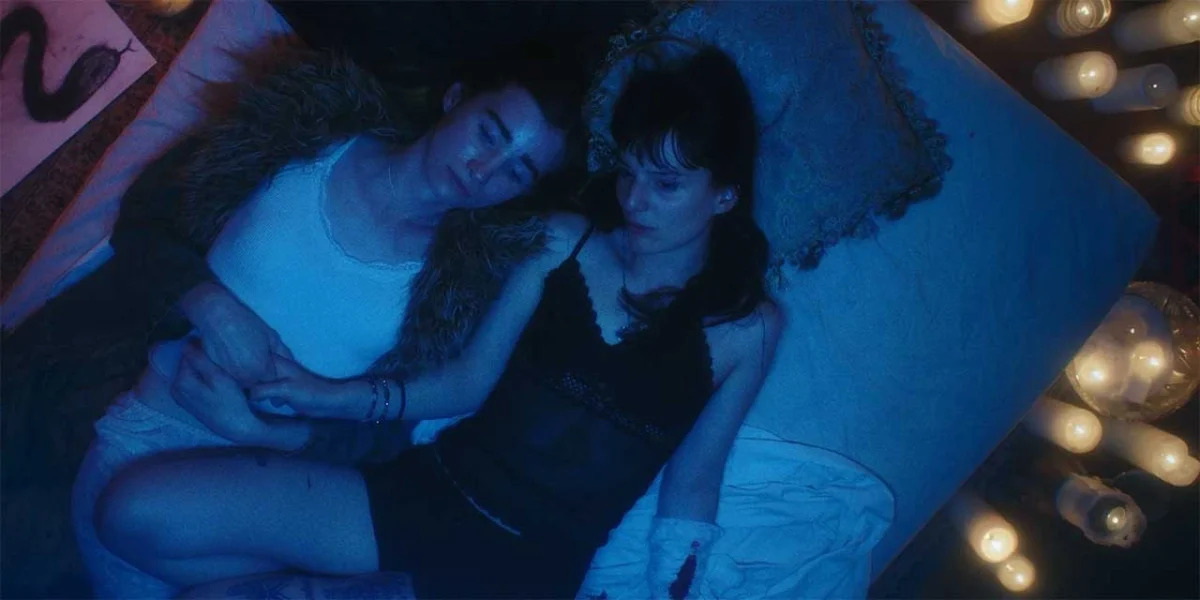
In a cinematic landscape increasingly defined by diverse storytelling and the exploration of nuanced identity, Alice Maio Mackay’s latest feature, "The Serpent’s Skin," emerges as a potent blend of supernatural horror, queer romance, and profound self-discovery. The film, clocking in at a brisk 85 minutes, boldly declares its identity from the outset, presenting itself as "A Transgender Film by Alice Maio Mackay." This self-identification is not merely a statement of representation but a foundational element that permeates the narrative, themes, and aesthetic of the production. Starring Alexandra McVicker as Anna and Avalon Fast as Gen, the film delves into the transformative journey of a young trans woman escaping a small-town past, only to find her new life intertwined with magic, romance, and a terrifying supernatural threat.
The narrative arc of "The Serpent’s Skin" centers on Anna, a young trans woman in her early twenties, who makes the courageous decision to leave behind the suffocating confines of her small, transphobic hometown. Her destination is the bustling anonymity of the city, where she plans to build a new life alongside her sister, Dakota, portrayed by Charlotte Chimes. Upon arrival, Anna quickly secures a job at a local record store, a seemingly mundane step towards establishing normalcy. However, her transition is far from smooth. She begins experiencing unsettling "daymares"—visions that blur the lines between reality and hallucination. These episodes, initially perceived as personal disturbances, soon reveal a latent, supernatural power within her.
The catalyst for Anna’s awakening comes during an attempted robbery at the record store. Her unexpected psychic abilities, manifested through these "daymares," allow her to thwart the assailant. This incident serves as the cosmic signal that draws her into the orbit of Gen (Avalon Fast), a confident and enigmatic tattoo artist. Gen possesses similar supernatural powers, and it is through her that Anna learns of their shared abilities and the potential for their development. A profound connection ignites between them, a bond forged in shared magic and blossoming into a tender romance. This burgeoning relationship, however, is soon imperiled by an unforeseen consequence of their combined power.
Inadvertently, Gen unleashes a malevolent entity, a demon, that possesses Danny (Jordan Dulieu), Anna’s former romantic partner and a neighbor. This demonic corruption transforms Danny into a vessel for an ancient evil, which then begins to systematically target and feed on those close to Anna and Gen. The film escalates into a desperate fight for survival as the supernatural threat intensifies, forcing the protagonists to confront the darkness that has infiltrated their lives. The supporting cast also includes Scott Major, contributing to the ensemble’s dynamic.
Thematic Resonance and Aesthetic Choices
"The Serpent’s Skin" distinguishes itself not only through its genre elements but also through its deliberate thematic and aesthetic choices, which are deeply rooted in the experiences of its trans creators and cast. The film’s self-identification as "A Transgender Film" underscores a commitment to authentic representation and a narrative that explores themes of change, self-acceptance, and the arduous process of shedding an old identity for a truer self. As the review notes, "the way the film’s themes and narrative revolve around ideas of change, discovery, and moving away from a former version of oneself also lends credence to this self-categorization." This resonates with the inherent challenges and profound rewards of personal transformation, particularly for individuals navigating societal prejudices.
Director and writer Alice Maio Mackay, born in 2004, exhibits a sophisticated understanding and appreciation for a specific era of filmmaking. The film’s visual style is a deliberate homage to the fantastical and supernatural films and television shows popular around the turn of the century. This includes a rich palette of colors, atmospheric lighting reminiscent of candles and flowing curtains, and a camerawork unafraid of bold choices. This retro aesthetic, often described as "cozy retro," creates a distinct mood that complements the film’s narrative of magic and mystery. Cinematographer Aaron Schuppan plays a crucial role in realizing this vision, employing techniques that enhance the dreamlike and sometimes hallucinatory quality of the story, even within what is understood to be a modest budget.
The special effects used to depict Anna and Gen’s psychic powers are intentionally understated and charmingly simple, evoking the practical effects of beloved films and series like "The Craft" and "Buffy the Vampire Slayer." This stylistic choice not only pays homage to influential works but also grounds the supernatural elements in a relatable, almost tangible reality, preventing them from becoming overly abstract. The lighting, described as "bright and dreamy," draws parallels to the evocative portrayal of Los Angeles in David Lynch’s "Mulholland Drive," another film that explores the journey of a small-town newcomer drawn into a mysterious urban landscape.
The musical score, composed by Alexander Taylor and Eduardo Daniel Victoria, further enhances the film’s atmospheric qualities. Its heavy reliance on strings is reminiscent of classic thrillers like Alfred Hitchcock’s "Vertigo," adding a layer of suspense and emotional depth to the proceedings. The editing, overseen by Vera Drew, a notable figure in the queer cinema scene and director of "The People’s Joker," injects a signature "trippy energy" into the film. Drew’s adept use of crossfades and double exposures effectively immerses the audience in the characters’ internal states, mirroring their fantastical and sometimes disorienting experiences. This cohesive collaboration across technical and craft departments underscores Mackay’s clear vision and ability to inspire her team.
Performances Driving the Narrative
The success of "The Serpent’s Skin" is significantly bolstered by its lead performances. Alexandra McVicker delivers a captivating portrayal of Anna, a character who is immediately sympathetic due to the difficult circumstances she flees. McVicker skillfully navigates Anna’s quiet sadness without allowing it to become overwhelming, while also capturing her impulsive nature and her ability to form quick connections in her new environment. Her nuanced performance ensures that Anna’s sometimes paradoxical decisions feel organic and exciting, drawing the audience into her journey of self-discovery and empowerment.
Avalon Fast is equally enthralling as Gen, Anna’s romantic interest and guide into the world of witchcraft. Fast imbues Gen with a headstrong and honest demeanor, effectively drawing both Anna and the audience into the film’s supernatural realm. Her performance is crucial in establishing the chemistry between the two leads, making their magical and romantic bond feel genuine and compelling. The dynamic between McVicker and Fast is central to the film’s emotional core, anchoring the supernatural elements in a relatable human connection.
Jordan Dulieu’s performance as Danny, the unfortunate soul possessed by the demon, is pivotal in escalating the film’s stakes. His transformation and subsequent actions serve as a tangible representation of the encroaching darkness, creating a palpable sense of danger for the protagonists. Charlotte Chimes provides support as Anna’s sister, Dakota, offering a grounded presence amidst the fantastical events. Scott Major’s role, while less detailed in the provided synopsis, contributes to the overall ensemble and the fabric of Anna’s new life.
Challenges and Triumphs in Storytelling
While "The Serpent’s Skin" excels in its thematic depth, aesthetic execution, and performances, the narrative does encounter some challenges as it progresses towards its climax. The film’s metaphorical approach to the supernatural threat, while thematically rich, occasionally struggles to coalesce with the direct storytelling style employed in earlier acts. This can lead to a sense of ambiguity regarding the exact nature and mechanics of the danger, making the climax feel "purely strange," as noted, rather than fully earned or conceptually integrated.
However, the review emphasizes that the film’s overall strengths far outweigh these minor shortcomings. The "vibe is so, so right," and the film achieves a remarkable feat of creating an empowering, forward-thinking, and deeply immersive experience. For audiences seeking unique queer narratives, supernatural thrills, and a celebration of identity, "The Serpent’s Skin" offers a compelling and spellbinding journey. The film’s ability to weave together personal transformation with supernatural horror, all wrapped in a distinctive retro aesthetic, marks it as a significant entry in contemporary independent cinema.
The film’s production timeline and its journey to wider release are indicative of the growing momentum behind independent and genre filmmaking. While specific release dates beyond the initial festival circuit are often subject to change, the anticipation surrounding "The Serpent’s Skin" suggests a deliberate and strategic approach to its distribution. The inclusion of a trailer within the promotional material signifies an effort to engage a broader audience and showcase the film’s unique visual style and thematic promise. The film’s participation in festivals like Fantasia, as indicated by the trailer’s title, serves as a crucial platform for generating buzz and connecting with a dedicated fan base that appreciates its bold artistic vision and inclusive storytelling. The continued success of films like "The Serpent’s Skin" is vital for fostering a more diverse and representative film industry, paving the way for future storytellers to explore their own unique experiences and perspectives. The film’s 85-minute runtime further positions it as an accessible and potent viewing experience, ideal for audiences seeking impactful narratives that resonate long after the credits roll. The collaborative spirit evident in its creation, from direction and writing to cinematography and editing, speaks to a generation of filmmakers eager to redefine genre conventions and champion authentic voices.