


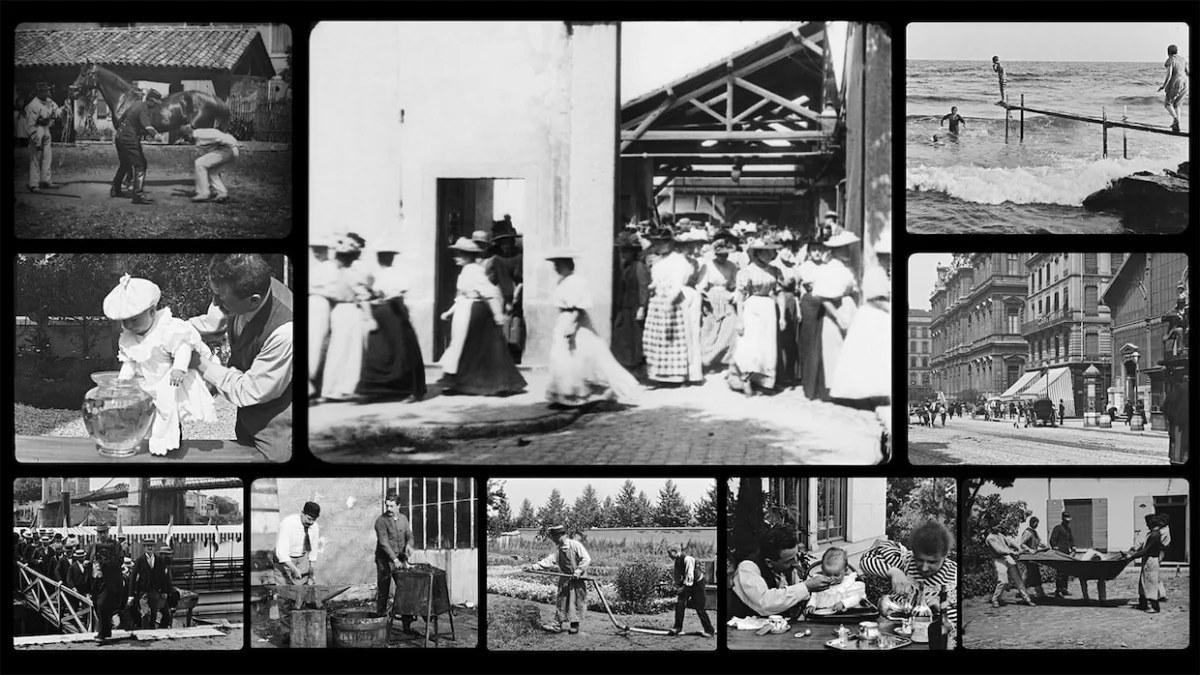
Thierry Frémaux, the director of the Cannes Film Festival and the Lumière Institute, has released a new documentary project titled Lumière, Le Cinema!, which serves as both a historical excavation and a philosophical defense of the theatrical experience. As the 65-year-old executive prepares for the 79th edition of the world’s most prestigious film festival, his latest creative endeavor looks back 130 years to the very origins of the medium. The film, a sequel to his 2016 documentary Lumière!, curated approximately 100 short films produced by Auguste and Louis Lumière between 1895 and 1905. Through this collection, Frémaux provides a narrated journey into the technical and aesthetic breakthroughs that defined the birth of cinema, arguing that the principles established by the Lumière brothers remain the bedrock of modern visual storytelling.
The release of Lumière, Le Cinema! comes at a critical juncture for the global film industry. As streaming platforms, social media algorithms, and generative artificial intelligence reshape how moving images are consumed and produced, Frémaux’s work serves as a reminder of cinema’s foundational intent: a collective experience centered on the "shot." By juxtaposing his roles as a gatekeeper of contemporary cinema at Cannes and a historian at the Lumière Institute in Lyon, Frémaux bridges the gap between the celluloid past and the digital future.
A Chronology of the Cinématographe and the Lumière Legacy
The history of the Lumière brothers is inextricably linked to the birth of the modern world. In 1895, Auguste and Louis Lumière, sons of a prominent photographer in Lyon, patented the Cinématographe. Unlike Thomas Edison’s Kinetoscope, which was a "peep-show" device designed for individual viewing, the Cinématographe was a three-in-one device that could record, develop, and project motion pictures onto a screen for a public audience.
The chronology of this era marks the transition from static photography to the "living image." On December 28, 1895, the brothers held their first commercial public screening at the Grand Café in Paris. This event is widely cited by historians as the birth of cinema as a social and economic institution. Over the following decade, the Lumière company dispatched operators across the globe—from Indochina to Mexico—capturing over 2,000 "actualités" or documentary shorts.
Frémaux’s new film focuses on these early "actualités," emphasizing that the Lumières were not merely inventors but the first true directors. He highlights the 1895 comedy L’Arroseur Arrosé (The Sprinkler Sprinkled) as a pivotal moment where the brothers moved from capturing reality to staging fiction. By organizing these 50-second clips into a cohesive narrative, Frémaux illustrates how the Lumières mastered depth of field, composition, and movement long before the formalization of film grammar.
The Aesthetic Philosophy of the "Shot"
In his analysis, Frémaux distinguishes between the modern deluge of "images" and the classical concept of the "shot." He posits that the simplicity of the Lumière brothers’ work—often a single, static camera position capturing a dynamic event—is an art form that contemporary filmmakers often overlook. This perspective is informed by his daily work selecting films for the Cannes Film Festival.
Frémaux notes that his evaluation process for new submissions is rooted in historical context. Whether reviewing a silent German classic like The Cabinet of Dr. Caligari or a modern blockbuster, the criteria remain the same: the efficiency and necessity of the shot. This aesthetic rigor is what he believes separates "cinema" from "content." While an Instagram post or a TikTok video utilizes the language of cinema, Frémaux argues that the intentionality of the Lumière "shot" created a lasting artistic legacy that transcends the ephemeral nature of modern digital media.
The Rivalry of Vision: Edison vs. Lumière
A significant portion of Frémaux’s historical analysis involves the ideological divide between the American and French pioneers of film. Thomas Edison’s Kinetoscope was a triumph of the "American way of life," predicated on individual consumption and direct payment per viewing. Edison believed that the French model of collective projection was a strategic error, fearing that once a group of people saw a film together, the market for that film would be instantly exhausted.

The Lumière brothers disagreed, betting on the "screening room" as a site of social desire. They believed that the act of gathering in the dark to watch a shared projection would create a repeatable demand. History has largely vindicated the Lumière model, as the global cinema industry was built on the foundation of the theatrical window. However, Frémaux acknowledges that the 21st-century rise of streaming platforms like Netflix and Disney+ represents a modern resurgence of the "Edison model"—individualized, home-based consumption that threatens the collective experience.
Supporting Data: The State of Global Cinema
To understand the stakes of Frémaux’s defense of the Lumière legacy, one must look at the current economic landscape of the film industry. According to data from the Motion Picture Association (MPA), the global home and mobile entertainment market reached $76.7 billion in 2022, a significant increase from pre-pandemic levels. Conversely, while the global box office has shown signs of recovery, reaching approximately $33.9 billion in 2023, it remains below the 2019 peak of $42.5 billion.
In France, the situation is bolstered by the "Cultural Exception" policy, which provides government subsidies and protections for the domestic film industry. Data from the Centre National du Cinéma et de l’image animée (CNC) shows that France maintains one of the highest theater-attendance rates in Europe, with 181 million admissions in 2023. This environment allows Frémaux to maintain a more optimistic outlook than his American counterparts. He cites figures like Sony Pictures Chairman Tom Rothman and Oscar-winning director Sean Baker as key allies in the fight to preserve the theatrical experience.
Official Responses and the Challenge of Artificial Intelligence
As Frémaux prepares for the 79th Cannes Film Festival, the conversation has inevitably shifted toward the impact of Artificial Intelligence (AI) on film production. During the selection process for the festival, Frémaux has encountered an increasing number of projects utilizing AI for visual effects, scriptwriting, and even performance.
His official stance is one of cautious humanism. Frémaux asserts that while technology evolves, the "brain" of the artist remains irreplaceable. He compares the use of AI to the transition from pen to computer in literature; while the tool changes, the creative spark required to produce a work on par with James Joyce or Marcel Proust cannot be automated. This sentiment reflects a broader consensus among festival organizers and labor unions, such as SAG-AFTRA and the WGA, who have recently negotiated contracts to protect human creators from AI displacement.
Broader Impact and the Future of the Medium
The release of Lumière, Le Cinema! is more than a retrospective; it is a manifesto for the future of the Cannes Film Festival and the industry at large. Frémaux’s refusal to adopt a pessimistic view of cinema’s "death" is grounded in the belief that every crisis in the medium’s history—from the advent of television to the rise of the internet—has been resolved by the innovation of artists.
The film also sheds light on the logistical evolution of film festivals. Frémaux notes that digital technology has allowed filmmakers to make changes to their projects up until a week before their Cannes premiere, a stark contrast to the months of lead time required during the era of physical film prints. This flexibility has led to the "last-minute" additions that have become a hallmark of the Cannes lineup, ensuring that the festival remains a reflection of the most current artistic movements.
Ultimately, Frémaux’s work suggests that the "second invention" of the Lumière brothers—the screening room—is what must be protected. As the world moves toward more fragmented and individualistic forms of media consumption, the Lumière Institute and the Cannes Film Festival stand as bulwarks for the collective experience. By revisiting the simplicity and efficiency of the first shots ever filmed, Lumière, Le Cinema! challenges a new generation of filmmakers to look past the "images" of the present and rediscover the power of the "shot."
As the 79th edition of Cannes approaches, the global film community remains focused on whether the industry can balance the technological demands of the future with the foundational artistry of the past. For Frémaux, the answer lies in the enduring relevance of two brothers from Lyon who, 130 years ago, decided that the world was worth seeing together, on a big screen, in the dark.