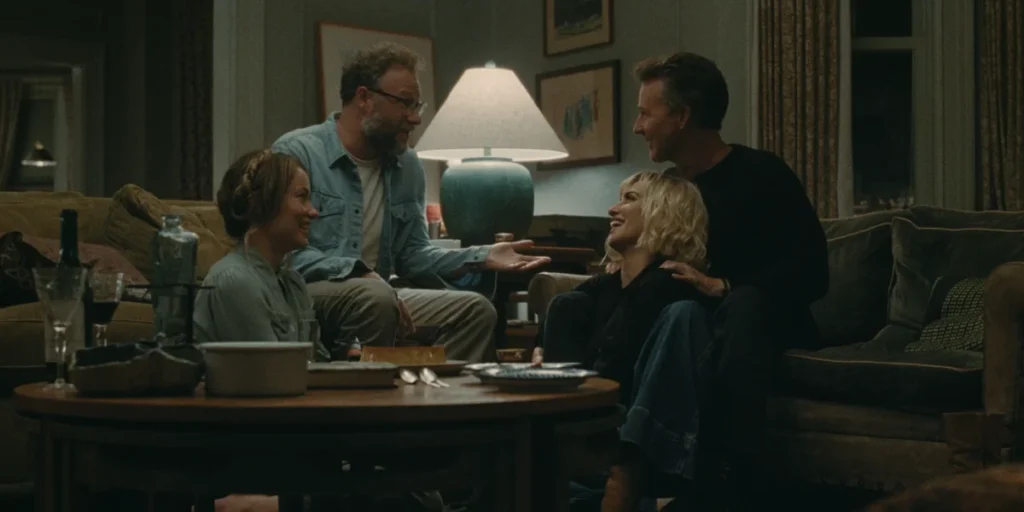
In Kristoffer Borgli’s latest cinematic offering, "The Drama," audiences are plunged into the tumultuous final week before a seemingly perfect wedding, only to witness their meticulously planned future unravel due to a deeply buried secret. The film, clocking in at a brisk 105 minutes, stars a formidable ensemble cast led by Zendaya as Emma and Robert Pattinson as Charlie, a couple on the cusp of marital bliss. Their idyllic world is shattered when a drunken confession game during a wine tasting event, attended by their closest friends, best man Mike (Mamoudou Athie) and maid of honor Rachel (Alana Haim), unearths a revelation so profoundly disturbing it immediately halts the festivities and casts a dark shadow over their impending nuptials. The film delves into the challenging concept of radical acceptance, questioning whether love can truly conquer all when faced with the most unvarnished truths about a partner.
A Wedding Week Thrown into Chaos
The narrative meticulously builds the image of a couple deeply in love and confident in their union. Charlie is seen diligently crafting a heartfelt, humorous wedding speech, while Emma appears to be enthusiastically participating in wedding preparations, from selecting floral arrangements to finalizing the menu. Their chemistry is palpable, and the anticipation for their wedding day is palpable. However, this picture of domestic harmony is abruptly disrupted during an evening intended for lighthearted revelry. The tradition of sharing the "worst thing you’ve ever done" takes a sharp, uncomfortable turn when Emma’s confession proves to be significantly more harrowing than anticipated. This single revelation acts as a catalyst, instantly transforming the atmosphere from celebratory to deeply unsettling.
The immediate aftermath of Emma’s confession is a study in contrasting reactions. Rachel, played with palpable disgust by Alana Haim, is visibly appalled, her shock bordering on revulsion. Mamoudou Athie’s portrayal of Mike, however, reflects a more analytical approach as he attempts to process the information and form an opinion. Robert Pattinson’s Charlie is rendered speechless, his world seemingly imploding. The film powerfully illustrates how a single, devastating piece of information can instantaneously reframe a person’s entire perception of their partner, leaving Charlie grappling with the unsettling reality that his fiancée is not who he believed her to be. With only seven days remaining until they exchange vows, the central conflict emerges: can Charlie reconcile his love for Emma with the profound judgment cast by her past actions? The film poses a critical question: can love survive the revelation of a partner’s deepest, most damaging secret, especially one that predates their relationship?
Exploring Radical Acceptance and Uncomfortable Truths
Director and writer Kristoffer Borgli deliberately avoids providing easy answers to the complex questions raised by Emma’s secret. Instead, "The Drama" utilizes this unsettling revelation as a thematic anchor for a love story that forces audiences to confront uncomfortable truths about human nature and the nature of forgiveness. The film probes the idea that a person’s worst moment should not define them, yet it simultaneously poses the counter-argument: are some actions, or even thoughts, inherently unforgivable? This moral and emotional tightrope walk forms the core of the film’s dramatic tension.
Borgli’s screenplay masterfully depicts the characters’ struggle to return to a semblance of normalcy, a quest that becomes increasingly futile as the weight of Emma’s secret presses down. The initial love between Emma and Charlie is undeniable, but the crack in their foundation widens with each passing moment. Charlie’s insistence on confronting the past and understanding its origins clashes directly with Emma’s steadfast refusal to re-examine or acknowledge her darkest days. This divergence in their approaches—Charlie’s desperate need for resolution versus Emma’s resolute avoidance—creates a palpable sense of frustration and impending doom, with Charlie’s emotional spiral becoming a central driving force of the drama.
A Masterclass in Cinematic Instability
The film’s technical execution plays a crucial role in conveying the pervasive sense of unease and instability. Borgli’s editing and use of point-of-view effectively immerse the audience in Charlie and Emma’s escalating fears and anxieties, demonstrating how the revelation fundamentally alters their perception of cherished memories. Previously innocent interactions are now viewed through a lens of suspicion and doubt, particularly for Charlie. This destabilization is further amplified by the film’s visual language, with striking editing choices and deliberate blocking that highlight the precariousness of their new dynamic.
The editing, described as intentionally destabilizing from the outset, becomes progressively more pronounced as the narrative unfolds. Certain cuts are abrupt and jarring, while others feel deliberately incomplete, mirroring the characters’ unfinished thoughts and unresolved emotional turmoil. This is expertly complemented by an anxiety-ridden and explosive sound design, which serves to place the audience directly in the eye of the storm. The escalating tension, building with each passing moment as the wedding approaches, effectively mirrors the disintegration of Emma and Charlie’s relationship. The film’s ability to elicit such a visceral response from viewers, making them feel as stressed and concerned as the characters, is a testament to Borgli’s directorial prowess, his sharp screenplay, and his innovative editing.
Navigating Sensitive Subject Matter
However, the film’s chosen subject matter is undeniably controversial and is likely to strike a particularly sensitive nerve with audiences, especially in an American context. The fact that such a profound and potentially triggering topic is presented within the framework of a dark comedy, where it serves as the basis for numerous jokes and is underscored by disturbing imagery and sound, could be perceived as irresponsible by some viewers. Borgli, being non-American, may exhibit a lack of nuanced understanding of the subject’s complexities, a deficit that is palpable throughout the film. Some critics might argue that the narrative would have been significantly strengthened had a different, less sensitive secret been employed to explore the film’s thematic concerns.
The responsible and ethical use of sensitive subject matter in art is paramount. When artists choose to delve into such topics, a level of respect and accountability is expected, which, for some, is not adequately demonstrated here. Borgli’s primary focus appears to be on the interpersonal dynamics of the central relationship rather than a deep dissection of the broader social implications of the subject matter. The use of the secret for shock value, while effective in generating tension, risks being deeply triggering for individuals directly or indirectly affected by the real-world issues it represents. This aspect of the film is likely to be the most divisive, prompting significant debate and critical scrutiny.
Stellar Performances Anchor the Film
Despite the challenging nature of the subject matter, "The Drama" would undoubtedly falter without the compelling performances of its lead actors. Zendaya and Robert Pattinson deliver nuanced and complex portrayals that anchor the film and elevate its emotional impact. Pattinson, in particular, embodies Charlie’s inherent quirkiness and neurotic tendencies with an almost effortless grace, suggesting the role was tailor-made for his unique brand of unconsolidated energy. He masterfully navigates Charlie’s internal conflict—the simultaneous state of being madly in love with Emma and deeply repulsed by her secret. Pattinson allows the audience to witness this internal battle manifest physically and emotionally, portraying a man desperately seeking a reason to forgive. His desperation emanates from the screen, creating a deeply empathetic portrayal of a man on the brink.
Zendaya rises to the considerable challenge of portraying Emma, a character grappling with the potential dissolution of everything she has strived for. Emma must be simultaneously likable, potentially dangerous, and enigmatic. Zendaya navigates this complex tightrope with remarkable skill, portraying a woman who has ostensibly clawed her way out of a dark past but has not actively engaged in the necessary work to confront her inner demons. Her character’s disconnection from her past self forces both Charlie and the audience to question the very nature of redemption and whether individuals can truly become productive members of society after experiencing or perpetrating something so profoundly unforgivable. Zendaya imbues Emma with a palpable anguish as she attempts to maintain a semblance of normalcy, constantly reminding Charlie of their love and their capacity to overcome this crisis. Emma may well be Zendaya’s most demanding role to date, and she embraces it fully, allowing the audience to oscillate between empathy, judgment, and the possibility of forgiveness.
A Fierce and Tightly Controlled Chemistry
The on-screen chemistry between Zendaya and Robert Pattinson is nothing short of electric, characterized by a fierce yet tightly controlled dynamic. Every microexpression, every subtle glance, feels like a deliberate choice, open to multiple interpretations and analyses. Borgli wisely provides them with extended scenes, allowing their performances to breathe and their complex characters to truly interact and clash. The inherent conflict between Charlie’s need for understanding and Emma’s refusal to confront her past creates a deeply frustrating, yet compelling, dynamic for both the characters and the audience. However, the sheer strength of Pattinson and Zendaya’s performances ensures that these contrasting decisions are perceived as necessary for each character’s survival, even as they imperil their relationship. The interplay between them is akin to a high-stakes athletic competition, a relentless volley that results in an exceptionally captivating viewing experience.
Adding further depth and nuance to the ensemble are Alana Haim and Mamoudou Athie, who deliver both comedic and dramatic moments as friends navigating differing perspectives on the unfolding crisis. Zoë Winters, a consistently brilliant character actor, once again demonstrates her exceptional understanding of a film’s tone and purpose, portraying the wedding photographer with perfect comedic timing and subtle gravitas. Hailey Benton Gates also makes a notable contribution in her limited but impactful scenes.
The Enduring Question of Forgiveness
As Emma and Charlie face a minor conflict regarding their DJ, who is observed smoking a potentially illegal substance, Emma offers a pragmatic observation: "We could have caught her on her worst day." Charlie’s response, "But you caught her," encapsulates the film’s central thematic concern. "The Drama" is, at its core, an exploration of our capacity for forgiveness and our belief in individuals’ ability to evolve beyond their most egregious mistakes. This is, as the film poignantly illustrates, far easier said than done. The narrative relentlessly probes the question of whether society can achieve "radical acceptance"—embracing an individual for who they are in the present, irrespective of their past.
This is a fascinating and timely question, ripe for narrative exploration, and for the most part, Borgli succeeds in presenting multiple facets of this query, ensuring that "The Drama" will undoubtedly spark heated post-movie discussions. However, the decision to filter this vital debate through the lens of a highly sensitive subject matter, and to utilize it as a source of comedic material, remains a questionable and, for many, a distasteful artistic choice. The film’s ultimate success lies in its ability to provoke thought and debate, even if the path it takes to get there is fraught with controversy.