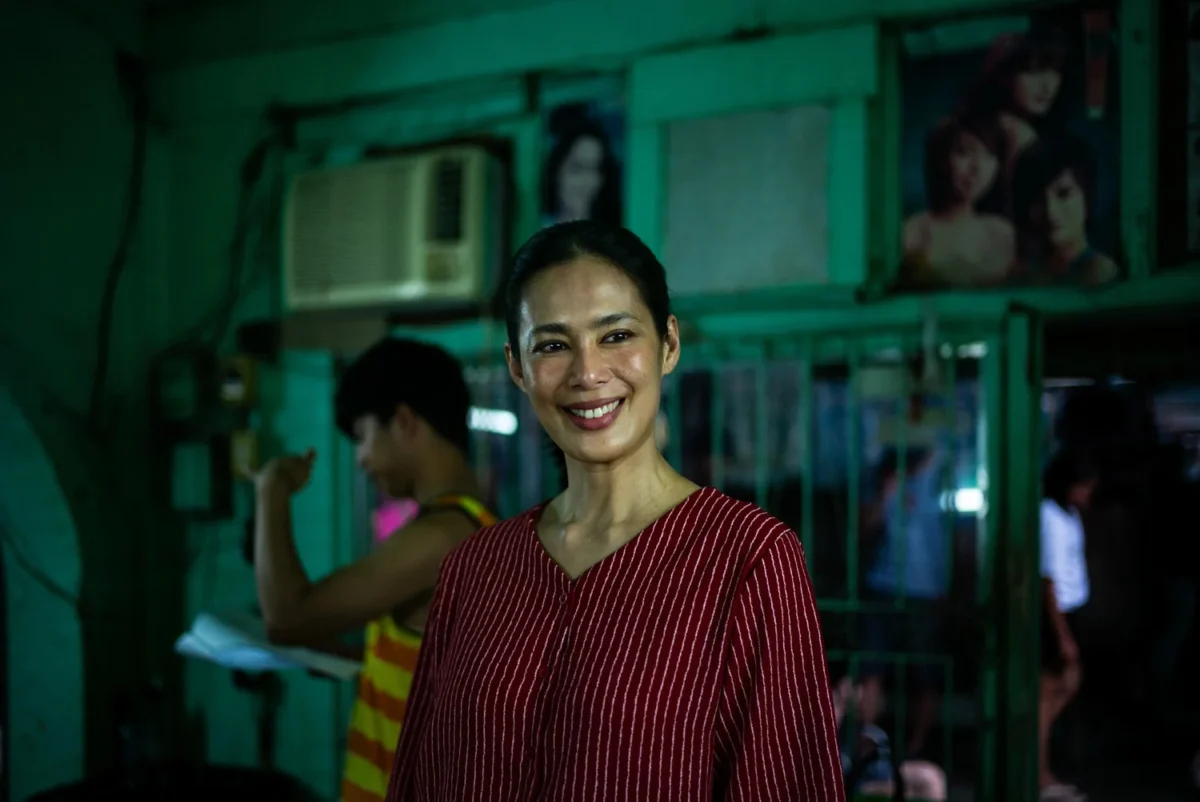
The cinematic landscape of East Asia has frequently explored the poignant realities faced by Filipina domestic workers, a recurring theme that has yielded both critical acclaim and commercial success. Films like Kelvin Tong’s "The Maid" (2005) and Anthony Chen’s Oscar-nominated "Ilo Ilo" (2013) have highlighted the complexities of these narratives, often resonating deeply with audiences. Joining this established tradition is Freddy Tang’s latest directorial effort, "April," a Taiwanese production that delves into the intricate lives of migrant workers and the enduring strength of family ties. Written and directed by Tang, known for his 2023 TV series "Port of Lies," the film features a commanding performance from Angel Aquino, a celebrated actress from the Philippines.
The Premise: A Caregiver’s Dual Burden
"April" centers on its titular character, portrayed by Angel Aquino, a dedicated Filipina caregiver working in Taiwan. April shoulders the immense responsibility of being the primary breadwinner for her family back home, which includes her easygoing husband, Joseph (Paolo O’Hara), and their two bright children, Luisa (Gabby Padilla) and Diwa (Benedix Ramos). The narrative takes a somber turn as April learns that her mother, Maria (Madeleine Nicolas), is gravely ill. Torn between her familial obligations in Taiwan and the urgent need to be by her mother’s side, April faces a difficult dilemma.
Her employers, Ah Gong’s children, Ah Cheng (Kaiser Chuang) and Yun (Tzu-Yu Yu), present a compromise: April may visit her ailing mother, but she must bring Ah Gong, a wheelchair-bound patriarch suffering from dementia, along with her. This arrangement introduces a new layer of complexity, as April must now navigate the care of a vulnerable elder while grappling with her own personal crisis. Adding to the familial drama, Ah Gong’s estranged son, Qi-Wen Lin (Kuwan-Ting Liu), is released from prison and returns to a vastly altered family landscape, facing his own set of challenges and responsibilities.
Socio-Economic Context: The Reality of Labor Export
The film’s narrative is deeply rooted in the socio-economic realities of the Philippines, a nation grappling with the pervasive issue of labor export. For decades, the Philippines has relied heavily on its citizens working abroad to bolster the national economy through remittances. This phenomenon is often attributed to a persistent lack of robust industrial development and a history of governmental policies that have been criticized for their inadequacy in fostering domestic employment opportunities.
Data on Philippine Labor Export:
According to the Philippine Overseas Employment Administration (POEA), in 2023, approximately 1.3 million Overseas Filipino Workers (OFWs) were deployed, sending home an estimated $33.5 billion in remittances, which constitutes a significant portion of the country’s Gross Domestic Product (GDP). This consistent outflow of labor underscores the economic necessity driving many Filipinos to seek employment overseas.
The decision to work abroad is frequently not one of choice but of necessity, driven by poverty and limited opportunities within the Philippines. While these migrant workers are able to provide for their families, the personal cost is often immense, involving prolonged separation and the emotional strain of missing crucial family milestones. "April" subtly, yet powerfully, illustrates this sacrifice, portraying the caregiver as a vital economic engine for her household, often at the expense of her own immediate family’s presence.
Cinematic Tropes and Subversions
The theme of Filipina domestic workers in East Asian cinema has evolved into a recognized subgenre. While these portrayals have often been instrumental in bringing Filipino talent to international attention and exploring themes of displacement and cultural negotiation, they have also faced scrutiny for potentially perpetuating stereotypes. The risk of depicting these women solely as servants, reinforcing existing racial and social hierarchies, is a constant consideration for filmmakers.
"April" appears to navigate this delicate terrain with a conscious effort to transcend simplistic archetypes. Director Freddy Tang, who previously explored the plight of migrant workers in Taiwan in his critically acclaimed 2023 TV series "Port of Lies," brings a nuanced understanding to the subject matter. His previous work, a crime procedural and legal drama, delved into the intricacies of migrant labor, suggesting a familiarity with the multi-dimensional aspects of these lives. This background implies that Tang is likely to present his characters with depth, avoiding the pitfalls of one-dimensional portrayals.
Character Analysis: April’s Complex Humanity
Angel Aquino’s portrayal of April is central to the film’s success in humanizing its protagonist. April is depicted not as a flawless martyr, but as a multifaceted individual. She is shown to be doting and caring, yet also impatient, overbearing, and at times, out of touch with the evolving dynamics of her family in Taiwan. Having been away for years, she retains a strong sense of authority, which can sometimes clash with her children’s growing independence.
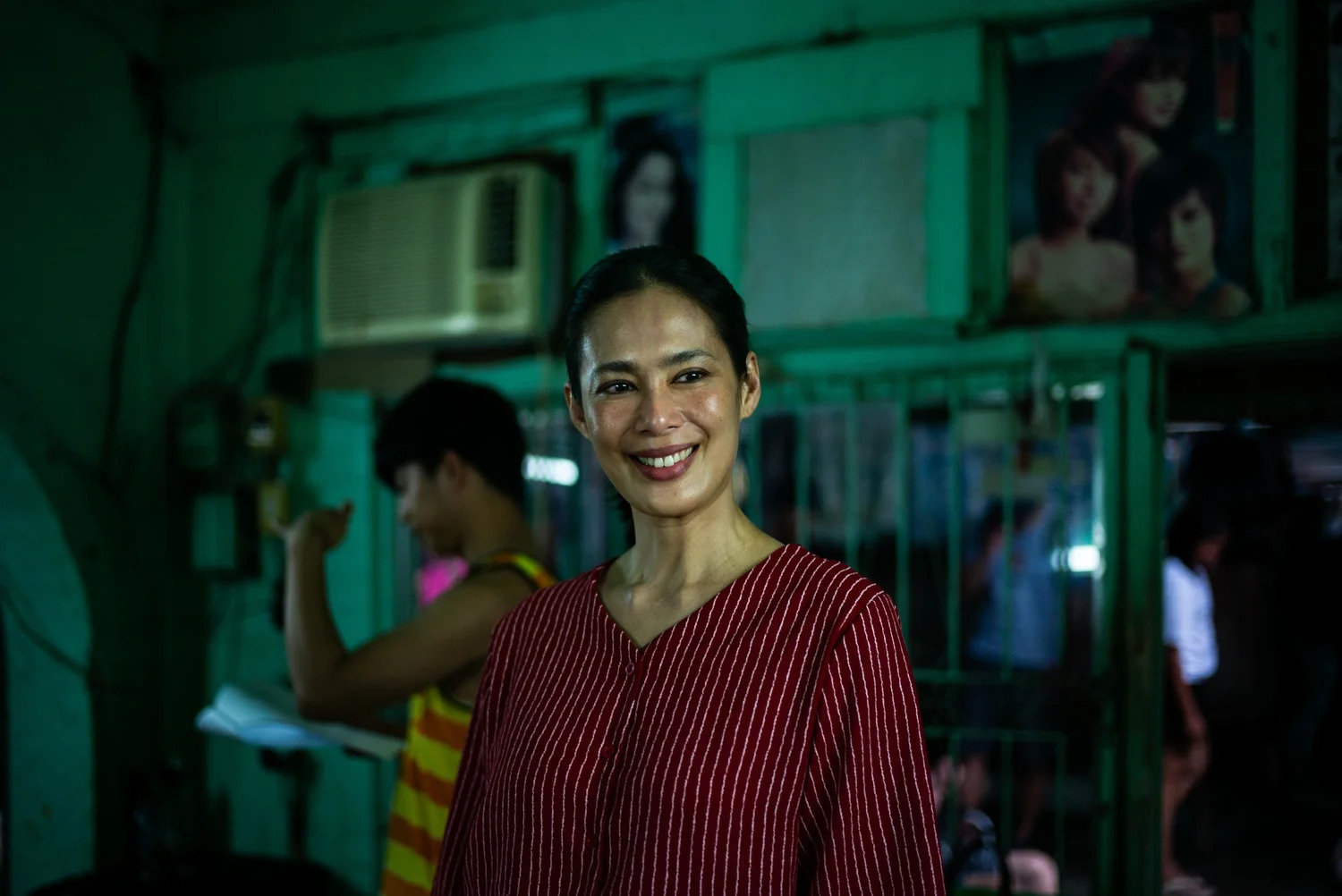
However, her imperfections do not detract from her underlying strength and deep love for her family. April is characterized by her assertiveness; she voices her opinions and desires, even if it means potentially straining relationships. Yet, her resolve is matched by her capacity for empathy. When she finally grasps the passions and sorrows of her husband and children, she responds with immediate understanding and unwavering support. Her presence itself serves as the family’s bedrock, a silent testament to her enduring influence and commitment, often conveyed without the need for raised voices.
Aquino’s performance is lauded for its gravitas and restraint, effectively carrying the film and holding its various narrative threads together. Her ability to imbue April with such profound depth ensures that the character’s presence is felt even when she is not on screen. Furthermore, Aquino’s command of Hakka, a Taiwanese dialect, adds an authentic layer to her performance, demonstrating a commitment to cultural nuance and immersion.
Parallel Narratives and Supporting Performances
While April’s story is the central focus, the film also dedicates significant screen time to the parallel arc of Qi-Wen Lin, played by Kuwan-Ting Liu. This narrative thread, which begins with his release from prison, offers a compelling counterpoint to April’s experiences. Liu delivers a rich and solemn performance, humanizing a character who has faced disappointment from both his family and society, and who is now entangled with unsavory elements. His journey explores themes of redemption and the struggle for a second chance, adding another layer of emotional complexity to the film.
The introduction of Xiu-Mei Zhang, a provincial girl portrayed by Esther Huang, brings a promising romantic element to Qi-Wen’s storyline. Huang’s performance is described as stellar, depicting a resilient and formidable character who takes charge of her relationship, even to the extent of driving a truck, a visual metaphor for her strength and agency.
The film also dares to subvert expectations regarding the portrayal of Ah Gong. Instead of opting for predictable "fish out of water" comedic scenarios where Ah Gong reacts to Filipino culture, the narrative wisely keeps him largely in the background, allowing his presence to be felt through his quiet struggles with dementia. Xiao-Xiong Zhang delivers a powerful and heart-wrenching performance in a pivotal, emotionally charged sequence. His ability to convey profound sadness and vulnerability solely through his facial expressions and tears is a testament to his skill. The inclusion of veteran actress Lui Manansala as a spiritist in the same scene adds an intriguing, almost mystical dimension to the unfolding events, suggesting that Ah Gong’s journey is not the only one with unexpected turns.
Narrative Cohesion and Thematic Resonance
The screenplay is commended for its ability to skillfully tie together disparate plotlines and tones. In conjunction with Hsiu-Hsiung Lai’s crisp and clear editing, the film gracefully juggles multiple narratives, genres, and tonalities, often within the same scene. This seamless integration is exemplified by a moment where a tense standoff transitions into a lighthearted conversation about pork knuckle noodles, showcasing the film’s versatility and its capacity to evoke a wide range of emotions.
The supporting cast, comprised of both Filipino and Taiwanese actors, is acknowledged for their contributions, enriching the film with their unique quirks and modulations, adding to both the mirth and the pathos of the story. Their collective performances enhance the overall tapestry of the film, making it a more complete and resonant viewing experience.
Broader Impact and Implications
"April" emerges as a significant contribution to the discourse surrounding migrant workers and the complexities of family dynamics in a globalized world. By depicting the Filipina caregiver not as a symbol or a judgment of a people, but as an individual with her own struggles, desires, and resilience, the film offers a profound and humanizing perspective. It challenges simplistic narratives and encourages audiences to look beyond nationality and social roles to recognize the shared humanity of its characters.
The film’s success in East Asian cinema, particularly in Taiwan, where the narrative is set, also highlights the growing interest in and appreciation for stories that reflect the experiences of migrant communities within the region. Such cinematic explorations are crucial for fostering empathy, understanding, and a more nuanced appreciation of the diverse populations that contribute to the fabric of modern East Asian societies. "April" stands as a testament to the power of cinema to illuminate these vital, often overlooked, human stories.