
The Johnson Valley in Southern California, typically a quiet expanse of arid public land, undergoes a radical transformation every January. A thick, semi-permanent dust cloud now hangs over the horizon, signaling the presence of Hammertown—a temporary city that rises from the desert floor to host the King of the Hammers (KOH) off-road racing series. What began two decades ago as a grassroots wager between a small group of friends has matured into an international spectacle, drawing over 80,000 attendees and 750 competitors to a landscape that blends the rugged utilitarianism of "Mad Max" with the corporate scale of a major sporting event.
This year’s iteration of the event, which spans 16 days, highlights the staggering growth of the off-road industry and the increasing complexity of the competition. The centerpiece of the series, the Race of Kings, has solidified its reputation as the most grueling single-day off-road race on the planet. Combining the high-speed demands of desert racing with the technical precision of rock crawling, the 2024 course stretched 245 miles across some of the most unforgiving terrain in the United States. The difficulty was so pronounced that out of a field of elite drivers, only two teams managed to cross the finish line within the mandated 14-hour time limit.
The Evolution of the Ultra4 Series and Hammertown
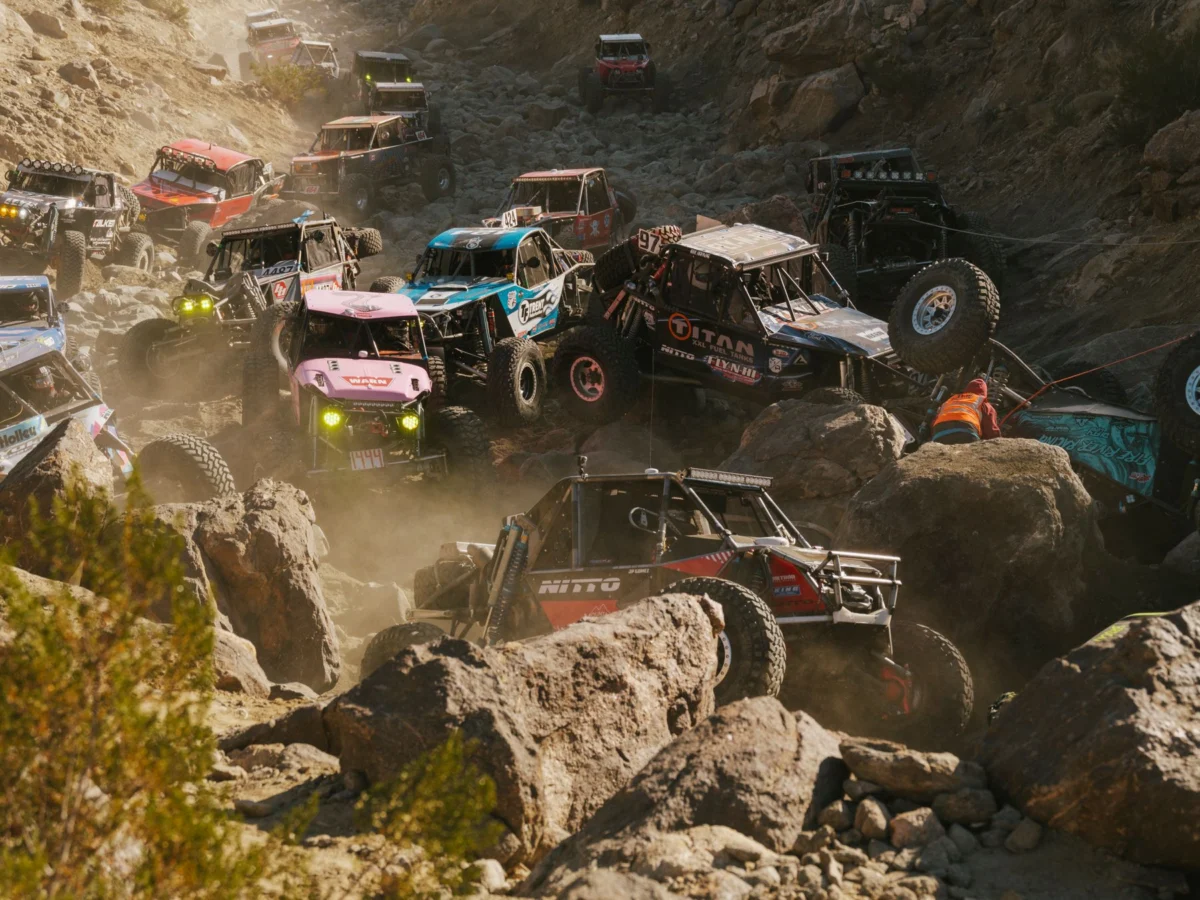
The King of the Hammers is the flagship event of the Ultra4 racing series, a category defined by its lack of restrictions on vehicle design, provided they are capable of four-wheel drive. This "unlimited" class has birthed engineering marvels: custom-built rigs that cost upwards of several hundred thousand dollars, featuring sophisticated suspension systems, massive tires, and engines capable of producing over 800 horsepower. These vehicles must navigate high-speed lake beds at speeds exceeding 100 mph before transitioning immediately into "the hammers"—a series of narrow, boulder-strewn canyons with names like Chocolate Thunder, Jackhammer, and Sledgehammer.

The growth of the event reflects a broader surge in the off-road vehicle market. According to data from Grand View Research, the global off-road vehicle market is currently valued at over $22 billion, driven by a post-pandemic boom in outdoor recreation and technological advancements in Utility Task Vehicles (UTVs) and All-Terrain Vehicles (ATVs). This commercial success is visible in the "vendor village" at the heart of Hammertown, which features major corporate sponsorships from brands like Monster Energy, Ford, and Toyota. The presence of factory-backed teams underscores the event’s transition from a niche hobby to a critical marketing platform for automotive manufacturers.
Historical Context: From the "OG 13" to a Digital Audience
To understand the current scale of King of the Hammers, one must look back to its inception in 2007. The event was founded by Dave Cole and Jeff Knoll, who invited 12 other friends—now known as the "OG 13"—to compete for a case of beer. There were no spectators, no sponsors, and no prize money. The goal was simply to see who could navigate the most difficult trails in Johnson Valley in a single day.
By 2008, the race had become an official event, and its popularity exploded alongside the rise of social media. The visual nature of the sport—massive trucks precariously balanced on vertical rock faces—proved perfect for the digital age. Organizers report that the 2024 event reached a global audience of 1.2 million viewers through online streaming platforms. This digital reach has allowed the event to maintain its "underground" feel while commanding the viewership numbers of traditional televised sports.
Chronology of Key Milestones
- 2007: The inaugural "informal" race is held among 13 friends.
- 2008: The first official King of the Hammers race takes place with 43 competitors.
- 2012: The introduction of the "Everyman Challenge," allowing for more stock-class vehicles to compete, broadening the participant base.
- 2016: Bailey Campbell, a member of the prominent Campbell racing dynasty, becomes the first woman to finish in the top five of the Race of Kings at age 19.
- 2020: The event expands to a multi-week format to accommodate various vehicle classes, including motorcycles and UTVs.
- 2024: The 245-mile course is designated as the most difficult in history, with a sub-1% completion rate for the main event.
The Socio-Political Landscape of the Desert
Beyond the mechanical and athletic feats, King of the Hammers serves as a unique cultural crossroads. The temporary city of Hammertown operates with its own set of social norms, centered on a fierce devotion to personal autonomy and the preservation of public land access. The Bureau of Land Management (BLM) oversees the Johnson Valley Off-Highway Vehicle (OHV) Area, and the event’s continued existence relies on a complex "Shared Use" agreement with the U.S. Marine Corps, which utilizes the adjacent land for training exercises.

The vehicles themselves often serve as canvases for personal and political expression. While the "shit-box" culture—characterized by older, dented Toyota pickups and Jeeps held together by welds and stickers—remains a staple of the community, these rigs are frequently adorned with symbols of American individualism. Flags and vinyl wraps featuring the Gadsden "Don’t Tread on Me" design, Second Amendment slogans, and various patriotic motifs are ubiquitous. This focus on "breaking, fixing, and breaking again" is not just a mechanical cycle but a philosophical one, representing a desire to operate outside the constraints of urban life and modern regulation.
Technical Demands and the "Shit-Box" Aesthetic
Despite the influx of million-dollar rigs, the heart of the off-road community remains rooted in the "built, not bought" ethos. This is exemplified by the first-generation Toyota pickups and 4Runners that populate the campsites. These vehicles, often stripped to their bare essentials and fitted with internal roll cages, are prized for their durability and simplicity.
In these "shit-boxes," as they are affectionately known, the interiors are a maze of aftermarket switches and levers. These controls manage critical components such as:
- Air Lockers: Pneumatic systems that lock the differentials to ensure all wheels spin at the same speed for maximum traction.
- Winches: Essential for pulling vehicles up vertical obstacles that are impossible to drive.
- Transfer Case Levers: Often modified to "dual cases" to provide ultra-low gearing for slow-speed rock crawling.
The contrast between these weathered, battle-scarred Toyotas and the pristine, logo-laden professional rigs highlights the two-tiered nature of the modern off-road scene. Professional teams bring semi-trucks filled with spare parts and full-time mechanics, while amateurs rely on the "Hammertown spirit"—a communal willingness to lend a tool or a hand to a stranger to get them back on the trail.

Broader Economic and Environmental Implications
The success of King of the Hammers has significant implications for the local economy of the Morongo Basin. San Bernardino County officials note that the influx of 80,000 visitors provides a massive seasonal boost to gas stations, grocery stores, and hotels in nearby Lucerne Valley and Yucca Valley. However, this scale also brings challenges in waste management, emergency services, and environmental stewardship.
The organizers, Hammerking Productions, have implemented strict "Leave No Trace" policies to ensure the long-term viability of the Johnson Valley OHV area. The sustainability of the event is a frequent topic of discussion among stakeholders. As the off-road industry moves toward electrification—with companies like Rivian and Jeep introducing electric models—the future of King of the Hammers may eventually include "e-Hammers" classes, though the current culture remains firmly rooted in the roar of internal combustion engines.
Conclusion: The Future of the Hammers
As King of the Hammers enters its third decade, it stands as a testament to the enduring appeal of the American frontier spirit. It is an event that has successfully navigated the transition from a private gathering to a global media property without losing its grit. The 2024 race, with its near-impossible completion rate, suggests that the organizers have no intention of softening the challenge to cater to a broader audience.
The enduring legacy of the event is perhaps best summarized by the community it fosters. Whether it is a professional driver like Bailey Campbell continuing a family legacy or an amateur mechanic nursing a 30-year-old Toyota through the rocks, the common thread is a preoccupation with testing the limits of man and machine. In the dust of Johnson Valley, the finish line is often secondary to the act of simply showing up to the desert to see what breaks first.