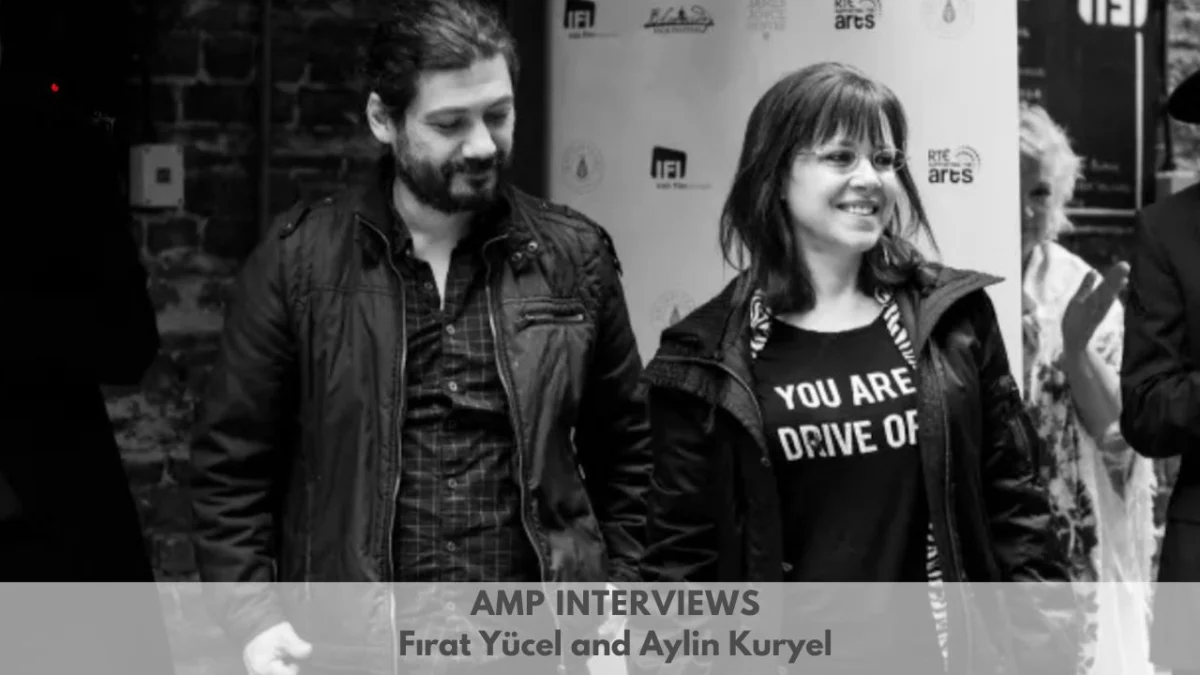
Fırat Yücel, a documentary producer and editor whose creative endeavors bridge Amsterdam and Istanbul, stands at the forefront of a new wave of politically charged filmmaking. As the curator of the video series Altyazı Fasıltı: Free Cinema, an initiative of the Altyazı Cinema Association dedicated to supporting at-risk political filmmakers, Yücel champions collective creation and resistance against censorship. His recent feature documentary, "Happiness," co-directed with Aylin Kuryel, has garnered significant attention, particularly following its screening at the Thessaloniki Film Festival. This article delves into the motivations, methodologies, and broader implications of "Happiness," exploring its unique engagement with contemporary issues of violence, digital media, and the pervasive influence of image politics.
Contextualizing "Happiness": A Response to Witnessing Genocide
The genesis of "Happiness" is deeply rooted in a profound and urgent response to the ongoing genocide of the Palestinian people, a tragedy being broadcast in real-time through digital platforms. Fırat Yücel articulates this impetus with stark clarity, rejecting the notion of filmmaking as therapy. "We do not think of filmmaking as a form of therapy," Yücel states. "Rather, we felt an urge to respond to the fact that the genocide of the Palestinian people has been livestreamed." This perspective is amplified by the observations of writer Susan Abulhawa, who posits that Palestinians may be uniquely burdened with the expectation to witness their own destruction while simultaneously being policed in their expression of grief and resistance.
The filmmakers contend that the global social media populace finds itself in an unprecedented historical position: expected to observe a genocide and then simply resume their daily lives as if unaffected. This observation led directly to the film’s chosen aesthetic and thematic approach. "That is why we felt that desktop cinema – a form that claims to capture the reality of our relationship to digital screens – was the most fitting way to reflect on this condition," Yücel explains. The film’s engagement with the livestreamed genocide is not an act of self-serving catharsis but a direct confrontation with how such devastating events permeate and impact individual and collective consciousness. The very ability to remain detached and functional in the face of online atrocities is presented as a more profound cause for concern, a symptom of a deeply unsettling societal numbness.
The Video Essay and Desktop Documentary: Tools for Critical Inquiry
"Happiness" employs the video essay format, a deliberate choice that allows for the fluid integration of literary elements into its narrative structure. Yücel elaborates on this choice, noting that while the film features a diary, it transcends individual experience to become a "collage of collective experiences." This format effectively captures the myriad individuals caught between engagement and apathy, both in physical spaces and behind their digital screens, mirroring a shared mental state.
The essayistic approach was crucial for bridging local and global perspectives, moving beyond a narrow focus on individual introspection. "We weren’t interested in portraying the interior guilt of a comfortable, middle-class protagonist; that narrative held no interest for us," Yücel emphasizes. Instead, the film constructs a character who embodies the precarious existence of a migrant in Amsterdam, grappling with the fear of deportation while feeling an inescapable pull to bear witness to unfolding atrocities abroad. This character inhabits a liminal space, existing in a state of perpetual tension between sleep and wakefulness, between physical presence and a yearning for elsewhere. The video essay, with its inherent flexibility and capacity for nuanced exploration, provided the ideal framework to address these complex political realities.
Aylin Kuryel further illuminates the significance of these chosen forms. The video essay and desktop documentary are not merely illustrative tools; they provide a space for critical thought and image-based reasoning. They allow for the inclusion of research processes, moments of hesitation, and the questioning of ideas and methodologies directly within the film’s fabric. "Desktop documentary is also about re-seeing and reinterpreting what is there through the interface itself, turning browsing into a form of inquiry," Kuryel notes. The act of navigating digital content, with its cursor movements and opening and closing windows, becomes a visual metaphor for a trajectory of attention, illustrating how one image can lead to another, and one thought can unfold into the next. This process encapsulates a state of being "caught between images, between places, between action and paralysis."
Editing as a Dialectic of Passivity and Action
The editing process in "Happiness" is a deliberate reflection of its multi-layered thematic concerns. Yücel describes a "multi-window surface" where the view of police on horseback passing a physical window intersects with the windows of a laptop browser. These spatial and temporal layers are not merely juxtaposed but are presented as transformative entities.
A particularly striking example of this transformative montage is the subversion of a sleep remedy, such as listening to white noise, into a call to action: "let’s make some noise." This represents a "literal conversion of passivity into action." The film also incorporates a layer of dark humor to underscore the inherently political nature of insomnia, reframing it as a societal ailment rather than a purely individual one. The persistent social anxiety of war, Yücel argues, is inescapable, irrespective of efforts to reduce screen time or blue light exposure. This fundamental contradiction forms the bedrock of the film’s "dialectical montage."
The Frantic Rhythm of Late Capitalism and Digital Existence
The film’s accelerated pace is a conscious decision designed to mirror the frenetic flux of images in the digital realm. This rhythm captures the inherent tension between randomness and deliberate intent that characterizes our online experiences. Yücel explains that the film aims to explore the "collision between the algorithms that curate our digital lives and our own autonomous politics."
The relentless pace is intended to echo the "rhythmic synchronicity of late capitalism," where the constant barrage of consumer advertisements moves in lockstep with the destructive campaigns of imperialist expansion. Navigating this complex and overwhelming sensory and political landscape necessitates a similarly relentless cinematic rhythm.
Intertwined Realities: Personal Anxiety and Global Violence
The connection between personal anxiety and global political violence is not presented as an external linkage but as an already existing condition that the film seeks to illuminate. Aylin Kuryel elaborates, stating, "What is often framed as personal anxiety is, in fact, produced within broader social and political structures." Drawing on the work of Sara Ahmed, Kuryel highlights how affects like happiness are not private experiences but are shaped by normative social expectations. Similarly, anxiety can be understood as an emergent property of living within these pervasive socio-political conditions.
"Happiness" therefore does not connect two separate realms but rather traces their inherent entanglement. The insomnia, restlessness, and inability to disengage from screens are interpreted not as individual pathologies but as consequences of a world where violence is continuously mediated and circulated. Crucially, these shared affective states also hold the potential to foster collective attention, solidarity, and action. The film acknowledges the inherent tension between the immediate environment and distant events, between the screen and the street, but refrains from presenting them as absolute binary oppositions or mutually exclusive states.
"Happiness" as a Political Act
Both filmmakers unequivocally view "Happiness" as a political film. Aylin Kuryel argues that the film engages with the notion of happiness as a tool of normative social orientation, capable of directing individuals towards specific lifestyles and functioning as a disciplinary mechanism that perpetuates the existing social order. This positions the film as an exploration of the "politics of emotions and politics of images." Furthermore, the act of filmmaking itself is framed as a political response, an attempt to comprehend the present moment without rushing to premature resolutions, fostering a sustained engagement with critical questions and opening new avenues for discussion.
Fırat Yücel offers a broader perspective, asserting, "Ultimately, every film is political." He uses romantic comedies as an example, suggesting they can subtly propagandize heteronormativity and establish relationship norms. "Happiness," he concludes, is fundamentally a film about "image politics," focusing on how individuals react to images and the subsequent actions taken based on those reactions.
Navigating Passive Complicity in the Digital Age
The idea that observing war through screens engenders passive complicity is a complex issue addressed by the filmmakers. Aylin Kuryel acknowledges that such observation can indeed lead to paralysis. However, she redirects the inquiry towards understanding the origins of this passivity. She points out that images and information are not passively consumed; they are actively filtered, prioritized, suppressed, and sometimes deliberately obscured by commercial and complicit media platforms. What appears as passive consumption is often shaped by these infrastructures, influencing what is made visible, what is hidden, and how attention is directed.
Drawing on the work of Nicholas Mirzoeff, Kuryel also highlights the emerging capacity to "see in the dark"—to synthesize fragmented images and testimonies to construct a more comprehensive understanding of realities that elude dominant media narratives. In this light, online circulation can facilitate forms of collective witnessing that, while not always translating into organized action, can be a precursor to it. Therefore, screens are not simply conduits for passivity but contested spaces. They can foster detachment and numbness, but they can also serve as sites for attention, connection, and political activation.
Identifying Institutional Complicity
The film’s reference to "institutional complicity in systemic murder" specifically targets Dutch universities that maintain partnerships with Israeli institutions. Yücel explains that these institutions are implicated because they "directly host sites for military technology development." They are seen not only as ideological proponents of occupation but also as providers of critical scientific infrastructure for autonomous drones, surveillance systems, and weapons of mass destruction. Consequently, any university that fails to sever ties with such entities is deemed complicit in systemic violence.
Desensitization and the War of Narratives
Yücel suggests that a desensitization to wars and genocides in West Asia and Africa existed among Western audiences even before the current level of media saturation. He frames the contemporary landscape as a battleground between state propaganda and grassroots counter-propaganda. Independent media and individual dissemination of information can, and have, catalyzed global movements, citing historical examples like the Vietnam War and contemporary anti-genocide protests for Palestine.
However, when "imperialist, pro-war state propaganda takes over," and images of atrocity are disseminated by entities like the IDF, the sheer volume and intensity of these images can become paralyzing. The public’s sense of powerlessness, Yücel argues, arises not from sharing "images from below" but from the experience of having those images "violently imposed on them from above."
The Responsibility of Filmmakers
Both Yücel and Kuryel affirm that filmmakers bear a responsibility when engaging with real-time political crises. Aylin Kuryel states unequivocally, "Yes, in the sense that any publicly active position carries responsibility." This underscores the ethical imperative that accompanies the creation and dissemination of media in a politically charged world.
Future Endeavors: Watching the Watchers
Looking ahead, the Image Acts collective, of which Yücel is a part, continues its work on both collaborative and individual projects. Their current focus is on a story that examines the act of "watching the watchers." This project centers on a camera constructed from police weaponry, designed to document police violence. This endeavor promises to continue the collective’s commitment to scrutinizing power structures and amplifying marginalized voices through innovative cinematic approaches.