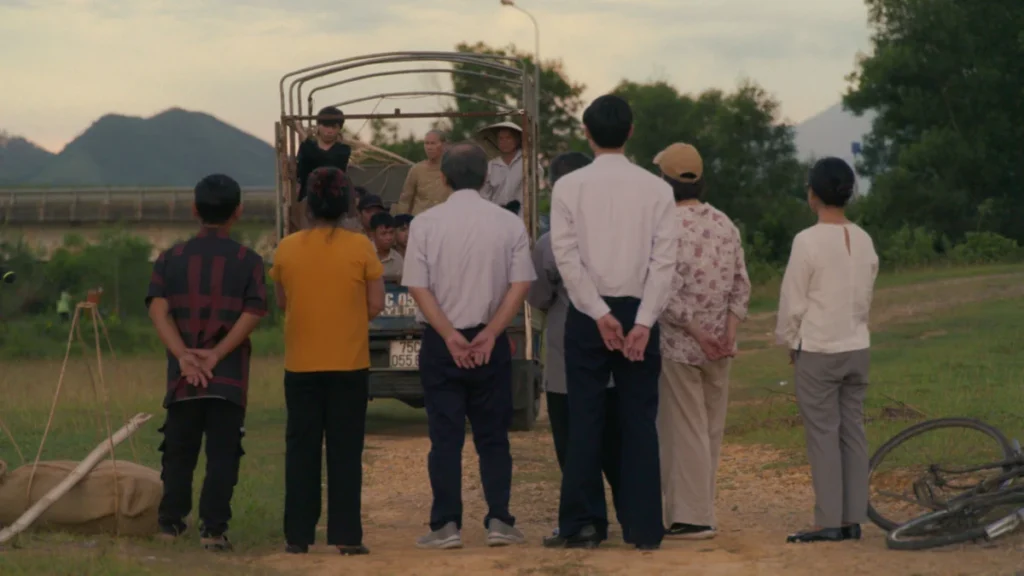
Academy Award-nominated French filmmaker Sylvain Chomet, renowned for his distinctive visual storytelling in films like The Triplets of Belleville, The Illusionist, and The Old Lady and the Pigeons, has brought to the screen A Magnificent Life, a 2D animated feature that serves as a deeply personal homage to the celebrated playwright and filmmaker Marcel Pagnol. The film, released in select theaters nationwide on Friday, March 27, by Sony Pictures Classics, is a testament to Chomet’s lifelong admiration for Pagnol, an admiration that began in his own childhood.
Chomet’s connection to Pagnol dates back to his formative years. "When I was in school, we would read Marcel Pagnol books with the teacher," Chomet recalls. "I read La Gloire de mon père, which is about his childhood memories. I was reading this book about a kid who was 10-years-old and living in the south of France in 1904 while I was 10 years old and living in the North of France many years later. He became like a little friend, and I was fascinated by him and his adventures." This profound childhood connection is the bedrock of A Magnificent Life, with Chomet emphasizing the critical role of the young Marcel in the narrative. "That’s why, when I did the biopic, I decided the child version of Marcel would have to be really important to the story because, growing up, he was very important to me."

A Return to Artistic Roots: The Premise of A Magnificent Life
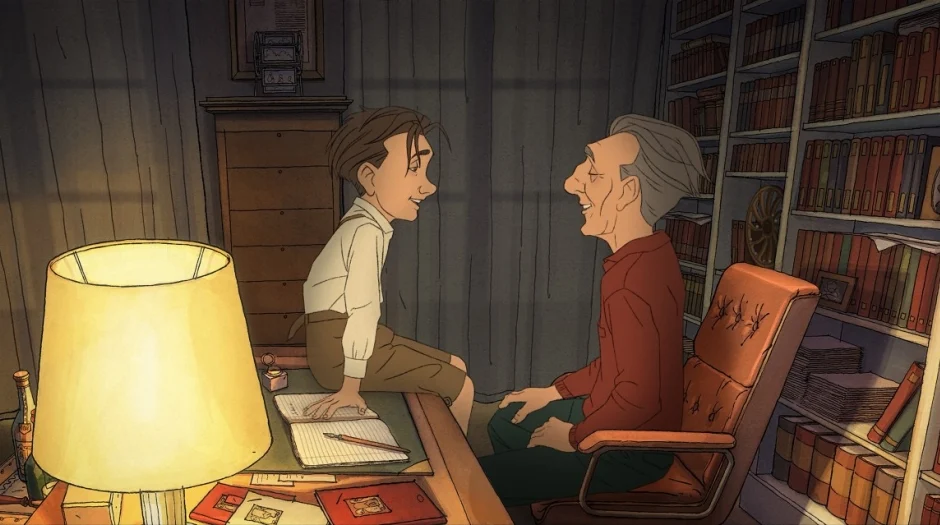
The narrative of A Magnificent Life unfolds in 1955, where a 60-year-old Marcel Pagnol is presented with an opportunity by the editor-in-chief of ELLE Magazine to write a weekly column recounting his childhood. This commission represents a significant moment for Pagnol, offering him a chance to reconnect with his artistic origins as a writer. However, this prospect is shadowed by internal conflict. Pagnol grapples with the encroaching reality of his failing memory and the sting of disappointment from his two most recent theatrical endeavors. These challenges lead him to a profound period of self-doubt, questioning his capacity to continue his creative pursuits.
The film masterfully visualizes Pagnol’s internal struggle through a touch of magical realism. As Pagnol contemplates his dwindling creative fire, the memory of his younger self—"Little Marcel"—materializes as if by enchantment. This spectral yet vivid presence allows the elder Pagnol to embark on a journey back through his own extraordinary life, rekindling cherished encounters and memories that had begun to fade. Together, the older and younger Marcel navigate the rich tapestry of Pagnol’s past, unearthing the experiences that shaped him and reigniting his passion for storytelling.

The Creative Genesis: From Documentary to Animated Spectacle
The journey to a fully animated feature was not the initial plan for A Magnificent Life. The project originated when Marcel Pagnol’s grandson, Nicolas Pagnol, approached Chomet with the idea of a documentary. The initial concept involved incorporating archival footage and limited animation to illustrate moments for which no visual record existed. Chomet recounts, "When I was first approached by Marcel’s grandson Nicolas Pagnol about creating a film about his grandfather, the idea was to make a documentary with archives and only small amounts of animation to convey scenes not available in live-action."
However, a pivotal moment occurred during the early stages of production. Chomet animated a single scene depicting Marcel Pagnol in conversation with the esteemed actor Raimu in a restaurant. The reception to this animated segment was overwhelmingly positive. "I did one scene of Marcel Pagnol talking to Raimu in a restaurant, and, when we showed it to the producers and financers, everybody was going like, ‘We like that. We want more of that.’ So, we decided to just go for a fully animated film." This decisive shift transformed the project into the visually rich animated feature audiences are now experiencing.

Chomet’s Signature Style: A Blend of Classic Influence and Innovation
A Magnificent Life is animated in Chomet’s signature illustrative 2D style, a technique that places a strong emphasis on line work, particularly in the nuanced rendering of character expressions. This approach allows for the conveyance of a wide spectrum of human emotions, from the subtle to the overtly dramatic. Chomet’s artistic lineage is evident, drawing inspiration from the golden age of animation. "I was raised by the classic Disney movies like 101 Dalmatians, which I think is one of the most beautiful art styles," Chomet states. "It was the symbol of beauty to me because you can see how everything is drawn, even in the backgrounds. It’s really a painting in motion."
In a deliberate nod to traditional animation techniques, Chomet employed an innovative method to capture authentic performances, echoing practices used by studios like Disney during the production of classics such as The Little Mermaid, Snow White, and Sleeping Beauty. "It’s the first time I’ve tried this, but we hired professional actors, separate from our voice actors, to dress in costume and act out the scenes," Chomet explains. "We filmed them on a greenscreen and sent the videos to our animators. It’s not rotoscoping, but we’d use those videos to direct the scenes and show the animators how we want the characters to move and emote."

This method involved carefully instructing the actors to embody the characters with exaggerated expressiveness. "We also asked the actors to keep in mind that this was an animated movie and to act everything out very clearly with expressive gestures and minimal pauses and no movement if it wasn’t their turn to talk," Chomet notes. "This is a film with a lot of dialogue and a lot of people talking to each other, so I really needed animation that would capture every subtle movement and emotion." The aim was to infuse the animated characters with a profound sense of humanity, mirroring the naturalistic performances of live actors. "It was a way to bring more humanity to the film. It’s a story about dialogues and it’s all about writing."
The fidelity to Pagnol’s original work is paramount. Chomet emphasizes, "Marcel was a very good technician in writing and 80 percent of the dialogues you hear in the film were written by Marcel Pagnol. And every single anecdote – even the way the sheep dies – is real. So, for me, it was very important that I was as faithful to Marcel’s voice and the human language as possible."
Unexpected Discoveries and Subtle Artistry

The transition to a fully animated production yielded serendipitous artistic discoveries. During the sound mixing process, Chomet and his team observed an unintended but captivating visual effect: a subtle vibration in the eyes of the characters and the lines on their faces. "When we were working on sound for the film, I noticed a vibration to the eyes of the characters and the lines on the face," Chomet shares. "It’s very small and we weren’t trying to make that happen, but when our team saw it we all decided to keep it because it made the face and the eyes feel alive. There’s always a bit of life there and it makes it feel like there’s really a brain behind those eyes. In animation, sometimes eyes can look quite dead, and we were impressed to see how this turned out, even accidentally." This happy accident enhanced the expressiveness and perceived sentience of the animated characters.
The expansive nature of animation also allowed Chomet and his team to embed subtle details and personal touches within the film’s backgrounds. These "Easter eggs" are a hallmark of Chomet’s work. "There are scenes with massive amounts of characters, and the audience won’t notice this, but we put a lot of caricatures of our team in those crowds," he reveals. "It’s also my signature to put pigeons everywhere in my films, so that’s something the audience will notice." These hidden elements add layers of charm and personality to the visual landscape.
The Enduring Legacy of Marcel Pagnol and the Power of Animation

For Chomet, the most rewarding aspect of the production was the opportunity to delve deeper into the life of the adult Marcel Pagnol, the figure he had admired since childhood. "When I started on this film, I only knew the little child Marcel Pagnol," he admits. "I didn’t know that much about his adult life. I knew he made some films which I had seen, but I didn’t know how adventurous he was. He didn’t lead the life of a typical writer." The film captures Pagnol at a moment of creative stagnation, but ultimately depicts his resurgence. "But the film also meets him at a point where he’s a bit down. He doesn’t want to make things anymore. And the story is about how he comes back to himself, his child self, and it restores in him a new urge to make things."
Chomet’s ultimate hope for A Magnificent Life is to inspire viewers. "I hope the film inspires viewers to make things, especially animation, and that the animated characters in this film feel just as real, or even more real, than live-action characters," he concludes. "Animation is an amazing art form and if the acting is good, the art is good, and the editing is good, people will believe in its reality."
The film has garnered significant critical attention, earning nominations for an Annie Award and a Lumiere Award. It is produced by Aton Soumache, Ashargin Poiré, Valérie Puech, Lilian Eche, and Adrian Politowski, with production companies What The Prod, Mediawan, Bidibul Productions, and Walking The Dog. Based on Pagnol’s autobiography Confidences, A Magnificent Life stands as a powerful testament to the enduring influence of great artists and the boundless potential of animated storytelling to capture the essence of human experience. The film’s release marks a significant cultural event, inviting audiences to rediscover the world of Marcel Pagnol through the distinctive and evocative lens of Sylvain Chomet.