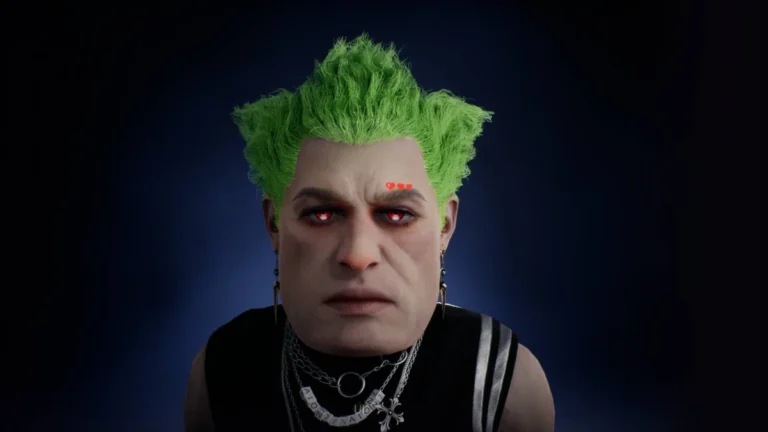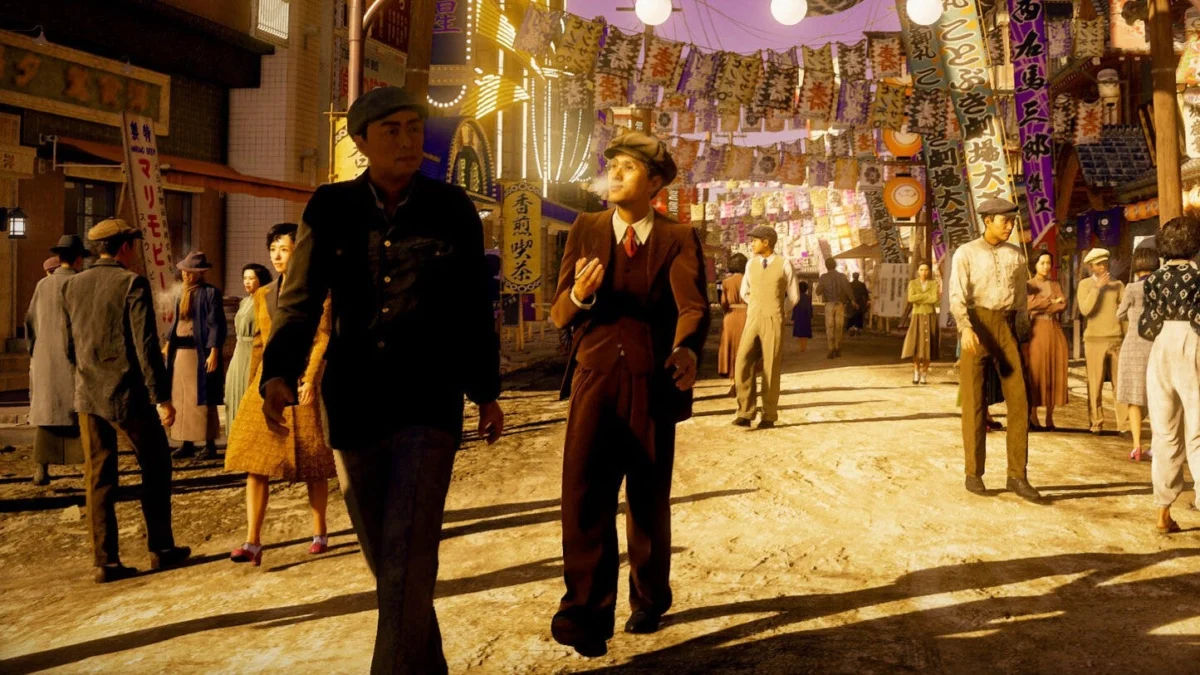
The Xbox Partner Preview event recently served as the stage for a major announcement from Ryu Ga Gotoku (RGG) Studio, the acclaimed developers behind the long-running Like a Dragon and Judgment franchises. During the broadcast, the studio officially debuted Stranger Than Heaven, a project that appears to be one of the most ambitious undertakings in the developer’s history. Moving away from the singular contemporary or singular historical settings of previous titles, Stranger Than Heaven will transport players across five distinct eras of Japanese history, spanning half a century of cultural and social evolution.
RGG Studio executive producer Masayoshi Yokoyama provided initial insights into the project, confirming that the game will feature five different cities across five specific years: 1915, 1929, 1943, 1951, and 1965. This chronological breadth represents a significant departure for the studio, which typically focuses on dense, modern-day urban districts like Kamurocho or Isezaki Ijincho. According to the development team, the goal is to explore periods of Japanese history that are frequently overlooked in the medium of interactive entertainment, providing a narrative tapestry that links the late Taisho era through to the height of the Showa era’s economic miracle.
A Chronological Journey Through Japanese History
The selection of years for Stranger Than Heaven suggests a narrative deeply rooted in the transformative moments of 20th-century Japan. By choosing 1915, 1929, 1943, 1951, and 1965, RGG Studio is positioning the game to cover the rise of Taisho democracy, the impact of the Great Depression, the height of the Pacific War, the struggles of post-war reconstruction under Allied occupation, and the eventual resurgence of Japan as a global economic powerhouse.
In an interview with Xbox Wire following the reveal, Masayoshi Yokoyama emphasized the scale of this vision. "As you can imagine, five cities and five eras is a massive undertaking," Yokoyama stated. "We’re putting a tremendous amount of care into bringing to life these times and places we feel are rarely explored in games. It’s truly a unique experience you can’t get anywhere else."
The technical challenge of creating five distinct versions of Japanese urban environments involves more than just aesthetic changes. For RGG Studio, which prides itself on environmental storytelling, this means recreating period-accurate architecture, fashion, social customs, and even the evolving linguistic nuances of the Japanese language over fifty years. The transition from the horse-drawn carriages and early industrialization of 1915 to the neon-lit, bustling streets of 1965 Tokyo or Osaka requires a level of asset production and historical research that exceeds the studio’s previous historical efforts, such as Like a Dragon: Ishin! or Ryu Ga Gotoku Kenzan!.
Evolution of Combat and Gameplay Systems
While the narrative scope is a primary focus, the Xbox Partner Preview also offered a glimpse into the mechanical evolution accompanying Stranger Than Heaven. The teaser trailer showcased a combat system that appears to build upon the studio’s signature real-time brawler roots while introducing new layers of complexity.
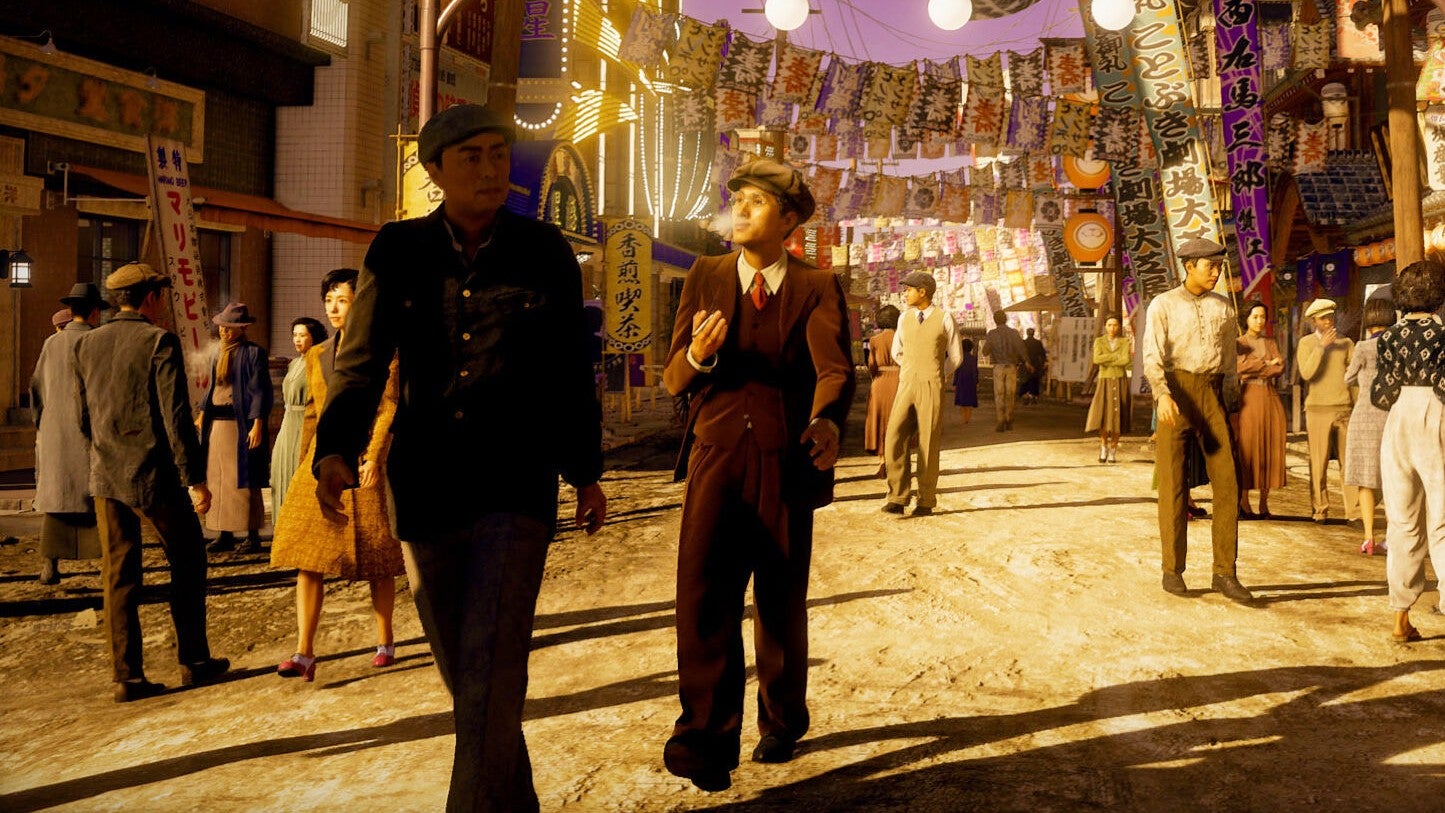
Viewers observed a variety of combat features, including sophisticated grappling mechanics and a heavy emphasis on environmental interaction. The trailer highlighted "one-versus-many" encounters, a staple of the RGG formula, but with refined animations and a broader array of weaponry suitable for the various time periods. Yokoyama hinted that the footage shown was merely a baseline for what the final product will offer. "This is an all-new level of combat design from us, and what you saw is just the tip of the iceberg with much more to be revealed soon," he noted.
The inclusion of environmental interactions suggests that players will be able to utilize the unique settings of each era to their advantage. Whether it is the wooden stalls of a 1920s marketplace or the industrial machinery of a 1940s shipyard, the combat is expected to feel grounded in its specific chronological context. This attention to detail extends to the weaponry, which will likely evolve from traditional blades and improvised tools in the earlier eras to more modern implements as the timeline progresses toward 1965.
The All-Star Cast and Character Legacy
RGG Studio has long been known for its "star system," frequently casting high-profile Japanese actors and utilizing face-scanning technology to bring realistic performances to their games. Stranger Than Heaven appears to continue this tradition, but with a potential twist involving the studio’s own legacy characters.
The trailer featured several figures that bore a striking resemblance to iconic characters from the Like a Dragon series. While the studio has not explicitly confirmed if these are the same characters or ancestors—similar to the approach taken in Like a Dragon: Ishin!—Yokoyama’s comments suggest a significant roster of talent. "We weren’t exactly subtle with some of the footage we chose for this trailer, but let’s just say that players can look forward to an all-star cast," Yokoyama remarked.
This "all-star" approach often serves as a major draw for the studio’s domestic audience in Japan while providing international fans with familiar faces in new roles. The prospect of seeing character archetypes similar to Kazuma Kiryu, Goro Majima, or Ichiban Kasuga navigating the complexities of 1943 or 1951 adds a layer of intrigue to the game’s narrative structure.
Strategic Partnership and Multi-Platform Release
The reveal of Stranger Than Heaven at an Xbox event underscores the strengthening relationship between Sega, RGG Studio’s parent company, and Microsoft. Over the last several years, the Like a Dragon franchise has seen a massive surge in popularity in Western markets, fueled in part by its availability on Xbox Game Pass.
Upon its eventual release, Stranger Than Heaven is confirmed for a wide array of platforms, ensuring maximum accessibility. The game will be available on Xbox Series X/S, Windows PC, and PlayStation 5. Furthermore, the title will be integrated into the Xbox ecosystem via Xbox Cloud Gaming and will be a day-one addition to the Xbox Game Pass library. This strategy aligns with Sega’s recent push for simultaneous global launches, a move that has resulted in record-breaking sales for recent titles like Like a Dragon: Infinite Wealth.

The inclusion of Steam as a launch platform also highlights the studio’s commitment to the PC gaming community, which has become a significant portion of the RGG fanbase since the series moved away from being PlayStation-exclusive.
Industry Analysis: The Significance of Historical Accuracy
Industry analysts suggest that Stranger Than Heaven represents a calculated risk for RGG Studio. While the developer is the undisputed master of the "urban sandbox," managing five different historical settings requires a massive budget and a disciplined development cycle. However, the move is seen as a way to differentiate the studio from other open-world developers who often stick to a single, static time period.
By covering the 1940s and 1950s, the studio is entering a sensitive but narratively rich period of Japanese history. The transition from the militarism of the 1940s to the democratic reforms and "economic miracle" of the 1960s provides a backdrop for themes of redemption, societal change, and the evolution of the Japanese underworld—themes that have always been at the heart of RGG Studio’s writing.
Upcoming Dedicated Broadcast
For fans seeking a deeper dive into the mechanics and world-building of Stranger Than Heaven, RGG Studio has announced a dedicated broadcast scheduled for early May. This event is expected to provide extended gameplay demonstrations, character reveals, and perhaps a clearer explanation of how the game transitions between its five eras.
The broadcast is scheduled for May 6th or 7th, depending on the viewer’s geographic location. The studio has promised that this "deeper dive" will address many of the questions raised by the initial teaser, particularly regarding the narrative link between the disparate time periods.
Conclusion and Broader Impact
The announcement of Stranger Than Heaven, alongside other titles like the Stalker 2: Cost of Hope expansion and Dispatch, marks a significant moment for the mid-2026 gaming calendar. For RGG Studio, it is a statement of intent—a signal that they are willing to push the boundaries of their established formula to create something historically significant and mechanically fresh.
As the gaming industry moves toward increasingly complex narratives and high-fidelity historical recreations, Stranger Than Heaven stands out as a project that attempts to capture the soul of a nation across its most turbulent century. With a proven track record of delivering emotional stories and engaging gameplay, Ryu Ga Gotoku Studio appears poised to deliver a definitive historical epic that bridges the gap between the past and the present of Japanese society.