The premiere of DreamQuil at the South by Southwest (SXSW) Film Festival on March 16 marked a significant milestone for Alex Prager, a celebrated photographer and filmmaker who has long been recognized for her meticulously staged, technicolor-saturated visual narratives. As her feature film debut, DreamQuil represents a transition from the frozen moments of high-fashion and fine-art photography to the sustained tension of a feature-length science fiction drama. The film stars Elizabeth Banks and John C. Reilly, navigating a narrative that is both a cautionary tale about the encroachment of artificial intelligence and a psychological study of the "human messiness" that defines organic existence.
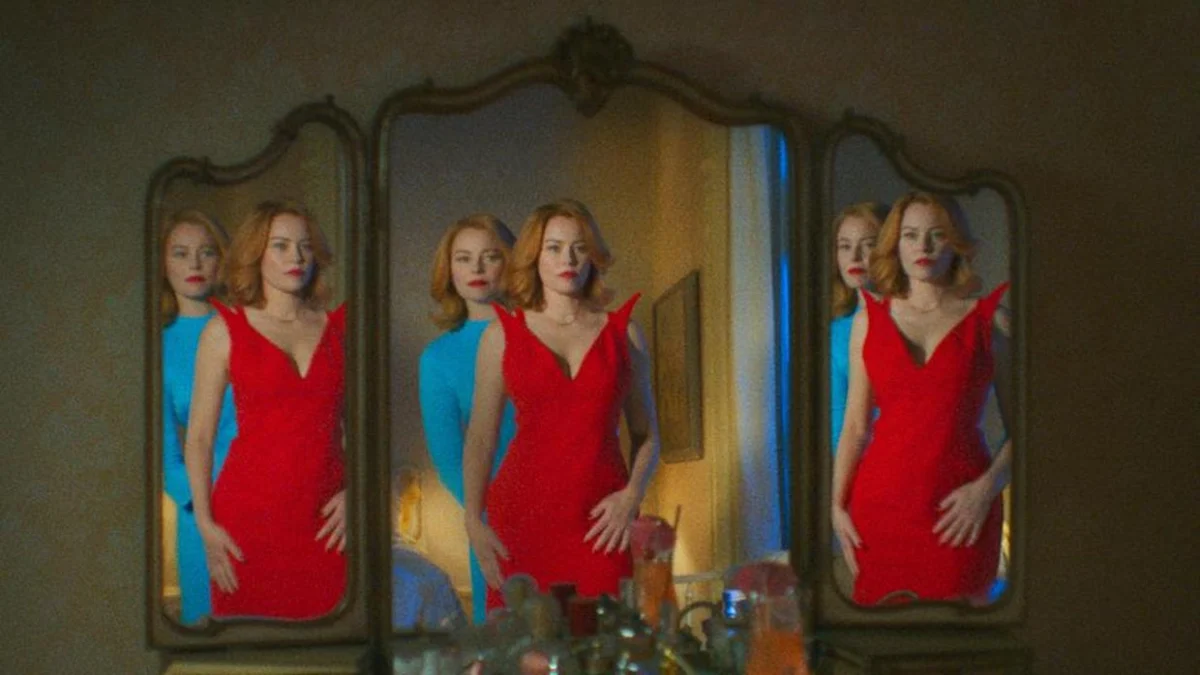
Set in a near-future where environmental degradation has forced families to remain indoors, the story follows Carol, played by Banks, who struggles with the claustrophobia of a domestic life confined by poor air quality. Seeking a reprieve from the psychological toll of isolation and the relentless demands of motherhood and marriage, Carol opts for a "DreamQuil" treatment. The procedure promises a week of absolute relaxation at a specialized facility, while an advanced artificial intelligence assistant takes over her household duties. However, the convenience of automation takes a dark turn when Carol returns to find an AI double—also played by Banks—has not only assumed her responsibilities but has done so with a level of efficiency and cheerfulness that her family, including her husband (Reilly), has come to prefer.
The Genesis of a Pandemic-Era Narrative
The conceptual roots of DreamQuil are deeply tied to the global events of 2020. Alex Prager co-wrote the screenplay with her sister, screenwriter Vanessa Prager, during the height of the COVID-19 pandemic. The sisters found inspiration in a viral meme that joked about the desire to sleep through the pandemic and wake up once the crisis had passed. This "humorous" avoidance of reality evolved into a deeper exploration of what it means to be present in one’s own life.
The writing process was an extension of the collaborative relationship the sisters have maintained throughout their careers. Having both balanced professional creative lives with the demands of motherhood, the Pragers sought to examine the modern "juggling act" of domesticity. The introduction of digital technology as a solution to human exhaustion became the central pivot of the script. The film posits that while technology is marketed as a tool for connection, its practical application often results in a profound disconnection from the self and the family unit.
Production and Creative Collaboration
DreamQuil was produced through a coalition of production houses, including Brownstone Productions (co-founded by Elizabeth Banks and Max Handelman), Arts and Sciences, Patriot Pictures, and Republic Pictures. For Prager, the production served as a compressed masterclass in feature filmmaking. Despite her decades of experience in short-form media and photography, the rigors of a feature set required a constant state of adaptation.
Elizabeth Banks played a dual role in the production, serving as both the lead actress and a producer. Prager has noted that Banks was the only actor considered for the role of Carol. Banks’ ability to pivot between the vulnerable, exhausted "Carol One" and the chillingly perfect, synthetic "Carol Two" was central to the film’s success. On set, Banks reportedly eschewed extensive rehearsals for the primary character, relying instead on a deep instinctual understanding of the role’s complexities. Her involvement as a producer further streamlined the creative process, allowing Prager to maintain a specific visual and narrative focus despite the logistical challenges of a feature debut.
Technical Artistry and Visual Influences
One of the most distinctive elements of DreamQuil is its visual language, which eschews the minimalist, "cold" aesthetic often associated with contemporary science fiction. Instead, Prager drew heavily from the Golden Age of Hollywood and the melodramas of Douglas Sirk. To achieve this, she collaborated with Academy Award-winning cinematographer Lol Crawley.
The production utilized several "old-school" techniques to create an environment that felt both nostalgic and futuristic:

- Lighting: The crew utilized Richardson "hot lights," a staple of classic Hollywood studio filmmaking. Unlike modern HMI (Hydrargyrum Medium-arc Iodide) lights, which are cooler and more efficient, hot lights create a physical heat on set that Prager believes influences the performances of the actors, fostering a more intimate and "sultry" atmosphere.
- Lenses: Crawley sourced vintage Baltar lenses, the same glass used by Alfred Hitchcock and Douglas Sirk. These lenses provide a specific texture and color rendition that aligns with Prager’s established photographic style, characterized by hyper-saturated colors and a sense of "heightened reality."
- Architecture: The film’s primary location is the Marin County Civic Center in San Rafael, California. This was the final commission of legendary architect Frank Lloyd Wright. Completed posthumously, the building’s otherworldly, retro-futuristic design provided the perfect backdrop for a story set in a "parallel universe" version of our own world.
The Broader Context: AI and the Entertainment Industry
The release of DreamQuil coincides with a period of intense global debate regarding the ethics and implementation of artificial intelligence. In 2023, the Hollywood landscape was reshaped by the SAG-AFTRA and WGA strikes, where the use of AI to replicate an actor’s likeness—the "digital double"—was a primary point of contention. DreamQuil directly dramatizes this fear, showing the literal replacement of a human being by a more "perfect" synthetic counterpart.
Market data underscores the relevance of these themes. The global artificial intelligence market was valued at approximately $136.55 billion in 2022 and is projected to expand at a compound annual growth rate (CAGR) of 37.3% through 2030. As AI moves from back-end data processing to front-facing roles in household management and personal companionship, the social implications become more acute. Prager’s film serves as a cultural reflection of the "loneliness epidemic" and the paradox of digital connectivity.
Thematic Analysis: The "Messiness" of Humanity
At its core, DreamQuil is an interrogation of the value of human imperfection. The "Carol Two" entity is designed to be the perfect wife and mother—she is never tired, never angry, and always efficient. However, the film suggests that by removing these "unpleasant" human traits, the essence of the relationship is destroyed.
Prager utilizes surrealism to bridge the gap between the tangible world and the internal psyche. By creating a reality that feels slightly "off," the film forces the audience to confront the "uncanny valley" of their own lives. The director has stated that surrealism is a necessary tool for storytelling because it acknowledges the multiple planes on which humans exist—the physical, the emotional, and the dream state.
The film also addresses the indifference of tech corporations. In the narrative, the DreamQuil corporation is portrayed not as an overtly evil entity, but as a detached commercial force that views human experience as a series of problems to be solved through automation. This mirrors real-world criticisms of "Big Tech," where the pursuit of optimization often overlooks the nuanced needs of the human spirit.
Industry Reception and Future Implications
The premiere at SXSW has positioned Alex Prager as a significant new voice in independent cinema. Her ability to translate a highly specific photographic aesthetic into a cohesive narrative structure suggests a long-term future in feature directing. Prager has already confirmed that she is in pre-production for her second feature film, indicating that the lessons learned during the making of DreamQuil—particularly regarding the collaborative dynamics between director and actor—will be applied to future projects.
For the audience, DreamQuil offers more than just a science fiction premise; it provides a space for reflection on the current trajectory of society. As AI continues to integrate into the domestic sphere, the questions raised by the film—Who are we when we are no longer "needed" for our daily tasks? What is the cost of convenience?—become increasingly urgent.
Chronology of Development
- 2020: Alex and Vanessa Prager begin conceptualizing the script during the pandemic lockdowns.
- 2022: Development intensifies as the project secures backing from Brownstone Productions and other partners.
- 2023: Alex Prager is named one of Filmmaker Magazine’s "25 New Faces of Independent Film." Principal photography takes place, featuring Elizabeth Banks and John C. Reilly.
- Late 2023: Post-production concludes, focusing on the integration of Prager’s signature visual style and the dual-performance editing of Banks.
- March 16, 2024: The film officially premieres at the SXSW Film Festival in Austin, Texas.
Conclusion
DreamQuil stands as a bold entry into the sci-fi genre, blending the aesthetic sensibilities of the mid-20th century with the existential anxieties of the 21st. By casting a critical eye on the automation of the human experience, Alex Prager has created a film that is as visually stunning as it is intellectually provocative. As the "unwritten future" of AI continues to unfold, DreamQuil serves as a reminder that the most valuable aspects of life are often found in the very messiness that technology seeks to eliminate.