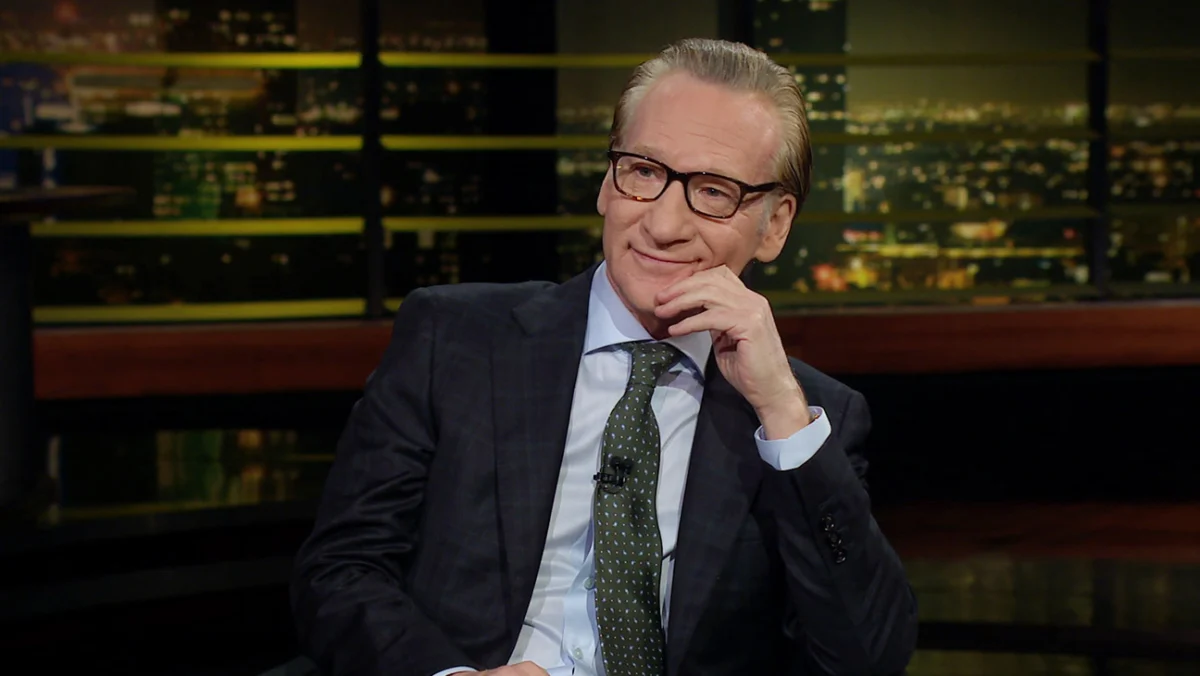
The John F. Kennedy Center for the Performing Arts has officially announced that Bill Maher, the provocative and long-standing voice in political satire, will be honored with the 27th Mark Twain Prize for American Humor. This confirmation on Thursday, following an earlier report in The Atlantic that was vehemently denied by members of former President Donald Trump’s administration as "fake news," solidifies Maher’s place among the nation’s comedic legends. The ceremony is slated to take place on June 28 at the prestigious Washington D.C. arts institution, with the program set to premiere exclusively on Netflix at a later, yet-to-be-announced date.
The announcement brings a definitive end to a week of unusual public drama surrounding the award. Just days prior, an Atlantic article suggesting Maher as the recipient sparked a swift and pointed rebuttal from key figures within Trump’s orbit. White House press secretary Karoline Leavitt explicitly stated, "This is fake news. Bill Maher will NOT be getting this award," while White House Communications director Steven Cheung echoed, "Literally FAKE NEWS." This episode, unfolding in the highly charged political climate of Washington, underscored the unique intersection of comedy, media reporting, and political posturing in contemporary American discourse. The Kennedy Center’s subsequent official confirmation served as a clear validation of the initial report, implicitly refuting the claims of falsehood from the Trump administration allies.
The Prestigious Mark Twain Prize for American Humor
Established in 1998, the Mark Twain Prize for American Humor is an annual award presented by the Kennedy Center to individuals who have made a profound and lasting impact on American society through their contributions to humor, in the spirit of the 19th-century novelist and satirist Samuel Clemens, better known as Mark Twain. Twain, a master of wit, social commentary, and keen observation of the human condition, is celebrated for his timeless works such as The Adventures of Tom Sawyer and Adventures of Huckleberry Finn, which often blended sharp satire with poignant insights into American life. The prize bearing his name aims to recognize those who embody his legacy of using humor to provoke thought, challenge norms, and illuminate societal truths.
The award ceremony itself has become a cultural event, drawing a constellation of stars from comedy, film, and television to pay tribute to the honoree through testimonials, performances, and comedic roasts. Over the years, the list of recipients has read like a who’s who of comedic genius, including trailblazers such as Richard Pryor (1998), Whoopi Goldberg (2001), Steve Martin (2005), Tina Fey (2010), Eddie Murphy (2015), Julia Louis-Dreyfus (2018), and Dave Chappelle (2019). The inclusion of Bill Maher among such esteemed company speaks volumes about his sustained influence and unique comedic voice in the American cultural landscape. Notably, the award’s integrity was challenged in 2018 when the prize bestowed upon Bill Cosby in 2009 was rescinded following multiple allegations of sexual assault, marking a significant moment in the award’s history and a testament to the Kennedy Center’s commitment to upholding its values.
Bill Maher’s Enduring Legacy in Political Satire
Bill Maher’s career spans over four decades, during which he has cemented his status as one of the most recognizable and often polarizing figures in American political commentary and comedy. His distinct brand of humor, characterized by its sharp wit, unapologetic skepticism, and willingness to challenge both sides of the political spectrum, has made him a significant voice in shaping public discourse.
Maher first rose to national prominence as the host of Politically Incorrect, which premiered on Comedy Central in 1993 before moving to ABC in 1997. The show, a panel-discussion format that brought together an eclectic mix of politicians, celebrities, and pundits, allowed for often contentious but always engaging debates on current events. It broke ground by bringing nuanced, sometimes uncomfortable, political discussions to late-night television. After Politically Incorrect was controversially canceled in 2002 following comments Maher made in the wake of the 9/11 attacks, he quickly transitioned to HBO with Real Time with Bill Maher.
For more than 20 years, Real Time has served as Maher’s primary platform, maintaining a similar format but with a more focused and often more pointed political edge, especially in its signature "New Rules" segment. Through Real Time, Maher has consistently engaged with the pressing political and social issues of the day, offering commentary that frequently challenges conventional wisdom and often draws both ardent fans and vocal critics. His longevity in the highly competitive landscape of late-night television and political commentary is a testament to his enduring appeal and relevance.
His prolific career has earned him considerable critical acclaim, evidenced by his remarkable 42 Emmy nominations. While many of these nominations were for his hosting and writing on Politically Incorrect and Real Time, Maher secured his first Emmy win in 2014 as an executive producer for the HBO series VICE, a documentary news program exploring global issues. This diverse recognition highlights his impact beyond just stand-up and talk show hosting, extending into the realm of serious journalism and documentary production.
Financial Underpinnings and Strategic Partnerships
Beyond its cultural significance, the Mark Twain Prize also serves as a crucial revenue driver for the Kennedy Center, the nation’s living memorial to President John F. Kennedy and its national center for the performing arts. Public financial records for the Kennedy Center from fiscal year 2024 underscore the award’s substantial economic impact. The filings reveal that the Center recorded receipts of $5.2 million directly attributable to The Mark Twain Prize. This significant figure highlights the event’s success in attracting corporate sponsorship and securing valuable media partnerships.
The streaming deal with Netflix, which grants the global streaming giant exclusive rights to air the ceremony, is a particularly potent element of this financial model. Such partnerships are vital for arts institutions like the Kennedy Center, providing not only essential operating funds but also extending the reach and visibility of their programs to a global audience. In an era where traditional arts funding can be challenging, leveraging high-profile events like the Mark Twain Prize through commercial avenues ensures the financial stability necessary to continue its broader mission of fostering artistic excellence and providing arts education. The Netflix deal allows the Kennedy Center to tap into a vast subscriber base, generating revenue and potentially cultivating new audiences for the performing arts, which is crucial for the long-term sustainability and cultural impact of the institution.
Official Reactions and Maher’s Signature Wit
The official announcement was accompanied by statements reflecting the significance of Maher’s contributions. Roma Daravi, Vice President of Public Relations for the Kennedy Center, praised Maher’s long-standing influence: "For nearly three decades, the Mark Twain Prize has celebrated some of the greatest minds in comedy. For even longer, Bill has been influencing American discourse – one politically incorrect joke at a time." This statement encapsulates Maher’s consistent role as a provocateur and commentator, emphasizing his unique ability to blend humor with incisive social and political critique.
Bill Maher himself responded to the honor with his characteristic blend of self-deprecation and sharp observation. "Thank you to the Mark Twain people: I just had the award explained to me, and apparently it’s like an Emmy, except I win," Maher quipped, referencing his numerous Emmy nominations that often didn’t result in a win. He further added, "I’d just like to say that it is indeed humbling to get anything named for a man who’s been thrown out of as many school libraries as Mark Twain." This remark cleverly ties his own reputation for controversy and challenging norms to that of his namesake, highlighting Twain’s historical struggles with censorship and his own often-unconventional views. Maher’s reaction underscores his understanding of the award’s lineage and his place within it, recognizing the spirit of intellectual rebellion that Mark Twain himself embodied.
Broader Implications and the State of Political Comedy
The selection of Bill Maher for the Mark Twain Prize carries several broader implications for the landscape of American comedy and political discourse. Firstly, it reaffirms the Kennedy Center’s commitment to recognizing voices that, while sometimes controversial, undeniably shape public conversation and reflect the spirit of Mark Twain’s fearless satire. In an increasingly polarized society, Maher’s willingness to critique figures and ideologies across the political spectrum, even at the risk of alienating segments of his audience, aligns with the Twainian tradition of speaking truth to power, regardless of the consequences.
Secondly, the "fake news" controversy surrounding the initial Atlantic report and the subsequent White House denials highlights the ongoing tension between media, government, and public perception. The incident serves as a microcosm of the larger national debate about media credibility and the weaponization of the "fake news" label. The Kennedy Center’s eventual confirmation, standing firm against external political pressure, reinforces the independence of cultural institutions in their recognition of artistic merit.
Finally, Maher’s longevity and continued relevance underscore the enduring power of political comedy as a vital component of a healthy democracy. His ability to provoke laughter while simultaneously challenging audiences to think critically about complex issues remains a testament to the unique role comedians play in holding a mirror up to society. The Mark Twain Prize, in honoring Maher, not only celebrates his individual achievements but also acknowledges the significant, often uncomfortable, yet essential contribution of political humor to American culture and dialogue. His recognition ensures that the legacy of Mark Twain, a master of societal critique wrapped in humor, continues to resonate through contemporary voices that dare to question, provoke, and enlighten.