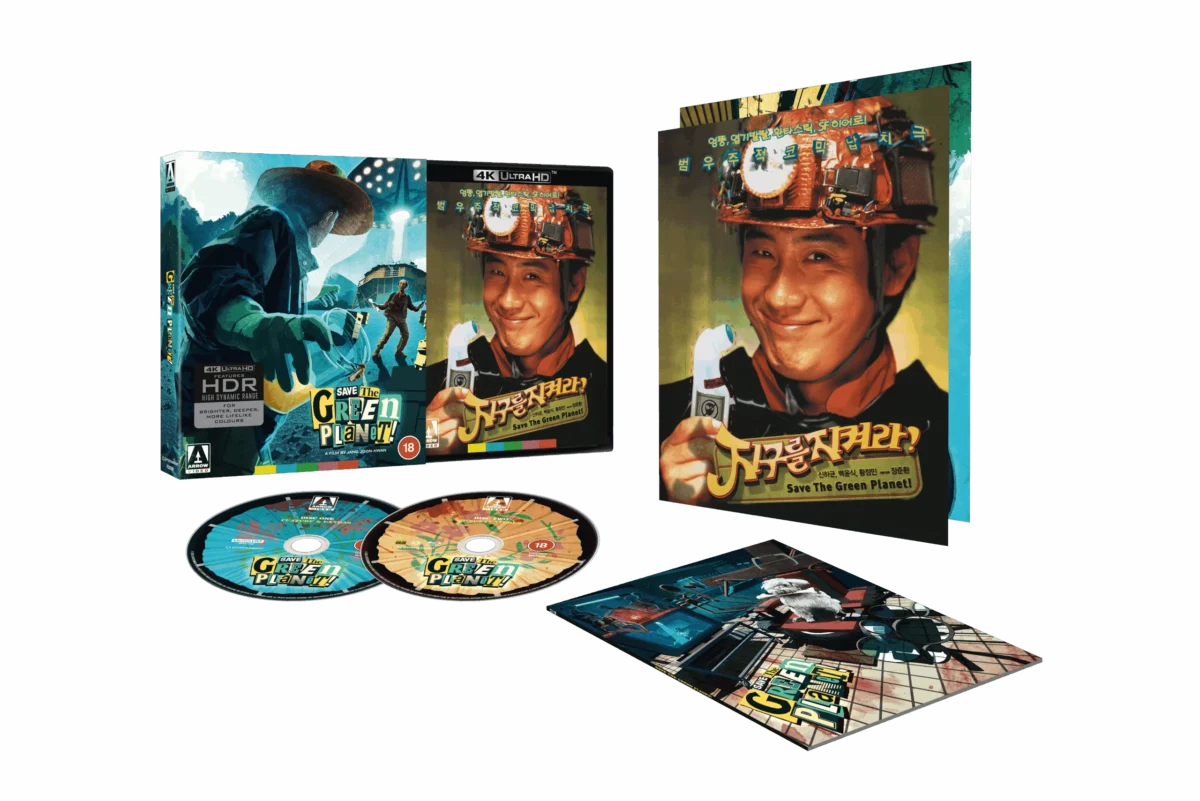
More than two decades after its audacious debut, Jang Joon-hwan’s "Save the Green Planet!" continues to be a touchstone of audacious Korean cinema, a film that defied genre conventions and resonated with a prescient commentary on societal alienation and existential dread. Released in 2003, the film, a bewildering and brilliant concoction of dark comedy, psychological thriller, science fiction, and biting social critique, has transcended its initial divisive reception to become a cult classic, its themes proving even more potent in the contemporary landscape. This enduring legacy is now being amplified through international reinterpretations and a continuous critical re-evaluation, prompting a timely conversation with its visionary director.
Director Jang Joon-hwan, speaking years after his last acclaimed project, "1987: When the Day Comes," reflects on the genesis of "Save the Green Planet!," its unexpected spiritual successor "Bugonia," the film’s unforgettable narrative twists, the intricacies of its casting and production, the evolving Korean film industry, and his much-anticipated return to filmmaking.
The Genesis of a Cosmic Outcry: Inspiration and Enduring Relevance
The initial spark for "Save the Green Planet!" ignited from a confluence of two distinct influences, as Jang Joon-hwan reveals. The first was a profound engagement with Rob Reiner’s 1990 psychological thriller "Misery." While captivated by its narrative tension, Jang found himself grappling with the simplistic portrayal of its antagonist, Annie Wilkes. "I felt a sense of regret that the protagonist, Annie, was dismissed merely as a ‘madwoman’ or a ‘villain’ who deserved to die," Jang explains. "Perhaps it’s my nature to look at the world from a slightly skewed angle, but I felt a thirst to explore the hidden story behind why she became that way." This desire to delve into the "why" behind perceived madness, to humanize the monstrous, became a foundational element of his approach.
The second, more whimsical, catalyst emerged from a peculiar anecdote encountered in the film magazine Cine 21. An article detailed a far-fetched claim from a foreign website suggesting that Leonardo DiCaprio, then a global superstar, was an alien on a mission to conquer Earth by seducing its women, with his signature hairstyle serving as antennas to communicate with extraterrestrial forces. The sheer absurdity, coupled with its imaginative audacity, struck Jang with humorous force. "I burst into such a loud laugh while reading it on the bus that people actually stared," he recalls. "It was absurd, yet brilliantly imaginative."
These two disparate inspirations – the empathetic exploration of a villain’s psyche and the outlandish conspiracy theory surrounding a pop culture icon – converged within Jang, creating a "chemical reaction" that birthed a story with an entirely novel "molecular structure." The result was the character of Byung-gu, a man convinced of an impending alien invasion and determined to stop it, a character who would become the embodiment of the film’s deeper anxieties.
"The resulting outcry from the main character Byung-gu wasn’t mere madness," Jang emphasizes. "It was a desperate scream from those moaning under the weight of our society’s structural violence." He posits that the societal pressures, the feeling of powerlessness, and the inherent violence embedded within societal structures are not new phenomena. Over two decades later, these themes have arguably intensified. "Twenty-three years later, I feel the questions I posed then are more hauntingly relevant than ever," he states.
Jang draws a stark parallel between the world of 2003 and the present day, highlighting the escalating crises that plague humanity. "Look at the world we face today. From the climate crisis and endless wars to indiscriminate hatred toward others… Technology may have advanced exponentially since 2003, but the way human beings treat one another (and the Earth itself) seems more precarious." He suggests that in this increasingly fractured world, "countless ‘Byung-gus’ are screaming in the shadows, trying to save humanity or simply to end their own pain."
The central question posed by "Save the Green Planet!" – "Is humanity worth saving?" – has, according to Jang, become even more poignant. "The question ‘Save the Green Planet!’ asked, ‘Is humanity worth saving?’, strikes a deeper, more painful chord in 2026," he asserts. He concludes this reflection with a somber acknowledgment: "The process of searching for that answer is exactly why we must protect this grieving planet." He also offered his "deepest condolences on the passing of the great Rob Reiner, whose powerful film ‘Misery’ served as such a profound inspiration to me."
A Dialogue of Descendants: "Save the Green Planet!" and "Bugonia"
The conversation naturally gravitates toward Yorgos Lanthimos’s recent film, "Bugonia," which shares a thematic and conceptual lineage with "Save the Green Planet!" Jang approaches the comparison with a nuanced perspective, likening the creative relationship to that of a parent discussing their child. "That’s a fascinating question," he muses, "But for a creator, it’s almost as difficult to answer as being asked, ‘Which is prettier, your own child or someone else’s?’"

He articulates the distinct artistic temperaments of the two films. "If my original ‘Save the Green Planet!’ is like a ‘bizarre cocktail’ where all sorts of intense flavors swirl and blend together, Yorgos Lanthimos’s ‘Bugonia’ feels like a ‘smoky cocktail’: dry, searing, and marked by his signature grotesque aesthetic." This analogy captures the essence of their differences: "Save the Green Planet!" as a chaotic, passionate blend, and "Bugonia" as a more refined, chillingly precise concoction.
Jang refrains from declaring one film superior to the other, emphasizing their individual artistic merits. "I don’t see ‘Bugonia’ and ‘Save the Green Planet!’ in terms of which is superior. Much like the cocktail analogy, they are independent works with entirely different ‘tastes’ and ‘aromas.’" He acknowledges Lanthimos’s mastery in adapting the core narrative DNA. "Bugonia,’ filtered through the lens of a master like Lanthimos, is a brilliant artistic achievement in its own right. It was a marvelous experience for me, as the original creator, to see how he inherited the DNA of the story while overlaying it with his characteristically cold and precise aesthetic."
He then contrasts this with the spirit of his original work. "Of course, the original film I made 23 years ago preserves the rough but passionate ‘raw energy’ and the zeitgeist-driven screams of that era. It holds a unique soul that could only have been forged in that specific time and place."
Despite these differences, Jang expresses deep admiration for Lanthimos’s vision. "I deeply respect the direction in ‘Bugonia,’ which conveys a bone-chilling pain, and the passion of the actors. I especially loved the poetic ending, which was so eerie that it bordered on beautiful." He views "Bugonia" not as a mere remake, but as a sophisticated evolution of the original’s themes. "While my film was a passionate outcry of its time, ‘Bugonia’ is a modern, elegant response to that cry. I am more than satisfied knowing that both films can offer audiences such distinct forms of shock and inspiration."
The Art of Deception: Crafting the Iconic Twist
The narrative pivot in "Save the Green Planet!" remains one of its most discussed and impactful elements. Jang meticulously details his approach to crafting this memorable twist, emphasizing the delicate balance required in both writing and direction.
During the writing phase, the primary objective was to cultivate a persistent sense of ambiguity. "The focus was that of meticulously weaving a thread of doubt: ‘Is Byung-gu truly insane, or is he the only one speaking the truth?’" he explains. "I never wanted the audience to settle into an answer." This deliberate uncertainty was designed to create a "psychological tug-of-war," where the audience oscillates between sympathy for Byung-gu’s perceived madness and dismissal of his claims as delusion. This internal conflict, Jang notes, was "both the most painful and the most meticulous part of the process."
Translating this written ambiguity into a visceral cinematic experience presented a new set of challenges during production. "Once we moved to directing, the challenge shifted to how we could use the performances to amplify that tension into something three-dimensional." Jang aimed to "subtly subvert genre clichés, building a sense of dread that would eventually explode in the finale, delivering a sensory and emotional shock to the audience."
He likens the directorial process to a precarious act of balance, referencing the character of Soon-i. "The whole process felt like Soon-i balancing precariously on a tightrope. Even a slight lean in either direction would have shattered the film’s internal reality or robbed the twist of its impact." This razor-thin balance was paramount. "Maintaining that razor-thin directorial balance was my most difficult task. Ultimately, it was that very instability that allowed the truth, once revealed, to hit the audience not just as a surprise, but as a profound and haunting question."
The Alchemy of Performance: Casting and Collaboration
The success of "Save the Green Planet!" hinges significantly on its powerful performances, particularly from its lead actors. Jang recounts the casting process with a keen eye for the specific qualities that drew him to Shin Ha-kyun and Baek Yoon-sik.
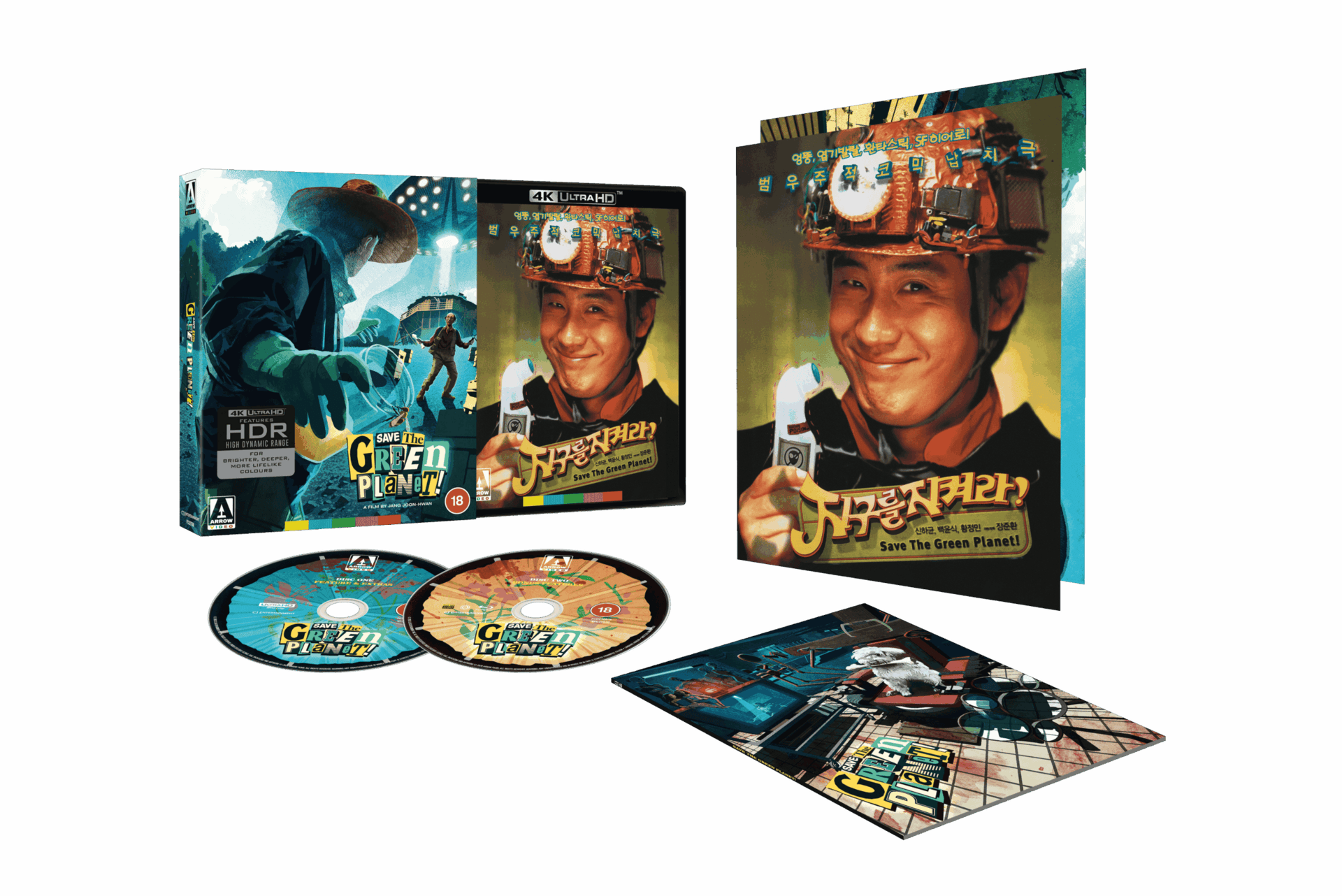
For the pivotal role of Byung-gu, Jang was seeking an actor capable of embodying a vast emotional spectrum. The casting puzzle began to resolve when he encountered Shin Ha-kyun’s photographic spread in KINO magazine. "Four photos, four completely different souls: one icy, one fiery, one grieving, and one pure," he recalls. "I was certain then that he had the emotional depth we needed." Shin Ha-kyun’s performance not only met but exceeded these high expectations. "There were moments when I felt the camera couldn’t even contain the raw intensity of his emotions, and his energy sent shivers down my spine and that of the entire crew." Jang praises his ability to seamlessly blend diverse acting styles. "From understated comedy to dead-serious drama and even explosive madness, he naturally and meticulously blended these vastly different acting styles into a single character." The collaboration was a director’s dream: "As a director, working with an actor possessing such an immense range was both a great fortune and a pleasure."
Casting Kang Man-sik, the antagonist, presented its own unique hurdles. The role demanded a physical commitment, including a head-shaving requirement, which deterred some actors. Producer Tcha Sung-jai eventually put forward Baek Yoon-sik, a seasoned actor from the 1960s who was essentially making his film lead debut. Jang notes that Baek Yoon-sik initially hesitated, aware of the demands of the role. "He came to the set braced for a struggle, but the reality was even tougher than he’d imagined. He eventually dropped the famous line, ‘This shoot has made me realize without a shadow of a doubt why human beings wear clothes.’"
However, this arduous process yielded significant rewards. "But that hardship paid off immensely once the film was released. His radical transformation was a shock and a delight to both audiences and industry insiders. After this film, he established himself as a titan of Korean cinema with a presence no one else can match." Despite the on-set "adorable complaints," Jang found working with Baek Yoon-sik to be an enlightening experience. "I often had to soothe his ‘adorable complaints’ throughout the shoot (laughs), but working with him was a constant journey of discovery. He created a uniquely memorable antagonist in Kang Man-sik."
Ultimately, Jang attributes the film’s successful performances to the caliber of the actors themselves. "Honestly, I think a great cast is often more important than the director’s relationship with the actors on set. I simply feel fortunate to have found the right people."
Designing the Labyrinth: Cinematography and Production Design
The claustrophobic and meticulously crafted environments of "Save the Green Planet!" are crucial to its unsettling atmosphere. Jang details the collaborative efforts with his Director of Photography (DP) and Production Designer to achieve this immersive effect.
The pre-production process was heavily reliant on storyboards, a tool that allowed for precise visualization of nearly every frame. "It was a meticulously calculated process, so much that the final film actually has a 95% match rate with those original sketches." While this approach ensured a cohesive visual narrative, Jang acknowledges its potential to limit spontaneity. However, the cast and crew managed to transform this rigid framework into a cinematic asset.
Jang Geun-young, the Production Designer, played a vital role in shaping the film’s visual identity. "He personally crafted everything from Byung-gu’s black vinyl suit to the props made from modified mining helmets." The design of Byung-gu’s house, inspired by traditional Gangwon-do architecture, was intended to evoke a sense of self-made, isolated dwelling. "The result was perfect. Because the space itself was an extension of Byung-gu’s character, we hand-selected and designed every single prop to reflect his delusions and obsessions."
DP Hong Kyung-pyo then brought this carefully constructed world to life. "He chose lenses that perfectly suited each character’s psyche, using subtle camera movements and unique lighting to heighten the claustrophobic tension of the basement." Jang describes the synergy between cinematography and production design as almost organic: "The cinematography and production design moved like a single organism, controlling the flow of information while effectively baring the characters’ inner worlds."
The Symphony of Cuts: The Editor’s Crucial Role
The frenetic pace and genre-bending nature of "Save the Green Planet!" are inextricably linked to its masterful editing. Jang collaborated closely with editor Park Gok-ji, a prominent figure in Korean cinema at the time, to forge a singular, powerful flow from fragmented emotional elements.
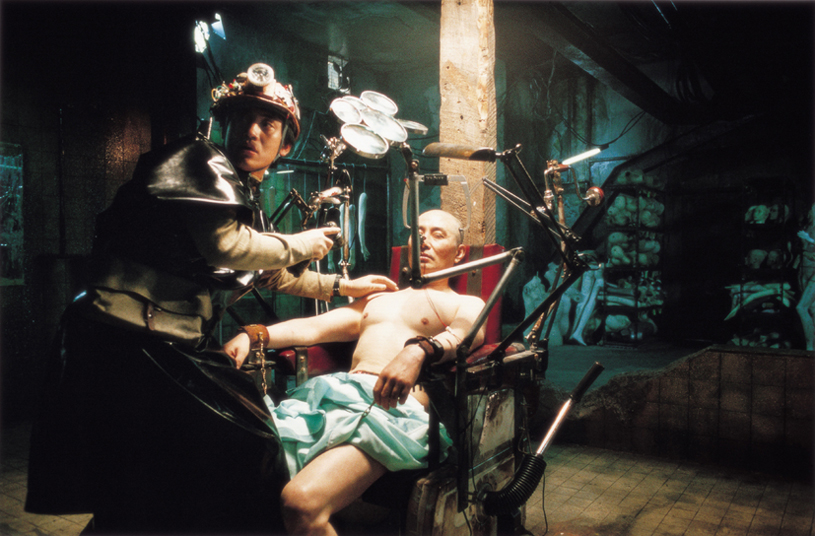
"Save the Green Planet! is a work where disparate genres (comedy, thriller, sci-fi and even melodrama) intersect with jarring intensity," Jang states. "Because of this, editing was the absolute key to binding these fragmented emotions into a singular, powerful flow." The core of their discussions revolved around how to harness the "off-beat rhythm" created by these tonal clashes and transform it into a unique cinematic energy.
The editing process was a delicate dance between maintaining the film’s signature "grotesque energy" and ensuring "universal immersion" for the audience. The editing room became a "battlefield of wits against the audience," where every cut was a strategic decision. "We fine-tuned every single cut, deciding what to reveal and what to hide to protect the final twist." The team meticulously controlled information to make Byung-gu’s claims appear delusional while simultaneously embedding subtle clues about the truth. Jang believes these "precise editorial devices" were instrumental in making the "eventual genre subversion at the end feel so explosive, both visually and emotionally."
A particularly challenging sequence involved the depiction of Earth’s history. "One particularly grueling section to edit was the sequence where Kang Man-sik explains the history of Earth. We cross-cut footage of apes violently smashing bones with archival clips of atrocities committed throughout human history. Recounting that global cycle of sorrow where violence only breeds more violence through a montage was a deeply painful process that stays with me even now."
The Evolving Landscape of Korean Cinema
Reflecting on the current state of the Korean film industry, Jang draws a stark contrast between the early 2000s, when he began his career, and the present day of 2026. The early 2000s are characterized as a period of "massive boom" and vibrant creative freedom. "Although the industry’s capital base may have been smaller than it is today, the creative energy was more vibrant and free than ever before," he recalls. He credits the success of bold ventures like "Save the Green Planet!" to the support of visionary producers who held significant influence over investment firms.
Today, Korean cinema has achieved unprecedented global recognition. "As of 2026, the status of Korean cinema has risen to an incomparable level. Our content has become a mainstream global phenomenon, and our technical prowess and capital have grown exponentially." However, this growth has brought about a paradox. "Paradoxically, however, as the industry has become more massive and systematized, the logic of capital has grown colder." This has led to a greater aversion to risk, shrinking the space for radical and subversive filmmaking. "There is a stronger tendency to avoid risk out of a fear of failure, and as a result, the space for the kind of radical, subversive attempts we once saw feels narrower." He identifies this as a contributing factor to a "vicious cycle whereby audiences are increasingly turning away from Korean films they find cliché’d."
Despite these challenges, Jang remains optimistic about the industry’s resilience. He believes that the essence of compelling cinema—stories that offer something new—remains constant, even as the distribution landscape shifts with the rise of streaming platforms. "Despite this, I still believe in the resilience of Korean cinema." He views international collaborations like "Bugonia" and the advancements in new technologies as potential catalysts for breakthroughs. "My wish is for a ‘Second Renaissance’ where creative adventures are once again welcomed in the Korean film industry."
A Return to Form: New Projects on the Horizon
The hiatus in Jang Joon-hwan’s directorial career, following "Hwayi: A Monster Boy" (2013) and "1987: When the Day Comes" (2017), has been a subject of much speculation. Jang explains that personal health issues necessitated an extended break. "To be honest, due to unexpected personal health issues, I had no choice but to step away from the industry for a while and take an extended break." He describes this period as a "precious ‘period of reflection’" that allowed him to recharge.
Fortunately, his health has improved, and he is now poised for a directorial comeback. "Fortunately, I have recovered my health, and I am now ready to return behind the camera." His next project is a music film focused on the life of a legendary Korean rock musician. "My new project (a music film chronicling the life of a legendary Korean rocker) is now in full swing. Bringing his fiery music and life to the screen is both a new challenge and a source of great excitement for me."
Beyond this musical endeavor, Jang is also revisiting other long-gestating projects. "Beyond this musical film, I am also dusting off those ‘quirky projects’ that I’ve been brooding over for years." His aim is to synthesize the raw creativity of his earlier work with his evolved artistic vision. "My goal is to combine the visceral creativity of my early work with the matured vision I’ve developed recently. I look forward to sharing these high-density, singular stories with you soon. Thank you."